

Best Temperatures for Baking with Olive Oil
When baking with olive oil, it's important to understand how its smoke point and flavor work with different recipes. Extra virgin olive oil, with a smoke point of 374°F to 410°F, is safe for most baking needs. Internal temperatures of baked goods rarely exceed 210°F, so the oil remains stable and flavorful. Here's a quick guide to baking with olive oil:
- Cakes & Quick Breads: Bake at 325°F–350°F for moist, tender results. Use 3/4 cup olive oil for every 1 cup of butter.
- Cookies & Muffins: Bake at 350°F–375°F for crisp edges and golden finishes.
- Yeast Breads & Focaccia: Higher temperatures (375°F–450°F) create crispy crusts and soft interiors.
- Pastries & Delicate Desserts: Stick to 300°F–375°F to preserve olive oil's subtle flavors.
Olive oil enhances texture, keeps baked goods moist longer, and adds mild, fruity notes. For the best results, choose high-quality extra virgin olive oil, like Arbequina for sweet treats or Picual for savory recipes.
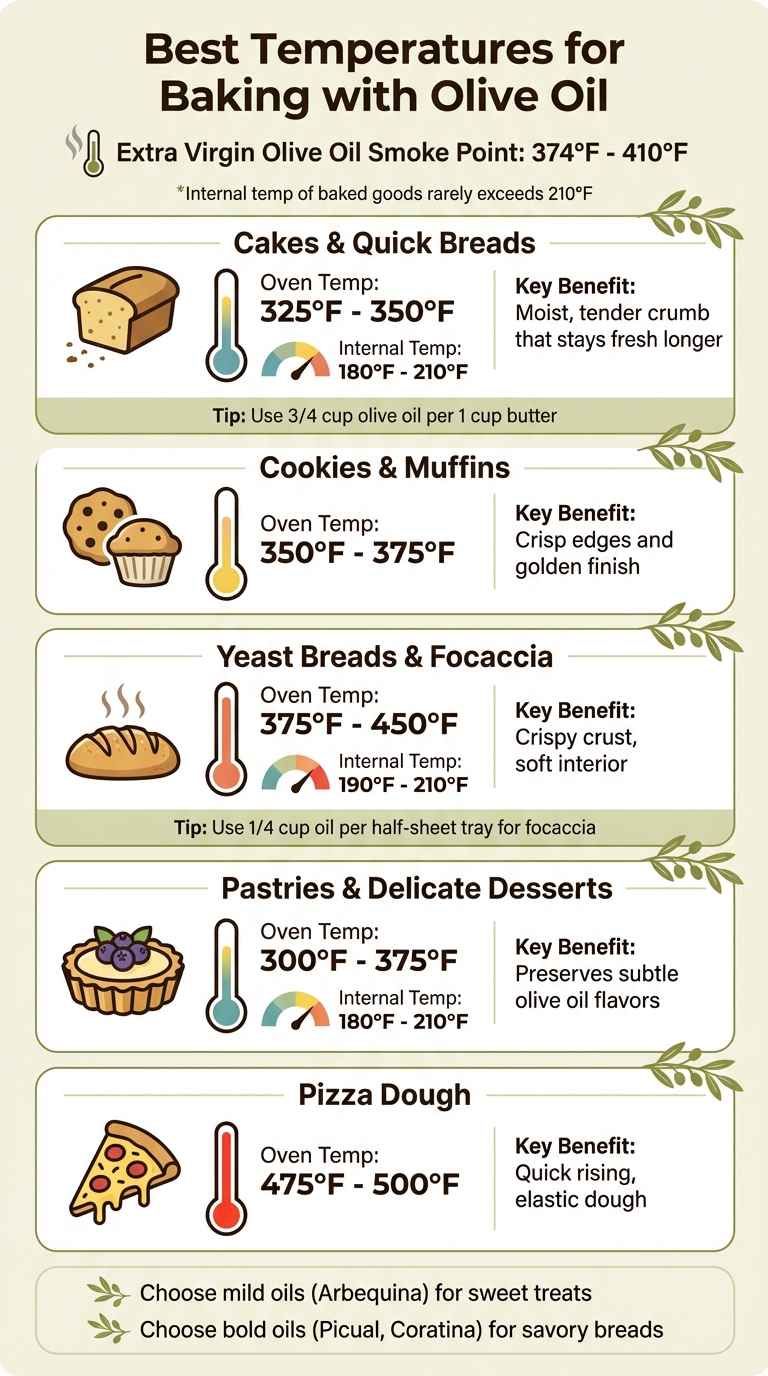
Olive Oil Baking Temperature Guide by Recipe Type
1. Olive Oil Smoke Point and Baking Safety
Safety and Stability of Olive Oil at Specific Temperatures
The smoke point of extra virgin olive oil typically falls between 350°F and 410°F. However, when baking cakes, bread, or pastries, the internal temperature of your baked goods rarely exceeds 210°F. This is because the moisture inside keeps the temperature from going above water's boiling point of 212°F. This natural safeguard ensures that olive oil remains well below its smoke point during baking.
The heat stability of olive oil is influenced by both its smoke point and its resistance to oxidation. Extra virgin olive oil is rich in oleic acid (making up 55–85% of its composition) and contains beneficial antioxidants like polyphenols. These elements provide strong oxidative resistance, making it more stable under heat compared to many oils with higher smoke points, such as sunflower or peanut oil.
While olive oil is safe for baking, it's worth noting that heating does subtly alter its flavor profile.
Impact of Olive Oil on Texture and Flavor
When extra virgin olive oil is heated, some antioxidants are lost - about 40% at 248°F and up to 75% at 338°F. Still, as certified food scientist Jessica Gavin explains, "studies show its overall polyphenol content remains stable enough to meet EU health standards". This means that olive oil retains enough of its beneficial compounds to remain both safe and flavorful. During baking, its grassy or peppery notes mellow, leaving behind a subtle character that works beautifully in citrus cakes or savory breads.
For high-heat baking, refined or "light" olive oils are a solid option. With smoke points ranging from 390°F to 470°F, these oils are ideal for recipes like focaccia baked at 450°F. However, the refining process strips away most of their flavor and nutritional value, leaving behind a more neutral oil. For everyday baking at temperatures between 325°F and 375°F, extra virgin olive oil strikes the perfect balance, offering both stability and health benefits without any safety concerns.
2. General Oven Temperature Range: 325°F to 375°F
Recommended Temperature Ranges for Each Category
The 325°F to 375°F range is ideal for most baking projects involving olive oil. This temperature range aligns perfectly with the smoke point of extra virgin olive oil. Staying within this window helps maintain the oil's flavor and prevents it from breaking down, while also allowing for the Maillard reactions and caramelization that give baked goods their appealing texture and taste.
For cakes and quick breads, aim for 325°F to 350°F. This ensures the center bakes evenly without over-browning the exterior. On the other hand, cookies and muffins do well at the higher end of the range, around 375°F, to achieve those crisp edges and a golden, inviting finish.
Impact of Olive Oil on Texture and Flavor
Temperature isn't just about preventing issues like smoking; it also plays a key role in preserving the unique flavors of olive oil. Baking within the 325°F to 350°F range helps retain the fruity, grassy, and peppery notes that extra virgin olive oil is known for. Additionally, because olive oil stays liquid at room temperature, baked goods made with it tend to remain moist and tender for longer compared to those made with solid fats. This results in a denser crumb and a softer crust, often described as having a "plush" texture.
When baking sweet treats like cakes and muffins, opt for milder olive oil varieties such as Arbequina. For savory breads, bolder options like Hojiblanca can bring out deeper, more complex flavors.
For the best results, try using a high-quality extra virgin olive oil - such as those available from Big Horn Olive Oil (https://bhooc.com) - to elevate both the flavor and the health benefits of your baked creations.
3. Cakes and Quick Breads: 325°F to 350°F
Recommended Temperature Ranges for Each Category
When baking cakes and quick breads with olive oil, the sweet spot is between 325°F and 350°F. This range works perfectly because cakes usually reach an internal temperature of 180°F–210°F, with water naturally buffering around 212°F.
If you're swapping butter for olive oil in a cake recipe, use 3/4 cup of olive oil for every 1 cup of butter. Also, increase the other liquids in the recipe by about 1/4 of the original butter amount. These temperatures not only ensure your baked goods are safe but also help achieve the best texture and flavor.
Impact of Olive Oil on Texture and Flavor
Baking with olive oil creates a crumb that's denser and moister compared to butter. Since olive oil is liquid at room temperature, it coats the flour proteins more effectively than solid fats, resulting in a tender texture that stays fresh for days. Unlike butter, which requires creaming with sugar for aeration, olive oil batters are whisked together, making them simpler to prepare - perfect for bakers of all experience levels.
The flavor depends on the olive oil you choose. Mild extra virgin olive oils, such as Arbequina, are excellent for sweet cakes, offering a buttery finish with subtle hints of apple or banana. For chocolate or darker cakes, medium-intensity oils can add depth without overpowering the other ingredients. To enhance the fruity notes in olive oil, try adding lemon or orange zest - it’s a great way to bring out the natural brightness in your baked goods.
Safety and Stability of Olive Oil at Specific Temperatures
Baking at 325°F to 350°F is completely safe for extra virgin olive oil, which has a smoke point between 374°F and 405°F. This temperature range ensures olive oil remains stable throughout the baking process.
"Because cakes never reach an internal temperature much higher than 200°F (93°C), baking is far gentler on volatile compounds (such as those in olive oil) than savory techniques like sautéing, frying, or even boiling."
– Stella Parks, Pastry Editor
While heating olive oil can reduce some of its antioxidants - about 40% at 248°F and up to 75% at 338°F - the remaining polyphenols are still sufficient to meet health standards. Using a high-quality extra virgin olive oil at these gentle baking temperatures preserves its natural grassy, floral, or peppery flavors. So, not only does it enhance the taste of your cakes and quick breads, but it also retains its nutritional benefits. For consistently delicious results, try an Ultra Premium Extra Virgin Olive Oil from Big Horn Olive Oil (https://bhooc.com).
4. Yeast Breads and Focaccia: 375°F to 450°F
Recommended Temperature Ranges for Each Category
Yeast breads and focaccia thrive in higher oven temperatures - typically between 375°F and 450°F - to achieve their signature textures: a crisp, golden crust and a soft, airy crumb inside. For standard yeast breads, baking at 375°F to 425°F produces a tender crust and a moist interior, with the bread's internal temperature reaching around 190°F to 210°F. Focaccia, on the other hand, benefits from slightly higher heat, baking best at 425°F to 450°F. This range ensures a crispy, golden exterior while maintaining a soft, light center, with an internal temperature of about 200°F.
If your oven doesn’t have a convection setting, preheating to 500°F and then lowering it to 425°F once the dough is in can help mimic that effect. To achieve those signature crisp edges, use about 1/4 cup of olive oil per half-sheet tray. Caroline Anderson, Founder of Scaled Down, emphasizes the importance of these elements:
"Fat, time, and temperature. Be sure to use a lot of olive oil and leave it in the oven long enough. I find that home bakers tend to under bake their focaccia."
Impact of Olive Oil on Texture and Flavor
Olive oil isn’t just for flavor - it’s a game-changer for texture, too. When added to yeasted doughs, it makes them softer and more pliable, which helps the dough rise better during baking. For focaccia, olive oil creates those characteristic indentations that trap flavors, while also giving the crust its golden crispness and keeping the interior soft and fluffy. The type of olive oil you use matters, too. Medium-intensity oils like Picual or Coratina bring herbaceous or peppery notes that pair beautifully with classic toppings like rosemary, garlic, or sea salt. While the high heat of baking can soften some delicate flavors in premium extra virgin olive oil, the oil’s bold, rich character still shines through in the final product.
Safety and Stability of Olive Oil at Specific Temperatures
You might wonder if baking at these temperatures affects the safety of olive oil, but rest assured - it doesn’t. Extra virgin olive oil has a smoke point ranging from 374°F to 405°F, with some high-quality oils reaching up to 425°F. This means it stays well within safe limits during baking. Thanks to its antioxidants and low levels of polyunsaturated fats, extra virgin olive oil is remarkably stable under heat. Plus, the indirect heat from baking is far gentler than methods like frying, helping preserve the oil’s quality and flavor. For the best results, consider using a high-quality Ultra Premium Extra Virgin Olive Oil, such as those from Big Horn Olive Oil (https://bhooc.com), to ensure both stability and exceptional taste.
sbb-itb-4066b8e
5. Pastries and Delicate Baked Goods: 300°F to 375°F
Recommended Temperature Ranges for Each Category
For pastries and other delicate baked goods, the ideal oven temperature falls between 300°F and 375°F. This range stays below the smoke point of extra virgin olive oil, preserving its flavor and beneficial compounds. If you're working on slow-bake desserts like custard tarts or meringue-topped treats, aim for the lower end - 300°F to 325°F - to protect antioxidant levels and maintain those subtle, floral undertones. For standard cakes and quick breads, 325°F to 350°F is the sweet spot. This ensures the inside bakes evenly without over-browning the sugar-rich exterior. For cookies and tart crusts that need crisp edges and a golden finish, 350°F to 375°F delivers the perfect balance, all while keeping olive oil within safe temperature limits.
Even when baking at 375°F, the internal temperature of most baked goods stays between 180°F and 210°F, which keeps the olive oil stable and safe to use.
Impact of Olive Oil on Texture and Flavor
Baking at these temperatures not only preserves olive oil's delicate flavors but also enhances the texture of your pastries. Olive oil adds tenderness and moisture, creating a denser crumb compared to butter. For sweet pastries and cakes, mild-intensity olive oils like Arbequina or Hojiblanca are excellent choices. Their buttery, fruity notes - reminiscent of apple and banana - complement desserts without overpowering the flavors.
In tart crusts, olive oil contributes to a tender yet moisture-resistant texture, making it an excellent option for quiches or fruit tarts. If you're substituting olive oil for melted butter in delicate pastries, use 3/4 the amount of olive oil and slightly increase the liquid in your recipe to maintain proper moisture levels. However, olive oil isn’t suitable for laminated doughs like croissants or puff pastry, where solid fats are essential for creating those signature flaky layers.
Safety and Stability of Olive Oil at Specific Temperatures
When baking between 300°F and 375°F, olive oil remains well within its safe range. Extra virgin olive oils typically have smoke points between 350°F and 410°F, ensuring stability during baking. While heating olive oil may reduce some antioxidants, its polyphenol content remains largely intact, preserving both its safety and flavor.
For delicate pastries where flavor is key, staying at or below 375°F safeguards both the health benefits and the nuanced taste of the olive oil. For the best results, consider using a high-quality Ultra Premium Extra Virgin Olive Oil, such as those offered by Big Horn Olive Oil (https://bhooc.com), to ensure you're working with a stable, flavorful product for your baked creations.
How To Bake with Olive Oil
Temperature Reference Table
Here's a handy guide to optimal baking temperatures and performance insights for various baked goods. This table includes recommended oven settings, target internal temperatures, and notes on how olive oil contributes to the baking process.
| Baking Category | Recommended Oven Temp | Expected Internal Temp | Olive Oil Performance Notes |
|---|---|---|---|
| Cakes & Quick Breads | 325°F – 350°F | 180°F – 210°F | Adds moisture and density to the crumb while helping to maintain freshness. |
| Yeast Breads & Focaccia | 375°F – 450°F | 190°F – 210°F | Produces a soft crust and tender crumb; high heat is safe due to the dough's moisture content. |
| Cookies | 350°F – 375°F | Enhances crisper edges and a short, tender texture. | |
| Pastries & Delicate Baked Goods | 300°F – 375°F | Ideal for preserving delicate textures and subtle flavors, perfect for light pastries and quiches. | |
| Pizza Dough | 475°F – 500°F | High heat ensures quick rising before gluten sets, and olive oil adds elasticity. |
Most baked goods reach their best at internal temperatures between 180°F and 210°F, staying well below olive oil's smoke point. Even at oven settings as high as 500°F (e.g., for pizza), the moisture in the dough prevents overheating, ensuring both safety and flavor.
For a rich flavor and dependable stability, consider using Ultra Premium Extra Virgin Olive Oil from Big Horn Olive Oil (https://bhooc.com).
Conclusion
By sticking to the temperature ranges mentioned earlier, you can take full advantage of olive oil's unique qualities in your baking. Whether you're gently baking delicate cakes at 325°F or cranking up the heat to 450°F for a perfectly crusty focaccia, extra virgin olive oil remains a reliable, stable, and safe choice throughout the process.
Olive oil doesn't just perform well under heat - it also enhances your baked goods with moist, tender textures that stay fresh longer and a subtle layer of flavor. Certified Food Scientist Jessica Gavin highlights this, noting, "Another study found extra-virgin olive oil to be the most heat-stable, even outperforming oils with higher smoke points, thanks to its antioxidants and low polyunsaturated fat content". This combination of performance and health benefits shows the importance of using high-quality ingredients.
For the best results, consider using fresh, Ultra Premium Extra Virgin Olive Oil from Big Horn Olive Oil (https://bhooc.com), which delivers unmatched stability, flavor, and health benefits in every recipe.
Now’s the time to experiment! Try mild oils like Arbequina for sweet treats or go bold with Picual or Coratina for savory breads and rich chocolate desserts. With the right oil and careful attention to temperature, you’ll consistently achieve baked goods with better texture, moisture, and flavor every time.
FAQs
What kind of olive oil should I use for baking sweet versus savory recipes?
When it comes to baking sweet treats like cakes, cookies, or muffins, a mild, light-flavored extra-virgin olive oil is the way to go. It brings just the right amount of moisture and richness to your desserts without overshadowing their delicate flavors. Oils from buttery olives, such as Arbequina, are especially great for these kinds of recipes.
For savory baked goods - think breads, focaccia, pizza crusts, or herb-infused pastries - a robust, full-bodied extra-virgin olive oil is your best bet. These oils, often crafted from olives like Coratina, deliver a bold, peppery kick that complements and elevates savory flavors beautifully.
Big Horn Olive Oil carries both mild and robust EVOOs, so you can easily find the perfect oil for any of your baking adventures.
What effect does olive oil have on the texture and moisture of baked goods?
When you use olive oil in baking, it works wonders by coating the flour particles with liquid fat. This process helps retain moisture, giving your baked goods a tender crumb and a slightly denser texture compared to using solid fats like butter.
Olive oil shines in recipes for cakes, breads, and pastries, keeping them soft and preventing them from drying out. To elevate your baking, try using high-quality extra virgin olive oil, such as those from Big Horn Olive Oil. It not only adds moisture but also brings a subtle, rich flavor to your treats.
Why is extra virgin olive oil safe for baking even with its lower smoke point?
Extra virgin olive oil is a great option for baking, thanks to its high levels of monounsaturated fats and natural antioxidants, which help it stay stable under heat. Most baking recipes use temperatures far below its smoke point, which typically falls between 405°F and 470°F.
This stability means the oil keeps its flavor and nutritional perks intact while adding a unique touch to your baked goods. Whether you're whipping up cakes, breads, or pastries, extra virgin olive oil can bring a smooth texture and a hint of depth to your recipes.