

5 Tips for Extending Shelf Life of Infused Oils
Infused oils can add flavor to your meals, but they come with safety risks like botulism and rancidity. To ensure your oils are safe and last longer, follow these key tips:
- Store Properly: Keep oils in dark, cool places to slow oxidation and prevent bacterial growth. Refrigeration or freezing is best for long-term storage.
- Use Dried Herbs: Fresh ingredients increase the risk of contamination. Opt for fully dried herbs to reduce moisture and extend shelf life.
- Minimize Air Exposure: Use small, airtight containers to limit oxygen contact and maintain freshness.
- Strain Thoroughly: Remove all solids like herbs or garlic to avoid trapped moisture and spoilage.
- Add Natural Antioxidants: Choose high-quality oils rich in antioxidants, like extra virgin olive oil, to delay rancidity.
Proper handling and storage are essential for both flavor and safety. Always label your oils with a "discard by" date and check for spoilage signs like cloudiness or off smells.
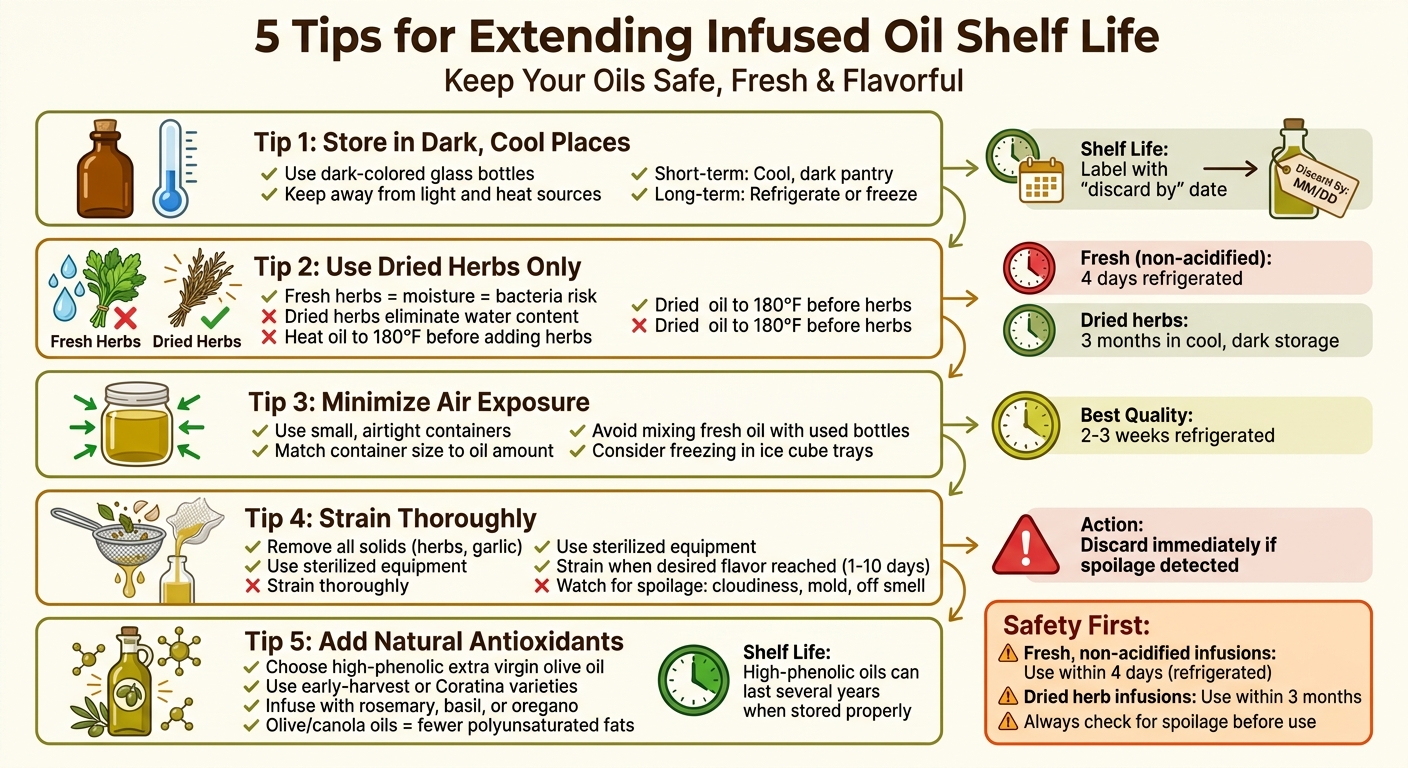
5 Essential Tips for Extending Infused Oil Shelf Life
Safely Infuse Oils at Home
sbb-itb-4066b8e
1. Store in Dark, Cool Places
Exposure to light and heat can speed up oxidation and cause infused oils to go rancid. To avoid this, keep your oils away from windows, stovetops, ovens, or any other heat sources.
Use dark-colored, clean, food-grade glass bottles to protect the oils from light damage. Pairing dark storage with cool temperatures helps slow down oxidation even more.
Cool environments also reduce chemical reactions and inhibit the growth of Clostridium botulinum. For short-term use, a cool, dark pantry works fine. However, for longer storage, refrigeration or freezing is recommended. If refrigerated oil becomes cloudy or solidifies, simply let it sit at room temperature for 10–15 minutes to return to its normal state.
Make safety a priority by labeling your bottles with a "discard by" date - generally three months for dried herb infusions and one month for acidified fresh infusions.
2. Use Dried Herbs Only
Fresh herbs might seem appealing for making infused oils, but they come with serious safety concerns. Their moisture content creates the perfect environment for Clostridium botulinum, a bacterium that thrives in oxygen-free spaces like oil and produces dangerous neurotoxins. Without proper acidification, fresh herbs in oil can quickly become a health hazard.
"The safest way for home cooks to prepare flavored or infused oils is to use properly dried herbs, garlic, or vegetables. Since dried ingredients have no water, C. bot bacteria will not grow." - Jason Bolton, Assistant Extension Professor and Food Safety Specialist, University of Maine Cooperative Extension
This moisture factor is also why dried herbs dramatically extend shelf life compared to fresh ones. Fresh herb infusions, unless acidified, need to be refrigerated and used within 4 days. In contrast, oils infused with properly dried herbs can last up to 3 months when stored in a cool, dark spot. Pairing dried herbs with good storage habits offers an effective way to keep your oil safe.
To ensure safety, make sure your dried herbs are fully dry - either leathery or crisp with no trace of moisture. Additionally, heat your oil to 180°F before adding the herbs to remove any lingering moisture.
While dried herbs help prevent bacterial growth, keep in mind that the oil itself can still degrade over time due to oxidation. Proper storage remains key to maintaining quality.
3. Minimize Air Exposure with Small Containers
Oxygen is the enemy of infused oils - it breaks down antioxidants and polyphenols, which eventually leads to rancidity. When your oil sits in a container with too much headspace (the gap between the oil and the lid), it’s exposed to air constantly. This exposure not only strips away the compounds responsible for olive oil's health perks and flavor but also leads to unpleasant off-flavors over time. Reducing air exposure works hand-in-hand with proper storage and herb selection to keep your oils fresh longer.
To limit air contact, always match your container size to the amount of oil you’re storing. Texana Brands emphasizes this point:
"Smaller bottles enhance safety and preserve freshness".
This advice is especially crucial for infused oils, as they typically retain their best quality for only 2–3 weeks when refrigerated.
Using smaller containers offers another benefit: it makes it easier to spot signs of spoilage early, such as cloudiness, mold, or strange odors. As Chance Sanders from GramLeafCo points out:
"Smaller batches simplify usage and spoilage detection. That alone can improve quality more than any fancy bottle ever will".
To further protect your oils, avoid mixing fresh oil with partially used bottles - this restarts the "safety clock" and increases the risk of spoilage. Instead, transfer your oil to a clean, appropriately sized container every time. If you're gifting infused oils, small bottles are a smart choice to ensure they stay at their best. For longer storage, tightly seal your containers and consider freezing portions in ice cube trays so you can thaw only what you need.
4. Strain Thoroughly and Discard Sediment
Once you've stored and selected your ingredients properly, the next step is thorough straining. This step is critical - not just for taste, but for safety. Leaving solids like herbal flavors or garlic in infused oils can lead to bitter, overpowering flavors. More importantly, it can trap moisture, creating an ideal environment for harmful bacteria such as Clostridium botulinum, especially in the oil's oxygen-free surroundings.
To keep the flavor balanced, strain the oil as soon as it reaches the desired taste - this usually takes anywhere from 1 to 10 days, depending on the infusion. Carla Schwan, Assistant Professor at the University of Georgia, emphasizes this point:
"Once the oil reaches the desired flavor, remove the acidified garlic or herbs (common in spicy flavors like chili oil) - otherwise, the flavor will continue to intensify."
For straining, use sterilized tools like a fine-mesh strainer, cheesecloth, or a nut-milk bag. Make sure everything is completely dry and sanitized - boil your equipment for at least 10 minutes to eliminate any potential contaminants.
It's also important to keep an eye on your infused oil. Check regularly for signs of spoilage such as cloudiness, water droplets, mold, or an off smell. If you notice anything unusual, throw the oil out immediately. Nonacidified fresh infusions should be refrigerated and used within 4 days, while acidified infusions can last up to 1 month.
Straining thoroughly and monitoring for spoilage are non-negotiable steps to ensure your infused oil remains safe and flavorful.
5. Add Natural Antioxidants
Using high-quality extra virgin olive oil that's rich in phenolic compounds is a smart way to extend shelf life naturally. These compounds act as antioxidants, protecting the oil from oxidation and rancidity. As American Olive Farmer puts it:
"These phenolic compounds serve as natural antioxidants, protecting the oil from degradation over time. In well-made oils, this translates to a longer-lasting aroma, flavor, and nutritional benefit."
To get the most out of these antioxidants, go for high-phenolic extra virgin olive oil, especially early-harvest varieties or types like Coratina. Oils like olive and canola, which have fewer polyunsaturated fatty acids, are naturally more resistant to turning rancid. Martha Zepp, Former Program Assistant at Pennsylvania State University, explains:
"Olive oil and canola oil contain fewer polyunsaturated fatty acids than many other vegetable oils and will turn rancid less quickly."
This combination of stability and antioxidant protection helps keep infused oils fresher for longer.
You can also enhance your oil's antioxidant profile by infusing it with herbs like rosemary, basil, or oregano. During the infusion process, beneficial compounds from the herbs transfer into the oil. Texana Brands highlights this benefit:
"Infusion itself doesn't strip nutrients - in fact, many antioxidants from herbs may leach into the oil."
While natural antioxidants are a powerful tool for extending freshness, their effectiveness depends on proper storage. When handled and stored correctly, high-phenolic oils can stay fresh for several years - far exceeding the typical 18 to 24-month shelf life cited for olive oil.
Conclusion
The methods outlined above work together to preserve both the flavor and safety of your infused oils. To keep your oils fresh for longer, focus on three key steps: use dried herbs to eliminate moisture, store oils in cool, dark places with minimal air exposure to limit oxidation, and strain carefully to remove contaminants.
Remember, infusions made with fresh, non-acidified ingredients need to be refrigerated and used within 4 days, while those made with dried herbs should be consumed within 3 months. Be cautious - rancidity can develop without obvious signs, so relying on smell or taste alone isn’t enough to ensure safety.
By controlling moisture, storing oils properly, and using them in a timely manner, you create a strong safety system. Combining dried ingredients with dark glass bottles, cool storage, and thorough straining adds multiple layers of protection against microbial and chemical risks.
Following these steps isn’t just about maintaining flavor - it’s also about protecting your health. At Big Horn Olive Oil, every bottle is crafted with these safety and quality measures in mind.
FAQs
How do I acidify fresh herbs or garlic for infused oil?
To ensure infused oils with fresh herbs or garlic are safe, soak them in an acid, such as vinegar or lemon juice, before mixing them with the oil. This step helps prevent bacterial growth and increases their shelf life. If you want a simpler option, dried herbs are a safer choice since they don't need acid treatment and last longer. When using fresh ingredients, always store the infused oil in the refrigerator to minimize any safety concerns.
What’s the safest way to sterilize bottles and tools?
To ensure the safety of your infused oils, start by thoroughly washing all bottles and tools. Then, boil them for at least 10 minutes to kill off bacteria, yeast, and mold. Opt for sterilized, airtight containers - dark glass bottles work best - as they help prevent contamination. Proper sterilization and storage are crucial, particularly when working with fresh ingredients like herbs or garlic, to minimize risks such as botulism.
Can I freeze infused oil, and how do I thaw it?
Yes, you can freeze infused oil, and it’s safe as long as you handle it correctly. Freezing helps keep the oil fresh and extends its shelf life. When you’re ready to use it, simply thaw the oil by placing it in the refrigerator or letting it sit at room temperature until it liquefies. While freezing might cause minor changes in texture or aroma, it’s a convenient way to preserve both its flavor and safety.