

Ultimate Guide to Gluten-Free Olive Oil Cakes
If you want a gluten-free olive oil cake that stays moist and doesn’t fall apart, 4 things matter most: the flour mix, whipped eggs, slow oil mixing, and full cooling before slicing.
I’d boil the whole article down like this: use almond flour for a richer, denser cake or a 1-to-1 gluten-free blend for a lighter crumb; whip the eggs and sugar to the ribbon stage for 2 to 4 minutes; drizzle in the olive oil over 60 to 90 seconds; and let rice-flour batter rest for 30 minutes if needed. Then bake based on pan size, cool in the pan for 10 to 15 minutes, and wait at least 2 hours before cutting.
Here’s the short version:
- Olive oil helps keep gluten-free cake moist for 3 to 4 days
- Eggs and sugar do much of the structure work
- Starches like tapioca or cornstarch help lighten the crumb
- Buttermilk or yogurt can help with softness
- Lemon and orange pair well with olive oil
- Dense, dry, or sunken cakes usually come from overmixing, under-whipping, or overbaking
Quick comparison of the 2 main flour paths:
| Flour option | Texture | Flavor | Best for |
|---|---|---|---|
| Almond flour | Tender, slightly dense | Nutty, rich | A moist cake with more body |
| GF flour blend | Lighter, more cake-like | Neutral | A classic crumb and cleaner citrus flavor |
So if I were making one, I’d keep it simple: pick a mild to medium extra virgin olive oil, weigh the dry ingredients, fold gently, and don’t rush the cooling step.
Lemon Olive Oil Cake - Gluten & Dairy Free
sbb-itb-4066b8e
What Makes an Olive Oil Cake Gluten-Free
Once you have the base formula, the big choice is the flour mix. Without wheat flour, the cake needs other ingredients to do the heavy lifting for structure, lift, and a soft crumb. In a gluten-free olive oil cake, that job usually falls to the eggs, sugar, and flour base.
When you beat the eggs and sugar until the mixture turns pale and thick - the ribbon stage - you trap air in the batter. That air expands in the oven and helps the cake rise. Sugar does more than make the cake sweet, too. It helps steady the whipped eggs and supports that volume as the cake bakes.
Starches like cornstarch or tapioca flour often show up in gluten-free flour mixes because they help make the crumb lighter. Some recipes also fold in whipped egg whites to make the cake even lighter.
Almond Flour vs. Gluten-Free Flour Blend
The two main flour options lead to two pretty different cakes. Almond flour gives you a richer, denser result, with moisture coming from its natural nut oils. A gluten-free all-purpose blend - often made with rice flour and starches - gives the cake a lighter crumb that feels closer to a classic cake. Some recipes use both, like 1 cup of GF blend with 1/2 cup of almond flour, to land somewhere in the middle.
Use almond flour if you want a richer crumb, or a gluten-free blend if you want a lighter, more classic cake.
| Feature | Almond Flour | Gluten-Free Flour Blend |
|---|---|---|
| Texture | Very tender, slightly dense | Light, classic crumb |
| Moisture | High; stays moist for days | Moderate; often needs added liquids or fats |
| Flavor | Rich and nutty | Neutral; lets citrus and olive oil shine |
| Structure | Fragile; often needs extra eggs | Sturdier; uses starches and binders |
One small but useful tip: if your blend is rice flour-based, let the batter rest for 30 minutes before baking. That gives the flour time to absorb the liquid, which helps cut down on the grainy texture gluten-free cakes sometimes have.
How Olive Oil Affects Texture and Flavor
After the flour base, the oil becomes the next big factor. Olive oil helps keep the crumb tender even after the cake cools. That’s part of why this kind of cake stays moist for several days.
The flavor depends a lot on the oil you use, so pick a fresh, balanced extra virgin olive oil. Since baking makes the olive oil taste stand out more, it should taste good straight from the bottle. A mild to medium-fruity extra virgin olive oil usually gives the cleanest flavor.
Key Ingredients for Structure, Moisture, and Flavor
Once you’ve got the flour base sorted out, every other ingredient needs to do a job. In this kind of cake, that usually means structure, moisture, or flavor.
Core Ingredients That Hold the Cake Together
Eggs do a lot of the heavy lifting in a gluten-free batter. Since there’s no gluten network to help hold things up, eggs step in and give the cake shape and lift. Use 3 to 4 room-temperature large eggs, then whip them with sugar until the mixture looks pale and thick. That step helps build the rise gluten would usually provide.
Sugar does more than sweeten the cake. It helps with browning and supports structure too. If you’re using citrus, rub the zest into the sugar first. That helps release the oils from the zest and spreads the flavor through the batter.
For leavening, use 1½ to 3 teaspoons baking powder. If the batter has lemon juice or orange juice, add ¼ to ½ teaspoon baking soda as well. And don’t skip the salt. Even a small pinch makes the other flavors stand out and keeps the cake from tasting dull.
Dry and Liquid Add-Ins That Improve Tenderness
After structure, tenderness is the next thing to dial in.
The flour mix plays a big part here. A 1-to-1 gluten-free flour blend - usually 1 to 2 cups - handles most of the structure. Then blanched almond flour, anywhere from ⅓ cup to 1¼ cups, helps keep the crumb moist for days. Stick with blanched almond flour if you can. Almond meal tends to make the crumb gritty. A little tapioca flour adds some spring and keeps the texture lighter.
For the liquid side, full-fat buttermilk or plain yogurt gives more moisture and tenderness than milk. Add 1 to 2 tablespoons of fresh citrus zest and 1 to 2 teaspoons of vanilla extract to brighten the cake without weighing it down. If you want a little texture on top, press sliced almonds onto the batter before baking. They add a light crunch and make the finished cake look polished.
How to Choose an Olive Oil for Baking
The last big choice is the oil, and it has a direct effect on the cake’s final taste.
Pick the oil with care because its flavor comes through in every bite. Look for an Extra Virgin Olive Oil with fruity, citrus, herbal, or peppery notes, plus a slight bitterness. Big Horn Olive Oil's Picual and Coratina EVOOs fit that profile well for baking. Go with a mild to medium-fruity EVOO if you want a cleaner taste, or use a more robust oil if you want the olive flavor to stand out more.
Mixing and Baking Methods That Prevent Dry or Dense Cakes
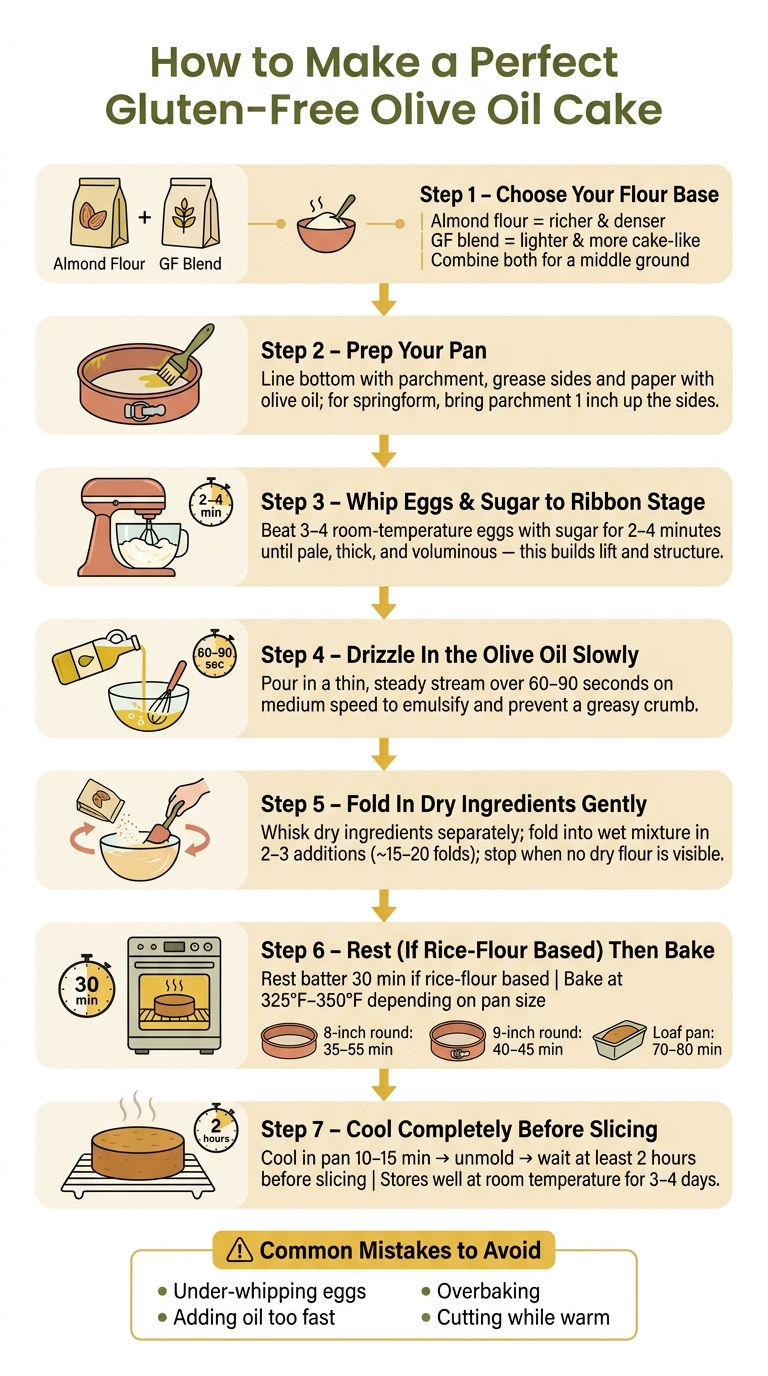
How to Make a Perfect Gluten-Free Olive Oil Cake: Step-by-Step
How to Mix the Batter Without Overworking It
Once your ingredient ratios are right, the mixing method makes or breaks the texture. This is the point where a cake stays light and tender - or ends up heavy.
Start by whipping the eggs and sugar until the mixture looks pale and thick, about 2 to 4 minutes. That step builds the lift and air that gluten would usually help create, so it’s worth giving it the full time.
Then pour in the olive oil in a thin, steady stream over 60 to 90 seconds while mixing on medium speed. This helps the batter emulsify and keeps the cake from feeling greasy. After that, whisk the dry ingredients in a separate bowl to remove any clumps. Fold them into the wet mixture in two or three additions with a flexible spatula. Aim for about 15 to 20 folds, and stop as soon as you no longer see dry flour. A few small lumps are completely fine.
Rice-flour batters also do better with a 30-minute rest before they go into the oven.
Pan Sizes, Oven Settings, and Signs of Doneness
Pan size affects batter depth, which means it also affects bake time. Here’s a quick guide for the most common pans:
| Pan Type | Temperature | Approximate Bake Time |
|---|---|---|
| 8-inch Round Pan | 350°F | 35–55 minutes |
| 9-inch Round Pan | 325°F–350°F | 40–45 minutes |
| 9-inch Springform Pan | 325°F–350°F | 40–50 minutes |
| 9x5-inch Loaf Pan | 325°F | 70–80 minutes |
If you’re using a dark metal or glass pan, lower the oven temperature by 15°F so the outside doesn’t brown too fast.
To check doneness, look at the edges first. They should be lightly golden and just starting to pull away from the pan. The center should spring back when you press it lightly. A toothpick inserted into the middle should come out with a few moist crumbs, not wet batter.
How to Cool and Release the Cake Cleanly
Once the cake comes out of the oven, a gentle hand helps a lot while it sets.
Let it cool in the pan for 10 to 15 minutes before unmolding. Line the bottom of the pan with parchment paper, and grease both the pan sides and the paper with olive oil before adding the batter. If you’re using a springform pan, bring the parchment about 1 inch up the sides for extra insurance. Then loosen the edges with a thin knife or offset spatula and release the cake.
Wait at least 2 hours before slicing. Cutting too early is one of the most common reasons a gluten-free cake falls apart. Store it in an airtight container. These cakes keep well at room temperature, and the flavor stays good for 3 to 4 days.
Flavor Pairings, Variations, and Troubleshooting
The Best Flavor Pairings for Olive Oil Cakes
Olive oil has a clear, noticeable taste. So the best pairings don't fight it. They support the cake and let the oil stay front and center.
Lemon is the safest bet. Its acidity cuts through the oil's richness and gives the cake a bright finish. One small move makes a big difference: rub the zest into the granulated sugar before mixing. That helps release the citrus oils, so the flavor can hold its own against a bold extra virgin olive oil.
Once you have the base right, the rest should build on it, not cover it up. Lemon, orange, blood orange, and Meyer lemon all fit well, each nudging the cake in a slightly brighter or warmer direction. If you want a little more depth, add 2 to 3 tablespoons of Amaretto, Grand Marnier, or Cointreau. Those work especially well with orange or almond pairings.
You can also bring in a bit of spice or herbs without taking over the cake. Cardamom adds warmth. Rosemary and thyme add a savory edge that still plays nicely with the oil.
For toppings, lighter is better:
- A dusting of powdered sugar
- Fresh raspberries or blueberries
- A quick citrus glaze made with 1 cup powdered sugar and 2 tablespoons citrus juice
And here's the nice part: the flavors get deeper overnight.
How to Fix Dense Crumb, Dryness, and Sinking Centers
If the flavor is there but the texture feels off, the issue usually comes back to mixing, measuring, or bake time. In most cases, the cause is pretty easy to pin down.
| Problem | Likely Cause | Fix |
|---|---|---|
| Dense or heavy crumb | Too much flour; eggs under-whipped | Weigh flour; whip eggs and sugar to ribbon stage |
| Dry texture | Overbaking | Check doneness 5 to 10 minutes early; reduce oven temperature by 15°F for dark pans |
| Sinking center | Underbaking; too much baking powder | Bake until the center is fully set; measure baking powder precisely |
| Oily or greasy | Oil added too fast; poor emulsification | Drizzle oil slowly into whipped eggs while mixing on medium speed |
| Cake crumbles when sliced | Cut while still warm; flour blend missing a binder | Cool at least 2 hours; add 1/2 tsp xanthan gum if the blend lacks it |
A bitter aftertaste usually points to one of two things: the zest hit the pith, or the baking powder was overmeasured. A microplane helps with zesting, and careful measuring helps with the baking powder.
Conclusion: Key Steps for a Moist, Reliable Gluten-Free Olive Oil Cake
The gap between a cake that turns out well and one that falls short usually starts with a few choices made before the batter is mixed. Start with a fresh, balanced extra virgin olive oil. Fruity, herbal, or peppery notes tend to work best.
Choose a fresh, balanced extra virgin olive oil; its flavor carries through in the finished cake.
From there, the basics matter most: measure dry ingredients by weight, whip the eggs and sugar until the mixture is pale and voluminous, fold gently, and bake at the right temperature for your pan. Let the cake cool all the way before slicing, and if you can, let it rest overnight.
FAQs
Can I make this cake dairy-free?
Yes. You can swap any dairy ingredient for a dairy-free version.
For example, replace buttermilk with a nondairy mix made from half unsweetened almond milk and half plain nondairy yogurt.
As a bonus, many gluten-free olive oil cake recipes are already dairy-free as written.
Which olive oil tastes best in cake?
The best olive oil comes down to the flavor you want.
If you're working with delicate ingredients like lemon, go with a mild or light extra virgin olive oil. That way, the citrus still gets its moment and doesn't get buried.
For bolder flavors like cardamom or orange, reach for a robust, fruity, or peppery extra virgin olive oil. Those stronger notes can stand up to the rest of the recipe.
Either way, choose an olive oil that tastes good on its own. That's a smart rule in baking, because the flavor tends to come through even more once it's in the oven.
Can I freeze gluten-free olive oil cake?
Yes. Let the cake cool all the way first, then wrap it tightly in freezer-safe wrap to help keep the moisture in.
If you store it well in the freezer, it’ll stay fresh for up to 2 months.