

Ultimate Guide to Oil-to-Vinegar Ratios
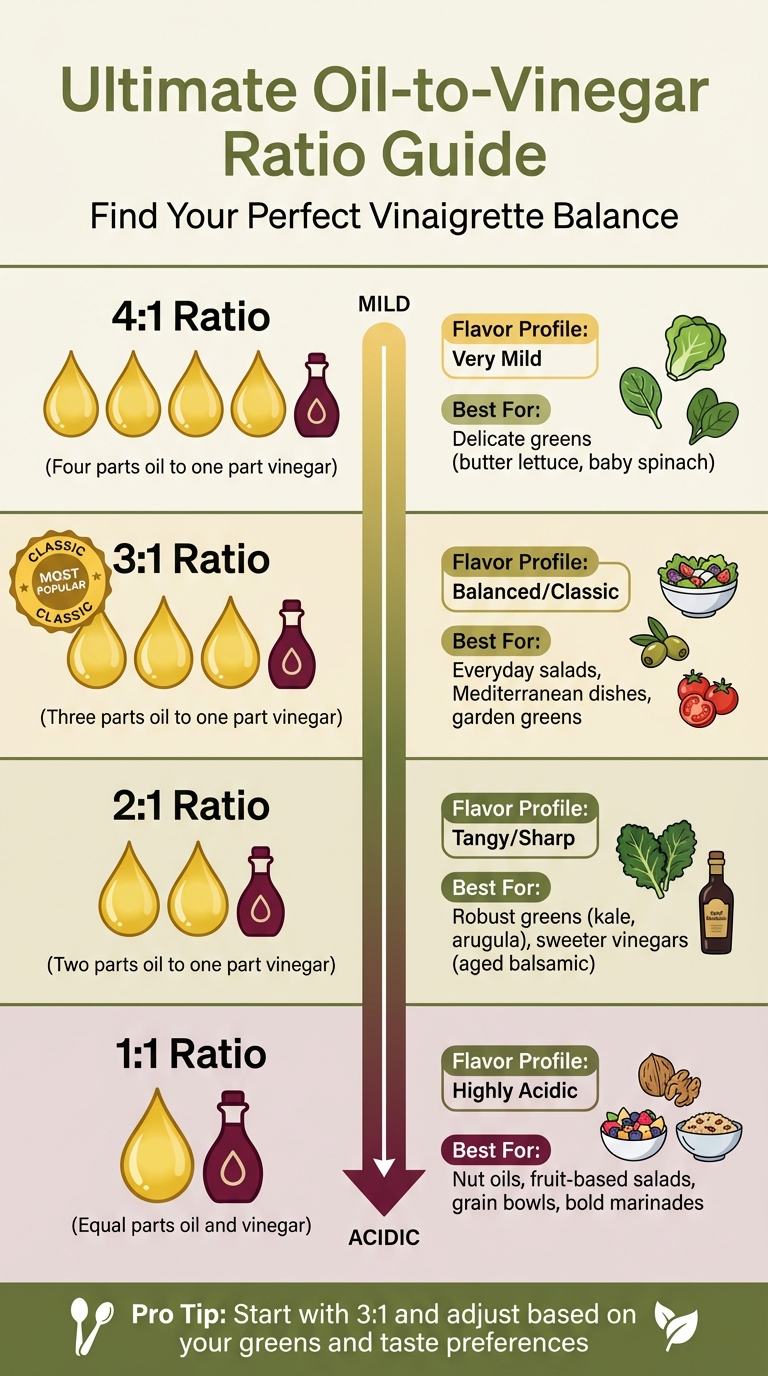
When making vinaigrettes, the oil-to-vinegar ratio determines both flavor and texture. The classic 3:1 ratio (three parts oil to one part vinegar) provides a smooth balance, ensuring the dressing clings well to greens. Adjusting the ratio can tweak flavor intensity:
- 3:1: Balanced, ideal for everyday salads.
- 2:1: Tangier, works with robust greens like kale.
- 1:1: Highly acidic, perfect for grain bowls or fruit salads.
Premium ingredients like Big Horn Olive Oil's Extra Virgin Olive Oils and aged balsamic vinegars enhance these ratios, offering rich, complex flavors. Adding emulsifiers like Dijon mustard or honey helps create a stable, creamy dressing. Start with 3:1 and adjust based on your dish and taste preferences.
Oil to Vinegar Ratio Guide for Vinaigrettes
Common Oil-to-Vinegar Ratios
Classic 3:1 Ratio
The 3:1 ratio - three parts oil to one part vinegar - is the cornerstone of vinaigrette-making. This proportion creates a smooth, balanced dressing where the oil's richness mellows out the vinegar's tanginess.
This ratio works wonderfully for salads with standard garden greens and doubles as a versatile marinade for grilled chicken or a finishing touch for roasted vegetables. When using Big Horn Olive Oil's premium EVOOs, such as Picual or Coratina, the 3:1 ratio highlights their fruity, peppery flavors while the vinegar adds a refreshing brightness. For delicate greens like butter lettuce or baby spinach, you might consider shifting to a 4:1 ratio. This adjustment reduces acidity, ensuring the mild leaves aren’t overwhelmed. These subtle tweaks demonstrate how the basic ratio can adapt to different ingredients.
Sharper Ratios: 2:1 and 1:1
If you’re aiming for a dressing with more tang, reducing the oil results in a sharper flavor. The 2:1 ratio creates a bold, tangy dressing that pairs well with hearty greens like kale, arugula, or radicchio. It’s also a great match for naturally sweeter vinegars. As Olive Lane Oils notes, "sweeter vinegars like aged balsamic may work better at a 2:1 ratio", as their sweetness balances the increased acidity.
For an even brighter, more acidic dressing, the 1:1 ratio is ideal. This ratio is perfect for thinner nut oils like walnut or hazelnut, where the vinegar’s sharpness can take center stage. It’s also a great choice for grain bowls or fruit salads, where the acidity complements richer ingredients. Big Horn Olive Oil's Traditional 18-Year Aged Dark Balsamic Vinegar, with its natural sweetness and syrupy texture, stands out as one of the few vinegars that can handle this reduced oil ratio without tasting overly harsh.
| Ratio | Flavor Profile | Best Applications |
|---|---|---|
| 4:1 | Very Mild | Delicate greens (butter lettuce, baby spinach) |
| 3:1 | Balanced/Classic | Everyday salads, Mediterranean dishes, garden greens |
| 2:1 | Tangy/Sharp | Robust greens (kale, arugula), sweeter vinegars (aged balsamic) |
| 1:1 | Highly Acidic | Nut oils, fruit-based salads, bold marinades |
These ratios not only provide a foundation for creating dressings but also open the door to experimenting with Big Horn Olive Oil’s wide range of products in the next section.
sbb-itb-4066b8e
Customizing Ratios with Big Horn Olive Oil Products
Estate Reserve EVOO with Traditional 18-Year Aged Dark Balsamic Vinegar
The Estate Reserve EVOO brings a bold, peppery flavor that beautifully complements the rich sweetness of Traditional 18-Year Aged Dark Balsamic Vinegar. For a classic dressing, start with a 3:1 ratio - 3 tablespoons of EVOO to 1 tablespoon of balsamic. This ratio works perfectly for everyday salads, offering a balanced blend of robust and sweet flavors.
What makes aged balsamic special is its natural sweetness and syrupy texture, which adds a depth and umami quality that regular wine vinegars can't replicate. For dishes like tomato-based salads, Caprese, or roasted vegetable marinades, this 3:1 combination provides a restaurant-quality balance. Want a bolder, sweeter touch? Try shifting to a 2:1 ratio for a richer, more syrupy profile.
Picual EVOO with Molto Denissimo 25-Year Aged Balsamic Vinegar
If you're after a more herbaceous dressing, Picual EVOO is the way to go. Known for its bold flavor and green tomato notes, it pairs wonderfully with the luxurious Molto Denissimo 25-Year Aged Balsamic Vinegar. For the best results, mix at a 2:1 ratio - 2 tablespoons of oil to 1 tablespoon of vinegar. This balance highlights Picual's robust, herbaceous profile while complementing it with the balsamic's deep sweetness.
This pairing is ideal for hearty dishes like roasted vegetables or grilled meats. It's also a surprising yet delightful drizzle over fruit-based desserts. For a silky finish, whisk the mixture until it's fully emulsified.
Coratina EVOO with Traditional 18-Year Aged Dark Balsamic Vinegar
For those who love bold flavors, Coratina EVOO is a standout choice. Its distinct peppery kick pairs seamlessly with the syrupy richness of Traditional 18-Year Aged Dark Balsamic Vinegar. Begin with a 2:1 ratio - 2 parts Coratina EVOO to 1 part balsamic - to balance the intense peppery notes with the vinegar's complexity.
If the initial mix feels too strong or sweet, you can adjust closer to a 3:1 ratio for a milder dressing. As always, whisk until fully emulsified to ensure the flavors meld perfectly. This combination works well for those who enjoy a dressing with a bold character and depth.
Tips for Perfect Emulsions
Using Emulsifiers
Emulsifiers play a crucial role in keeping oil and vinegar from separating, creating that smooth, creamy mixture we all love. Without them, oil tends to coat your salad greens while the vinegar sinks to the bottom - definitely not ideal.
One of the most popular emulsifiers for vinaigrettes is Dijon mustard. As Leah Colins, Senior Culinary Editor at Serious Eats, explains:
"Mustard is the glue that keeps oil and acid in a functional, if slightly tense, molecular marriage."
Even a small amount - just 1–2 teaspoons - can work wonders in binding the mixture. This simple addition helps maintain the flavor balance achieved through the right oil-to-vinegar ratio using premium extra virgin olive oils and vinegars.
For a more neutral option, mayonnaise is a fantastic choice. Its lecithin-rich egg yolks create a stable emulsion, making it a go-to fix for separated dressings. Just whisk in 1 teaspoon of mayonnaise per 1/2 cup of dressing, and you’re good to go.
Another handy ingredient is honey. While it doesn’t technically emulsify, honey thickens the dressing, slowing down the movement of oil droplets and delaying separation. Pairing honey with mustard adds extra stability, keeping your vinaigrette smooth and cohesive.
Here’s a quick comparison of common emulsifiers:
| Emulsifier | Key Benefit | Best Use |
|---|---|---|
| Dijon Mustard | Strong binding; works with most acids | Classic vinaigrettes |
| Mayonnaise | Creates a very stable emulsion | Creamy dressings or fixing separation |
| Honey | Thickens and balances acidity | Use with mustard for added stability |
| Egg Yolk | Highly effective, rich emulsifier | Thick, rich dressings (can foam) |
Once you’ve chosen your emulsifier, the next step is all about the mixing technique.
Mixing Methods for Consistency
Selecting the right emulsifier is only half the battle - how you mix the ingredients is just as critical. The key to a stable emulsion is breaking the oil into tiny droplets while allowing the emulsifier to surround and stabilize them. Leah Colins emphasizes:
"Slowly introducing the oil while vigorously agitating it creates smaller droplets while giving your emulsifier time to surround and stabilize them. The smaller the droplets, the more stable the emulsion."
Start by whisking together your vinegar, aromatics, and emulsifiers. Once combined, add the oil in a slow, steady stream while whisking vigorously. This "slow drizzle" technique ensures the oil breaks into microscopic droplets.
For long-lasting emulsions - ones that stay stable for days in the fridge - use a blender or food processor. If you’re using an immersion blender, tilt the container slightly so the oil flows directly into the blade stream for optimal mixing.
Lastly, always serve vinaigrettes at room temperature and give them a quick whisk before drizzling to ensure the best texture and consistency.
Recipes Featuring Big Horn Products
Table of Ratios and Recipe Pairings
Here’s how you can put those ratios to good use. These recipes show how the right balance of ingredients can take your dishes to the next level.
| Ratio | Recipe Name | Ingredients | Per Serving Yield | Best Pairing |
|---|---|---|---|---|
| 3:1 | Classic Estate Reserve Vinaigrette | 3 tbsp Estate Reserve Ultra Premium EVOO, 1 tbsp Traditional 18-Year Aged Dark Balsamic Vinegar, 1 tsp Dijon mustard, salt & pepper | 1/4 cup | Caprese salad with fresh mozzarella, tomatoes, and basil |
| 2:1 | Aged Balsamic & Picual Dressing | 2 tbsp Picual Extra Virgin Olive Oil, 1 tbsp Molto Denissimo 25-Year Aged Dark Balsamic Vinegar, 1 tsp honey, 1 tsp Dijon mustard | 3 tbsp | Arugula with shaved Parmesan and walnuts |
These recipes highlight the premium quality of Big Horn Olive Oil's Ultra Premium EVOOs and aged balsamic vinegars.
To prepare each vinaigrette, start by whisking the aged balsamic vinegar with Dijon mustard and any sweetener. Gradually add the olive oil while continuing to whisk until fully emulsified. Season with salt and pepper to your liking, and serve at room temperature for the best taste and texture.
Basic Vinaigrette 3:1 RATIO
Conclusion
The right oil-to-vinegar ratio can turn an ordinary dressing into something truly special. The classic 3:1 ratio offers a harmonious balance of flavor and a silky texture that clings perfectly to greens. If you’re craving a sharper kick, adjusting to a 2:1 or even 1:1 ratio can add that extra tang, ideal for heartier salads or marinades. Just be cautious - too much vinegar can overpower with sourness, while excess oil might feel heavy.
By combining these techniques with Big Horn Olive Oil's Ultra Premium EVOOs and their aged balsamic vinegars from Modena, Italy, you can elevate your dressings even further. Whether you choose the Estate Reserve EVOO with Traditional 18-Year Aged Dark Balsamic or experiment with Picual EVOO and Molto Denissimo 25-Year Aged Balsamic, the vibrant, fresh flavors shine through. These oils are cold-pressed within two hours of harvesting and delivered within three months, ensuring peak flavor and nutritional benefits.
Start with the 3:1 ratio and tweak it to your liking - adding a teaspoon of Dijon mustard can help stabilize the mixture. Remember, the perfect ratio depends on your dish. What complements a delicate butter lettuce salad might not work for a hearty kale bowl. Big Horn's high-quality products make it easy to experiment and discover your ideal balance, turning simple meals into something memorable. Master these techniques and ratios to create dressings that elevate every dish.
FAQs
How do I choose the right ratio for my salad?
For a balanced and smooth dressing, begin with a classic 3:1 ratio of olive oil to vinegar. If you prefer a tangier kick, go for a 2:1 ratio. For a milder, more subtle flavor, adjust to 4:1. The beauty of this is that you can tweak the mix to suit your taste. Experiment a little, and you’ll discover the combination that’s just right for you.
Why does my vinaigrette separate so fast?
Your vinaigrette separates so quickly because it hasn’t been emulsified correctly. To keep the oil and vinegar from splitting apart, try thoroughly whisking the ingredients, giving the dressing a good shake right before serving, or adding an emulsifier like mustard or honey. These steps help stabilize the mixture, so it stays combined longer.
Can I make vinaigrette ahead and store it?
Yes, you can make vinaigrette ahead of time and keep it stored. Place it in an airtight container and refrigerate it to let the flavors blend together for a deeper taste. Just remember to shake or stir it well before using, as the ingredients tend to separate while sitting.