

Roasting Lamb with Garlic and Olive Oil
Roasting lamb with garlic and olive oil is a simple yet flavorful method that delivers a tender, aromatic dish. Here's a quick guide to mastering this recipe:
- Key Ingredients: Semi-boneless leg of lamb, fresh garlic, rosemary, thyme, lemon zest, sea salt, black pepper, and high-quality olive oil.
- Preparation: Trim and clean the lamb, make small pockets for garlic slices, and massage a garlic-herb marinade into the meat.
- Marination: For best results, marinate for 24 hours. If short on time, 30 minutes at room temperature works.
- Cooking: Start roasting at 450°F for 20 minutes, then reduce to 400°F. Use a meat thermometer to ensure desired doneness (e.g., 135°F for medium-rare).
- Rest and Serve: Let the lamb rest for 20 minutes before carving. Pair with sides like garlic mashed potatoes or a Greek salad.
Pro Tip: Use high-quality olive oil, like Big Horn Olive Oil, to enhance the flavors and achieve a golden crust. At $8.99, it’s a great choice for this recipe.
Follow these steps for a perfectly roasted lamb that’s juicy, flavorful, and ready to impress.
Garlic & Herb Roasted Leg of Lamb - EASY, Juicy & Delicious Recipe!!
sbb-itb-4066b8e
Ingredients for Garlic Olive Oil Roasted Lamb
When making Garlic Olive Oil Roasted Lamb, the quality of your ingredients can make or break the dish. Each component contributes to the rich, layered flavors you're aiming for.
Core Ingredients
Start with a semi-boneless leg of lamb (hip and shank bones removed, femur intact). This cut is ideal for roasting - juicy, flavorful, and easy to carve. Look for lamb with pinkish-red, fine-grained meat and creamy-white fat. Steer clear of meat that's muddy-red or fat that looks yellow; these are signs of age or poor handling.
For aromatics, use fresh garlic with firm bulbs and tight, papery skins. Pair it with vibrant rosemary and thyme. Skip any sprigs that are brittle or yellowing - they’ve lost their essential oils and flavor.
Add lemon zest and juice (organic lemons work best), sea salt, and freshly ground black pepper. The lemon provides a bright, citrusy contrast to the lamb’s richness, while sea salt creates a better crust than regular table salt.
| Ingredient | What to Look For |
|---|---|
| Leg of lamb (semi-boneless) | Pinkish-red meat, creamy-white fat, femur intact |
| Garlic | Firm bulbs, tight skin, no green sprouts |
| Fresh rosemary & thyme | Bright green, needles firmly attached |
| Lemon | Organic preferred; bright yellow, firm skin |
| Sea salt & black pepper | Coarse sea salt, freshly ground pepper |
Why Use Big Horn Olive Oil
The marinade’s magic lies in its backbone: Big Horn Olive Oil. This oil carries the garlic, herbs, and lemon zest deep into the lamb for maximum flavor. Recipe tester Helen Doberstein put it perfectly:
"The marinade paste is on the thin side but boy does the aroma of garlic and lemon permeate the kitchen."
That kind of flavor infusion works best with high-quality olive oil. Big Horn Olive Oil offers Ultra Premium Extra Virgin Olive Oils, cold-pressed within two hours of harvesting. This ensures bold flavor, high polyphenol content, and low acidity. Meeting the strictest international standards for EVOO, it’s a simple yet impactful choice for just $8.99.
With these top-notch ingredients, especially the standout Big Horn Olive Oil, you’re all set to whip up a marinade that transforms your lamb into a show-stopping dish.
How to Prepare the Lamb and Garlic Herb Marinade
Once you've gathered your ingredients, it's time to prepare the lamb. The way you handle the meat before cooking can make all the difference in how flavorful and tender it turns out.
Trimming and Cleaning the Lamb
Start by patting the lamb dry with paper towels - this helps the marinade stick better. Next, remove the silver skin, which is the thin, shiny membrane on the surface. Trim away any excessive fat, but leave a thin layer intact to keep the meat juicy during cooking. Use a sharp knife to create small pockets, about 1 inch by ½ inch, across the lamb. These pockets allow the flavors to penetrate deeper into the meat.
Taking the time to properly clean and trim the lamb ensures your marinade will work its magic.
Making the Garlic Herb Marinade
Thinly slice garlic cloves and press the slices into the pockets you created earlier - this step infuses the meat with flavor from the inside out. For the marinade, combine Big Horn Olive Oil with dried dill weed, crushed rosemary, sea salt, and freshly ground black pepper. For a 5-pound leg of lamb, use these measurements:
- 3 teaspoons dried dill weed
- 1 teaspoon crushed rosemary
- 1½ teaspoons sea salt
- ½ teaspoon freshly ground black pepper
Make sure to crush the rosemary before adding it to release its oils. Then, thoroughly massage the marinade into the lamb, working it into the surface and the pockets.
"Don't just smear the rub on the surface, make incisions and work that garlic-herb mixture into the meat. This step takes an extra minute but gives you massive payoff in flavor." - Joanna Cismaru, Recipe Developer, JoCooks
How Long to Marinate for Best Flavor
For the best results, marinate the lamb in the refrigerator for up to 24 hours. If you're short on time, even 30 minutes at room temperature can do the trick. In either case, let the lamb sit at room temperature for at least 30 minutes before roasting - this helps it cook more evenly.
"You can make the rub and season the lamb up to a day in advance, just wrap it up and refrigerate." - Joanna Cismaru, Recipe Developer, JoCooks
Oven Setup and Temperature Guide
Now that the lamb is marinated and ready, it’s time to prepare your oven to ensure the best roasting results.
Preparing the Oven and Roasting Pan
Start by preheating your oven for 20–30 minutes. This step is crucial because a hot oven will sear the lamb right away, sealing in its juices and creating a flavorful garlic-olive oil crust.
Place the oven rack in the lower third of the oven. This setup helps distribute heat evenly and prevents the top of the lamb from browning too quickly. For accuracy, consider using an oven thermometer, as built-in oven dials can sometimes be off by as much as 25°F, which could affect your cooking time.
Choose a sturdy metal roasting pan that's at least 2 inches deep. Leave 2–3 inches of space around the lamb to allow proper air circulation. To ensure even cooking, place the lamb on a wire rack inside the pan. This setup prevents steaming and allows drippings to collect for a pan sauce. Lightly brush the rack with Big Horn Olive Oil before placing the lamb fat-side up. This positioning allows the lamb to self-baste as it cooks.
Once your oven and roasting pan are ready, set the temperature based on how you like your lamb cooked.
Roasting Temperatures and Cook Times
For larger cuts, roast at 325°F for slow, even cooking. If you’re working with smaller cuts and want a crispier exterior, go for 375°F. Serious Eats found that roasting at 325°F can make a leg of lamb up to 20–30% more tender compared to high-heat methods.
Here’s a guide to approximate cook times per pound for a bone-in leg of lamb roasted at 350°F. Remember, the USDA advises cooking lamb to a minimum internal temperature of 145°F, followed by a 3-minute rest.
| Doneness | Internal Temp (°F) | Time per lb (approx.) |
|---|---|---|
| Rare | 125–130 | 20–25 min |
| Medium-Rare | 130–135 | 25–30 min |
| Medium | 140–145 | 30–35 min |
| Well-Done | 160°F+ | 40+ min |
For the most accurate results, use a meat thermometer. Insert it into the thickest part of the lamb, avoiding the bone. Resist the urge to open the oven door repeatedly - use the oven light and a timer instead to keep an eye on progress without losing heat.
Step-by-Step Roasting Instructions
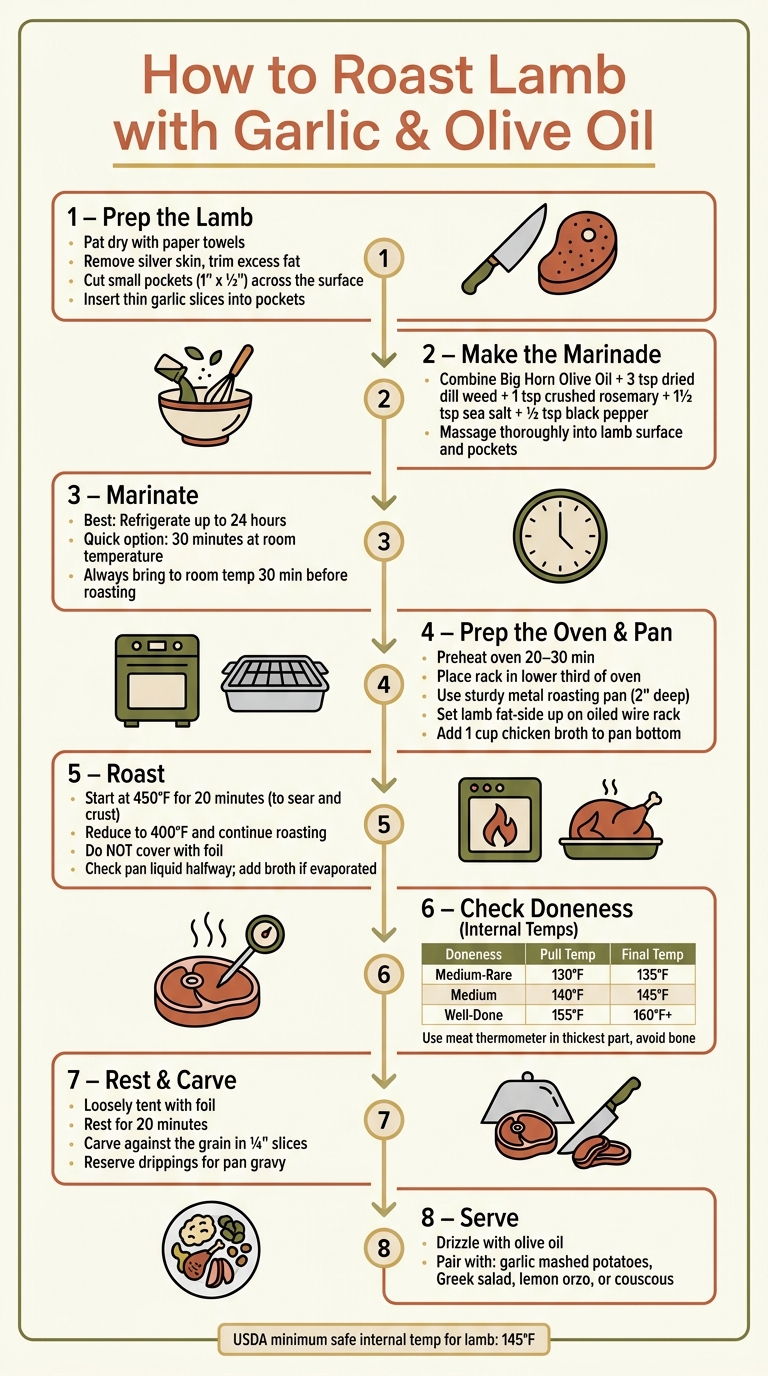
How to Roast Lamb with Garlic & Olive Oil: Step-by-Step Guide
With your lamb prepped and marinated, it's time to get it into the oven and roast it to perfection.
Placing the Lamb in the Oven
Once your oven is fully preheated, transfer the marinated lamb to a wire rack set inside a roasting pan:
"Transfer lamb onto a rack in a roasting pan."
Make sure the lamb is placed fat-side up on the rack, which should be lightly brushed with Big Horn Olive Oil. Elevating the lamb allows the hot air to circulate evenly, creating that golden-brown crust on all sides. The olive oil not only prevents sticking but also enhances the flavor, helping the marinade soak in deeply. Before putting the pan in the oven, pour about 1 cup of chicken broth or water into the bottom of the pan. This step keeps any drippings from burning and lays the foundation for a delicious pan sauce later.
Start roasting at 450°F for 20 minutes to sear the lamb, then reduce the heat to 400°F to finish cooking.
Keep an eye on the roast to ensure you maintain that crisp, flavorful exterior.
Basting and Monitoring the Lamb
Thanks to the marinade and fat cap, your lamb will stay moist with minimal basting. Avoid covering it with foil, as this will soften the crust you've worked to develop:
"I did NOT tent it as I like a bit of crust on my meat." - MeriLee, Allrecipes Member
Check the liquid in the pan about halfway through the cooking process. If it has evaporated, add more broth to prevent scorching. Use a reliable meat thermometer to track the lamb's progress and avoid overcooking:
"Use a meat thermometer and trust it. Lamb can go from perfect to overcooked quickly."
The thermometer will be your best tool for nailing the perfect doneness.
Checking for Doneness
Start checking the lamb’s internal temperature about 15 minutes before you expect it to be done. Insert an instant-read thermometer into the thickest part of the meat, being careful to avoid the bone, as it can give an inaccurate reading.
Remove the lamb from the oven when it measures 5°F below your desired final temperature, as the heat will continue to rise slightly while the meat rests. For reference, aim for 135°F for medium-rare or 145°F for medium. The USDA recommends a minimum safe temperature of 145°F for lamb roasts. Here's a quick guide:
| Doneness | Pull-from-Oven Temp | Final Resting Temp |
|---|---|---|
| Medium-Rare | 130°F | 135°F |
| Medium | 140°F | 145°F |
| Well-Done | 155°F | 160°F+ |
Resist the urge to cut into the lamb immediately after removing it from the oven. Let it rest to keep the juices locked in for a tender and flavorful result.
Resting, Carving, and Serving the Lamb
Resting the Lamb After Roasting
Once your lamb roast is out of the oven, it’s essential to let it rest before slicing. This step ensures the juices stay inside, giving you a tender, flavorful roast.
"Always let your roast rest for at least 20 minutes before carving. This locks in the juices and keeps it beautifully tender." - Joanna Cismaru, Recipe Developer, Jo Cooks
To maintain the roast's warmth without softening the crust, loosely tent it with aluminum foil during the resting period. After the rest, you’re ready to carve and reveal the succulent interior.
How to Carve the Lamb
After resting for about 20 minutes, transfer the lamb to a sturdy cutting board. Use a sharp knife to carve the meat, ensuring you slice against the grain for maximum tenderness.
If you’re working with a bone-in leg, carefully cut around the bone in thin, even slices. Aim for slices roughly ¼ inch thick for the best texture and presentation. While carving, don’t forget about the drippings in the roasting pan - they’re perfect for creating a quick red wine pan gravy that enhances the lamb’s rich, savory flavor. Once carved, it’s time to think about the perfect sides to complete your meal.
What to Serve with Roasted Lamb
The bold flavors of garlic and olive oil in your roasted lamb pair beautifully with well-chosen sides. For a hearty option, garlic mashed potatoes or lemon-roasted Greek-style potatoes are excellent choices, soaking up every drop of pan gravy. If you’re looking for something lighter, a traditional Greek salad - featuring tomatoes, cucumbers, olives, and feta - adds a refreshing acidity that balances the richness of the lamb.
To keep the Mediterranean theme going, grains like lemon orzo with asparagus or a simple couscous work wonderfully. For a finishing touch, drizzle each plate with Big Horn Olive Oil Ultra Premium Extra Virgin Olive Oil. This final flourish ties all the flavors together, giving your dish a polished and cohesive presentation.
Conclusion: Getting the Best Results from Your Lamb Roast
A perfect lamb roast comes down to a few key steps. Start by letting the lamb sit at room temperature for about 30 minutes before roasting. Use the high-to-low roasting method - begin at 450°F for 20 minutes to create a flavorful crust, then lower the temperature to 400°F to ensure the inside stays tender and juicy.
Every detail matters, from preparation to the final presentation. For instance, using high-quality olive oil can elevate your dish significantly. Olive oil is more than just a cooking fat - it’s the foundation that enhances every flavor in the lamb. Big Horn Olive Oil Ultra Premium Extra Virgin Olive Oil is a fantastic choice. Cold-pressed within two hours of harvest, it delivers a fresh, clean taste that withstands high roasting temperatures. Starting at just $8.99, it’s a simple upgrade that adds depth and richness to your roast, especially in achieving that golden, crispy exterior.
For the best results, remove the lamb from the oven when it reaches 135°F for medium-rare or 145°F for medium. Then, let it rest for a full 20 minutes before carving. These final steps are crucial to preserving all the flavors and textures you’ve worked hard to create.
Ready to get started? Your perfect lamb roast awaits.
FAQs
Can I use boneless lamb instead?
Boneless lamb is an excellent choice for roasting, especially when paired with garlic and olive oil. Since it lacks the bone, it tends to cook a bit quicker than bone-in lamb. To get it just right, monitor the internal temperature closely to achieve your preferred level of doneness.
How do I keep the lamb from drying out?
To keep your lamb juicy while roasting, start by coating it with olive oil - garlic-infused extra virgin olive oil works beautifully for added flavor. Make sure to baste the lamb periodically during cooking to lock in moisture. Covering the lamb tightly with foil is another great way to retain its natural juices and ensure even cooking. Once it’s out of the oven, let the lamb rest for a while. This allows the juices to redistribute, leaving you with tender, flavorful meat.
What’s the best way to use the pan drippings?
The pan drippings from roasting lamb with garlic and olive oil are liquid gold when it comes to flavor. The best way to use them? Turn them into a rich sauce or gravy. Start by deglazing the pan with wine, broth, or even water. As you do, make sure to scrape up all those browned bits stuck to the bottom - that’s where the deep, savory flavors hide. The result is a mouthwatering sauce that perfectly complements your sliced lamb.