

Vanilla Balsamic Sauce for Desserts
Yes - you can turn 1 cup of balsamic vinegar into a dessert sauce in about 10 to 15 minutes. I’d use low heat, add a little sugar or honey, stir in vanilla after cooking, and stop when the sauce looks slightly loose because it thickens as it cools.
If I wanted the short version, it would be this:
- Best use: ice cream, cheesecake, pound cake, strawberries, peaches, and roasted fruit
- Main flavor: sweet, tangy, dark, and lightly vanilla-scented
- Best vinegar for rich desserts: dark aged balsamic
- Best vinegar for pale desserts: white balsamic
- Yield: about 1/4 to 1/3 cup from 1 cup
- Cook time: about 10–15 minutes
- Storage: about 2–3 months in the fridge, or up to 3 months frozen
What matters most is keeping the sauce smooth and pourable. If I boil it too hard, it can scorch. If I cook it too long, it can turn sticky fast. A spoon test helps: when it coats the back of a spoon, it’s close.
Quick comparison
| Option | Color | Taste | Best on |
|---|---|---|---|
| Dark balsamic | Deep brown | Rich, molasses-like, tangy | Ice cream, cake, cheesecake |
| White balsamic | Pale gold | Lighter, cleaner, mildly tart | Fruit, light-colored desserts |
| Plain sauce | Glossy and smooth | Balsamic + vanilla | Drizzling |
| Fruit sauce | Thick and spoonable | Fruit-forward with tang | Cheesecake, pound cake, yogurt |
I’d think of this sauce as a simple way to give dessert more contrast: sweetness, acidity, and a warm vanilla note in one quick pan sauce.
Ingredients and Equipment You Need
You only need a handful of ingredients and a few basic kitchen tools.
Ingredients in U.S. Measurements
| Ingredient | U.S. Measurement | Purpose |
|---|---|---|
| Balsamic vinegar | 1 cup | Base of the sauce |
| Sugar (granulated or brown) or honey | 1–2 tablespoons | Balances acidity and aids thickening |
| Vanilla extract | 1 teaspoon (or 1 whole vanilla bean) | Main flavor |
| Salt | Small pinch | Enhances sweetness and depth |
| Butter (optional) | 2 tablespoons | Adds richness |
| Lemon zest or juice | To taste (optional) | Adds a bright, citrusy top note |
Butter gives the sauce a silkier finish. Lemon zest or a small splash of lemon juice works especially well if you're serving it over fruit-based desserts.
How to Choose a Quality Balsamic Vinegar
The balsamic vinegar you pick has a big effect on the final sauce. An aged balsamic usually has more body and a deeper taste, which makes it a good fit for dessert sauces.
Look for a well-aged dark balsamic from Modena with a clean aroma and balanced sweetness. Before you cook, check the bottle for any off smell or visible mold and discard if found.
Saucepan, Measuring Tools, and the Spoon Test
Use a small heavy-bottom saucepan, measuring cups and spoons, and a whisk or heatproof spatula.
To check thickness, use the spoon test: dip a metal spoon into the simmering sauce and hold it horizontally. If the liquid coats the back of the spoon and doesn't run off right away, it's ready.
Once the vinegar, sweetener, and tools are set, you're ready to head to the stove and start the reduction.
sbb-itb-4066b8e
How to Make Vanilla Balsamic Sauce Step by Step
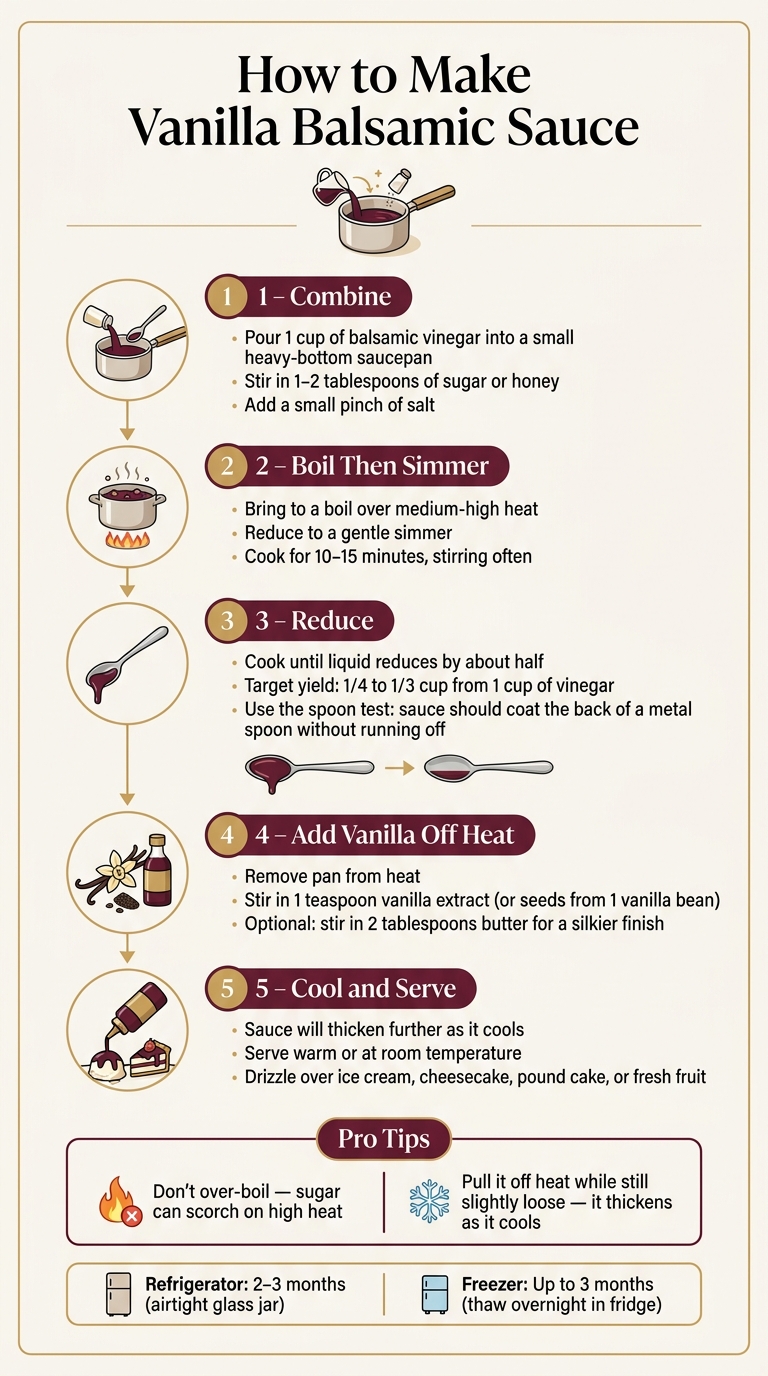
How to Make Vanilla Balsamic Sauce: Step-by-Step Guide
Combine, Simmer, and Reduce
Pour 1 cup of balsamic vinegar into a small saucepan, stir in the sweetener, and bring it to a boil over medium-high heat. Then lower the heat to a gentle simmer and cook for 10–15 minutes, stirring often, until the liquid reduces by about half and coats the back of a spoon. For a dessert drizzle, you want it glossy and pourable, not sticky.
A good rule of thumb: 1 cup of balsamic vinegar usually cooks down to about 1/4 to 1/3 cup of finished sauce. And don’t panic if it still seems a bit loose in the pan. The sauce will thicken more as it cools.
Once the base has reduced, add the vanilla off the heat.
When to Add Vanilla for the Best Flavor
If you’re using vanilla extract, stir it in after you take the pan off the heat. That helps keep the vanilla flavor in the sauce instead of cooking it off during the boil.
How to Avoid Burning or Over-Thickening
Keep the simmer low and steady. If it boils too hard, the sugar can scorch. Stir often so the sweetener doesn’t stick, and take the sauce off the heat just before it reaches the texture you want. It will keep thickening as it cools.
If the sauce gets too thick in the fridge, let it sit at room temperature for 10–15 minutes before drizzling.
From here, you can leave it plain or turn it into a fruit sauce.
Variations and Dessert Pairings
Fruit Versions with Strawberries or Mixed Berries
For a fruitier take, cook 2 cups of mixed berries with 2 tablespoons of vanilla balsamic, 2 tablespoons of honey or brown sugar, and a little vanilla for about 10 minutes, until the fruit softens and the sauce turns thick enough to spoon. The balsamic adds a bit of acid, which keeps the flavor balanced instead of letting it tip too sweet.
Want a chunkier texture? Pulse it briefly. If you'd rather have it silky, puree it a little longer. A small pinch of cinnamon brings a little warmth without adding more sugar.
How to Serve It on Ice Cream, Cake, and Fruit
Use the plain version when you want a light, clean drizzle. Go with the fruit version when you want a topping with more body. Both work well over vanilla bean ice cream, pound cake, cheesecake, or fresh fruit.
It also tastes great over:
- Sliced peaches
- Strawberries
- Meringues
To finish the plate, add a little mint or lemon zest.
Plain Drizzle vs. Fruit Sauce: A Quick Comparison
Choose the version that fits the dessert's texture and look.
| Feature | Plain drizzle | Fruit sauce |
|---|---|---|
| Texture | Glossy, syrupy, and smooth | Thick, jammy, and spoonable |
| Primary Flavor | Concentrated balsamic with vanilla notes | Fruit-forward with a tangy finish |
| Best For | Vanilla bean ice cream, meringues, or sliced peaches | Pound cake, cheesecake, or yogurt |
If you're after neat, polished lines on a plated dessert, the plain drizzle is the better fit. If you want a topping that stays put on cheesecake, the fruit version makes more sense.
Storage, Reheating, and Key Takeaways
How to Store the Sauce Safely
After the sauce cools, save any extra for later. Let it cool all the way, then pour it into an airtight glass jar or container and place it in the fridge. Before using it again, check for mold, an off smell, discoloration, or a slimy texture. If the sauce contains butter, chill it first so the fat hardens, then skim that layer off before storing.
Reheating the Sauce
If the sauce gets firm in the fridge, warm only the amount you plan to use. Heat it slowly over low heat and stir often until it loosens up and becomes pourable. High heat can burn the sauce or cook it down too much, so keep things gentle.
Before Serving
Use a good aged balsamic if you want the best depth of flavor. Keep the heat low from start to finish, and take the sauce off the burner when it looks a little thinner than you want. It will thicken more as it cools. For the neatest drizzle, serve it warm or at room temperature.
| Storage Method | Shelf Life | Notes |
|---|---|---|
| Refrigerator | 2–3 months | Store in airtight glass; sauce thickens as it chills. |
| Freezer | Up to 3 months | Freeze in a sealed container; thaw overnight in the fridge before rewarming. |
FAQs
Can I make it ahead?
Yes. Let the sauce cool all the way to room temperature first. Then pour it into an airtight glass container and store it in the fridge for up to 2 months.
If the sauce is cream-based, the storage window is much shorter. In that case, use it within 3 to 4 days.
Before serving, let it sit out at room temperature for 15 to 20 minutes. If it gets too thick, warm it gently in a water bath until it reaches about 110°F.
What if it gets too thick?
If your sauce gets too thick, add 1/4 teaspoon of hot water at a time, ideally around 180°F, and stir until it turns smooth again.
You can also warm the container in a 110°F water bath for 3 to 5 minutes. Skip the microwave and any direct high heat. The sauce is ready when it coats the back of a spoon and drips off slowly.
Can I use vanilla bean instead?
Yes. You can add vanilla bean or vanilla extract to deepen the sauce’s flavor.
If you’re using Big Horn Olive Oil’s Cara-Cara Orange and Vanilla White Balsamic Vinegar, those flavors are already well balanced. But a bit of fresh vanilla bean or extract can add more aroma and depth.
Whisk it into the balsamic base as it reduces so the vanilla has time to infuse the sauce all the way through.