

Vanilla-Infused Olive Oil: Flavor Guide
Vanilla-infused olive oil tastes like smooth EVOO with warm vanilla bean, light caramel, soft floral notes, and a mild peppery finish. I’d use it most for finishing, not heavy cooking, because heat can dull the aroma.
If you want the short answer, here it is:
- Flavor: vanilla bean, cocoa, almond, light sweetness, and olive fruit
- Best base oil: mild EVOO, often Arbequina
- Best uses: cakes, brownies, yogurt, ice cream, fruit, cheese, seafood, and roasted squash
- Best method: cold infusion for 1 to 4 weeks for a softer taste; warm infusion in about 5 minutes if kept under 140°F
- Storage: dark glass, tightly sealed, in a cool spot at 57°F to 70°F
- Shelf life: opened bottles are often best within 4 to 6 months
- Safety check: throw it out if it smells like cardboard, crayons, stale nuts, grease, metal, or turns cloudy with bubbling or mold
What stands out most is how vanilla shifts plain olive oil. It lowers the sharp edge, makes the mouthfeel more silky, and lets the oil work in both sweet and savory dishes without tasting sugary.
A few numbers matter here too: vanilla has 250+ flavor compounds, and that helps explain why the oil can smell layered instead of one-note. For baking, I’d also keep the 3:4 butter-to-oil swap in mind.
| Topic | What to know |
|---|---|
| Taste | Warm vanilla, floral, caramel, cocoa, almond, soft pepper finish |
| Texture | Silky and velvety, not heavy |
| Best use | Finishing oil for sweet and savory dishes |
| Quality sign | Clean vanilla smell with lively olive notes |
| Bad sign | Musty, rancid, metallic, greasy, or flat aroma |
| Storage | Cool, dark place; dark glass bottle |
If I had to sum it up in one line: buy or make it only with good EVOO, use it where the aroma can stay on top, and store it with care.
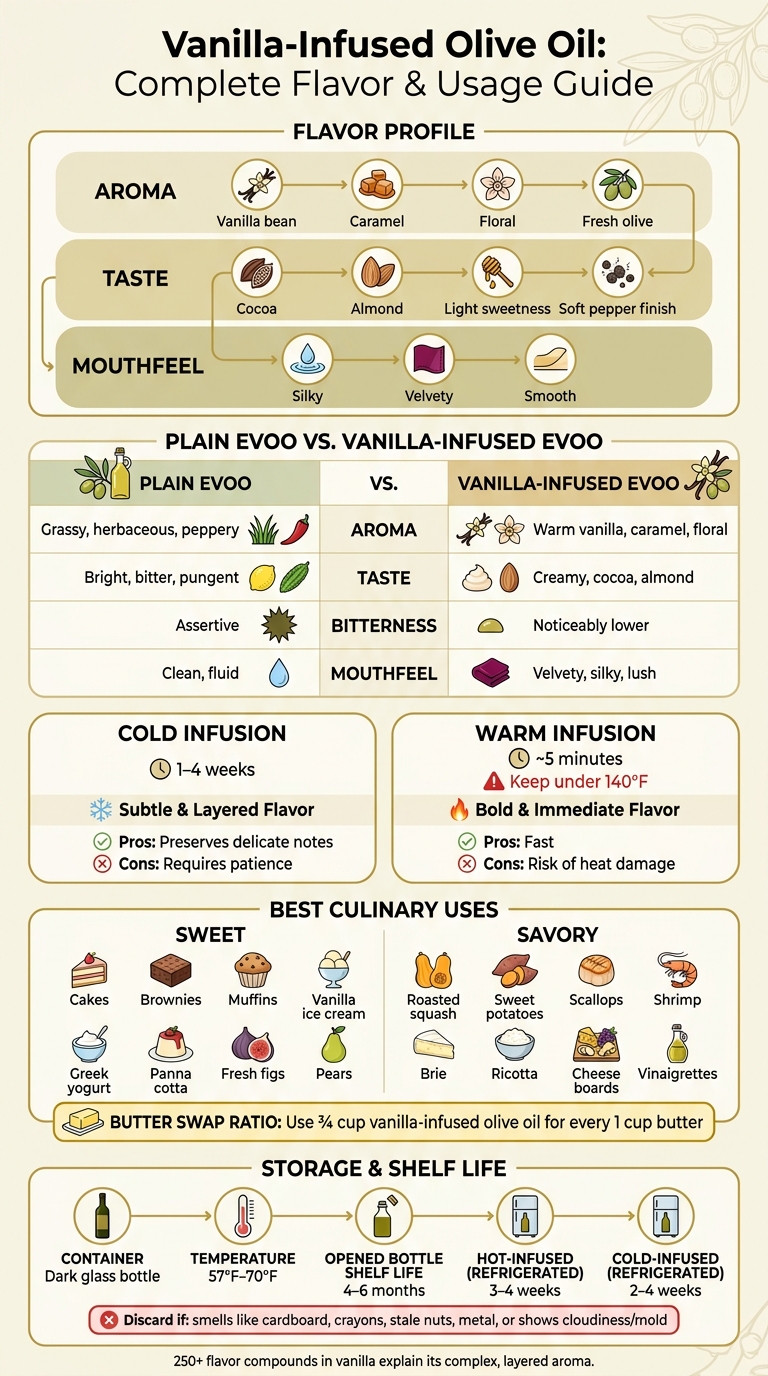
Vanilla-Infused Olive Oil vs. Plain EVOO: Flavor, Storage & Best Uses
Flavor Profile: Aroma, Taste, and Mouthfeel
The aroma starts with fresh vanilla bean, caramel, and soft floral notes. On the palate, it comes across as smooth and layered, with cocoa, almond, and light sweetness. The finish lands with a light peppery note.
Texture matters here too. This oil feels velvety and silky - it coats the palate without turning heavy or greasy. Put it all together, and you get a smoother, more dessert-friendly EVOO with a softer finish. That profile makes more sense when you compare it with plain olive oil.
How Vanilla Changes Plain EVOO
Vanilla does more than add sweetness. It softens the bitterness found in standard EVOO and gives the oil a more luxurious mouthfeel.
| Feature | Plain EVOO | Vanilla-Infused EVOO |
|---|---|---|
| Aroma | Grassy, herbaceous, or peppery | Warm vanilla bean, caramel, and floral perfume |
| Taste | Bright, bitter, and pungent | Creamy sweetness with notes of cocoa and almond |
| Bitterness | Can be assertive or aggressive depending on variety | Perceived bitterness is lower |
| Mouthfeel | Clean and fluid | Velvety, silky, and lush |
Those shifts come from two things: the base oil and the way the infusion is made. Both shape the final balance.
Best Base Oil Styles for a Balanced Vanilla Flavor
Mild, fruity EVOOs such as Arbequina tend to work best for vanilla infusion. If the starting oil is too bitter, it can overpower the vanilla and throw the whole profile off. A good base oil keeps the vanilla balanced and clean. From there, the production method helps explain why those differences show up so clearly.
sbb-itb-4066b8e
How Vanilla-Infused Olive Oil Is Made and How to Judge Quality
Vanilla-infused olive oil starts with split vanilla beans steeped in extra virgin olive oil, so the beans’ oil-soluble aromatics move into the oil. That sounds simple, and it is—a philosophy we live by in our story. But the method matters a lot. It shapes whether the final oil tastes soft and layered, bold and punchy, or dull and worn out.
Cold Infusion vs. Warm Infusion
The two main methods mostly differ in speed and flavor profile. Cold infusion takes longer and keeps things gentle. Warm infusion works fast and pushes out flavor sooner.
| Method | Typical Time | Flavor Intensity | Pros | Cons |
|---|---|---|---|---|
| Cold Infusion | 1–4 weeks | Subtle to moderate | Keeps delicate vanilla notes intact; no heat-related damage | Takes time; shake the bottle gently every few days |
| Warm Infusion | About 5 minutes | Immediate and bold | Fast; flavor compounds release fast | Can damage the oil if the temperature goes above 140°F |
Cold infusion tends to give you a softer, more layered result. Warm infusion is the shortcut. It can taste stronger right away, but there’s less room for error. Push the heat too far, and the oil can lose the very notes you want to keep.
How to Spot Fresh, Tired, or Faulty Oil
You can learn a lot from a quick smell-and-taste check. Rub a drop between your fingers to warm it, then smell it. Fresh vanilla-infused oil should give off clean vanilla and fresh olive notes. If it smells musty, like old cardboard, or greasy, that usually points to oxidized oil or an infusion that got too hot.
| Attribute | Fresh / High Quality | Tired or Faulty | Typical Causes |
|---|---|---|---|
| Aroma | Clean vanilla, floral warmth, fresh olive notes | Musty, cardboard-like, or odorless | Oxidation, light exposure, or old base oil |
| Taste | Balanced sweetness, subtle peppery finish | Flat, bitter, rancid, or metallic | Poor base oil or excessive heat during infusion |
| Mouthfeel | Silky, smooth, and rounded | Heavy, greasy, or thin | Degraded oil structure or low-grade base oil |
A muted aroma or short finish often comes back to the base oil. If the olive oil lacks life, the infusion usually will too.
Why Base EVOO Quality Affects the Final Flavor
Fresh, cold-pressed EVOO brings natural antioxidants and phenolic compounds that help the infusion stay stable longer and taste cleaner. That gives the vanilla a better stage to stand on.
Low-grade or old oil does the opposite. It carries its flaws straight into the bottle. And here’s the plain truth: vanilla can add aroma, but it can’t hide rancid oil.
Best Culinary Uses and Pairings
Vanilla-infused olive oil can do more than people expect. It fits into sweet dishes with ease, but it also brings a soft, fragrant edge to savory food.
Baking and Desserts
In baking, you can swap it in for butter to make cakes, muffins, brownies, and quick breads more moist, with a light sugar-cookie aroma. Use a 3:4 butter-to-oil ratio in baking.
| Butter | Vanilla-Infused Olive Oil |
|---|---|
| 1 tablespoon | 2¼ teaspoons |
| 2 tablespoons | 1½ tablespoons |
| ¼ cup | 3 tablespoons |
| ½ cup | ¼ cup + 2 tablespoons |
| 1 cup | ¾ cup |
It’s also great as a finishing drizzle over vanilla ice cream, gelato, panna cotta, or Greek yogurt. Sometimes that small final touch is what makes dessert feel a bit more special.
Savory Pairings That Work with Vanilla Notes
This oil isn’t limited to sweets. On savory dishes, it works best as a finishing oil so the vanilla aroma stays clear instead of fading into the background. Think of it as the last brushstroke, not the whole painting.
Use it where that aroma can sit right on top of the dish: warm roasted vegetables, seared seafood, cheese, and fruit.
| Food | Flavor Effect | Recommended Use | Serving Temp |
|---|---|---|---|
| Roasted squash and sweet potatoes | Brings out caramel notes | Drizzle before or after roasting | Warm |
| Pork and poultry glazes | Adds smoky-sweet depth | Light glaze or finishing drizzle | Hot |
| Seafood (scallops, shrimp) | Highlights natural sweetness | Brush before grilling or finish after searing | Warm |
| Mild cheeses such as brie and ricotta | Adds floral, creamy contrast | Drizzle over cheese with figs on a board | Room temperature |
| Fresh figs, pears, and apples | Bridges sweet and earthy notes | Drizzle over fruit with prosciutto and arugula | Room temperature |
Dressings, Drizzles, and Pantry Pairings
It also works well in simple vinaigrettes. Whisk it with balsamic or white wine vinegar, Dijon, and sea salt for a quick dressing over spinach, arugula, or sliced strawberries.
Some pairings work especially well: strawberry, D'Anjou pear, dark chocolate, and blood orange balsamic or Blood Orange Olive Oil. A drizzle of vanilla-infused oil next to balsamic is one of the easiest ways to finish a cheese board or a bowl of yogurt.
Next, storage determines how long that flavor stays fresh.
Storage, Safety, and Key Takeaways
How to Store Vanilla-Infused Olive Oil
Good storage helps protect the olive oil and the vanilla aroma. Use a dark glass bottle, seal it tightly, and keep it in a cool, dark pantry or cabinet away from windows and the stove. The best storage range is 57°F to 70°F.
For homemade infusions, refrigeration helps slow flavor loss. Once opened, bottles are usually best within 4 to 6 months. Hot-infused oils last 3 to 4 weeks, while cold-infused oils last 2 to 4 weeks in the refrigerator. It also helps to label the bottle with the opening date. That small step can save you from guessing later.
Before using it, take a quick look and smell test:
| Risk | Cause | Prevention | Recommended Action |
|---|---|---|---|
| Rancidity | Light, heat, or oxygen exposure | Store in dark glass, keep it in a cool pantry, and seal it tightly | Discard if it smells like crayons or stale nuts |
| Off-Odors | Tired base oil or poor infusion hygiene | Start with premium EVOO and use sterilized, bone-dry containers | Discard if the aroma turns musty, sour, greasy, or metallic |
| Contamination | Moisture from fresh ingredients or dirty containers | Dry all equipment thoroughly and refrigerate homemade infusions | Discard immediately if bubbling, cloudiness, or visible mold appears |
What to Remember Before You Cook With It
Use vanilla-infused olive oil only when the aroma smells clean and vanilla-forward. The flavor should feel buttery and balanced, not sugary or fake. If it smells greasy, metallic, musty, or sour, throw it out.
The base EVOO matters too. A mild, smooth Arbequina extra virgin olive oil lets the vanilla stand out without taking over the whole dish. That’s part of why this oil works in both sweet and savory cooking. And if you’re buying a bottle, pick a size you can finish within 4 to 6 months.
FAQs
Can I cook with vanilla-infused olive oil?
Yes. Vanilla-infused olive oil works in both sweet and savory dishes, which is part of what makes it so handy.
You can use it in baking instead of butter or vegetable oil. It’s also great drizzled over roasted vegetables, whisked into vinaigrettes, or brushed on as a glaze for seafood and pork. On the sweet side, it shines as a finishing oil for yogurt, ice cream, and fresh fruit.
How do I know if vanilla-infused olive oil has gone bad?
Store vanilla-infused olive oil in a cool, dark place or in the refrigerator. That helps shield it from light and heat, which can affect the oil’s quality.
When stored the right way, it usually keeps for up to three months. If the warm, pleasant vanilla aroma starts to change, or the oil takes on an off or rancid smell, it’s time to toss it.
What foods pair best with vanilla-infused olive oil?
Vanilla-infused olive oil works in both sweet and savory dishes, which is part of what makes it so fun to use.
For sweeter options, try drizzling it over pancakes, waffles, French toast, oatmeal, yogurt, fresh fruit, ice cream, custards, or ganache. It adds a soft vanilla note without making the dish feel heavy.
It also fits nicely into baking. You can use it as a butter substitute in cookies, brownies, muffins, cakes, and quick breads.
On the savory side, it pairs well with roasted carrots or squash, seafood, pork, and salads made with balsamic vinaigrette.