

Why Balsamic Vinegar Elevates Roasted Vegetables
Balsamic vinegar transforms roasted vegetables by adding sweetness, acidity, and a caramelized glaze that enhances their natural flavors. When roasted at high heat, the vinegar condenses into a syrupy coating, balancing earthy, starchy, and savory notes. Here's why it works:
- Flavor Boost: Its mix of sweetness and tang sharpens and complements vegetables like carrots, Brussels sprouts, or zucchini.
- Caramelization: Under heat, balsamic's sugars thicken into a glossy glaze, softening acidity while adding depth.
- Versatility: Pairs well with root vegetables, cruciferous options, and tender varieties, adapting to different textures.
For best results, use a 2:1 olive oil-to-balsamic ratio, roast at 400°F–425°F, and finish with a drizzle of aged balsamic for added complexity. Simple garnishes like fresh herbs or cheese can further elevate the dish. Premium balsamic options, such as aged or infused varieties, enhance the experience even more.
Why Balsamic Vinegar Works So Well with Roasted Vegetables
The Flavor Profile of Balsamic Vinegar
Balsamic vinegar is more than just tangy - it's a blend of sweetness, acidity, and savory depth that brings out the best in vegetables. This complexity stems from its production process: high-quality balsamic vinegar is made from cooked grape must and aged in wooden barrels. Traditional PDO balsamic, for instance, is aged for at least 12 years, allowing its sugars to concentrate and its flavor to deepen. This unique balance of acidity and sweetness enhances the natural flavors of vegetables. For example, it sharpens the sweetness of carrots, beets, and sweet potatoes, while its umami undertones add richness to earthy vegetables like mushrooms and Brussels sprouts. These are flavor dimensions that simple oil and salt just can't replicate.
"Balsamic vinegar isn't just another vinegar; it's a symphony of sweetness and acidity, crafted through a meticulous aging process." - Brynlee, Beingcreators
This intricate profile also sets the stage for a magical transformation during roasting.
How Balsamic Vinegar Caramelizes in the Oven
When exposed to high heat (around 400°F–475°F), balsamic vinegar works its magic. The heat causes water to evaporate, leaving behind concentrated sugars that thicken into a syrupy glaze. At the same time, the Maillard reaction creates a rich, caramelized crust on the vegetables. This process softens the vinegar's sharp acidity, turning it into a mellow sweetness with just enough tang to keep things exciting.
"Heat mellows the sharp acidity of raw vinegar, transforming it into a mellow, caramelized sweetness." - Casey, Arora's Recipe
The result? Vegetables that are not only delicious but also beautifully glazed and packed with flavor.
Matching Balsamic Vinegar to Vegetable Textures and Flavors
Not all vegetables respond to balsamic vinegar in the same way. Each type interacts differently based on its texture and flavor profile:
| Vegetable Type | How Balsamic Helps | Best Timing |
|---|---|---|
| Root Vegetables (Carrots, Sweet Potatoes) | Brings out their natural sweetness and balances starchiness | Toss before roasting for rich caramelization |
| Cruciferous (Brussels Sprouts, Broccoli) | Reduces bitterness and creates crispy, glazed edges | Drizzle midway or after roasting |
| Tender/Watery (Zucchini, Bell Peppers) | Forms a light glaze as moisture evaporates | Toss before roasting |
| Alliums (Red Onions) | Turns sharp flavors into a jammy, sweet richness | Roast with balsamic from the start |
For vegetables prone to drying out, like broccoli or asparagus, consider adding balsamic after roasting. This keeps the finish bright and tangy without risking a burnt glaze.
Roasted Vegetables with Balsamic Glaze | Easy & Delicious Recipe
The Best Vegetables to Roast with Balsamic Vinegar
Roasting vegetables with balsamic vinegar brings out their natural flavors in unique ways. Factors like texture, water content, and sugar levels influence how each vegetable reacts to the oven's heat. Understanding these differences lets you create perfectly roasted veggies, whether you're working with root, cruciferous, or tender varieties.
Root Vegetables
Root vegetables are ideal for balsamic roasting. Carrots, parsnips, sweet potatoes, and beets hold up well to high heat, allowing their natural sugars to combine with the vinegar for a rich, caramelized glaze. The result? A deep amber coating that's both sweet and tangy.
"Root vegetables work particularly well as they stand up to the roasting process beautifully." - Carluccio's
For best results, cut them into uniform ¼-inch slices or chunks. Roast at 400°F–425°F for 35–45 minutes. Beets should be roasted separately to avoid their vibrant color staining other vegetables.
Cruciferous Vegetables
Brussels sprouts, broccoli, and cauliflower pair naturally with balsamic vinegar. Their florets catch the glaze as it reduces, while the vinegar's acidity balances their earthy, sometimes bitter flavor. This creates a smoky char on the outside and a softer, nutty interior.
These vegetables roast quickly - about 20–30 minutes. If you're roasting them alongside root vegetables, add the cruciferous ones halfway through to avoid over-charring while still achieving that glossy, caramelized finish.
Tender Vegetables
Zucchini, bell peppers, and asparagus require a more delicate touch. These softer vegetables roast quickly and can become mushy if overcooked. Balsamic vinegar forms a light, glossy coating on them rather than the deep caramelization seen with heartier vegetables.
The trick is in the cut. As Beth Moncel, Founder of Budget Bytes, advises:
"Hard vegetables should be cut into small pieces and soft vegetables into large pieces to help them roast at a similar rate."
Cut tender vegetables into 1½- to 2-inch pieces and roast for just 15–20 minutes. Avoid pre-marinating them with balsamic vinegar, as the salt and acid can draw out moisture, causing them to steam instead of roast.
How to Make a Simple Balsamic Roasting Mixture
Getting the balance of balsamic vinegar and olive oil just right can make a big difference in how your roasted vegetables turn out. This mixture not only ensures even coating but also helps create that caramelized glaze and rich flavor everyone loves.
Basic Balsamic and Olive Oil Blend
The ideal starting point is a 2:1 ratio of olive oil to balsamic vinegar - think 4 tablespoons of olive oil to 2 tablespoons of vinegar. This mix provides enough oil to coat the vegetables and keeps them from drying out during roasting.
"Without enough oil, the vegetables will shrivel and dry instead of caramelize." - Beth Moncel, Founder, Budget Bytes
For the best results, stick to high-quality extra virgin olive oil (EVOO). Brands like Big Horn Olive Oil offer cold-pressed EVOOs that are harvested fresh, giving you a clean, vibrant flavor perfect for roasting. Whisk the oil, balsamic vinegar, salt, and pepper together until emulsified, then toss your vegetables in the mixture. This ensures every piece is evenly coated, rather than letting the mixture pool on the baking sheet.
If your balsamic vinegar is on the thinner or tangier side, you can add 1–2 tablespoons of maple syrup or honey. This not only tempers the acidity but also enhances caramelization during roasting.
Now, let’s dive into how different types of balsamic vinegar can elevate your dish.
Traditional vs. Infused Balsamic Vinegars
The type of balsamic vinegar you use can completely change the flavor profile of your roast. Traditional aged balsamic, like Big Horn Olive Oil's Molto Denissimo 25-Year Aged Dark Balsamic Vinegar, is naturally thick and sweet, with a molasses-like texture that shines on its own.
"For the best results, use a premium balsamic vinegar which should be thick, sweet, and pour like molasses instead of water." - Laura, Recipe Creator, JoyFoodSunshine
For roasting, a standard aged balsamic is a great choice for the marinade since it holds up well under high heat. Reserve your premium, syrupy balsamic for a finishing drizzle after roasting - prolonged heat can mute its delicate flavors. Infused balsamic vinegars, like a Garlic Cilantro variety, are another great option. They pack extra layers of flavor without requiring additional seasonings, making them perfect for busy nights.
| Balsamic Type | Best Use | Flavor Profile |
|---|---|---|
| Traditional aged (18–25 years) | Finishing drizzle or final roasting stage | Thick, sweet, complex |
| Standard balsamic | Base for roasting marinades | Tangy, slightly sharp |
| Infused balsamic (e.g., Garlic Cilantro) | Marinade base with built-in flavor | Layered, aromatic |
Once you’ve nailed the base, you can experiment with add-ins to create your own signature glaze.
Optional Add-Ins
For extra depth, try adding a few simple ingredients to your balsamic mixture. Minced garlic or garlic powder enhances the savory richness, while sturdy herbs like rosemary and thyme bring earthy warmth and can withstand high oven temperatures. If you’re using dried herbs, remember they’re more concentrated, so use half the amount compared to fresh.
A small spoonful of Dijon mustard can balance the sweetness of the balsamic and help keep the mixture emulsified. For a hint of smokiness, sprinkle in a bit of smoked paprika, which pairs beautifully with the caramelized edges of roasted vegetables. Save delicate herbs like fresh basil or parsley for after roasting to keep their bright color and fresh flavor intact.
sbb-itb-4066b8e
Step-by-Step: Roasting Vegetables with Balsamic Vinegar
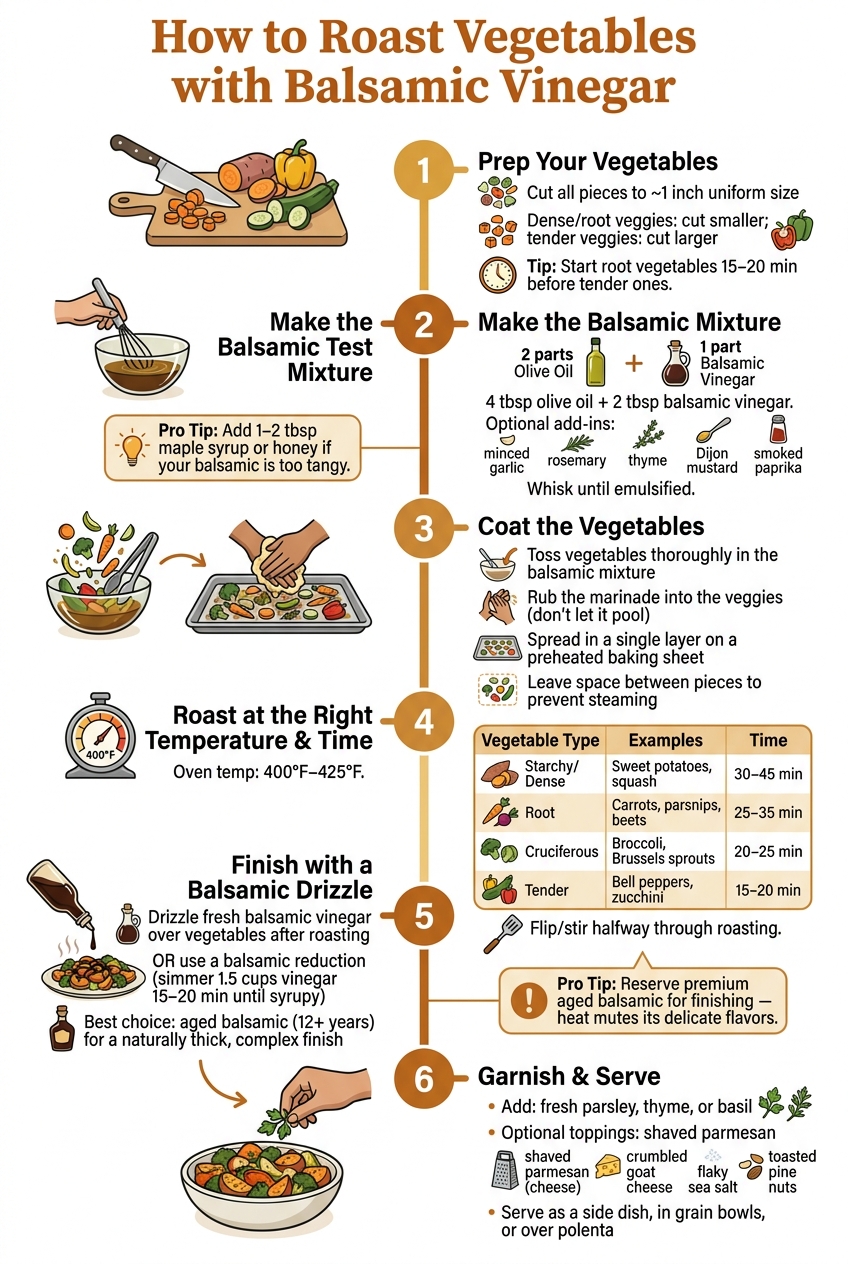
How to Roast Vegetables with Balsamic Vinegar: Step-by-Step Guide
Follow these steps to achieve perfectly caramelized roasted vegetables. Using a good balsamic vinegar, like those from Big Horn Olive Oil, can take the flavor to the next level.
How to Prep Vegetables Before Roasting
Consistent cutting is crucial. Aim for pieces about 1 inch in size to ensure even cooking and proper absorption of the glaze. Keeping the thickness uniform helps balance moisture loss. If you’re roasting vegetables with varying textures, plan ahead - start with tougher ones and add softer ones later.
"Hard vegetables should be cut into small pieces and soft vegetables into large pieces to help them roast at a similar rate." - Beth Moncel, Founder, Budget Bytes
For mixed trays of dense root vegetables and tender ones, put the roots in the oven 15–20 minutes before adding the softer vegetables. This staggered timing ensures everything finishes perfectly cooked, without anything becoming overly soft or mushy.
Oven Temperature and Roasting Times
Once your vegetables are prepped, set the oven to the right temperature for caramelization. For balsamic roasted vegetables, 400°F is a reliable starting point. It’s hot enough to caramelize the vinegar’s natural sugars without burning them. If you prefer crispier edges or faster browning, try 425°F.
"In my experience, 425ºF is the perfect temperature - not too low, not too high!" - Jessica Hylton, Founder, Jessica in the Kitchen
Here’s a quick guide to roasting times based on vegetable types:
| Vegetable Type | Examples | Approximate Time at 400°F–425°F |
|---|---|---|
| Starchy/Dense | Sweet potatoes, butternut squash | 30–45 minutes |
| Root | Carrots, parsnips, beets | 25–35 minutes |
| Cruciferous | Broccoli, Brussels sprouts, cauliflower | 20–25 minutes |
| Tender | Bell peppers, zucchini, mushrooms | 15–20 minutes |
For a head start on caramelization, preheat your baking sheet in the oven before adding the vegetables. A sturdy aluminum or dark-colored pan works best, as it distributes heat evenly and encourages browning.
How to Coat and Arrange Vegetables for Even Roasting
The way you coat and arrange your vegetables can make or break the roast. Toss the vegetables thoroughly in the balsamic mixture before transferring them to the pan. Once on the hot pan, toss again to avoid liquid pooling - pooled marinade can burn and leave a bitter taste.
"If the marinade is pooling on the pan, it will burn in the oven, making a mess to clean up! Rub the marinade into the veggies for the best flavour." - Jessica Hylton, Founder, Jessica in the Kitchen
Spread the vegetables out in a single layer, leaving enough space between pieces to prevent steaming.
"The more space there is between the veggies, the crispier they'll be around the edges." - Mel Gunnell, Founder, Mel's Kitchen Cafe
If your vegetables don’t fit comfortably on one baking sheet, split them between two pans. Halfway through roasting, flip or stir the vegetables with a spatula to promote even browning. A slightly blackened look is a good sign - it’s the balsamic vinegar’s natural sugars caramelizing to perfection.
Finishing and Serving Balsamic Roasted Vegetables
Simple finishing touches can bring this dish to life.
A Final Drizzle of Balsamic Vinegar
Adding a light drizzle of balsamic vinegar after roasting keeps its sharp acidity intact and enhances the caramelized flavors. For a richer touch, you can make a balsamic reduction by simmering 1½ cups of vinegar for 15–20 minutes until it thickens enough to coat the back of a spoon. If the reduction feels too tart, whisk in a bit of honey or maple syrup. Store any leftovers in a glass jar in the fridge for up to 1–2 months. For an extra-special finish, try using a traditionally aged balsamic (12+ years), which offers a naturally thick and complex profile without additional cooking. A great example is Big Horn Olive Oil's Molto Denissimo 25-Year Aged Dark Balsamic Vinegar, known for its syrupy consistency that clings beautifully to roasted vegetables.
"Drizzling balsamic vinegar over the roasted vegetables after they are cooked allows the vinegar's bright acidity and complex flavors to shine through." - Brynlee, Author, BeingCreators
These small steps tie together the deep caramelization from roasting with a fresh, vibrant finish.
Garnishes and Toppings
After roasting, sprinkle freshly chopped parsley, thyme, or basil over the vegetables to brighten their aroma. You can also add a finishing touch with shaved parmesan or crumbled goat cheese, a pinch of flaky sea salt, freshly ground black pepper, and toasted pine nuts or walnuts for a satisfying crunch.
"Fresh parsley sprinkled on top at the end brightens the earthy, caramelized flavors perfectly." - Lila, Recipe Creator at LilaPlates
Ways to Serve Balsamic Roasted Vegetables
Once glazed and garnished, these vegetables are ready for endless serving possibilities. They make a versatile side dish for roasted chicken, pork tenderloin, or grilled salmon. Toss them into grain bowls with quinoa, farro, or herbed couscous, or serve alongside creamy polenta or mashed potatoes. If you have leftovers, reheat them under the broiler for 2–3 minutes and finish with an extra drizzle of balsamic vinegar for a quick refresh.
"Suddenly, vegetables stop feeling like a side dish and start feeling like the main event." - Arif, Chef and Founder of InstantCooks
Conclusion: Get Better Roasted Vegetables with Balsamic Vinegar
Balsamic vinegar brings flavors together, transforming plain vegetables into a dish that stands out. When roasted at 425°F, its natural sugars caramelize into a glossy glaze, creating a perfect balance of sweetness and depth. The acidity adds brightness, making every bite satisfying.
The quality of balsamic vinegar you use plays a big role:
"For the best results, use a premium balsamic vinegar which should be thick, sweet, and pour like molasses instead of water."
This is why choosing a high-quality balsamic vinegar is so important for consistent, flavorful results.
To make the most of your roasted vegetables, invest in products that offer both flavor and reliability. For dependable results, try Big Horn Olive Oil's Traditional 18-Year Aged Dark Balsamic Vinegar ($8.99), perfect for coating vegetables before roasting. For a finishing touch that impresses, their Molto Denissimo 25-Year Aged Dark Balsamic Vinegar ($12.99) delivers a syrupy texture and complex flavor that elevates any dish.
Stick to these simple steps - toss, roast, and drizzle with a premium balsamic - and turn your vegetables into a memorable meal.
FAQs
How do I keep balsamic from burning in the oven?
To keep balsamic vinegar from burning, apply it directly to the vegetables rather than letting extra marinade collect on the pan. For an easier cleanup, line your baking sheet with parchment paper or foil - this helps if some of the glaze caramelizes. If you see dark spots, it’s usually the balsamic caramelizing rather than the vegetables burning. For top-notch flavor, opt for a premium balsamic vinegar like the one from Big Horn Olive Oil.
Should I add balsamic before or after roasting?
You can use balsamic vinegar at different stages of roasting, depending on the flavor you’re aiming for. Adding it before roasting allows it to caramelize, which works beautifully with vegetables like peppers and onions. On the other hand, applying it after roasting keeps its tangy brightness intact, making it a great match for carrots or Brussels sprouts. For the best of both worlds, try tossing your veggies with a little vinegar before roasting, then finish with a drizzle once they’re done.
What’s the best balsamic vinegar for roasting vs finishing?
For roasting, go with PGI/IGP balsamic vinegar. It works well in recipes where it's combined with other ingredients like mustard, garlic, or oil - perfect for cooking, marinades, or reductions.
For finishing, pick PDO/DOP Traditional Balsamic. This aged vinegar has a rich, complex flavor that’s best enjoyed uncooked. Drizzle it over plated dishes, cheese, or fruit to add an elegant touch.