

Bagna Cauda: Piedmont Style Compared
I’d compare bagna cauda by its garlic, anchovies, oil, and dairy - not just its recipe label. For four diners, one Piedmont-style recipe uses about 4 heads of garlic and 1 cup of olive oil; a milder home version uses 8 cloves and ¾ cup of oil, plus butter.
My starting rule: <u>soften the garlic without browning it</u>. Milk can mellow the garlic before cooking; cream changes the dip itself. Either way, keep the heat low and serve the sauce warm with raw and cooked vegetables, fully cooked potatoes, and bread.
Quick Comparison
| What I compare | Piedmont-style approach | Home versions |
|---|---|---|
| Ingredient balance | Often generous garlic, anchovies, and olive oil | May use less garlic or oil |
| Garlic preparation | Gently softened in oil or milk | Sliced, minced, grated, or milk-softened |
| Dairy | Sometimes butter; milk may prepare the garlic | Butter, milk, or cream may play a larger role |
| Texture and heat | Soft garlic and dissolved anchovies over low heat | Smooth or rustic, with the same gentle heat |
| Serving | Individual fujot warmers or a shared vessel | A heat-rated tabletop warmer |
| Accompaniments | Seasonal raw and cooked vegetables, plus bread | Similar choices based on availability |
How to make bagna cauda, a garlic dip from Piemonte | Pasta Grannies
sbb-itb-4066b8e
Ingredients: Garlic, Anchovies, Oil, and Dairy
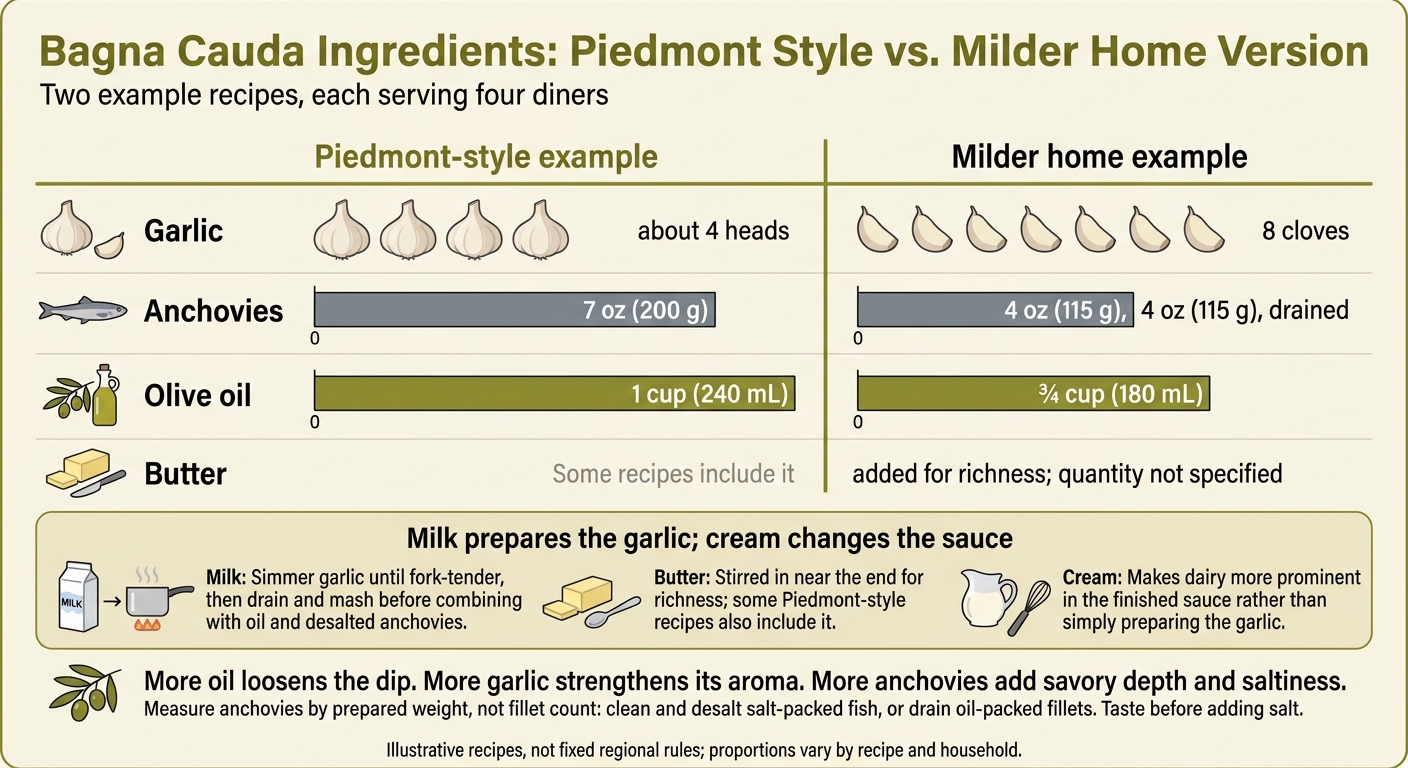
Bagna Cauda Ingredients: Piedmont Style vs. Milder Home Version
The main differences come down to proportions and how dairy is used.
| Ingredient | Piedmont-style approach | Home-style adaptations |
|---|---|---|
| Olive oil | Main liquid fat | Some home versions use less oil and add butter |
| Garlic | Usually generous amounts, gently softened | May use less garlic, minced, grated, or softened in milk |
| Anchovies | Often salt-packed, cleaned and desalted | Salt-packed or drained oil-packed anchovies |
| Dairy | Some recipes include butter; milk may be used to prepare garlic | Milk, butter, or cream may play a larger role |
Compare Ratios for Equal Servings
Comparing recipes for four diners makes the difference clear. A Piedmont-style version uses about 4 heads of garlic, 7 oz (200 g) anchovies, and 1 cup (240 mL) olive oil. A milder home version uses 8 garlic cloves, 4 oz (115 g) drained anchovies, 3/4 cup (180 mL) olive oil, and butter for richness.
More oil loosens the dip. More garlic strengthens its aroma, while more anchovies add savory depth and saltiness. Measure anchovies by prepared weight, not fillet count: rinse and desalt salt-packed fish, or drain oil-packed fillets. Taste before adding salt.
Milk-Softened Garlic vs. Added Cream
Milk softens the garlic before it goes into the sauce; cream changes the sauce itself. In the Piedmont method, simmer garlic in milk until fork-tender, then drain and mash it. This gives you a milder base to combine with oil and desalted anchovies.
Butter stirred in near the end adds richness, while cream makes dairy a more prominent part of the sauce. That difference also connects to how the garlic is cooked.
Technique: Garlic Preparation and Sauce Texture
Once you’ve decided whether to soften the garlic in milk, use low heat to control the final texture. In bagna cauda, garlic size, cooking time, and mashing matter more than the recipe label.
| Method | Flavor and texture | What it changes |
|---|---|---|
| Gently soften sliced, halved, or whole garlic in oil | Soft garlic that can be mashed into the sauce | Larger pieces generally need more time |
| Mince or grate garlic into oil | Finer texture; stronger flavor if it browns | Small pieces can scorch quickly |
| Mash softened garlic thoroughly | More even texture | Needs extra attention before serving |
Soften Garlic Without Browning
Start the garlic and oil together in a small, heavy saucepan over low heat, keeping the oil barely shimmering. Allow about 10–30 minutes, depending on the size of the pieces. Tenderness is the better test: the garlic should crush easily with a wooden spoon. If it starts to color, lift the pan off the heat and turn down the burner.
Add the anchovies once the garlic is tender. Stir and mash until they dissolve, without letting the mixture bubble vigorously or fry. For a smoother dip, mash thoroughly; for a rustic texture, leave a few tender garlic pieces. The sauce should stay fluid, with the anchovies dissolved rather than flaky.
Choose EVOO to Match the Sauce
You’ll taste the olive oil in this oil-forward sauce. A medium-intensity EVOO is a good starting point: its fruitiness can complement the garlic and anchovies without taking over. Mild oil gives a softer finish; a stronger-flavored oil adds more bite.
Keep the heat gentle so the garlic doesn’t scorch, then keep the dip warm for the table.
Serving: Warmers, Shared Meals, and Accompaniments
Once the sauce is ready, how you serve it becomes part of the meal. In Piedmont, some households use individual fujot heated by a candle or small flame. Others gather around one warmed vessel. At home, a tabletop warmer rated for heat works well.
| Serving detail | Piedmont-style service | Practical home service |
|---|---|---|
| Warming vessel | Individual fujot or a shared vessel | Fondue pot or another tabletop warmer rated for heat |
| Meal format | Communal meal or a main course | Appetizer, vegetable-centered supper, or shared course |
| Accompaniments | Seasonal raw and cooked vegetables, with bread | Similar vegetables chosen for availability and preparation time |
Set a vessel rated for tabletop heating on a stable, heat-resistant surface. Use gentle heat to keep the sauce fluid, without letting it simmer or scorch. Leave room for vegetable platters, give each person dipping utensils, and avoid double-dipping. For larger groups, use several warmers.
Prepare Vegetables for Dipping
The warmer holds the sauce, but the vegetables shape the meal. What's available locally - and how much time you have - often guides the selection. Choose five or six vegetables, mixing crisp raw pieces with tender cooked ones. Serve washed fennel wedges, endive leaves, and seeded pepper strips raw. Clean and trim cardoons, remove their tough strings, and cook until tender. Cook turnips and Jerusalem artichokes until just tender.
Always cook potatoes fully. Boil, steam, or roast them until tender but still intact. Soften leeks and cook beets, then cut them into easy-to-eat pieces. Cut all vegetables into fork-sized pieces that hold together when dipped. Drain cooked vegetables and dry raw ones thoroughly so they don't water down the sauce.
Keep raw vegetables chilled until serving, and bring cooked vegetables to the table shortly after preparation. Serve crusty bread to catch drips.
Conclusion: Keep the Core, Adjust the Method
Start with extra-virgin olive oil, plenty of garlic, and anchovies. Piedmont style is about balance, not a fixed ratio. Recipes differ across regions and households, and some finish the sauce with a little butter.
Adjust the garlic treatment first, changing only one variable at a time. For a gentler flavor, simmer peeled cloves in milk, then drain and dry them. Cream adds richness but moves the sauce away from its olive-oil-centered style.
Next, pay attention to heat - it controls the texture. Soften the garlic without browning it, clean and desalt salted anchovies, and stir until they dissolve. A shorter cooking method works only if the garlic stays tender and the sauce holds together. Keep the heat gentle and serve the sauce warm, whichever method you use.
FAQs
Can I make bagna cauda ahead and reheat it?
You can make bagna cauda ahead of time and store it in the refrigerator. When you’re ready to serve, reheat it gently over low heat until it returns to the right consistency. Avoid high heat to help protect the delicate flavors and nutritional quality of your Ultra Premium Extra Virgin Olive Oil from Big Horn Olive Oil.
How do I fix bagna cauda that's too salty?
A little more high-quality, mild-flavored olive oil can tone down the saltiness while keeping the texture silky. If your recipe allows it, extra garlic or dairy can also soften the salty flavor. Adjust in small amounts and taste as you go.
Why is my bagna cauda bitter?
Bitterness likely comes from how you prepare the garlic or heat the olive oil. Garlic can turn sharp or bitter if it sits too long after mincing. For a milder flavor, roast the garlic until soft and caramelized, then mash it into the oil.
Olive oil can taste burnt and bitter when heated past its smoke point - typically around 375°F, though this varies by oil. Use high-quality olive oil that hasn’t gone stale or rancid; either can spoil the flavor, no matter how you prepare it.