

Spaghetti Aglio e Olio: Italian Pasta Recipe
I make spaghetti aglio e olio with one simple rule: keep the garlic pale gold, then toss the pasta with starchy cooking water for a glossy sauce - not oily noodles.
For 4 servings, I use 1 pound of spaghetti, ⅓ cup of extra virgin olive oil, 6 garlic cloves, and ¼–½ teaspoon of chili flakes. Here’s what makes it work:
- Watch the heat: I cook the garlic gently and keep it from browning.
- Save the pasta water: I reserve at least 1 cup before draining, then add small splashes while tossing.
- Finish in the skillet: I transfer the spaghetti slightly underdone and toss until al dente.
- Adjust before serving: I add water if the sauce looks oily or dry, simmer briefly if it’s watery, and remake the oil base if the garlic tastes bitter.
I finish with salt to taste and optional parsley, then <u>serve right away</u>.
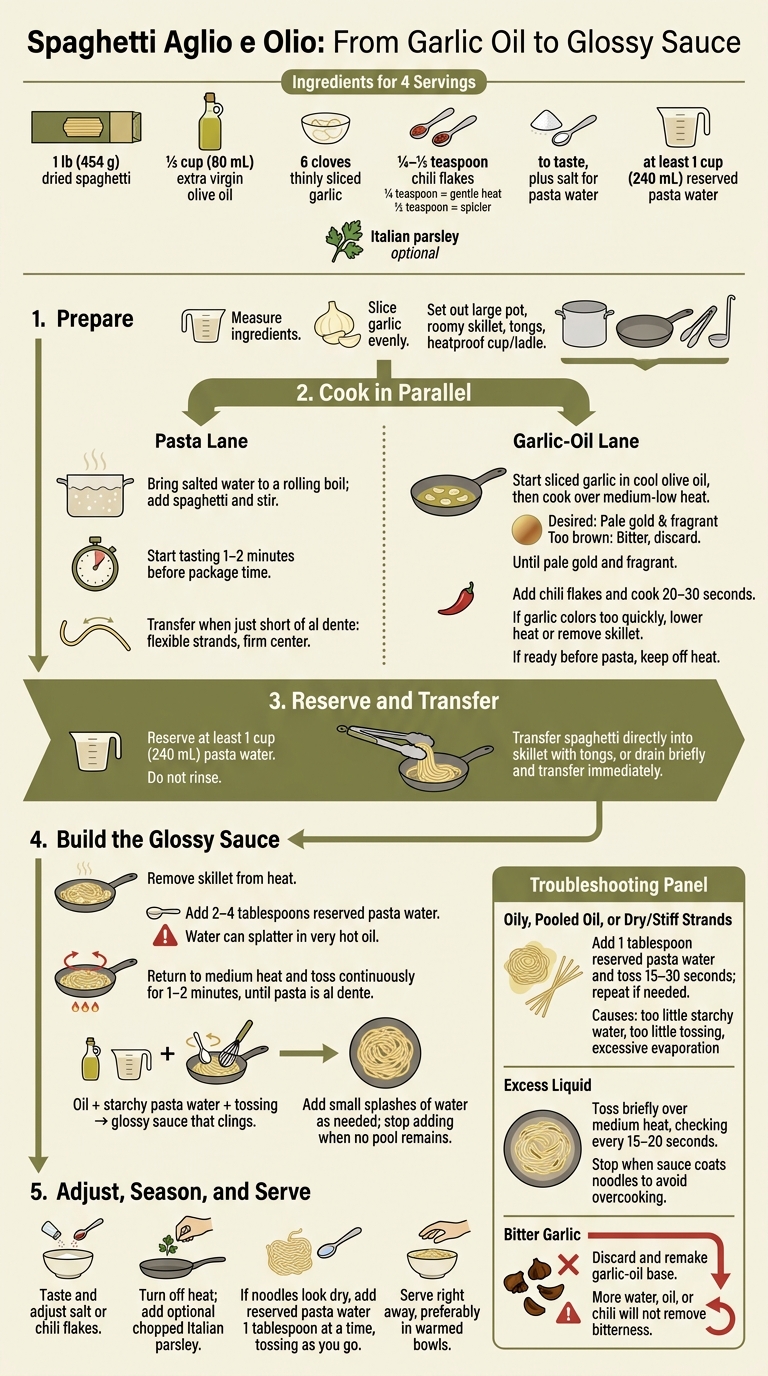
Spaghetti Aglio e Olio: From Garlic Oil to Glossy Sauce
Ingredients and Equipment for 4 Servings
Measure the Ingredients
Measure everything before you start cooking. Use ¼ teaspoon of chili flakes for gentle heat or ½ teaspoon if you prefer a spicier dish.
| Ingredient | Amount | Preparation |
|---|---|---|
| Dried spaghetti | 1 lb (454 g) | Keep dry until cooking |
| Extra virgin olive oil | ⅓ cup (80 mL) | Measure for the sauce |
| Garlic | 6 cloves | Slice thinly and evenly |
| Crushed red pepper flakes | ¼–½ tsp (about 1–2 g) | Adjust to taste |
| Salt | As needed | For the pasta-cooking water |
| Italian parsley, optional | 2 tbsp (about 8 g) | Chop finely |
| Reserved pasta water | Reserve at least 1 cup (240 mL) | Collect before draining |
Add the reserved pasta water a little at a time to loosen the sauce and help the oil and water blend into an emulsion.
Choose Extra Virgin Olive Oil
The oil forms the base of the sauce, so pick one whose flavor you enjoy. Check the harvest date, if listed, along with the best-before information. Keep the bottle tightly closed in a cool, dark place away from heat.
Big Horn Olive Oil offers extra virgin olive oils such as Estate Reserve, Picual, and Coratina. Use a mild oil for a subtler sauce or a stronger-tasting oil for a more pronounced olive flavor.
Set Out Your Cooking Tools
Set out a large pasta pot, a skillet or sauté pan with enough room to toss the pasta without crowding, tongs, a heatproof measuring cup or ladle, a sharp knife, and a cutting board.
Slice the garlic evenly so the pieces cook at the same rate rather than burning before they soften.
sbb-itb-4066b8e
Scott's Spaghetti Aglio e Olio
Cook the Pasta and Garlic Oil
Cook the spaghetti and garlic oil at the same time so they’re ready together.
Cook Spaghetti Just Short of Al Dente
Bring a large pot of water to a rolling boil, salt it, and add the spaghetti. Stir soon after adding it to separate the strands. Start tasting 1–2 minutes before the package time. The pasta should bend easily but still have a firm center.
Cook Garlic and Chili over Medium-Low Heat
While the spaghetti cooks, add the sliced garlic to cool olive oil and place the skillet over medium-low heat. Stir or swirl occasionally until the garlic turns pale gold and smells fragrant. Then add the chili flakes and cook for 20–30 seconds.
If the garlic colors too fast, lower the heat or briefly remove the skillet from the burner. If it’s ready before the spaghetti, keep the skillet off the heat. The garlic should still be pale gold when the pasta is ready.
Save Pasta Water Before Draining
Once a tasted strand is just short of al dente, use a heatproof cup or ladle to reserve at least 1 cup (240 mL) of cooking water. Lift the spaghetti into the skillet with tongs, or drain it briefly and transfer it right away. Do not rinse. Keep the reserved water nearby for the final toss.
Add the reserved water a little at a time as you finish tossing the pasta. Its starch helps the sauce cling to the strands instead of leaving oil behind.
Finish the Pasta in the Skillet
Toss with Pasta Water to Form the Sauce
Once the pasta and garlic oil are ready, bring them together in the skillet.
- Transfer the spaghetti straight into the skillet with tongs. Remove the skillet from the heat, then add 2–4 tablespoons of reserved pasta water. Water can splatter when it hits very hot oil.
- Return the skillet to medium heat and toss continuously with tongs for 1–2 minutes, until the spaghetti is just al dente. If the sauce still looks separated, adjust it right away.
- Let the appearance guide you. Add small splashes of water if the strands look dry or the oil separates. Stop adding water when no pool remains in the pan.
Tossing brings the oil and starchy water together into a glossy sauce that clings to the pasta.
Fix Common Sauce Problems
Make small adjustments before the spaghetti overcooks.
| Problem | Likely cause | Correction |
|---|---|---|
| Oily noodles, pooled oil, or dry, stiff strands | Too little starchy water, too little tossing, or too much evaporation | Add 1 tablespoon of reserved pasta water and toss for 15–30 seconds. Repeat if needed. |
| Excess liquid | Too much water or too little simmering | Toss briefly over medium heat, checking every 15–20 seconds. Stop as soon as the sauce coats the noodles to avoid overcooking. |
| Bitter garlic | Garlic cooked too hot or too long | Discard and remake the garlic-oil base. More water, oil, or chili won't remove bitterness already infused into the oil. |
Season and Serve
Once the sauce is glossy and clings to the pasta, taste a strand after the final toss. If it needs more seasoning, add a small pinch of kosher salt. For more heat, add a little more chili flakes, toss, and taste again.
Turn off the heat, then stir in 2 to 3 tablespoons finely chopped fresh Italian parsley.
If the noodles look dry, add reserved pasta water 1 tablespoon at a time, tossing as you go. Serve right away in warmed bowls while the spaghetti is hot, glossy, and evenly coated.
FAQs
Can I use gluten-free spaghetti for aglio e olio?
Yes, you can make aglio e olio with gluten-free spaghetti. High-quality olive oil and starchy pasta water come together to form a smooth sauce that coats the noodles.
If you’re using Big Horn Olive Oil’s Ultra Premium Extra Virgin Olive Oil, gently heat the garlic in the oil to preserve the oil’s peppery notes and clean flavor. Then toss the cooked spaghetti with the garlic-infused oil and a splash of pasta water until the sauce reaches the consistency you like.
What if I forget to save pasta water?
Forgot to save the pasta water? You can still make delicious spaghetti aglio e olio. Starchy pasta water helps emulsify the sauce, giving it a creamy coating. Without it, focus on your finishing oil: drizzle high-quality Ultra Premium Extra Virgin Olive Oil from Big Horn Olive Oil over the finished dish for shine, depth, and bright, peppery notes.
How do I reheat leftovers without drying them out?
Warm your pasta gently over moderate heat, keeping the temperature below 410°F. Avoid high heat - it can reduce your olive oil’s quality and dry out the dish.
Finish with a drizzle of premium Big Horn Olive Oil to restore moisture, richness, and shine, along with bright, peppery notes.