

5 Balsamic Vinegar Pairings for Festive Salads
If you want one easy way to make a holiday salad taste better, use balsamic with the right mix of fruit, cheese, and nuts. In these five pairings, I’d keep the formula simple: match balsamic with sweet winter fruit, creamy or salty cheese, and a crunchy topping, then dress the salad at the last minute.
Here’s the short version:
- Pomegranate + pear + soft cheese works well with mixed greens
- Fig + goat cheese + walnuts fits peppery arugula
- Beets + citrus + pistachios do best with a lighter balsamic
- Brussels sprouts + apple + cranberries need a deeper sweet-tart dressing
- Spinach + Brie + candied nuts pairs well with a thicker balsamic finish
A few useful numbers stand out right away:
- Use about 2 tablespoons of vinaigrette per 4 cups of greens
- For a glaze, use just 1 to 2 teaspoons per plate
- Roast Brussels sprouts at 400°F for 20 to 25 minutes
- Toast pistachios at 325°F for 8 to 10 minutes
What I like about these pairings is that they cover the main holiday salad styles: bright, peppery, earthy, crisp, and rich. So if your table needs contrast for heavy mains, or a salad that can stand next to cheese, nuts, and roasted vegetables, there’s a fit here.
Quick Comparison
| Salad | Best flavor match | Texture | Best balsamic pick | Best for |
|---|---|---|---|---|
| Holiday greens with pomegranate & pear | Sweet-tart fruit + tangy cheese | Light and juicy | Aged or pomegranate balsamic | Christmas dinner |
| Arugula with fig & goat cheese | Sweet fig + peppery greens | Soft with some crunch | Aged or fig balsamic | Cocktail party |
| Roasted beet with citrus & pistachio | Earthy + bright citrus | Tender and crunchy | White or citrus balsamic | Winter buffet |
| Brussels sprouts with apple & cranberry | Crisp fruit + bitter greens | Crunchy | Dark aged balsamic | Thanksgiving side |
| Spinach with candied nuts & Brie | Creamy cheese + sweet nuts | Rich and soft | Thick aged balsamic or glaze | Brunch or potluck |
Bottom line: I’d choose the salad based on the rest of the meal. Use the lighter pairings with heavy dishes, and save the richer ones for lighter mains or buffet tables.
sbb-itb-4066b8e
Festive Salad Pairings at a Glance
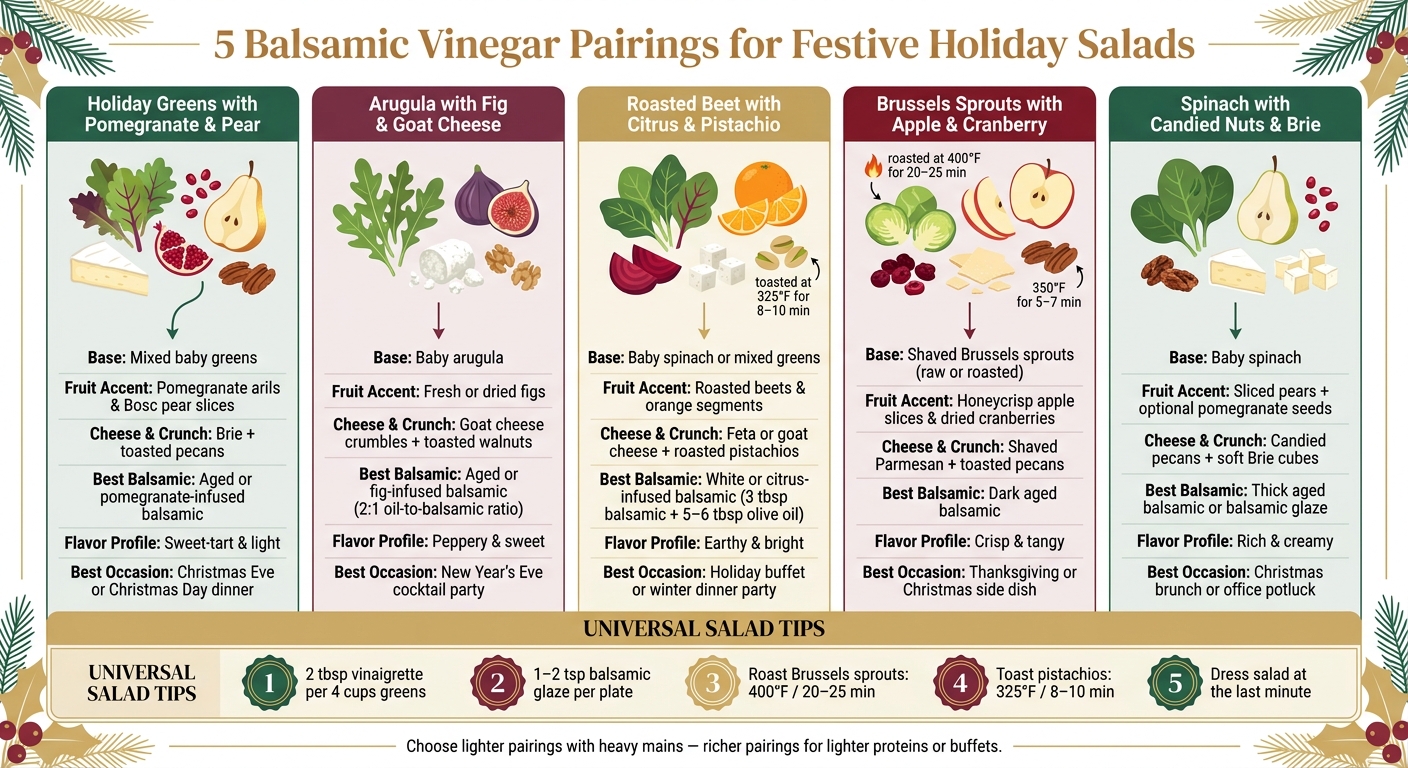
5 Balsamic Vinegar Pairings for Festive Holiday Salads
Take a quick look at the five salads below before you get into the full pairings.
| Salad | Base | Seasonal Accent | Cheese & Crunch | Best Occasion |
|---|---|---|---|---|
| Holiday Greens with Pomegranate & Pear | Mixed baby greens | Pomegranate arils & Bosc pear slices | Brie + toasted pecans | Christmas Eve or Christmas Day dinner |
| Arugula with Fig & Goat Cheese | Baby arugula | Fresh or dried figs | Goat cheese crumbles + toasted walnuts | New Year's Eve cocktail party or holiday wine-and-cheese night |
| Roasted Beet with Citrus & Pistachio | Baby spinach or mixed greens | Roasted beets & navel orange segments | Feta or goat cheese + roasted pistachios | Holiday buffet or winter dinner party |
| Brussels Sprouts with Apple & Cranberry | Shaved Brussels sprouts | Honeycrisp apple slices & dried cranberries | Shaved Parmesan + toasted almonds | Thanksgiving or Christmas side dish |
| Spinach with Candied Nuts & Brie | Baby spinach | Dried cherries (optional) | Candied pecans + soft Brie cubes | Christmas brunch or office potluck |
Balsamic ties these salads together. It balances sweet fruit, bitter greens, and creamy cheese, so each bite feels in sync instead of all over the place.
For the best flavor, pick a balsamic from Modena, Italy. First up: holiday greens with pomegranate and pear.
1. Holiday Greens with Pomegranate and Pear
Greens or Vegetable Base
Baby spinach and spring mix give this salad a nice middle ground. You get mild sweetness, a little bitterness, and enough texture to keep each bite from feeling flat. Just as important, this mix stands up well to dressing, so the salad doesn’t go limp or soggy too fast.
Seasonal Fruit Accent
Go with Bosc or Anjou pears.
Bosc pears stay firm when you slice them thin, and they bring a honey-like flavor that holds up well after dressing. Anjou pears are juicier and have a slight citrus note that brightens the whole bowl. Slice the pears right before serving, then toss them lightly in fresh lemon juice to keep them from browning. Add the pomegranate arils at the end so they keep their color and crunch.
Cheese or Crunch Element
Goat cheese (chèvre) is the best match here. Its tang cuts through the pear’s sweetness and takes the edge off the pomegranate’s tart bite.
For crunch, add toasted walnuts or pecans. They bring a warm, nutty depth that helps balance the bright fruit flavors. A small handful of goat cheese and toasted walnuts or pecans is plenty.
Best Balsamic Style
Use an aged or pomegranate-infused balsamic from Modena. Aged balsamic picks up notes of fig and dried cherry, which play nicely with the fruit in this salad. Its slightly thicker texture also helps it coat the greens more evenly.
Use a 3:1 olive oil-to-balsamic ratio, then season with salt, pepper, and a touch of honey if needed. Dress the salad just before serving.
Next comes a sharper pairing with arugula, fig, and goat cheese.
2. Arugula with Fig and Goat Cheese
Greens or Vegetable Base
Baby arugula is the best fit here. Its peppery bite cuts through the sweetness of the figs and the rich, creamy goat cheese. The smaller, tender leaves also look better on a platter and are much easier to eat at a holiday buffet.
Before you put anything together, spin the arugula completely dry. Even a little leftover water can water down the balsamic and make the greens go limp in a hurry.
Seasonal Fruit Accent
For Thanksgiving or Christmas, you’ll probably be using dried figs or fig preserves. Both do the job well. Slice dried figs thin. If they feel a bit firm, soak them for a short time in warm orange juice with a splash of balsamic vinegar, then pat them dry before adding them to the salad.
You can also whisk fig jam, balsamic, and olive oil into a simple dressing. That helps echo the fig flavor and gives the salad a smooth, even finish.
Cheese or Crunch Element
Crumble chilled chèvre over the top, then add toasted walnuts or pecans for contrast.
That rich mix pairs best with a balsamic that has enough depth to pull everything together.
Best Balsamic Style
A traditional aged balsamic from Modena, or a fig-infused version, brings out the fruit notes even more. Use a 2:1 olive oil-to-balsamic ratio so the flavor stays balanced.
Next: roasted beet with citrus and pistachio.
3. Roasted Beet with Citrus and Pistachio
Greens or Vegetable Base
Roasted beets give this salad its base, with an earthy sweetness that gets a nice lift from balsamic. A mix of red and golden beets makes the whole dish look jewel-toned and festive, without staining everything deep red. Set them over baby arugula or a spinach-arugula mix. The peppery greens help balance the beets' natural sweetness. From there, the citrus and pistachios bring contrast.
Seasonal Fruit Accent
Orange or grapefruit segments are the best fit here. Segment them cleanly so you get tender, juicy pieces without the pith. For 4 servings, use 2 medium oranges or 1 orange plus 1 grapefruit. If you spot blood oranges, grab them. Their deep red flesh plays well with the holiday color palette and looks great against golden beets.
Add about ½ teaspoon of grated orange zest to the dressing for more citrus aroma without watering the salad down.
Cheese or Crunch Element
Pistachios bring crunch and a pop of color. Their buttery, nutty flavor works well with both the beets and the citrus. Toast shelled pistachios at 325°F for 8 to 10 minutes, then coarsely chop them. Sprinkle about ½ cup over the salad right before serving so they stay crisp.
If you want something creamy, add 2 to 3 oz of goat cheese. Its tangy, lightly tart flavor cuts through the beet sweetness and helps tie the salad together without taking over.
Best Balsamic Style
A white balsamic or citrus-infused balsamic, like orange or lemon, keeps the dressing light enough for beets and citrus. Whisk 3 tablespoons balsamic with 5 to 6 tablespoons olive oil, plus salt, pepper, and a little honey for a dressing that stays bright and clean.
Next: Brussels sprouts with apple and cranberry, a crisper, tangier holiday salad.
4. Brussels Sprouts with Apple and Cranberry
Greens or Vegetable Base
Shaved raw Brussels sprouts make a crisp, slaw-like base that can handle balsamic without going limp. If you want something warmer, roast them at 400°F for 20 to 25 minutes until the edges turn lightly caramelized. Either way, that slight bitter note is what makes the fruit and dressing pop.
Seasonal Fruit Accent
For apples, go with Honeycrisp, Pink Lady, or Fuji. They stay crisp and hold up well with balsamic. Slice them thin, then toss them with lemon juice or white balsamic so they don't brown too fast. Dried cranberries add deeper color and play nicely with balsamic's sweet-tart bite.
Cheese or Crunch Element
Toasted pecans are a natural match here. They bring a warm, buttery flavor that feels right at home on a holiday table. Toast them at 350°F for 5 to 7 minutes, then give them a rough chop and scatter them on just before serving.
If you want cheese, crumbled goat cheese or feta both fit. Goat cheese makes the salad creamier and adds tang. Feta leans saltier and hits harder. In both cases, the richness pairs best with a balsamic that has enough sweetness to keep things in balance.
Best Balsamic Style
A traditional aged dark balsamic gives this salad more depth. If you want a lighter finish, use a white or fruit-infused balsamic instead. For the dressing, whisk together EVOO, balsamic, maple syrup, Dijon, salt, and pepper into a simple vinaigrette.
Next: spinach with candied nuts and Brie.
5. Spinach with Candied Nuts and Brie
Greens or Vegetable Base
Baby spinach is the best base here. It has a mild flavor, so it lets the Brie and candied nuts stand out instead of fighting for attention. If you want a little more color and a slightly bitter edge that fits winter well, add a small amount of radicchio. Just keep spinach as the main green. With pears and Brie in the mix, the salad still feels very much like a holiday dish.
Seasonal Fruit Accent
Sliced pears are the best fruit match for Brie and balsamic. They bring a soft sweetness that plays well with both. If you want more holiday color, toss in a few pomegranate seeds for a bright, tart pop.
Cheese or Crunch Element
Brie is the right cheese for this salad. Its creamy texture takes the edge off the greens and balances the acidity of balsamic. Let it sit at room temperature before serving so it softens and is easier to eat.
Candied pecans or walnuts bring sweetness and crunch. Add the candied pecans or walnuts just before serving so they stay crisp.
Best Balsamic Style
A thick aged balsamic or balsamic glaze works best because it clings to spinach and pairs well with Brie. Aged dark balsamic from Modena fits this combo nicely. Use a simple balsamic vinaigrette and dress the salad lightly. Dress it at the last minute for the best texture, then move to the serving tips below.
Serving and Dressing Tips
Choosing between a balsamic vinaigrette and a balsamic reduction depends on the kind of salad you're serving. A vinaigrette works best when you want a light, even coating over tender greens like arugula, spinach, or mixed holiday lettuces. A reduction, often called a balsamic glaze, is better when you want a glossy, syrupy finish on composed salads with heavier ingredients like roasted beets, candied nuts, or Brie.
A simple way to think about it: use vinaigrette for leafy salads and reduction for richer plates. A good extra-virgin olive oil gives vinaigrette a smoother feel, which helps with peppery or bitter greens. If you're using bitter greens like arugula or shaved Brussels sprouts, add a bit more vinegar and go easy on the honey to take the edge off without making the salad sweet. And if the salad already has sweet fruit or candied nuts, cut back the sweetener a little so the dressing doesn't fight with the other flavors.
To make a reduction, simmer 1 cup balsamic over medium-low heat until it reduces by half and reaches a thin texture that coats a spoon. It will thicken more as it cools. Use 1–2 teaspoons per individual plate, drizzled in a thin zigzag over cheese, nuts, or roasted vegetables instead of tossing it through the greens.
For holiday service, start by washing the greens in cold water, spinning them dry, and chilling them for at least 30 minutes before dressing. Dress the salad right before serving. Use about 2 tablespoons of vinaigrette per 4 cups of greens - enough to make the leaves look lightly shiny, not soaked. Keep the parts separate until plating so everything stays crisp.
Use this quick guide to match the dressing to the salad texture.
| Dressing Type | Best For | Amount Per Serving |
|---|---|---|
| Balsamic vinaigrette | Tender or bitter greens (arugula, spinach, mixed lettuces) | ~2 tbsp per 4 cups greens |
| Balsamic reduction | Roasted vegetables, cheese, candied nuts, composed salads | 1–2 tsp per plate |
| Vinaigrette + reduction | Rich salads with beets, Brie, or figs needing both coating and finish | 2 tbsp vinaigrette + 1 tsp reduction |
Conclusion
These five salads cover a few holiday moods: bright and fruit-forward, sweet-meets-savory, and creamy. What ties them together is balsamic’s sweet-tart balance. After that, it’s all about matching the salad to the rest of the meal.
Pair lighter, brighter salads with rich main dishes. Save richer salads for lighter proteins or meatless plates.
Late-fall favorites like apples, pears, citrus, pomegranate, Brussels sprouts, and beets make these salads easy to put together. And the swaps are simple: dried cherries instead of cranberries, walnuts instead of pistachios, feta instead of goat cheese. Think of these as templates, not strict recipes.
Quality balsamic is the finishing touch. If you want more depth, use a well-aged Modena balsamic or an infused fig or pomegranate balsamic. Big Horn Olive Oil carries both, along with Ultra Premium EVOO.
Pick the pairing that works for your menu this season, dress the salad right before serving, and let balsamic do the heavy lifting.
FAQs
How do I choose between balsamic vinaigrette and glaze?
Choose the form based on how you’ll use the balsamic vinegar.
A vinaigrette blends balsamic vinegar with extra virgin olive oil, usually at a 3:1 or 2:1 ratio. It’s the better pick for salads and marinades because it gives you acid, fat, and balance in one go.
A glaze is balsamic vinegar cooked down until it turns thick and syrupy, sometimes with sugar added. It works best as a finishing touch on roasted vegetables, meats, or even desserts.
Can I make these salads ahead of time?
Yes. You can prep many salad parts ahead, which makes holiday hosting a lot easier.
Just save the fresh herbs for the last minute so they stay bright and don’t wilt. Homemade vinaigrettes made with Big Horn Olive Oil and balsamic vinegar can be kept in the fridge for up to 1 week. Honey-balsamic syrups or glazes can be made up to 3 days in advance.
Before serving, give the dressing a good shake.
What type of balsamic works best for holiday salads?
For holiday salads, white balsamic vinegar is the best pick. It has a crisp, lightly sweet, tart flavor that keeps the salad tasting bright and fresh without taking over delicate ingredients like mixed greens and citrus.