

Best Cheese Bites With Balsamic Glaze
For a simple cheese appetizer spread, choose 2–3 contrasting bites and plan on 2–4 bites per guest. Keep each portion small, balance creamy or salty cheese with fruit or vegetables, and add balsamic glaze just before serving.
These five pairings offer different flavors and textures - not a ranking:
- Mozzarella, tomato, and basil skewers: Mild, juicy, and served without bread.
- Goat cheese and pear crostini: Tangy cheese, sweet pear, and toasted nuts.
- Burrata, fig, and pistachio toasts: Rich cheese with sweet figs and crisp toast.
- Feta, watermelon, and mint bites: Salty cheese with cool, juicy watermelon.
- Brie, apple, and walnut crostini: Buttery cheese with tart apple and nutty crunch.
Quick Comparison
| Cheese | Base | Main contrast | Serve |
|---|---|---|---|
| Mozzarella | Skewer | Tomato and basil | Chilled or briefly tempered |
| Goat cheese | Baguette toast | Pear and walnuts or pecans | Briefly tempered |
| Burrata | Sturdy toast | Fig and pistachio | Briefly tempered |
| Feta | Watermelon cube | Watermelon and mint | Chilled |
| Brie | Baguette toast | Apple and walnut | Warm or briefly tempered |
Prep toast and nuts ahead, keep wet toppings separate, and use a small drizzle of thick, pourable glaze so the cheese stays in focus. Nuts are optional; check labels for milk, wheat, and tree nuts.
Keep cold bites at 40°F or below. Count prep, tempering, and serving toward the same 2-hour limit outside refrigeration - or 1 hour above 90°F. Choose pasteurized-milk cheeses, especially for guests at higher risk of foodborne illness.
Caprese Skewers with Balsamic Drizzle
sbb-itb-4066b8e
How to Build a Balanced Cheese Bite
Build each bite on a sturdy base, then add cheese, one contrasting accent, a few herbs or nuts, and a small drizzle of glaze. Try a toasted baguette slice, seeded cracker, cucumber round, or firm fruit slice. Keep the base a little broader than the cheese so it’s easy to pick up.
Match the base to the cheese. Spread goat cheese thinly, choose thicker toast for burrata, and place feta on firm produce. Stick to one fruit or vegetable accent rather than piling on several juicy toppings.
Pair basil with mozzarella, mint with feta, and thyme with goat cheese. Finish with a small pinch of chopped, toasted walnuts or pistachios.
Balsamic glaze is thicker and sweeter than balsamic vinegar, so it clings rather than runs. Use bottled glaze, or gently simmer balsamic vinegar until it’s lightly syrupy. Let it cool completely - it thickens as it cools.
To keep bread crisp, toast it and let it cool before adding toppings. Pat mozzarella, tomatoes, cucumber, and fruit dry, and drain burrata and feta well. Add the cheese first, followed by the wetter toppings, to help keep the bread from getting soggy.
The pairings below put this formula to work.
1. Mozzarella, Tomato, and Basil Skewers
Flavor Balance
Creamy mozzarella, juicy tomato, and basil make this the simplest take on the balance formula. For 12 small skewers, use 12 mozzarella pearls, 12 cherry tomatoes, and 12 basil leaves. Finish with a light drizzle of extra-virgin olive oil, balsamic glaze, flaky salt, and black pepper. Go easy on the seasonings and glaze so the mild cheese comes through.
Base and Texture
Use 4-inch bamboo skewers or sturdy toothpicks. Blot the mozzarella, tomatoes, and basil dry, then thread a tomato, folded basil leaf, and mozzarella pearl onto each skewer. Fold larger leaves once before threading to help prevent tearing.
Fruit, Nut, and Herb Pairings
For a fruity twist, replace some tomatoes with firm strawberry pieces or small peach wedges. Keep basil as the main herb. Serve toasted, chopped pistachios on the side for guests who want crunch.
Timing and Temperature
Arrange the undressed skewers in a single layer, cover, and refrigerate for 4–8 hours at 40°F or below. Serve chilled, or let them stand for 10–15 minutes before serving. Add the extra-virgin olive oil, salt, and pepper, then finish with the glaze immediately before serving.
Next comes a richer, fruit-forward bite.
2. Goat Cheese and Pear Crostini
Flavor Balance
For 12 crostini, you’ll need 12 baguette slices, 6 ounces of soft goat cheese, and 1 firm pear. Spread about 1 tablespoon of cheese on each toast, then top with two or three thin pear slices. The cheese’s tang balances the sweet pear, while balsamic glaze adds a sweet-tart finish.
Base and Texture
Cut the baguette into 1/2-inch-thick slices and brush lightly with extra-virgin olive oil. Toast at 375°F for 7–10 minutes, turning once, until crisp and lightly golden. Let the toast cool briefly before adding the cheese. Give the goat cheese 15–20 minutes to soften so it spreads without breaking the bread.
Fruit, Nut, and Herb Pairings
Use Anjou, Bartlett, or Bosc pears, sliced about 1/8 inch thick. Top the batch with 2 tablespoons of chopped toasted walnuts or pecans and 1–2 teaspoons of thyme leaves, picked from the stems. Walnuts add a nuttier crunch; pecans give a sweeter finish. For a crisper bite and lighter crunch, swap the pear and nuts for Honeycrisp apple and toasted sliced almonds.
Timing and Temperature
Toast the bread several hours ahead, but wait until close to serving to slice the pear and assemble. Layer on the cheese, pear, nuts, and thyme, then add a thin drizzle of glaze - about 1/4 teaspoon per crostini. Serve within 2 hours, or within 1 hour when the temperature is above 90°F.
Next: a richer, creamier bite with burrata, fig, and pistachio.
3. Burrata, Fig, and Pistachio Toasts
Flavor Balance
Burrata takes the lead here, with figs adding sweetness and pistachios bringing crunch. The cheese’s soft, rich texture plays against the crisp toast. Finish each toast with 1/8–1/4 teaspoon balsamic glaze.
Base and Texture
Choose sturdy sourdough or ciabatta, cut about 1/2 inch thick. Toast at 400°F for 6–10 minutes, until the edges are crisp. Let cool briefly, then spoon about 1 tablespoon burrata onto each piece.
Fruit, Nut, and Herb Pairings
Use thin wedges of fresh figs or thinly sliced dried figs. If the dried figs feel firm, soften them in warm water and pat dry. Top each toast with 1 teaspoon chopped pistachios. Add basil with fresh figs or mint with dried figs.
Timing and Temperature
Keep the components separate until you’re ready to serve. Assemble at the last minute, drizzle the glaze last, and arrange the toasts in a single layer.
Next: feta, watermelon, and mint for a brighter, saltier bite.
4. Feta, Watermelon, and Mint Bites
Flavor Balance
This is the lightest bite in the lineup. Salty, tangy feta offsets watermelon’s juicy sweetness, and mint adds a cooling finish. For 16 bites, use about 1 teaspoon balsamic glaze and 1–2 teaspoons extra-virgin olive oil - just enough oil to soften the glaze’s edge. Black pepper is optional; skip the extra salt.
Base and Texture
Cut chilled seedless watermelon and feta into 1-inch cubes, then pat both dry so they’re less likely to slip. Stack one watermelon cube with one feta cube and secure with a short appetizer pick. For a steadier base, tuck a 1/2-inch English cucumber slice beneath each stack.
Fruit, Nut, and Herb Pairings
Add one small mint leaf per bite. A light sprinkle of finely chopped pistachios adds buttery crunch, but keep nuts optional for guests with allergies. For a less sweet version, swap some of the watermelon for cucumber.
Timing and Temperature
Assemble within 30 minutes of serving. Add the mint and pistachios just before serving, then drizzle with the oil and glaze. Keep the bites at 40°F or below until needed.
For a richer, sweeter bite, move to Brie, apple, and walnut crostini.
5. Brie, Apple, and Walnut Crostini
Flavor Balance
Buttery Brie pairs well with a crisp, tart apple like Granny Smith or Honeycrisp. Toasted walnuts bring earthy flavor and crunch. Keep the toppings light - this bite is already rich - and finish with a little balsamic drizzle.
Base and Texture
Lightly brush 1/4-inch baguette slices with olive oil, then toast until crisp and golden. Top each crostini with about 1/2 ounce Brie, two or three thin apple slices, and 1/2 teaspoon chopped toasted walnuts. Cut the apples about 1/8 inch thick so they’re easy to bite through. Leave the Brie rind on for texture.
Fruit, Nut, and Herb Pairings
Thyme is the mildest herb option. Rosemary adds a piney note, so use it sparingly. Pear works well, too; cut back on the glaze when using sweeter fruit.
Timing and Temperature
Keep Brie refrigerated until you’re ready to prepare it, then briefly temper or warm it. For cheese that spreads but still holds its shape, let it sit out for 20–30 minutes. For warm Brie, place it on the toasted bread and bake at 375°F for 2–3 minutes, just until softened. Add the fruit, nuts, herbs, and glaze after warming, then serve promptly.
Use the serving guide below to match these bites to the rest of your spread.
Cheese Bite Pairing and Serving Guide
Match each cheese bite to your menu with the guide below. Nuts are optional throughout. Chop them finely for crunch that won't overpower the cheese.
| Cheese bite | Base / format | Accent ingredient | Optional nuts | Herbs | Serving temperature | Occasion or season |
|---|---|---|---|---|---|---|
| Mozzarella, tomato, and basil skewers | Skewers; no bread needed | Tomato | Pine nuts | Basil | Chilled or briefly tempered | Summer cookouts, brunches, showers |
| Goat cheese and pear crostini | Toasted baguette or crostini | Pear | Walnuts or pecans | Thyme or rosemary | Briefly tempered | Fall gatherings, holidays, wine nights |
| Burrata, fig, and pistachio toasts | Toasted country bread | Fresh or dried fig | Pistachios | Basil, mint, or thyme | Briefly tempered | Late summer, fall, celebratory dinners |
| Feta, watermelon, and mint bites | Watermelon cubes | Watermelon | Pistachios | Mint | Chilled | Summer picnics, cookouts, buffet spreads |
| Brie, apple, and walnut crostini | Toasted baguette | Crisp apple | Walnuts | Thyme or rosemary | Warm or briefly tempered | Fall gatherings, holidays, brunches |
For serving, chilled means refrigerated until serving. Briefly tempered means taken out shortly before serving, while warm means served shortly after heating.
Build a balanced spread with one produce-based bite and one fruit-and-nut crostini, then add burrata or Brie for richness. Tomato and watermelon work especially well for summer menus; pear and apple suit fall gatherings and holidays.
At buffets, set out small platters and replace them in batches. Keep cold bites at 40°F or below. Discard perishables after 2 hours, or 1 hour when temperatures exceed 90°F.
Make-Ahead Prep and Food Safety
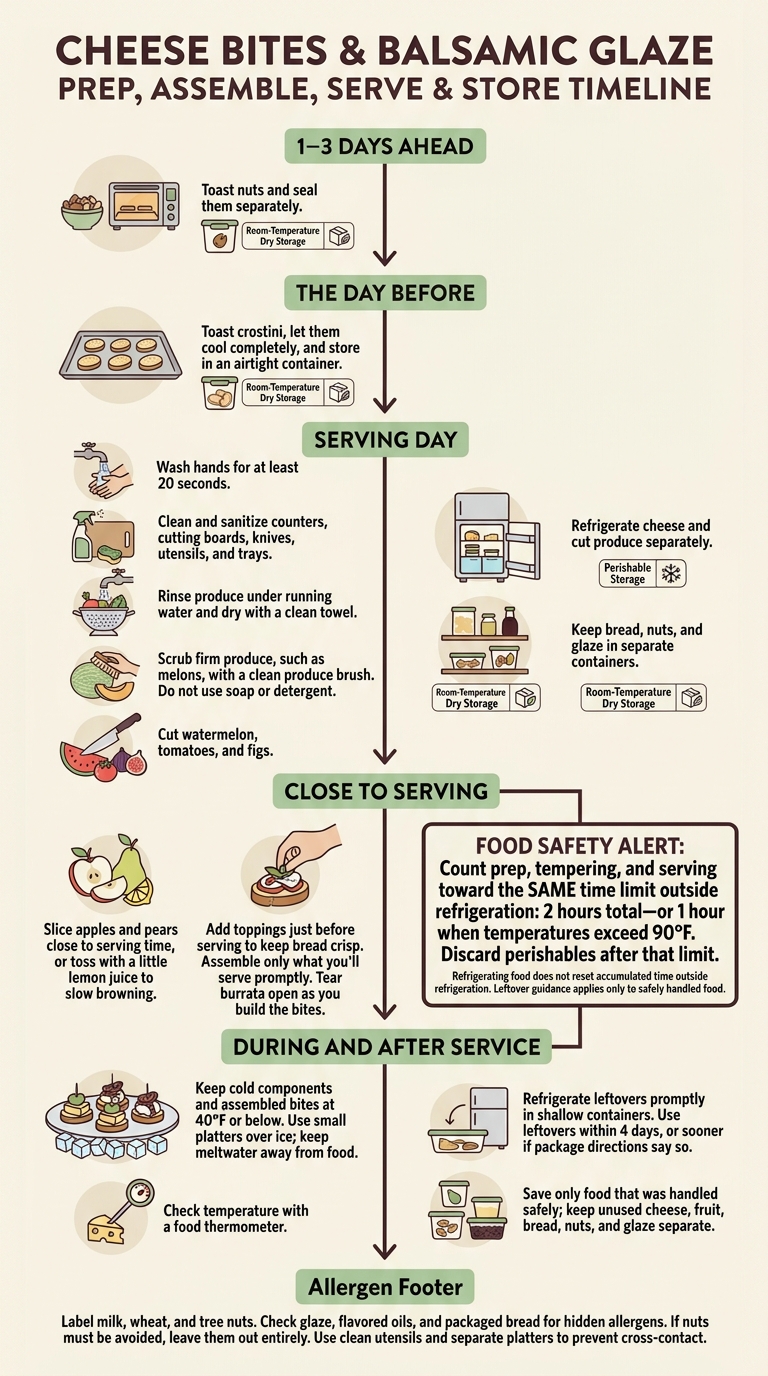
Cheese Bite Prep Timeline and Food Safety
Wash your hands for at least 20 seconds before prepping cheese bites and crostini. Clean and sanitize counters, cutting boards, knives, utensils, and trays. Rinse produce under running water - even fruit you’ll peel - and dry it with a clean towel. Scrub firm produce, such as melons, with a clean produce brush. Don’t use soap or detergent.
Prep the crisp base first and add toppings just before serving. Toast crostini the day before, let them cool completely, and store them in an airtight container at room temperature. Toast nuts 1–3 days ahead and seal them separately. Cut watermelon, tomatoes, and figs on serving day. Slice apples and pears close to serving time, or toss them with a little lemon juice to slow browning.
Refrigerate cheese and cut produce separately. Keep bread, nuts, and glaze in separate containers, too. Leave the remaining prep until close to serving so the cheese stays fresh-tasting and the bread stays crisp.
Assemble only what you’ll serve promptly, and tear burrata open as you build the bites. Keep cold components and assembled bites at 40°F or below on small platters over ice, with no meltwater touching the food. Check the temperature with a food thermometer. Include prep and tempering time in the same food-safety window already set for serving.
Label milk, wheat, and tree nuts, and check glaze, flavored oils, and packaged bread for hidden allergens. If nuts must be avoided, leave them out entirely. Use clean utensils and separate platters to prevent cross-contact. After service, save only food that was handled safely.
Keep unused cheese, fruit, bread, nuts, and glaze separate instead of assembling extra bites. Refrigerate leftovers promptly in shallow containers and use them within 4 days, or sooner if package directions say so.
Choosing Olive Oil and Balsamic Glaze
Once the bites are assembled, the oil and glaze add the finishing flavor. Match extra-virgin olive oil (EVOO) to the cheese: mild or fruity for mozzarella and burrata, peppery for feta. About 1 teaspoon for 4–6 bites adds a light finish without overpowering the toppings. Goat cheese and Brie usually need less oil.
Big Horn Olive Oil offers aged balsamic vinegars from Modena that work well as a syrupy finishing drizzle.
Focus on texture rather than label claims. Look for a thick, pourable glaze that falls in a thin ribbon. Check the ingredients, too: added sugar, syrups, starches, or gums affect sweetness and thickness.
If the vinegar is too thin, reduce it before serving.
Taste one dressed bite before drizzling the whole platter. Go lighter on glaze with mozzarella and watermelon; richer burrata and Brie can handle a heavier drizzle. Adjust that balance before serving.
Conclusion: Choose Contrasting Bites and Glaze Last
These bites balance tangy, rich, and salty flavors with crisp textures and a just-made taste.
Serve two or three contrasting varieties - not all five. For a light pre-meal appetizer, plan on 2–4 bites per guest.
Add the glaze last so the cheese takes the lead and the toppings stay bright.
FAQs
How do I fix balsamic glaze that's too thick?
Gently whisk in a little warm water or more high-quality balsamic vinegar until the glaze reaches the consistency you want.
For a homemade reduction, simmer the vinegar until half its original volume remains. This creates a syrupy, glossy finish without thickening agents. Choose high-quality balsamic vinegar, such as those from Big Horn Olive Oil, for the best flavor and texture.
How can I make gluten-free cheese bites?
Swap bread-based bases for nut coatings. Roll goat cheese into 1/2- to 1-inch balls, then coat them with finely chopped or ground almonds, walnuts, pecans, or pistachios. For a little heat or smoky flavor, add cayenne or smoked paprika. Roast at 475°F for 8–10 minutes.
Or serve your favorite cheeses on slices of fruit, such as tart apple rounds, for a crisp, gluten-free base.
What can I use instead of figs?
Strawberries, ripe pears, and apricots work well in place of figs in cheese bites, bringing out the sweet notes of aged balsamic vinegar. For a deeper sweetness, try a dollop of strawberry jam. Dried dates or cranberries add sweetness and a chewier texture.
Each option balances the creamy richness of mozzarella, burrata, goat cheese, feta, and brie.