

Mediterranean-Inspired Balsamic Tomato Chutney Recipe
If you want a tomato chutney that tastes balanced, this is it: cook tomatoes, onion, garlic, olive oil, and balsamic vinegar down for 40 to 60 minutes until thick and glossy.
I’d sum it up like this: you get a savory-sweet spread with tomato tang, balsamic depth, soft onion, and herbs. It makes about 3 to 3½ cups, stores in the fridge for 2 to 4 weeks, and works well with toast, cheese, grilled fish, chicken, roasted vegetables, and sandwiches.
Here’s the short version:
- I use 4 cups of chopped tomatoes and 1 cup onion as the base
- I cook onion first, then garlic, then add tomatoes, balsamic, herbs, salt, and pepper
- I simmer it uncovered until a spoon track holds for 2 to 3 seconds
- I adjust the taste with small amounts of salt, balsamic, or sugar/honey
- I store it in clean jars in the fridge at 40°F or below
- I can also freeze it for 4 to 6 months
A few points matter most:
- Roma or plum tomatoes give a thicker result
- ½ cup balsamic vinegar shapes most of the sweet-sharp taste
- Stir more often near the end so it doesn’t stick
- Skip starch thickeners; more simmer time gives a better texture
- Add basil and parsley off the heat for a brighter finish
This recipe is less about heat and more about balance. If I want a jammy tomato relish for a cheese board or grilled dinner, this is the kind I’d make.
Ingredients and Equipment
Ingredients with US Measurements
This batch makes about 3 to 3½ cups of chutney, which is enough for 2 to 3 half-pint (8-ounce) jars.
Here’s what you’ll need:
| Ingredient | Amount | Notes |
|---|---|---|
| Ripe tomatoes, cored and chopped | 4 cups (about 5–6 medium) | Roma or plum tomatoes make a thicker chutney |
| Yellow or sweet onion, finely chopped | 1 cup (about 1 medium) | Red onion adds a sharper bite |
| Garlic, minced | 2–3 cloves (about 2 tsp) | Use fresh garlic only |
| Extra virgin olive oil | 2 tablespoons | Use a fruity EVOO |
| Balsamic vinegar | ½ cup | Use aged Modena balsamic |
| Dried oregano or Italian herb blend | 1 teaspoon | Or 1 tablespoon chopped fresh oregano |
| Fresh basil or flat-leaf parsley | 1–2 tablespoons, chopped | Add near the end |
| Kosher salt | 1 teaspoon | Adjust to taste |
| Freshly ground black pepper | ½ teaspoon | |
| Brown sugar or honey (optional) | 2 tablespoons | Softens the tomato-balsamic edge |
| Crushed red pepper flakes (optional) | ½ to 1 teaspoon | Or 1 small fresh chili, minced |
Two ingredients do most of the heavy lifting here: olive oil and balsamic vinegar. A fruity, medium-intensity EVOO gives the onion and garlic a smooth, rich base. Then the balsamic steps in with sweetness and depth. Use a well-aged balsamic from Modena if you can. It tends to give the chutney better balance, and you may not need as much added sugar.
Big Horn Olive Oil's ultra premium EVOO and Modena balsamic work well here for a cleaner taste and a smoother finish.
With everything measured, prep is pretty straightforward.
Equipment for Cooking and Storing
You don’t need much. Just a solid pot and a few basic kitchen tools.
A 2- to 3-quart heavy-bottomed saucepan or medium Dutch oven helps the chutney cook evenly and lowers the chance of scorching as it thickens. A wooden spoon or heatproof silicone spatula works well for stirring without scraping up the pan. For chopping, use an 8-inch chef’s knife and a cutting board. Standard US measuring cups and spoons will help keep the ratios on track.
For storage, use 2 to 3 wide-mouth half-pint (8-ounce) glass mason jars with tight-fitting lids. Glass holds up well to heat, doesn’t take on odors, and makes it easy to check the texture. A ladle or small heatproof measuring cup also helps a lot when you’re moving hot chutney into jars without making a mess.
Once the ingredients are set, move on to washing and chopping.
sbb-itb-4066b8e
How to Prepare the Tomatoes and Aromatics
Get everything prepped before the pan goes on the stove. It makes the cooking part smoother, and you won’t be scrambling once the oil is hot.
Wash, Core, and Chop the Tomatoes
Rinse the tomatoes under cool water and pat them dry. Cut out the stem core with the tip of your knife, then chop the tomatoes into even ½-inch pieces for that jammy chutney texture.
If you want a looser, more rustic chutney, leave the seeds in. If you’d like it thicker, remove some of the seed gel before chopping.
Prep the Onion, Garlic, and Herbs
Dice the onion finely so it softens at the same pace all the way through. Bigger pieces take longer to cook than the tomatoes, and they can stand out in the finished chutney instead of melting into it.
Mince the garlic separately and set it aside. Garlic cooks much faster than onion, so keeping it on its own helps you add it at the right time instead of risking burnt bits.
Tear the fresh basil at the end to help hold onto its aroma. Strip the oregano and thyme from their stems, then chop them a little finer. They bring a savory Mediterranean note, while the basil adds brightness. Measure the herbs and pepper now so everything is ready when the chutney comes off the heat. Use only enough pepper to add warmth, not heat.
Next, heat the olive oil and start the sauté.
How to Cook and Finish the Chutney
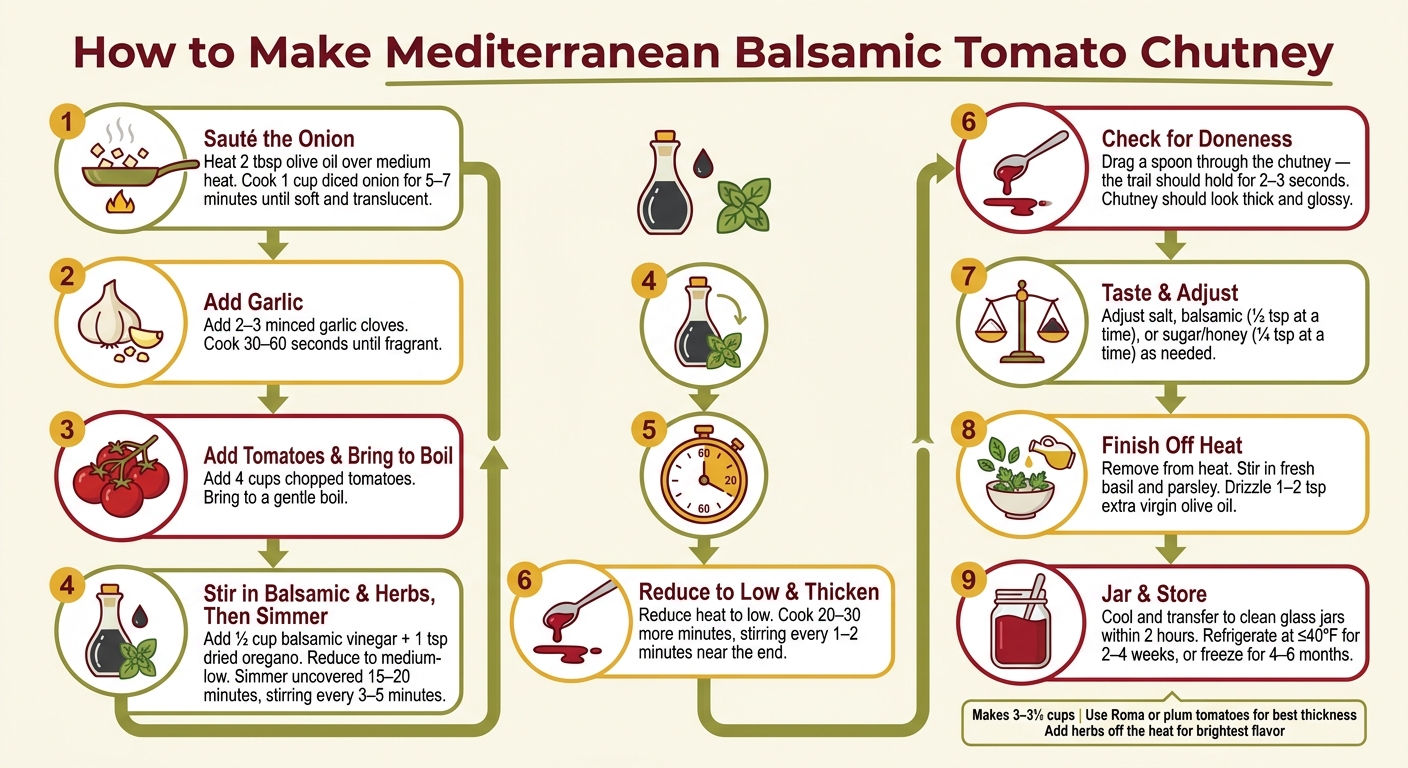
How to Make Mediterranean Balsamic Tomato Chutney: Step-by-Step
Now it’s time to turn those prepped ingredients into a thick, jammy chutney.
Sauté, Simmer, and Reduce Until Thick
Heat extra virgin olive oil in a heavy-bottomed saucepan over medium heat. Add the diced onion and cook for 5–7 minutes, stirring now and then, until soft and translucent. Add the minced garlic and cook for 30–60 seconds, just until fragrant.
Add the tomatoes and bring them to a gentle boil. Then lower the heat to medium-low. Stir in the balsamic vinegar and dried herbs, and let everything simmer uncovered for 15–20 minutes, stirring every 3–5 minutes, until the tomatoes soften.
After that, turn the heat down to low and let the chutney cook down for another 20–30 minutes. As it gets thicker, stir more often - every 1–2 minutes near the end. Each time, scrape along the bottom of the pan so nothing sticks or scorches. Total cook time usually falls between 40–60 minutes, depending on how much juice your tomatoes release.
You’ll know it’s ready when the chutney looks thick and glossy and a spoon dragged through it leaves a trail that holds for 2–3 seconds. A spoonful should sit up on a plate instead of running flat, and the bubbles on top will look slower and heavier.
Adjust Acidity, Sweetness, and Texture
Once the chutney has tightened up and the tomatoes have fully collapsed, taste and adjust. Let it cool slightly first, since hot chutney can hide the balance a bit.
Start with the salt. If the flavor still feels flat, add more balsamic ½ teaspoon at a time. If you’re using a naturally sweet, aged balsamic from Big Horn Olive Oil, you may need little or no extra sweetener. If it still tastes too sharp, add sugar or honey ¼ teaspoon at a time.
If the chutney still seems too loose, keep simmering it uncovered over low heat for 10–20 more minutes, stirring often. A wider skillet can help it cook down faster because more surface area means more evaporation. Skip cornstarch or flour. They can turn the texture pasty and dull the tomato and balsamic flavor.
Take the pan off the heat, then stir in the fresh basil, sliced into thin ribbons, and the chopped parsley. Adding the herbs off the heat helps keep their color bright and their aroma in place. Drizzle 1–2 teaspoons of extra virgin olive oil over the top and stir lightly before serving. That last bit of olive oil gives the chutney a fresh, fruity finish.
Let the chutney cool slightly before jarring or serving.
How to Store and Serve the Chutney
Storage Times and Safe Handling
Let the chutney cool, then move it to clean glass jars within 2 hours. Add the date to each jar so you know how long it has been in the fridge. Store the jars at the back of the refrigerator, where the temperature stays at or below 40°F.
Wash jars in hot, soapy water and dry them well before filling. If you're storing the chutney in the refrigerator, clean jars are enough.
| Storage Method | Conditions | Approximate Storage Time | Safety Notes |
|---|---|---|---|
| Refrigerator | Airtight glass jar, at or below 40°F | 2–4 weeks | Use a clean spoon each time; discard if mold, off-odors, or bubbling appear. |
| Freezer | Freezer-safe container with headspace | 4–6 months | Thaw in the fridge; stir before serving - texture may soften slightly. |
If you're putting it out on a buffet or cheese board, spoon only the amount you need into a small bowl and keep the main jar in the refrigerator. Don’t let chutney sit out for more than 2 hours. If the room is warm, give it even less time.
Serving Ideas and Key Takeaways
For the best flavor, serve the chutney cold or let it sit at room temperature for a short time before using. Once chilled, it’s ready to use as a topping, spread, or stir-in. Cold chutney holds onto its jammy texture and that bright balsamic finish.
A few easy ways to use it:
- Spoon it over roasted eggplant, zucchini, or bell peppers for a glossy finish.
- Stir 1–2 tablespoons into warm couscous or farro with olives and crumbled feta for a fast Mediterranean-style grain bowl.
- For a simple appetizer, add a drizzle of fruity extra virgin olive oil from Big Horn Olive Oil to each bite to echo those classic Mediterranean flavors.
Use about 1 teaspoon per bite so the chutney doesn’t overpower the cheese.
FAQs
Should I peel the tomatoes first?
The available information doesn’t say whether you should peel the tomatoes for this Mediterranean balsamic tomato chutney.
So I can’t confirm that the recipe says to peel them first.
Can I can this chutney for shelf storage?
Yes - you can can balsamic tomato chutney for long-term shelf storage with a boiling water bath.
When it's processed the right way, it can stay shelf-stable for 12 to 18 months in a cool, dry place.
Use proper canning jars with two-piece lids, stick to tested recipes so the pH stays in the safe range, and let the jars cool for 12 to 24 hours. After that, check each lid for a slight indentation in the center to make sure it sealed.
What cheeses pair best with it?
Sharp cheddar, aged Gouda, blue cheese, Brie, and goat cheese all pair nicely with Mediterranean-inspired balsamic tomato chutney. The sweet-tart flavor cuts through salty, creamy, and bold cheeses, which makes each bite feel more balanced.
It’s also a great fit for crostini, especially with soft cheeses like goat cheese, ricotta, or Brie.