

Best Gluten-Free Olive Oil Cake Recipes
If you want a gluten-free cake that stays moist, olive oil is one of the best ways to get it. In this guide, I’d boil it down like this: use almond flour for a denser, tender crumb, gluten-free blends for a more cake-like texture, and bold or mild EVOO based on the flavor you want.
Here’s the short answer:
- Lemon cakes work best with almond flour, tapioca, or a GF blend and a mild to fruity EVOO
- Almond cakes tend to come out soft, nutty, and a little denser
- Chocolate cakes pair best with a stronger EVOO that won’t get lost next to cocoa
- Most recipes here use 8-inch or 9-inch pans
- Bake times in the roundup run from about 25 to 45 minutes
- One standout lemon cake holds a 4.81/5 rating from 197 reviews
If I were picking fast, I’d do it this way:
choose lemon for brightness, almond for a soft middle ground, and chocolate for the richest crumb. Then match the oil to the cake, because olive oil flavor gets stronger after baking.
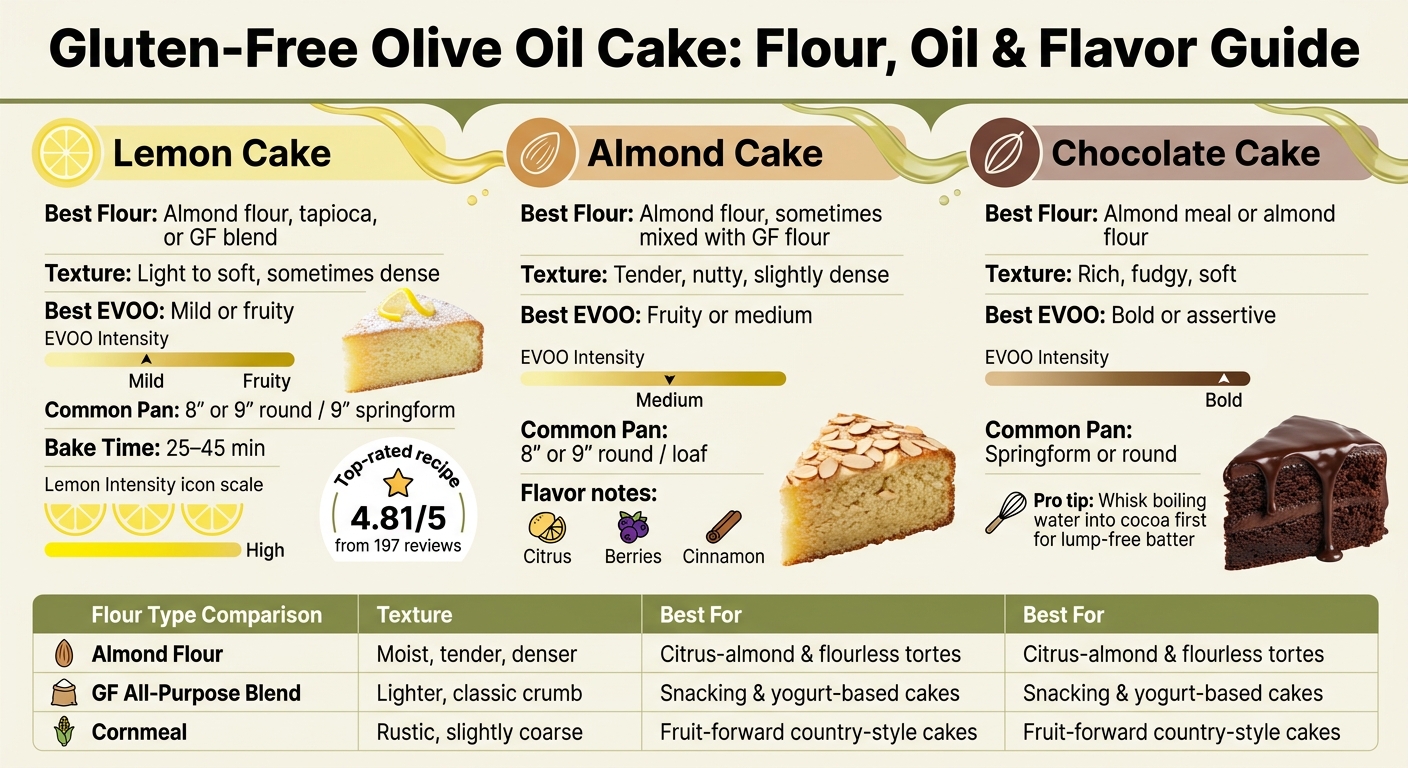
Gluten-Free Olive Oil Cake: Flour, Oil & Flavor Guide
EASY & DELICIOUS Lemon Olive Oil Cake (Gluten Free!)
sbb-itb-4066b8e
Quick Comparison
| Cake type | Best flour choice | Texture | Best EVOO style | Common pan |
|---|---|---|---|---|
| Lemon | Almond flour, tapioca, or GF blend | Light to soft, sometimes dense | Mild or fruity | 8" or 9" round, 9" springform |
| Almond | Almond flour, sometimes mixed with GF flour | Tender, nutty, slightly dense | Fruity or medium | 8" or 9" round, loaf |
| Chocolate | Almond meal or almond flour | Rich, fudgy, soft | Bold | Springform or round |
A few recipe details matter more than anything else: flour type, dairy choice, lemon level, and oil strength. That’s what shapes the crumb, flavor, and how the cake holds up after cooling.
Best Lemon Gluten-Free Olive Oil Cake Recipes
Lemon olive oil cakes vary most in three places: the flour base, the dairy, and how much lemon they pack in. In general, bright lemon cakes pair best with a balanced or fruity EVOO. The recipes below start with lighter, dairy-free cakes and move toward richer, more structured ones.
Vegan and Dairy-Free Lemon Olive Oil Cakes
The Bojon Gourmet recipe from Alanna Taylor-Tobin uses almond and tapioca flour, plus whipped egg whites folded into the batter. That step gives the cake a light, springy feel. It bakes in a 9-inch springform pan for about 40–45 minutes and holds a 4.81/5 rating from 197 reviews.
"Don't be afraid to use a super-flavorful extra-virgin olive oil here – the grassy notes add complexity and dimension." - Alanna Taylor-Tobin, The Bojon Gourmet
If you need a fully vegan choice, Rhian's Recipes by Rhian Williams uses a gluten-free flour blend with ground almonds and finishes the cake with a lemon syrup drizzle. That syrup adds both sweetness and tang.
Then the texture shifts a bit. Yogurt-based cakes lose some of that airy lift, but they gain a softer, more classic crumb.
Lemon Cakes Made with Greek Yogurt or Almond Flour
Elizabeth Rider's one-bowl cake uses a gluten-free all-purpose blend from Namaste along with Greek yogurt. The yogurt brings tang and helps keep the crumb soft without weighing it down.
If you're after a richer, more nutty cake, the next set leans denser. Making Thyme for Health uses almond flour and oat flour with dairy-free yogurt and honey instead of granulated sugar. It uses zest only, with no lemon juice. The recipe skips juice because extra acidity can weaken the rise, while zest from 2 lemons still gives full citrus flavor. The end result is a rich, moist 8-inch round cake that bakes in 25–30 minutes.
For a sharper lemon profile, Abra's Kitchen by Abra Pappa, MS, CNS, LDN, uses almond flour and coconut flour with zest, juice, and lemon extract. The almond flour makes the cake a bit denser, but the lemon still comes through clearly, as Pappa says:
"I love the texture of almond flour in this cake, it is slightly more dense than a traditional gluten-free flour, but plays nicely with the light lemon flavor."
One small trick helps across pretty much all of these cakes: rub the lemon zest into the sugar with your fingers before mixing. That helps release the aromatic oils and gives the finished cake a stronger citrus hit.
Use the table below to compare the flour base, dairy, and lemon intensity at a glance.
Lemon Cake Comparison Table
| Recipe | Flour Base | Dairy | Pan Size | Bake Time | Lemon Intensity |
|---|---|---|---|---|---|
| Bojon Gourmet | Almond + Tapioca | Dairy-Free | 9" Springform | 40–45 min | High (Zest + Juice) |
| Rhian's Recipes | Gluten-Free Blend + Ground Almonds | Vegan | 7" Springform | Not listed | High (Lemon Syrup Drizzle) |
| Elizabeth Rider | Gluten-Free Blend (Namaste) | Greek Yogurt | 9" Round | Not listed | Moderate (Zest + Juice) |
| Making Thyme for Health | Almond + Oat Flour | Dairy-Free Yogurt | 8" Round | 25–30 min | High (Zest Only) |
| Abra's Kitchen | Almond + Coconut Flour | Dairy-Free | 9" Round | 35–40 min | Very High (Zest + Juice + Extract) |
Best Almond and Chocolate Gluten-Free Olive Oil Cake Recipes
Almond cakes tend to stay light and bright. Chocolate cakes go richer and denser. Where lemon cakes feel sunny and sharp, these recipes move into nutty, citrusy, and deep chocolate territory. A fruity oil fits citrus and berries well, while a bolder oil stands up better to chocolate.
Almond Flour Olive Oil Cakes with Citrus or Berries
These cakes rely on almond flour for a tender, slightly crumbly crumb. Tapioca flour or starch helps add lift and keeps the batter from turning overly wet, as Nicole Charles, recipe developer, explains:
"The combination of the almond flour and olive oil makes this cake really soft and moist, while the tapioca starch prevents it from being too wet!"
Nicole Charles also says the olive oil adds a light floral note that works well with lemon zest and warm cinnamon. Berries fit this style nicely too, because their tartness cuts through the richness of the oil.
If you want a lighter texture, a gluten-free 1-to-1 blend mixed with almond flour can make a clear difference compared with a fully nut-based batter, as seen in the Unctuous Citrus Cake. That recipe uses sour cream for a moist crumb and blends orange and lemon juice for layered citrus flavor. It also has a 5/5 rating from 1 vote.
One smart baking tip from that recipe: toss sliced almonds with a little flour and sugar before scattering them over the batter. That helps keep them on the surface instead of letting them sink while the cake bakes.
For a blood orange and cardamom version, the Citrus Almond Loaf from Fede the Clumsy Chef uses gluten-free self-raising flour with almond flour and kefir yogurt. The kefir helps keep the crumb soft for several days, and the cardamom brings a warm, slightly floral note. A fruity EVOO is a good match here.
Chocolate Olive Oil Cakes with a Moist Crumb
When you're after a deeper flavor and a denser crumb, chocolate cakes are the move. A common method uses almond meal and cocoa powder to make a rich, fudgy texture. Paige Adams whisks boiling water right into the cocoa powder first, which makes a smooth, lump-free chocolate base before it gets mixed with eggs and olive oil. The end result is rich and fudgy, but still lighter than you might expect.
"For a flourless cake, every bite was very chocolatey, but still light." - Paige Adams, Author
These cakes are great with just a dusting of powdered sugar. Since the crumb is so tender, a springform pan lined with parchment paper makes cleanup and removal much easier. A bold or assertive EVOO works well in this kind of cake, since fruity notes can sharpen the cocoa. If the oil tastes especially bitter, adding a bit more salt can help soften that edge. So the oil you choose has a big effect, especially when you're deciding between fruitier and bolder EVOO styles for the cake.
Almond and Chocolate Cake Comparison Table
| Recipe Style | Primary Flour | Flavor Profile | Dairy | Texture | Best EVOO |
|---|---|---|---|---|---|
| Unctuous Citrus Cake | GF 1-to-1 + Almond | Orange, Lemon, Nutty | Sour Cream | Light, Moist | Fruity/Aromatic |
| Citrus Almond Loaf | GF Self-Raising + Almond | Blood Orange, Cardamom, Floral | Kefir Yogurt | Soft, Tender | Fruity |
| Moist Almond Cake | Almond + Tapioca | Lemon, Cinnamon, Floral | Dairy-Free | Light, Springy | Fruity |
| Flourless Chocolate Almond | Almond Meal | Chocolate, Vanilla, Almond | Dairy-Free | Rich, Fudgy | Bold/Assertive |
How to Pick the Right Olive Oil and Flour for Each Cake
Use the recipes above as your guide, then pair the oil and flour with the kind of cake you want to make. For gluten-free olive oil cake, two choices matter most: oil intensity and flour type.
Matching Olive Oil Intensity to Each Cake Style
The olive oil should fit the cake’s main flavor. If you’re making a lemon or citrus cake, go with a mild or fruity EVOO so the citrus stays bright. Big Horn Olive Oil's Picual works well for that because of its grassy, citrus-forward notes.
For almond cakes, a medium, fruity oil gives you better balance. Big Horn's Estate Reserve is a good fit for snacking cakes, berry cakes, and yogurt-based recipes. Chocolate cakes are different. They need a bold EVOO that can hold its own next to cocoa, and Big Horn's Coratina pairs well with bittersweet chocolate.
One thing to keep in mind: baking makes olive oil flavor stand out more. So start with an oil you already enjoy.
That brings you to the next choice: flour.
How Almond Flour, Gluten-Free Blends, and Cornmeal Differ
Flour shapes the texture of the cake. And each type lines up with a different style in this roundup.
Almond flour makes a cake moist, tender, and a bit denser. That’s why it works so well in lemon cakes, chocolate cakes, and flourless torte-style cakes. Use finely ground blanched almond flour. It makes a big difference. As Bree Hester of Baked Bree puts it:
"A finely milled almond flour creates a tender, even crumb, while coarser almond meal can make the cake dense and gritty."
GF all-purpose blends give you a lighter, more classic crumb, which makes them a good pick for yogurt-based snacking cakes. These blends often include xanthan gum, and they usually need extra moisture from ingredients like yogurt or buttermilk. Cornmeal goes in another direction. It gives cakes a rustic, slightly crunchy crumb that fits fruit cakes well.
| Flour Type | Texture | Best Cake Style |
|---|---|---|
| Almond Flour | Moist, tender, denser crumb | Citrus-almond cakes and flourless tortes |
| GF All-Purpose Blend | Lighter, more classic crumb | Snacking cakes and yogurt-based cakes |
| Cornmeal | Rustic, slightly coarse crumb | Fruit-forward country-style cakes |
Since there’s no gluten here, eggs and sugar have to do more of the work to build lift. With almond flour, beat the eggs and sugar for 3 minutes until the mixture looks pale and thick.
With the right oil-and-flour combo, picking the best recipe usually comes down to the flavor you want.
Conclusion: Picking the Right Gluten-Free Olive Oil Cake for Your Needs
Now that the flour-and-oil pairing is clear, the last call comes down to flavor.
Lemon cakes are the lightest pick. Almond cakes sit right in the middle. Chocolate cakes are the richest. So the olive oil should work with the cake, not against it.
Baking makes olive oil taste stronger, which is why it helps to choose an EVOO you already like. Go with a mild oil for lemon, a fruity oil for almond cakes, and a bold oil for chocolate. If you're using a fresh, high-quality EVOO from Big Horn Olive Oil, match the oil’s intensity to the style of cake.
Most cakes keep at room temperature for 3 days and freeze for 2 months.
FAQs
Can I swap almond flour for a gluten-free blend?
Usually, no. Almond flour gives these cakes a very specific texture, moisture level, and fat content. If you swap it for a gluten-free flour blend, the final cake may turn out quite different.
That’s because almond flour doesn’t act like grain-based gluten-free blends. Those blends often rely on starches and xanthan gum to imitate wheat flour, so they bake in a different way. For the best result, stick with the flour the recipe calls for.
How do I choose the right olive oil flavor?
Choose an extra virgin olive oil that tastes good to you. That part matters more than people think.
For citrus-forward cakes, go with a mild olive oil so the lemon or orange stays front and center.
For almond or chocolate cakes, a more robust extra virgin olive oil can add grassy, fruity depth.
What keeps gluten-free olive oil cake moist?
Extra-virgin olive oil does a lot of the heavy lifting here. It brings richness, a light fruity note, and helps the cake stay moist. Almond flour plays a big part too, giving the cake a tender, moist crumb, while buttermilk adds even more moisture and softness.
The mixing step matters just as much. Beating the eggs and sugar until pale and fluffy helps give the cake structure. And if you want that soft texture to stick around, don’t overbake it.