

Checklist for Evaluating Vinegar Terroir
When it comes to vinegar, terroir matters more than you might think. The flavor, aroma, and quality of vinegar are deeply influenced by where and how its raw materials are grown, fermented, and aged. From soil composition to climate and geography, every step of the process impacts the final product. Here's what you need to know:
- Soil: The type of soil (e.g., limestone, clay) affects water retention and drainage, shaping the fruit's flavor and acidity.
- Climate: Cooler climates produce fruit with higher acidity, while warmer areas yield sweeter profiles. Seasonal weather also impacts fermentation and aging.
- Geography: Altitude, topography, and proximity to water influence the fruit's chemistry and the aging process, adding depth to the vinegar.
- Fermentation: Traditional methods like surface fermentation allow local microbes to create complex flavors, while industrial processes may strip away regional character.
- Aging: Factors like barrel type, humidity, and temperature swings during aging intensify the vinegar's unique traits.
To evaluate vinegar terroir, look for certifications like PDO or PGI, check the farming and production methods, and use sensory evaluation to identify regional characteristics. Our premium vinegars made with care and tied to their origin can transform your cooking with bold and nuanced flavors.
Main Terroir Factors That Affect Vinegar Flavor
Soil Composition
The soil where raw materials are cultivated plays a key role in shaping vinegar's flavor. Factors like water retention and drainage are especially important. For instance, limestone soils, found in areas like Burgundy, often contribute to a crisp acidity and a mineral-driven character. On the other hand, clay soils, such as those in parts of Bordeaux, hold more water and tend to produce richer, more structured flavors.
Nitrogen levels in the soil also matter; they ensure yeast in the fruit has the nutrients needed to create desirable flavors and aromas. Additionally, the soil's microbial community - sometimes called "microbial terroir" - influences the raw material's sensory traits and the fermentation process itself. Vinegars made from fruits grown on slopes or in porous soils like gravel or schist often benefit from natural drainage, which can enhance flavor. Organic and biodynamic farming methods may amplify these effects, as they avoid synthetic chemicals that could disrupt the soil's natural microbiology. Of course, the impact of soil is intertwined with broader environmental factors.
Climate and Weather Patterns
Climate shapes both the raw materials and the fermentation process. Grapes from cooler climates, for example, maintain higher acidity, while those from warmer regions develop more sugar. This affects the vinegar's character - cooler climates often yield vinegars with a lively, fresh quality, while warmer areas produce rounder, less acidic profiles.
Seasonal weather also impacts fermentation. A study on Zhenjiang aromatic vinegar found that winter production achieved higher acid levels (8.3 g/100 g), while summer production was lower (6.9 g/100 g). Open fermentation in summer, however, can host up to 620 bacterial species, adding complexity to the flavor.
Even the aging process is influenced by climate. For example, low humidity accelerates water evaporation through barrels, concentrating flavors and increasing viscosity. Some producers even adjust barrel openings to manage this effect naturally. These climatic factors, combined with geography, help define a vinegar's regional identity.
Geography and Regional Characteristics
Geographical features like altitude, topography, and proximity to water bring unique qualities to vinegar. Higher altitudes, with their cooler temperatures and greater day-night temperature swings, produce fruit with enhanced acidity and concentrated flavors.
Steep slopes improve drainage and boost sun exposure, which intensifies flavors in the raw materials. Meanwhile, maritime climates near large bodies of water provide stable temperatures and specific humidity levels, adding depth and structure to the final product. For example, the presence of rotundone, a compound responsible for a peppery aroma, can vary significantly - up to 40 times - based on topography and sunlight exposure.
Local flora also influences terroir. In colder regions like Quebec, producers may use cryoconcentration - freezing fruit juice to create a highly concentrated base - to craft vinegars that reflect their harsh environment. Geographic certifications like Protected Designation of Origin (PDO) or Protected Geographical Indication (PGI) further emphasize the connection between a product's quality and its place of origin. Together, these regional traits, along with soil and climate, shape the unique character of artisanal vinegars, influencing both the raw materials and the fermentation process.
Wine and Dirt: How Soil Composition Affects Grapes and Wines
How to Evaluate Vinegar Terroir: A Step-by-Step Checklist
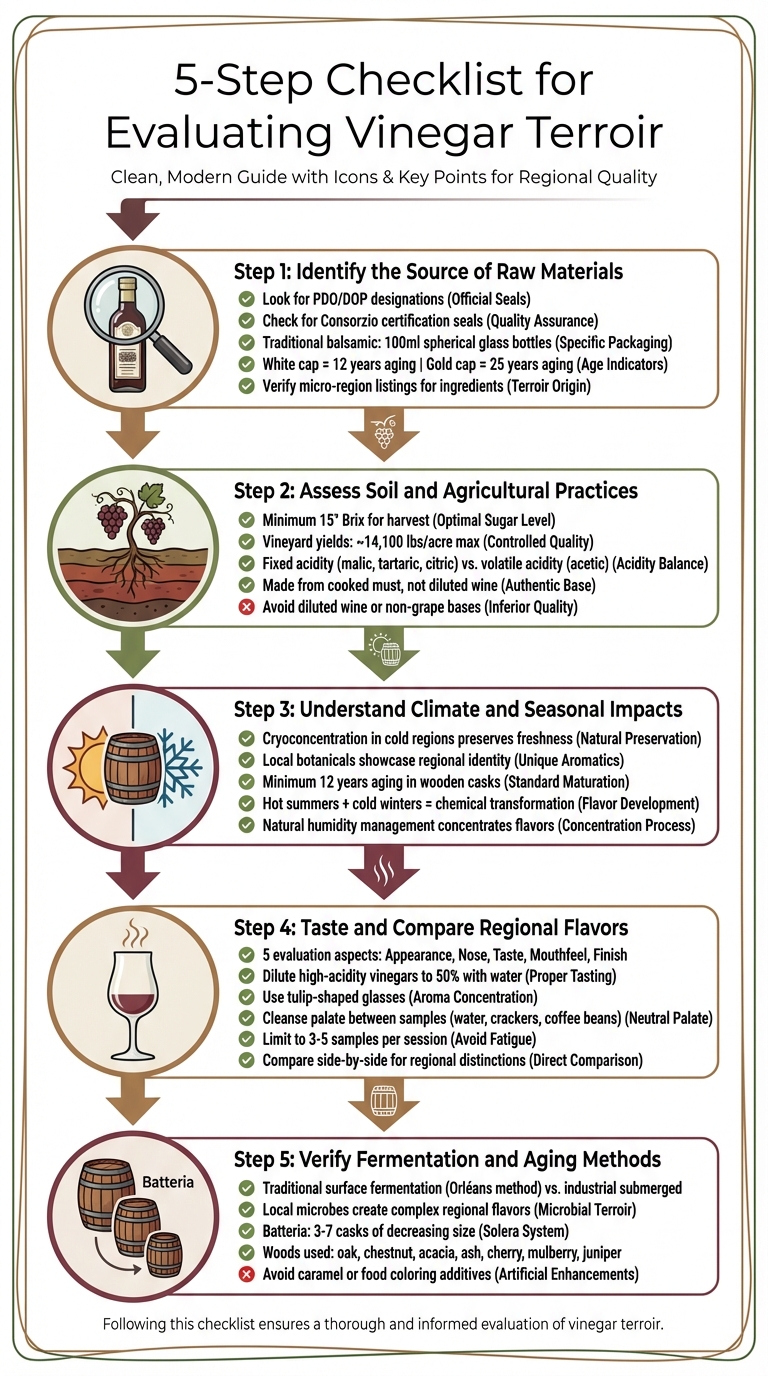
5-Step Checklist for Evaluating Vinegar Terroir
This checklist walks you through the process of evaluating vinegar terroir, taking into account the influence of soil, climate, and geography.
Identify the Source of Raw Materials
Start by checking the label for designations like PDO (Protected Designation of Origin) or DOP. These ensure that the grapes used - often Lambrusco or Trebbiano for Aceto Balsamico Tradizionale di Modena DOP - are grown and processed in specific regions under strict guidelines. Look for Consorzio certification seals, which confirm the vinegar has been blind-tasted and approved by experts. Traditional balsamic vinegar should come in regulated 100 ml spherical glass bottles, with white caps indicating 12 years of aging and gold caps for 25 years.
Some producers go further by listing micro-regions for their ingredients, offering deeper insights into the terroir. Once you’ve confirmed the source, consider how farming methods contribute to the final product, much like the careful cultivation required for premium olive oils.
Assess Soil and Agricultural Practices
Harvest timing is crucial, as it affects the balance between sugar and acidity. For traditional balsamic vinegar, grapes must reach a minimum of 15° Brix before harvesting, with vineyard yields limited to about 14,100 pounds per acre to maintain quality.
Vinegar acidity comes in two forms: fixed acidity (malic, tartaric, and citric acids) and volatile acidity (acetic acid). Fixed acids, derived from the fruit itself, are experienced on the palate, while acetic acid adds a sharp pungency experienced through the nose. Check if the vinegar is made from cooked must rather than diluted wine, as this traditional method better reflects the terroir.
Understand Climate and Seasonal Impacts
Explore how the local climate shapes the vinegar’s flavors. In colder regions, some producers use cryoconcentration, freezing the fruit juice to intensify its essence without cooking, which preserves fresh, regional characteristics. They might also incorporate local botanicals like larch branches, spruce shoots, or wild mushrooms to showcase the area’s identity.
Traditional balsamic vinegar undergoes a minimum of 12 years of aging in wooden casks. The natural cycle of hot summers and cold winters drives chemical changes that create its distinct flavor and aroma. Check if the producer manages barrel humidity naturally, as lower humidity speeds up water evaporation, concentrating the flavors and thickening the vinegar.
Taste and Compare Regional Flavors
Once you’ve verified the production methods, it’s time to taste the vinegar and identify how terroir influences its flavor. Use a structured approach to sensory evaluation, focusing on five key aspects: Appearance (clarity, color, viscosity), Nose (aroma intensity), Taste (primary flavors), Mouthfeel (texture), and Finish (lingering notes). For vinegars with high acidity, dilute them to 50% strength with water to uncover subtle flavors that might be hidden by the acetic burn.
Tulip-shaped glasses are ideal for concentrating aromas. Smell the vinegar from a short distance to avoid overwhelming your senses. Cleanse your palate between samples with water, crackers, or coffee beans, and limit tastings to 3–5 samples to prevent sensory fatigue. Pay attention to how flavors evolve - from initial sweetness or fruitiness to tannic acidity and a hint of bitterness at the finish. Comparing samples side-by-side can bring out regional distinctions that might not stand out when tasting vinegars individually.
sbb-itb-4066b8e
How Aging and Fermentation Express Terroir
How Fermentation Reflects Terroir
The fermentation method plays a big role in whether a vinegar's regional identity is highlighted or lost. Traditional surface fermentation, like the Orléans method, uses a natural acetic bacterial culture that forms at the liquid-air interface in oak casks. This slower process allows local microbes to leave their mark, creating complex flavors tied to the region’s environment.
On the other hand, industrial submerged fermentation relies on turbines and high-speed aeration to churn out up to 500,000 liters annually at 10% acidity. While efficient, this approach often sacrifices the nuanced aromas and local characteristics that give regional vinegars their distinctiveness. The result? A sharp, uniform acidity without the depth of flavor that reflects a specific place.
In traditional vinegar-making, local microbes are key players. Native yeast species like Zygosaccharomyces sapae or Hanseniaspora valbyensis, present in the environment and cooked must, contribute unique secondary compounds like esters and aldehydes. These compounds shape the flavor profiles that make a region’s vinegar stand out. For instance, traditional balsamic vinegar employs a two-stage process - alcoholic fermentation followed by acetic oxidation - allowing local yeasts and bacteria to coexist and create the complex, savory flavors iconic to Modena and Reggio Emilia. Jean-Francios Pelchat of La Villa Vinaigres & Jardins in Quebec highlights how his environment shapes his vinegar:
"I live in a place where winters are long and sometimes extremely cold. I use it to my advantage... it allows me to pack an insane amount of berries in a liter of vinegar without cooking the must".
The aging process that follows only deepens these terroir-driven qualities.
How Aging Affects Terroir Characteristics
Once fermentation has established the initial flavor profile, aging takes over, intensifying those characteristics. Traditional balsamic vinegar, for example, must age for at least 12 years, with "Extravecchio" varieties requiring 25 years or more. During this time, evaporation concentrates the sugars and acids, giving the vinegar a thicker, syrupy texture. Grape must is often reduced to about 30% of its original volume before fermentation even begins.
The environment where aging takes place adds another layer of influence. Factors like altitude, summer heat, and attic ventilation affect evaporation rates and maturation. Vinegar aged at higher altitudes, for example, undergoes different temperature swings compared to vinegar aged at sea level, leading to unique outcomes even when starting with the same base ingredients.
Aging barrels, or "batteria", also contribute to the final product. These sets typically include three to seven casks of decreasing size, often made from various woods such as oak, chestnut, acacia, ash, cherry, mulberry, and juniper. Each type of wood imparts distinct qualities, but smaller barrels, with their higher surface-area-to-liquid ratios, can sometimes overshadow subtle terroir notes with stronger wood-derived flavors. Rodrigo Vargas of American Vinegar Works sums up the difference:
"The difference between barrel aged vinegar and mass produced vinegar is the gap between finished and merely acidic".
However, not all aging is beneficial. If the raw materials have flaws - like burnt notes from over-cooking - aging will amplify these imperfections rather than enhance the terroir.
Both fermentation and aging are vital for showcasing the intricate interplay of local influences that define a vinegar’s terroir. Together, they serve as essential milestones in evaluating the final product’s quality and character.
Conclusion: Understanding the Value of Vinegar Terroir
Key Takeaways from the Checklist
Terroir plays a defining role in vinegar quality, and understanding it starts with examining factors like local weather, soil, and the origin of raw materials. High-quality producers often highlight these details - such as sourcing mountain blueberries from elevations around 5,249 feet (1,600 meters) - to create distinctive acidity and flavor profiles.
When buying vinegar, look for PDO or PGI certification labels. These confirm the product's regional authenticity and adherence to traditional production methods. Avoid vinegars containing caramel or food coloring, as these additives can obscure the natural traits that terroir develops. Genuine terroir shines through traditional methods like long-term barrel aging or cryoconcentration, which preserves the fresh essence of the fruit without cooking.
Artisanal producers dedicated to these principles create products that truly reflect their origins.
Improving Culinary Experiences with Big Horn Olive Oil
Big Horn Olive Oil exemplifies the importance of terroir in their artisanal balsamic vinegars. Their offerings, such as the Traditional 18-Year Aged Dark Balsamic Vinegar and the Molto Denissimo 25-Year Aged Dark Balsamic Vinegar, are perfect examples of terroir-driven craftsmanship. These vinegars, produced in Modena, Italy, undergo extended aging that concentrates their sugars and acids, resulting in rich, complex flavors unique to their region. The meticulous sourcing and traditional fermentation methods ensure that the distinct characteristics of their origin are preserved.
Incorporating vinegars like these into your cooking can elevate even the simplest dishes. A well-aged balsamic can introduce subtle mineral notes and transform meals into memorable culinary experiences. Whether drizzled over fresh vegetables or used to finish grilled meats, vinegars that capture the essence of terroir have the power to enhance your everyday cooking.
FAQs
How can I tell if a vinegar’s terroir is real?
To determine if a vinegar truly represents its region’s distinct traits, start by examining its connection to the area’s climate, soil, and traditional production methods. Vinegars that genuinely reflect their terroir often include detailed information about their origin, how they’re made, and their flavor profiles right on the label or accompanying materials.
Another way to check? Taste it. Compare the vinegar’s flavors to the known characteristics of its region. Does it align with what you’d expect from that area? This hands-on approach can give you a clearer sense of its authenticity.
What label clues show traditional fermentation and aging?
When shopping for balsamic vinegar, pay attention to labels that highlight extended aging periods, like "12+ years." Also, look for mentions of aging in wooden barrels, a process crucial to traditional fermentation and flavor development. These details often signal authentic production methods that enhance both quality and taste.
How should I taste vinegar to spot regional differences?
To spot regional variations in vinegar, pay attention to its appearance, aroma, and flavor profile. Examine the clarity, color, and thickness of the vinegar. Take a moment to smell it - does it carry hints of fruit, earthiness, or something else distinctive? When tasting, notice its brightness, sweetness, and any subtle flavors tied to the local terroir, like the soil or climate. This method helps reveal how regional elements influence the vinegar's unique character.