

Common Issues with Chili-Infused Olive Oil
If chili-infused olive oil goes bad, the problem is usually flavor, storage, or safety. If it tastes mild, bitter, burnt, stale, or oddly harsh, I’d check that first. If it was made at home with moist ingredients, I’d treat safety as the bigger issue.
Here’s the short version:
- Too mild: add a little more dried chili to a test portion first
- Too hot: dilute with plain olive oil, a little at a time
- Burnt or acrid: throw it out
- Cloudy from the fridge: let it warm up on the counter
- Waxy, cardboard-like, or paint-like smell: the oil is rancid; discard it
- Homemade oil with moist peppers, garlic, or herbs: keep at 40°F (4°C) or below and use within 2 to 4 days
- If storage history is unknown: don’t taste it; discard it
What I’d look for in a good bottle is simple: a clean smell, clear chili taste, and no stale or sharp chemical notes. <u>Cloudiness alone is not always a problem</u>, but moisture, bubbles, mold, or off smells are.
One safety point matters more than anything else: botulinum toxin may not change the smell, taste, or look of homemade oil made with moist ingredients. That’s why short fridge storage matters, and why guessing is a bad idea.
This article boils the whole topic down to one rule: adjust flavor problems, store quality problems well, and discard anything that seems unsafe.
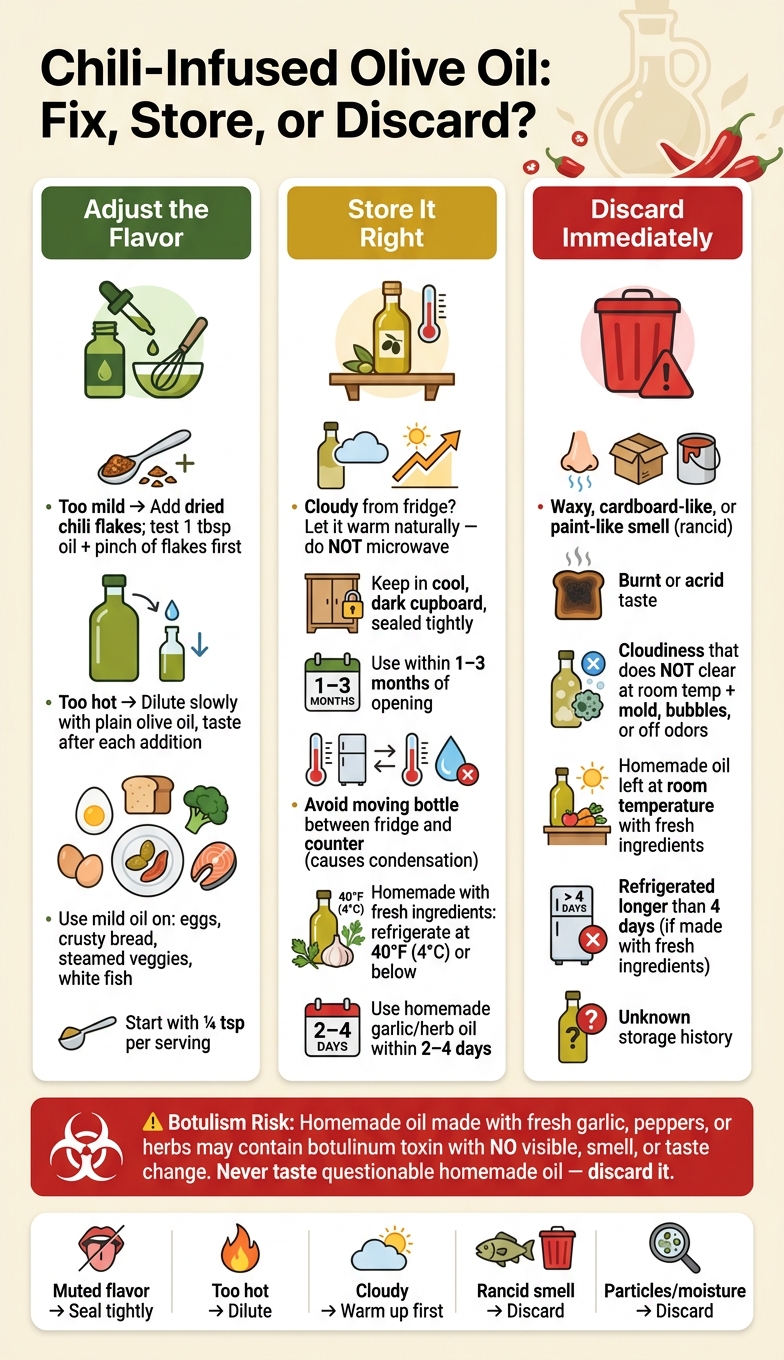
Chili-Infused Olive Oil: Fix, Store, or Discard?
When the Heat or Flavor Is Off
Oil That Tastes Too Mild or Too Hot
If your chili oil barely has any kick, the cause is usually pretty simple: the peppers were mild, old, had the seeds removed, or didn’t steep long enough.
Don’t tweak the full batch right away. Test a small amount first. Mix 1 tablespoon of oil with a small pinch of dried chili flakes. Let it sit for a few hours, then taste it on plain bread. That gives you a clean read on the heat level. If it lands where you want, use that same ratio for the rest of the batch so you don’t go too far.
If the oil swings the other way and turns out too hot, thin it out little by little with plain, unflavored olive oil. Taste after each small addition. Go slow. It’s much easier to add more oil than to deal with a batch that’s gone flat.
A stronger chili oil doesn’t have to be a waste. It can still shine as a finishing oil for bold dishes. Milder chili oil tends to work better on foods that don’t fight for attention, like:
- eggs
- crusty bread
- steamed vegetables
- white fish
Start with ¼ teaspoon per serving, then add more if needed.
Bitterness, Burnt Notes, or Harsh Heat
If the issue is bitterness, look for scorching first. Some bitterness is normal with olive oil, so don’t panic at the first slightly bitter taste. What you want to watch for is a sharp, acrid, smoky edge. That’s the red flag.
If the oil tastes burnt, there isn’t much you can do. Once a batch turns acrid, dilution just covers it up for a moment. Garlic, herbs, or more chili won’t save it either. If the flavor is clearly off, discard it and start fresh.
To avoid that problem next time, pull the pan off the burner before adding the dried chili. Keep the heat low - around 225–250°F (107–121°C) for flakes - and stir briefly instead of letting the chili sit in hot oil. When you’re trying a new pepper type or changing your process, a small test batch can save you a lot of frustration.
sbb-itb-4066b8e
How to Make Spicy Chili Oil | Italian Chili Oil for Pizza & Pasta
Storage Problems: Cloudiness, Staleness, and Short Shelf Life
If the heat level and flavor balance seem fine, storage is usually where things went sideways.
Cloudy or Solid Oil After Refrigeration
If your chili oil turns cloudy or partly solid in the fridge, let the bottle come back to room temperature on its own. Don’t microwave it or put it straight on the stove.
Once it warms up, take another look. If the cloudiness doesn’t clear, or you notice mold, bubbles, water droplets, or a smell that seems off, throw it out.
It also helps to stop moving the bottle back and forth between the fridge and the counter. That temperature swing can cause condensation inside the bottle. And once moisture gets in, shelf life gets shorter.
If the oil still seems wrong after warming, the next thing to check is oxidation.
Rancid Smell or Stale Flavor
A waxy, cardboard-like, or paint-like smell is a clear sign of oxidation.
There’s no kitchen trick that fixes rancid oil. Filtering it, adding more chili, or mixing it with fresh oil doesn’t solve the problem. It just covers it up for a bit. If the smell is clearly off, discard the oil, wash the bottle well, and make a new batch.
For storage, keep the bottle sealed tight in a cool, dark cupboard, away from heat and light. A good rule of thumb: only buy or make what you’ll use within 1–3 months.
Quick-Reference Quality Troubleshooting Table
| Symptom | Likely Cause | Safe Action | Discard If |
|---|---|---|---|
| Muted chili flavor | Age or oxygen exposure | Keep tightly sealed; use sooner; buy smaller bottles | Smell is waxy, stale, or paint-like |
| Excessive heat | Hot chili variety or high concentration | Dilute a small amount with fresh extra virgin olive oil; use less | Harsh heat is paired with burnt, chemical, or rancid aromas |
| Cloudiness or solid oil | Cold temperature | Let it warm naturally | Cloudiness persists at room temperature with mold, bubbles, moisture, or off odors |
| Rancid or stale odor | Oxidation | No fix; replace and store properly | Smell is waxy, cardboard-like, or paint-like |
| Persistent particles or trapped moisture | Contamination or deterioration | Do not taste or attempt to reuse | Discard and clean any container that touched the oil |
Food-Safety Risks With Homemade Chili Oil
Storage issues can hurt quality. Fresh ingredients can hurt safety. So if the oil looks fine but was made with fresh garlic, peppers, or herbs, safety is the bigger concern.
Why Fresh Ingredients Raise the Risk
Fresh peppers, garlic, or herbs in oil create a low-oxygen, moist setting that can support Clostridium botulinum and toxin production, which lowers the barrier to microbial growth. The CDC specifically identifies chopped garlic in oil as a botulism risk.
Here’s the part that catches people off guard: botulinum toxin may be present without changing the oil’s smell, appearance, taste, or texture. In plain English, homemade oil can seem normal and still be unsafe. Do not taste questionable homemade oil.
Safer Handling and When to Throw It Out
Use dried chili flakes or dried peppers instead of fresh peppers, garlic, or herbs unless you’re following a tested preservation method. Refrigerate homemade garlic- or herb-infused oil at 40°F (4°C) or below and discard it after 4 days.
Day-to-day handling matters just as much as the recipe. Use clean, completely dry containers, lids, and utensils, and keep water out of the oil. Label each batch with the preparation date in U.S. month/day/year format - for example, "Prepared 09/23/2026" - and note whether it contains fresh ingredients.
Throw it out without tasting it if any of these apply:
- It contains fresh ingredients and was left at room temperature
- It was refrigerated longer than 4 days
- It was made with wet or visibly damp ingredients or in an unclean container
- The date or storage history is unknown
Do not try to rescue the oil in any of these cases. Boiling it, straining it, or adding more vinegar will not eliminate the risk. If the preparation method, ingredient dryness, or storage history is unclear, the safest move is to throw it out.
How to Choose and Use Chili-Infused Olive Oil More Successfully
How to Use It Without Losing Flavor
Once the oil tastes good, the next job is using it in a way that lets that flavor show up. Chili-infused olive oil works best as a finishing oil. Drizzle it over pizza, roasted vegetables, beans, eggs, soups, pasta, or roasted meats right before serving. You can also whisk it into vinaigrettes, dips, sauces, or marinades. Those uses help the chili taste stay clear instead of fading into the background.
High heat can dull both the olive notes and the chili taste. A simple fix: cook with plain olive oil first, then finish the dish with 1–2 teaspoons per serving.
It also helps to match the heat level to the food. A mild chili oil fits gentler dishes like white fish, hummus, eggs, or fresh mozzarella. A hotter oil tends to work better with beans, grilled meats, pizza, hearty soups, and roasted vegetables. If the oil runs too hot, mellow it with something cool or rich, like yogurt, avocado, or cheese. If it feels too mild, add a little more chili-infused oil or a pinch of crushed dried chili.
What to Check Before Buying or Storing
Flavor matters, but so do the bottle and the label. Before you buy, check the ingredient list to see if the oil uses dried chilies, chili extract, fresh chilies, or other flavorings. Look at the best-by date, the bottle size, and any storage directions from the producer. Dark glass, opaque packaging, or a tin is the better pick.
Buy only as much as you'll actually use. The International Olive Council says opened olive oil is best used within about 1–3 months. It helps to write down the date you opened the bottle.
Conclusion: Adjust, Store, or Discard
Adjust the oil when the problem is just flavor balance. If it's too hot, spread that heat across more food. If it's too mild, add a bit more.
Store properly when the issue comes from light, heat, or cloudiness after refrigeration. Keep the bottle in a cool, dark place and follow the label.
Discard the oil if it smells waxy, like cardboard, or like paint. The same goes for any case where food safety feels uncertain, especially with homemade oils made from fresh ingredients stored under unclear conditions. When safety is the issue, don't taste it to test your luck. Throw it out.
FAQs
Can chili-infused olive oil make you sick?
Yes. Chili-infused olive oil can make you sick if it’s made or stored the wrong way. The main danger is botulism.
Here’s the issue: when fresh, moisture-rich ingredients sit under oil, they create the kind of low-oxygen setting where Clostridium botulinum can grow if the ingredients weren’t properly acidified and refrigerated.
And this is the part that catches people off guard: the toxin may not change the smell or taste. So if the oil seems suspicious, don’t sample it.
For room-temperature storage, stick to dried ingredients only. If you want to use fresh chilies or other fresh add-ins, acidify them first, keep the oil refrigerated, and throw it out if you notice:
- cloudiness
- bubbles
- off odors
- mold
How long does homemade chili oil last?
Homemade chili oil is not shelf-stable.
If you make it with fresh chilies or fresh garlic, store it in the refrigerator at or below 40°F and use it within 1 to 2 weeks. If you want the safest route, some methods suggest using it within 4 to 7 days.
If you make it with dried chilies only, it can last for up to about 6 months in the refrigerator.
Why did my chili oil turn cloudy?
Cloudiness in chili-infused olive oil usually comes down to two things.
Sometimes, it’s completely normal. Cold storage - especially in the refrigerator - can make the oil look cloudy. Once it warms back to room temperature, it should turn clear again.
Other times, cloudiness is a red flag. If the oil looks cloudy and you notice bubbles, an off smell, or mold, throw it out right away.