

Ciabatta vs. Focaccia: Best for Olive Oil
If you want the olive oil to stand out, I’d pick ciabatta. If I want a richer bite, I’d pick focaccia.
Here’s the short answer: ciabatta is lean, airy, and better for tasting the oil itself, while focaccia is softer, oil-rich, and better with bolder finishing oil. That comes down to four things: crumb, crust, built-in oil, and flavor strength.
I’d boil it down like this:
- Ciabatta has a lean dough with about 3% olive oil
- Its large holes hold oil well without feeling too heavy
- Focaccia has oil in the dough, on top, and in the pan
- Its dimples and soft crumb make each bite richer from the start
- Delicate to medium EVOO fits ciabatta better
- Medium to strong EVOO fits focaccia better
- For plain dipping, ciabatta is often the better pick
- For serving with toppings or heavier food, focaccia often wins
The main point: ciabatta acts like a cleaner base, while focaccia adds more of its own flavor. So if you’re judging grassy, fruity, or peppery notes in an EVOO, ciabatta usually gives you a clearer read. If you want contrast on a salty, soft, oil-rich bread, focaccia does that job better.
Quick Comparison
| Feature | Ciabatta | Focaccia |
|---|---|---|
| Crumb | Open, airy, large holes | Soft, pillowy, more even |
| Crust | Thin and crisp | Soft top, crisp bottom |
| Oil in bread | Low | High |
| Taste | Mild, wheaty | Rich, savory |
| Best oil style | Delicate to medium EVOO | Medium to bold EVOO |
| Best use | Dipping and oil tasting | Finishing and serving with toppings |
In short, I’d use ciabatta when the oil is the star and focaccia when the bread should carry more flavor too.
Ciabatta: Light, airy, and built for clean olive oil flavor
Ciabatta has a lean dough, so the olive oil gets to do most of the talking. Its mild wheat flavor stays in the background, which lets the oil bring the richness and aroma. That’s why ciabatta works so well for clean dipping and simple finishing oils.
How the open crumb and chewy crust absorb oil without feeling heavy
Ciabatta’s open crumb, with its large, irregular holes, comes from a high-hydration dough. Those air pockets hold olive oil well without making the bread feel dense. The thin, crisp crust adds a nice contrast, and the inside keeps its shape even after repeated dips. For serving, cut it into 1-inch slices and warm it briefly to sharpen the crust.
Best olive oil styles to use with ciabatta
Ciabatta pairs best with fresh, grassy, fruity, or lightly peppery EVOO. A moderately peppery, high-phenolic oil adds extra punch without taking over the bread.
Focaccia takes the opposite approach, with more built-in oil and a richer finish.
sbb-itb-4066b8e
Focaccia: Soft, oil-rich, and suited for bold finishing oils
Focaccia starts rich. There’s olive oil in the dough, in the pan, and on the surface as it bakes. Unlike ciabatta, it doesn’t rely on a finishing drizzle to bring oil to the party. The bread already has it built in. That changes the way the crumb, crust, and final drizzle play off each other.
How focaccia's soft texture and built-in olive oil create a richer base
Its high-hydration dough gives it an open, pillowy crumb with a springy bite. At the same time, a generous layer of pan oil crisps the bottom, and the dimples hold onto oil, brine, and toppings across the top.
That matters when you add oil at the end. Since focaccia already brings plenty of richness, a finishing drizzle adds another layer instead of fixing something missing. If the oil is too mild or too neutral, it can get lost. A bolder oil has a better shot at standing out. That’s why focaccia tends to do better with strong finishing oils than delicate ones. The goal isn’t just more moisture. It’s contrast.
Best olive oil styles to use with focaccia
For finishing focaccia, pick an EVOO with enough personality to show up. Fruity, medium-intensity oils add a round, easy flavor that fits the bread’s natural olive-oil taste. Robust EVOOs with green, peppery, or grassy notes cut through the richness and bring a touch of bitterness that works well with the soft, salty crumb, especially on herb- or tomato-topped focaccia.
This is a good place to use your best oil. A fresh Ultra Premium EVOO from Big Horn Olive Oil works well here because its fruitiness stays bright. Keep the drizzle light. That’s enough to add clear flavor without making the bread feel greasy. You’ll see that contrast more clearly in the side-by-side comparison below.
Next, compare how focaccia’s richness stacks up against ciabatta’s lighter, cleaner structure.
Ciabatta and focaccia: A side-by-side look at texture and flavor
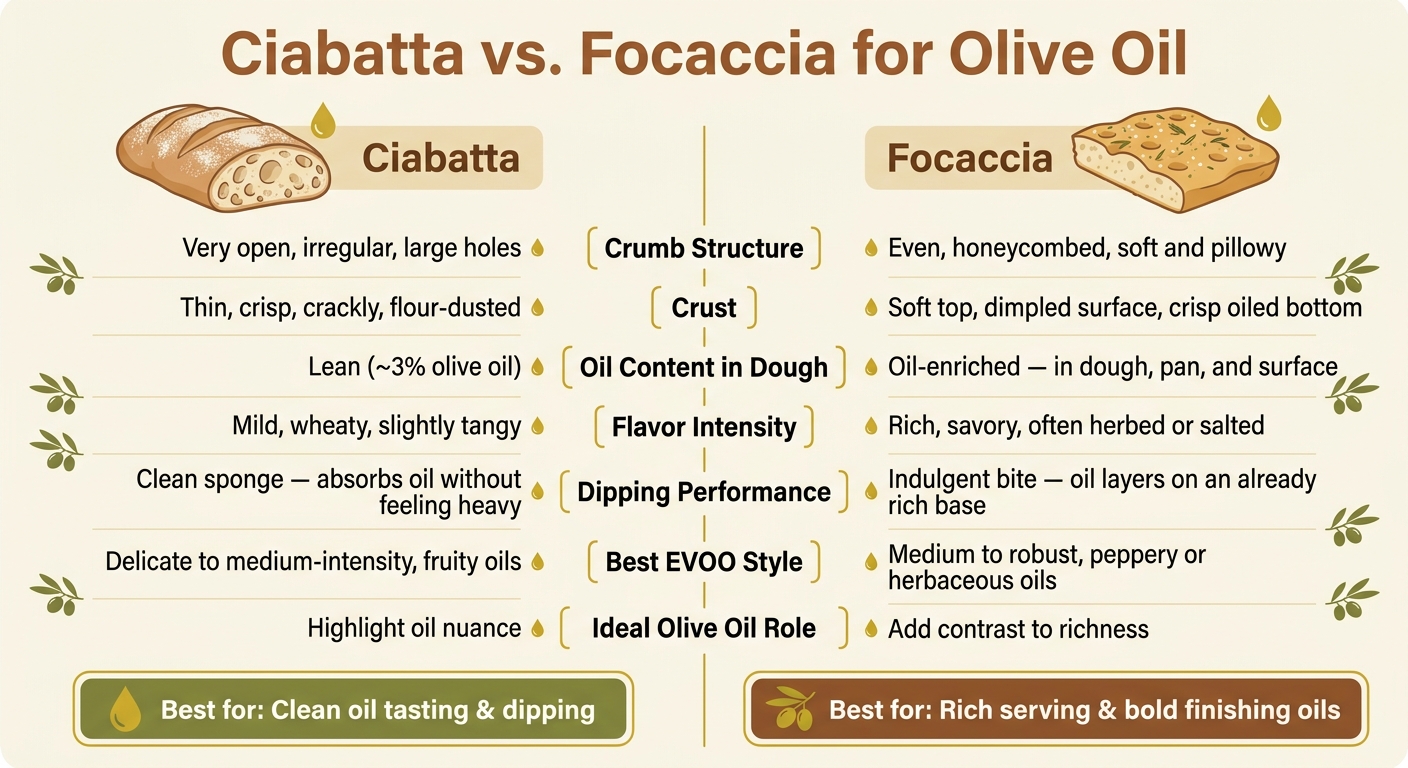
Ciabatta vs. Focaccia for Olive Oil: Full Comparison
Ciabatta and focaccia both work well with olive oil, but they don't play the same role. Ciabatta is lean and mild, with the focus on texture. Focaccia is rich and savory, with the focus on flavor. That's what shapes most pairing choices.
Ciabatta stays light because it uses very little oil. Its open crumb soaks up olive oil without turning heavy. Focaccia goes the other way. Oil is built into the bread from the start: in the dough, in the pan, and on top before baking.
The biggest differences show up in the crumb, crust, and how much oil you taste. Here's the fastest way to compare them.
Ciabatta vs. focaccia comparison table
| Feature | Ciabatta | Focaccia |
|---|---|---|
| Crumb structure | Very open, irregular, large holes | Even, honeycombed, soft and pillowy |
| Crust | Thin, crisp, crackly, flour-dusted | Soft top, dimpled surface, crisp oiled bottom |
| Oil content in dough | Lean (about 3% olive oil) | Oil-enriched, with oil in the dough, pan, and surface |
| Flavor intensity | Mild, wheaty, slightly tangy | Rich, savory, often herbed or salted |
| Dipping performance | Clean sponge - absorbs oil without feeling heavy | Indulgent bite - oil layers on an already rich base |
| Best EVOO style | Delicate to medium-intensity, fruity oils | Medium to robust, peppery or herbaceous oils |
| Ideal olive oil role | Highlight oil nuance | Add contrast to richness |
Ciabatta is the cleaner canvas, while focaccia brings more built-in richness. Ciabatta lets delicate oil stand out with less interference. Focaccia, by contrast, usually needs a bolder oil if you want the oil's character to come through clearly.
With that contrast in mind, the next question is when to pick each bread.
Which bread to choose for dipping, serving, and finishing
Once you've looked at texture and flavor, the last call is simple: what bread belongs on the table? Go with ciabatta when you want the olive oil to do most of the talking. Go with focaccia when you want the bread to bring more to the bite.
When to pick ciabatta and when to pick focaccia
Reach for ciabatta when olive oil should stay front and center. It fits lighter meals well, like grilled fish, green salads, or a plain oil-and-salt dip before dinner. If you're grilling or toasting bread for bruschetta or crostini, ciabatta handles the heat nicely and gives you a clean, nutty base, especially with a single-varietal EVOO.
Focaccia makes more sense when the bread should bring as much flavor as the oil. Reach for focaccia when you want the whole experience to feel a bit more rich. Its oil-heavy crumb and seasoned top pair well with bold, fruity, or infused EVOOs. It works well at gatherings, on antipasto platters, or next to hearty dishes like roasted vegetables or baked pasta. Finish warm focaccia with a robust, peppery EVOO at the table, and the bite feels richer right away.
Key takeaways
- Ciabatta suits clean olive oil tasting; focaccia suits richer serving.
- Match oil intensity to bread. Use delicate to medium EVOOs on ciabatta; use bolder, fruitier EVOOs on focaccia.
- When the goal is to evaluate an olive oil, ciabatta is the more reliable vehicle. When the goal is to celebrate it as part of a meal, focaccia delivers more impact.
FAQs
Can I use the same olive oil for ciabatta and focaccia?
Generally, no. Ciabatta tends to work better with medium-intensity olive oils that have nutty or grassy notes. Focaccia, on the other hand, is usually a better match for light, buttery oils with soft floral or fruity notes.
The main idea is simple: match the oil’s intensity to the bread’s texture and flavor, so one doesn’t overpower the other.
Does warming the bread change how the olive oil tastes?
Yes. Warming the bread can help the texture, but if the bread is too hot, it can soften the olive oil’s delicate peppery, fruity, and floral notes.
For the best flavor, serve the olive oil at room temperature. Cold oil can dull those qualities.
What toppings work best with focaccia and EVOO?
Keep the toppings simple so the focaccia’s texture and the EVOO’s soft, buttery notes can shine. A light sprinkle of flaky or coarse sea salt plus some fresh parsley works especially well on soft, mild focaccia.
If you want a more savory Italian-style taste, go with fresh rosemary. Or use a mix of dried basil, oregano, minced garlic, and a touch of Parmesan.