

Confit Garlic Recipe with EVOO
Garlic confit is a simple French preservation method that transforms garlic into a soft, sweet, and spreadable ingredient by slowly cooking it in oil. The infused oil left behind is perfect for cooking or drizzling over dishes. This recipe uses extra virgin olive oil (EVOO) for both taste and health benefits. Key points:
- Ingredients: Garlic cloves, EVOO, optional herbs (thyme, rosemary), and spices (salt, pepper, bay leaves).
- Cooking Methods: Use an oven or stovetop to cook garlic at a low temperature until tender.
- Storage: Refrigerate for up to 2 weeks or freeze for 3–6 months to prevent botulism.
- Uses: Spread garlic on bread, mash into dishes, or use the oil for dressings, sautés, and more.
Use high-quality EVOO for the best flavor and safety. Store properly to enjoy both the garlic and infused oil in various recipes.
Perfectly soft and caramelised garlic confit (made 3 ways)
Ingredients and Equipment for Garlic Confit
Before diving into the process, make sure you have quality ingredients and basic kitchen tools on hand.
Core Ingredients
This recipe keeps it simple, but the quality of your ingredients, especially the oil, can make all the difference.
| Ingredient | Quantity | Notes |
|---|---|---|
| Garlic cloves | 1¼ to 2 cups (about 3–6 heads) | Peeled; roughly 50 cloves from 4–5 heads |
| Extra virgin olive oil | 1½ to 2 cups | Enough to fully submerge the garlic cloves |
| Kosher or table salt | 1 teaspoon | Brings out the garlic's natural sweetness |
| Fresh thyme | 2–6 sprigs | Optional; adds a touch of herbal flavor |
| Fresh rosemary | 1–2 sprigs | Optional; provides an earthy aroma |
| Black peppercorns | ½ to 1 teaspoon (whole) | Optional; adds a gentle warmth |
| Bay leaves | 1–3 leaves | Optional; adds subtle depth to the flavor |
The olive oil is the backbone of this recipe, so it’s worth investing in a high-quality extra virgin olive oil (EVOO). As recipe developer Trang advises:
"Use a good quality olive oil since it's doing a lot of the flavor work here."
A premium EVOO, like Big Horn Olive Oil, which is cold-pressed within hours of harvesting, adds a fruity and complex character. Not only does this elevate the garlic confit, but the infused oil left behind becomes a delicious bonus ingredient for other dishes.
Once your ingredients are ready, gather the tools you'll need for a smooth cooking process.
Equipment You Will Need
You won’t need any fancy gadgets for this recipe - just a few essentials.
-
Cooking vessel: A small, deep, heavy-bottomed saucepan works well for the stovetop method. For the oven, try an 8-inch square baking dish, loaf pan, or mini Dutch oven. The key is a snug fit to avoid using too much oil. As Cathy Pollak from Noble Pig explains:
"Use a dish where the garlic sits snugly. A mini Dutch is the best. If it's too wide, you'll need more oil than you want."
- Storage jars: Heatproof glass jars with tight-fitting lids, like ½-pint Mason or canning jars, are perfect for storing the confit.
- Slotted spoon: Helps transfer the garlic cloves without damaging them.
- Fine-mesh strainer: Useful for separating the infused oil from the aromatics before storage.
- Kitchen thermometer: Ensures the oil stays between 175°F and 200°F for safe and consistent results.
With these ingredients and tools in place, you’re ready to create a flavorful garlic confit that’s as versatile as it is delicious.
How to Make Garlic Confit: Step-by-Step
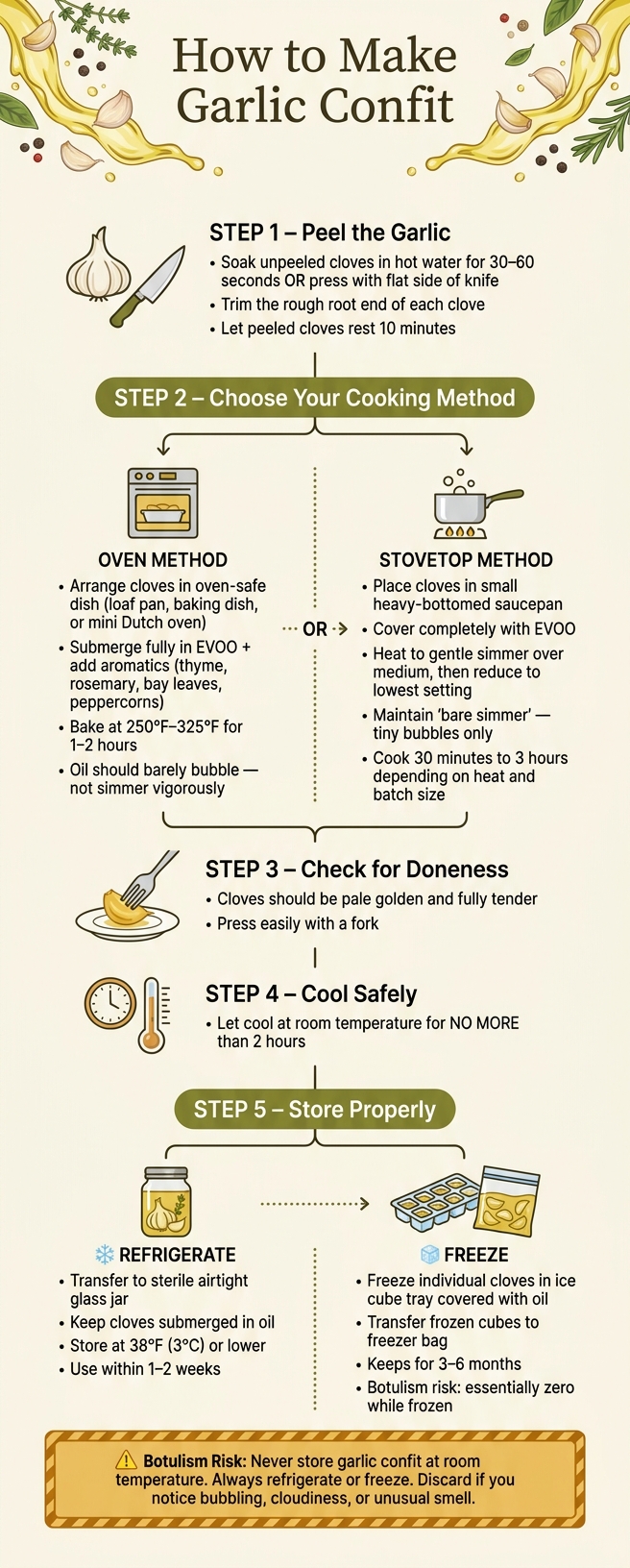
How to Make Garlic Confit: Step-by-Step Visual Guide
Using a time-honored French preservation technique, you can turn raw garlic into a smooth, flavorful confit. Once you’ve gathered your ingredients and tools, the process is simple. There are two popular ways to cook it - oven or stovetop - both resulting in sweet, tender cloves infused with rich, aromatic oil.
How to Prepare the Garlic
Start by peeling your garlic cloves. For larger batches, try soaking the unpeeled cloves in very hot water for 30–60 seconds; the skins should slip off with ease. Alternatively, press each clove with the flat side of a knife to loosen the skin. After peeling, trim the rough root end of each clove. This step ensures even cooking and gives the finished cloves a smoother texture. Let the peeled cloves rest for about 10 minutes to allow their natural flavors to develop.
Now, choose your preferred cooking method:
Oven Method
Arrange the peeled and trimmed garlic cloves in an oven-safe dish, loaf pan, or small pot. Pour in enough Big Horn Olive Oil EVOO to fully submerge the cloves, then add your favorite aromatics. Bake at 250°F to 325°F for 1 to 2 hours. The oil should barely bubble - if it starts simmering too vigorously, lower the temperature.
The garlic is ready when it’s soft enough to be easily pressed with a fork. Baking uncovered will give you a slightly caramelized, golden finish, while covering the dish produces a paler, more uniform result. Once done, let the garlic cool at room temperature for no more than 2 hours before refrigerating.
Stovetop Method
The stovetop method gives you more control but requires closer attention. Add the garlic cloves to a small, heavy-bottomed saucepan and pour in enough extra virgin olive oil to completely cover them. Heat the oil over medium heat until it reaches a gentle simmer, then reduce the heat to its lowest setting.
Daniel Gritzer, Editorial Director at Serious Eats, explains:
"Set over medium heat and bring to a bare simmer. Lower heat to maintain the barest simmer, so that you see some tiny bubbles on the garlic, but it's not actively frying in the oil."
If the oil starts bubbling aggressively or the garlic browns too quickly, lower the heat immediately to avoid a bitter taste. The garlic is done when it’s pale golden and fully tender, which can take anywhere from 30 minutes to 3 hours, depending on your heat settings and batch size.
sbb-itb-4066b8e
How to Store Garlic Confit Safely
Garlic confit comes with a serious safety concern: botulism. When garlic is submerged in oil, it creates an environment with low oxygen and low acidity, which can allow Clostridium botulinum spores to produce harmful toxins if stored improperly. Karishma Pradhan, Founder of Home Cooking Collective, explains:
"In the case of garlic confit, neither the oil nor the garlic are acidic enough to prevent botulism from occurring at room temperature."
This makes proper storage absolutely crucial.
Refrigeration Guidelines
After letting your garlic confit cool for no more than 2 hours, transfer it into a sterile, airtight glass jar. Make sure the garlic cloves are completely submerged in oil. Store the jar in the refrigerator at a temperature of 38°F (3°C) or lower. Use the confit within 1–2 weeks, and always handle it with a clean, dry utensil to avoid introducing bacteria.
Freezing for Long-Term Storage
For larger batches, freezing is a safer option. Don Schaffner, Chair of the Department of Food Science at Rutgers University, notes:
"Once you freeze something, the risk of botulism becomes essentially zero if the food is kept frozen."
To freeze, place individual garlic cloves in an ice cube tray, cover them with oil, and freeze until solid. Then, transfer the frozen cubes into a heavy-duty freezer bag. This method allows you to thaw only what you need. Garlic confit can remain in the freezer for 3 to 6 months. Keep in mind that freezing may slightly soften the texture, making the confit perfect for stirring into pasta or soups instead of spreading. This approach ensures both flavor and safety are maintained.
Food Safety Tips
In addition to proper storage, follow these essential food safety practices:
- Sterilize glass jars by boiling them for 10 minutes.
- Never leave the jar at room temperature between uses.
- Throw away the confit immediately if you notice bubbling, cloudiness, or an unusual smell - these could indicate bacterial growth.
- Be aware that botulism toxin is often odorless and tasteless, so visible spoilage signs aren’t the only risk.
| Storage Method | Shelf Life | Botulism Risk | Best For |
|---|---|---|---|
| Refrigeration | 1–2 weeks | Low (if kept below 38°F) | Spreads, fresh dressings |
| Freezing | 3–6 months | Essentially zero while frozen | Pasta, soups, stews |
Ways to Use Garlic Confit and Garlic-Infused EVOO
Garlic confit gives you two treasures: soft, caramelized cloves and flavorful garlic-infused oil. Both are culinary powerhouses when used thoughtfully.
Using Garlic Confit Cloves
The tender, caramelized cloves are incredibly adaptable. Spread a few directly onto toasted sourdough, sprinkle with flaky salt, and you've got an instant appetizer. Want to elevate your side dishes? Mash them into potatoes, cauliflower mash, or even a white bean dip to add depth without any harshness. They also shine as a finishing touch - stir whole or lightly mashed cloves over grilled steak, roasted chicken, or fish for a subtle, savory boost. Thanks to their mellow profile, you can use them generously without overwhelming your dish, making them a go-to ingredient even for those who prefer a lighter garlic flavor.
Using Garlic-Infused EVOO
The infused oil is just as versatile as the cloves, offering a delicate garlic note that enhances a wide range of dishes. Bon Appétit calls it "liquid gold", and for good reason. Drizzle it over roasted vegetables or grilled fish for an elegant finish. Swap it into a vinaigrette or Caesar dressing for a more complex flavor profile. It also works beautifully as a dipping oil - serve it with crusty bread or mix it with aged balsamic vinegar for a simple, satisfying starter.
This oil isn't just for finishing touches. Use it as the fat base for sautéing greens, starting a pasta sauce, or brushing onto pizza dough. Even a drizzle over tomato soup or plain rice can transform the dish. If you're working with a high-quality EVOO - like one from Big Horn Olive Oil, which cold-presses olives within hours of harvest - you'll get the added bonus of fresh, fruity notes alongside the garlic's savory depth.
Garlic Confit Cloves vs. Garlic-Infused EVOO: A Quick Comparison
Here’s a side-by-side look at how these two garlic-infused elements differ:
| Feature | Garlic Confit Cloves | Garlic-Infused EVOO |
|---|---|---|
| Form | Soft, spreadable solids | Fragrant, infused liquid |
| Flavor Intensity | Sweet, caramelized, concentrated | Subtle, aromatic, savory |
| Texture Impact | Adds creaminess and richness | Adds silkiness and moisture |
| Best Applications | Toast, mashed potatoes, hummus, pasta | Dressings, finishing drizzle, dipping oil, sautéing |
| Cooking Role | Primary ingredient or flavor base | Seasoning, finishing touch, or cooking fat |
Conclusion and Key Takeaways
Garlic confit isn’t just a cooking method - it’s a game-changer for your kitchen. The process is simple: peel fresh garlic, immerse it in high-quality extra virgin olive oil (EVOO), and cook gently over low heat until the cloves become soft and sweet. This technique not only transforms garlic into a versatile ingredient but also creates a richly flavored oil that’s perfect for countless culinary uses.
The type of oil you use plays a crucial role. A premium EVOO, like Big Horn Olive Oil's Ultra Premium Extra Virgin Olive Oil, which is cold-pressed within two hours of harvest, enhances both the flavor and nutritional value of your confit. Its fruity and complex notes complement the sweetness of the garlic while helping your body better absorb garlic’s fat-soluble compounds.
Proper storage is essential. To keep your garlic confit safe and flavorful, refrigerate it in an airtight container or freeze it if you plan to store it long-term. Skipping this step can compromise both safety and taste, so don’t overlook it.
And don’t forget about the infused oil! Use it to elevate salad dressings, drizzle it over finished dishes, or even use it for sautéing. As Epicurious aptly describes:
"The oil left in the jar after the garlic is gone is also medicinal and deeply flavoured... Liquid gold."
Both the tender garlic cloves and the infused EVOO are culinary treasures. Experiment with them in your favorite recipes, and you’ll see how they can bring a whole new depth to your cooking.
FAQs
How do I know my garlic confit is done without burning it?
Your garlic confit is done when the cloves turn a pale gold or light tan and feel soft and buttery when pressed with a spoon. If you notice the oil bubbling too aggressively or the cloves darkening too fast, reduce the heat to keep a gentle simmer. Opting for high-quality Big Horn Olive Oil can help maintain even heat and reduce the risk of burning.
Is garlic confit safe, and how do I avoid botulism?
Garlic confit can be safe to eat when stored correctly, but mishandling it poses a risk of botulism because garlic thrives in low-acid, low-oxygen environments. To minimize this risk, make sure to refrigerate it immediately after cooking, avoid leaving it out at room temperature for more than two hours, and consume it within four days. If stored at a temperature below 38°F, it might remain safe for up to 1–2 weeks, but always exercise caution.
Can I reuse garlic-infused EVOO, and what should I use it for?
Yes, you can reuse garlic-infused extra virgin olive oil. Its deep, savory garlic flavor works wonderfully for sautéing veggies, drizzling over soups, or mixing into salad dressings, marinades, and dipping oils. To keep it safe and fresh, store the oil and garlic in airtight containers in the refrigerator. Keeping it chilled is essential to reduce the risk of botulism.