

5 Ethical Sourcing Practices in Olive Oil
Key Takeaways:
- Fair Wages: Workers' pay improves lives and boosts local economies.
- Sustainability: Practices like organic farming and water conservation protect resources.
- Transparency: Traceable supply chains ensure accountability.
- Energy Efficiency: Cold-pressing reduces energy use while maintaining quality.
- Community Support: Fair trade funds education, tools, and local development.
By choosing ethically sourced olive oil, you're supporting better practices for everyone involved.
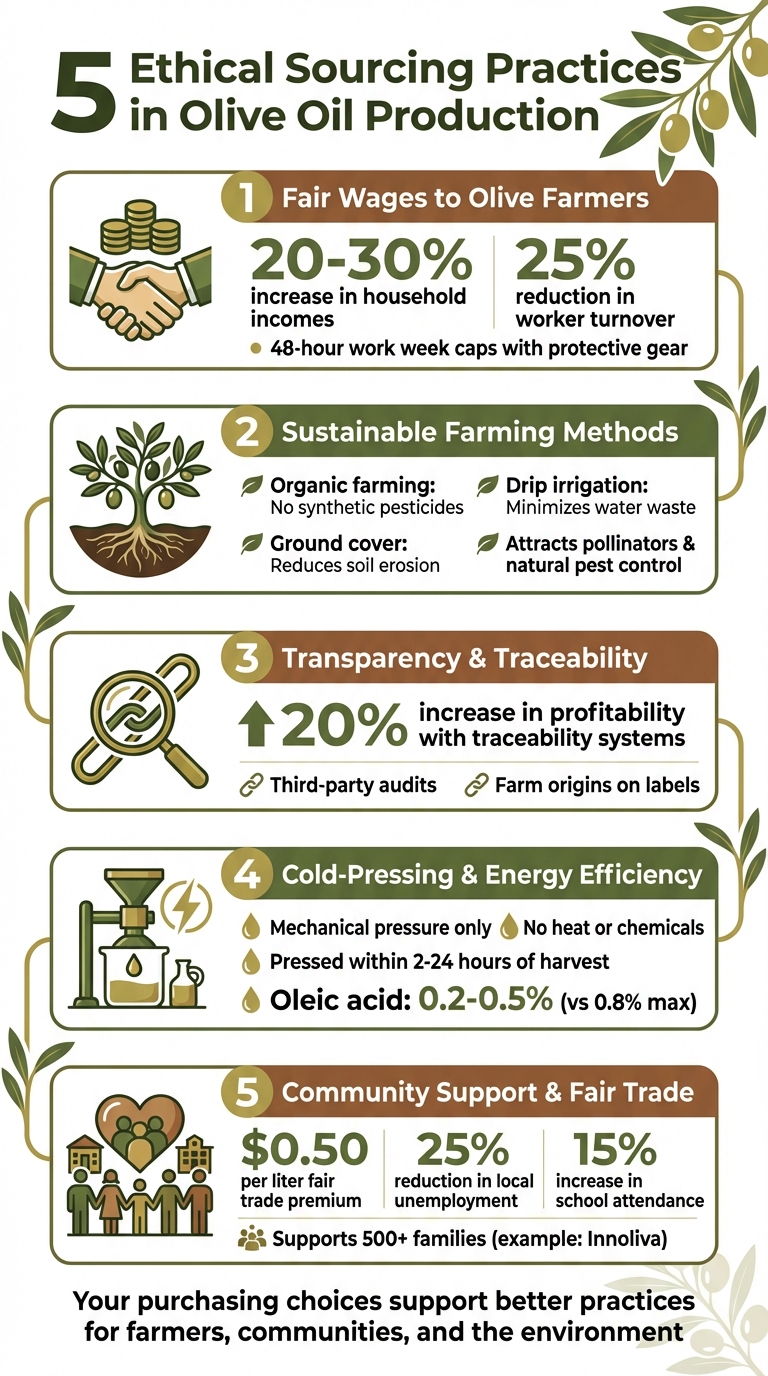
5 Ethical Sourcing Practices in Olive Oil Production
1. Paying Fair Wages to Olive Farmers
Fair Treatment of Workers
Fair wages aren't just about the paychecks - they encompass safe workplaces, reasonable hours, and basic protections that many olive harvesters still lack. In traditional olive farming, workers often endure grueling conditions, especially during the harvest season, without access to basic necessities. Thankfully, certifications now require farms to cap work weeks at 48 hours, provide protective gear, and prohibit child labor and discrimination. These measures ensure that workers picking olives are treated with respect and dignity, not as cheap labor.
The disparity in wages is striking. In countries like Spain and Italy, some olive farmers earn less than $2.00 a day during off-seasons. This leaves families struggling in poverty, often forcing workers to leave in search of better opportunities. However, in regions with fair wage initiatives, household incomes have increased by 20–30%, while worker turnover has dropped by 25%. This stability has even improved the quality of olives, as farmers can dedicate more care to their groves. By prioritizing fair labor practices, not only are workers uplifted, but entire local economies benefit as well.
Community Impact
Consistent and fair wages do more than just help individual workers - they strengthen entire communities. Families with stable incomes can invest locally, reducing the need for rural migration. For instance, Fair Trade olive projects in Tunisia have used premiums to build community wells and schools, transforming villages and combating poverty. In Palestine, farmers involved in Fairtrade programs have gained access to export markets, with one farmer sharing that fair wages now cover living costs, fund their children's education, and even allow for the purchase of essential farming tools.
Some olive producers are setting a higher standard by offering wages above regional averages and providing bonuses tied to harvest yields. These practices directly support family farms and encourage long-term commitment. Similarly, cooperatives that manage large groves often pair fair wages with profit-sharing programs, which not only retain skilled workers but also boost productivity. According to the International Olive Council, these approaches link fair pay to better product quality, creating a win-win for workers and producers alike.
Supply Chain Transparency
Fair wages go hand in hand with supply chain transparency, which ensures ethical practices are upheld. Transparent supply chains allow consumers to trace their olive oil from grove to bottle, verifying that fair wages are being paid. Tools like third-party audits and blockchain tracking systems now enable ethical brands to share wage data and farm locations openly. Fair Trade labels often include verifiable records accessible through apps, fostering accountability and pushing suppliers toward continuous improvement. When shopping for olive oil, look for brands that display farm origins and harvest dates on their bottles - this is often a sign of their commitment to ethical labor practices.
sbb-itb-4066b8e
REAL QUALITY OLIVE OIL in a SEA Of FAKES- INTERVIEW With OWNER of CANAAN PALESTINE
2. Using Sustainable Farming Methods
Sustainable farming plays a key role in ethical sourcing, balancing care for the environment with the well-being of local communities.
Environmental Sustainability
Sustainable farming methods are designed to protect the land while producing high-quality olive oil. For instance, organic farming avoids synthetic pesticides and fertilizers, instead relying on natural compost and crop rotation. This approach not only enriches the soil but also prevents harmful chemical runoff, which could disrupt nearby ecosystems. Many ethical farms also use permanent ground cover to combat soil erosion, retain moisture, and attract helpful insects like pollinators and pest predators.
Water conservation is especially important in olive-growing regions that often face drought conditions. Techniques like drip irrigation deliver water directly to tree roots, minimizing waste. Some producers, such as Innoliva, take it a step further by combining drip irrigation with rainwater collection systems and drone technology to apply organic treatments efficiently.
In Andalusia, research has shown that no-till farming combined with vegetal cover can significantly improve soil health while remaining profitable. According to expert Bruno Navarro, these methods not only reduce erosion but also enhance biodiversity and promote natural pest control. Farms that adopt such practices may even qualify for public aid programs, making sustainability more financially viable.
Beyond protecting the environment, these practices have a ripple effect on the surrounding communities.
Community Impact
Sustainable farming supports local economies by keeping traditional farms alive and thriving. Small-scale olive growers who rely on low-input methods - like hand-harvesting, minimal machinery, and organic fertilizers - reduce fuel use and their overall environmental footprint. At the same time, they create jobs and maintain employment opportunities in rural areas. By enabling workers to stay in their communities, these farms help preserve not just jobs but also the rich traditions and expertise tied to olive cultivation.
3. Providing Transparency and Traceability
Supply Chain Transparency
Transparency and traceability go hand in hand with ethical sourcing, ensuring that fair labor and sustainable farming methods are upheld from grove to bottle.
In practical terms, supply chain transparency means producers openly share details about their farming methods, harvest schedules, and processing techniques. When labels include information like the olive grove’s origin and harvest date, it demonstrates a commitment to ethical practices, giving consumers confidence in the product they’re purchasing.
Interestingly, adopting soil-monitoring and traceability systems can increase profitability by 20% on erosion-prone groves. These systems also help farms stay ahead of policy changes and meet evolving consumer expectations by incorporating CO2-capturing plant cover systems.
Detailed documentation is another essential piece of the puzzle. By maintaining accurate records, producers can prevent the misrepresentation of lower-quality oils, ensuring accountability and safeguarding both consumers and ethical producers.
At Big Horn Olive Oil, we take traceability seriously. Every bottle of our ultra-premium extra virgin olive oil reflects these values, creating a clear chain of accountability. This not only protects consumers but also lays the groundwork for advancements in ethical olive oil production.
4. Cold-Pressing and Energy-Efficient Processing
Environmental Sustainability
Cold-pressing is a standout method for producing olive oil, particularly when considering environmental responsibility. This approach relies solely on mechanical pressure, steering clear of high temperatures and chemical solvents that could negatively impact the air, water, or soil.
Since it eliminates heat-intensive refining steps, cold-pressing significantly reduces energy consumption. This aligns with sustainable practices that prioritize conserving energy and minimizing environmental strain. The reduced energy demand makes this method a strong example of eco-conscious production.
Energy Efficiency
Cold-pressing is where quality meets sustainability. For instance, in Sparta, Greece, SIMPLi sources Koroneiki olives from over 25,000 trees and ensures they are cold-pressed within 24 hours of harvest at a mill dedicated exclusively to extra virgin olive oil. This careful process keeps oleic acid levels between 0.2% and 0.5%, well below the 0.8% maximum required for Extra Virgin Olive Oil classification.
At Big Horn Olive Oil, the process is even faster - olives are cold-pressed within just two hours of harvest. This not only preserves the natural antioxidants, monounsaturated fats, and vitamins in the oil but also minimizes energy consumption. By maintaining this balance, the process ensures high-quality olive oil while staying true to principles of sustainability and transparency.
"The essence of sustainable agriculture lies in improving product quality and maintaining the natural balance, rather than focusing solely on mass production." - Gaia Oliva
5. Supporting Local Communities and Fair Trade
Ethical practices in olive oil production don’t just benefit the environment - they also have the power to uplift entire communities through fair trade initiatives.
Fair Treatment of Workers
Fair trade certification ensures that producers adhere to strict standards for worker welfare and community investment. For example, in Andalusia, these practices have not only improved worker retention but also increased profitability by 20–30%. This creates a win-win situation, enhancing both business success and the well-being of local communities.
Community Impact
Fair trade premiums, which average about $0.50 per liter, are often reinvested into community development projects that directly benefit local populations. Spanish cooperatives like Innoliva, managing over 8,000 hectares (about 20,000 acres), use these funds to support more than 500 families. These premiums have funded youth training programs, reducing local unemployment by 25%, and have even led to a 15% increase in school attendance in rural areas.
A compelling example comes from Mohammad, a Palestinian farmer who has been part of the Palestine Fair Trade Association for eight years. With the help of Fairtrade premiums, he has been able to purchase essential tools and fund his children’s education. His olives are exported to Europe through the Canaan company, showcasing how fair trade can transform lives.
Supply Chain Transparency
Fair trade isn’t just about funding - it’s also about accountability. Transparent tracking of fair trade premiums ensures that funds are used effectively. Certified cooperatives and brands can leverage tools like blockchain to trace these premiums from the grove to the final product. Annual impact reports help confirm that the funds are being allocated to vocational training, infrastructure improvements, and resource conservation projects. Companies like Big Horn Olive Oil, which sources from regions such as Italy, highlight the importance of quality sourcing and community-focused production.
Conclusion
Choosing ethically sourced olive oil benefits not just farmers and the environment but also consumers. When producers ensure fair wages, adopt eco-friendly farming techniques, maintain transparency, use energy-efficient processing, and invest in local communities, they create a system that works for everyone. In Andalusia, for example, regenerative farming on steep slopes improves soil health, reduces erosion, and increases yields, making farming more profitable and climate-resilient through ground cover practices.
As a consumer, you can support these efforts with your purchases. Look for olive oils with fair trade certifications, organic labels, and cold-pressed methods. These practices preserve the oil's nutritional quality and flavor while minimizing emissions and avoiding chemical processing. For instance, Big Horn Olive Oil sources olives from renowned regions like Modena, Italy, showing how premium products can align with ethical practices. Such transparency builds trust and empowers informed purchasing decisions.
Your buying choices make a difference. When you opt for olive oil from producers who prioritize community investment and environmental stewardship, you contribute to a more sustainable food system. Brands like San Antonio's Gourmet Olive Oils provide detailed information on each bottle, including the olive oil's origin, farm source, and harvest date, ensuring full traceability from grove to table. Additionally, consider purchasing larger 5-liter bottles (about 1.3 gallons) from companies that focus on reducing packaging waste and environmental impact. Supporting U.S. retailers offering traceable, high-quality extra virgin olive oil allows you to align your health goals with ethical values.
FAQs
How can I tell if an olive oil brand pays fair wages?
When choosing olive oil, seek out brands that work directly with farmers, uphold fair trade principles, or carry certifications such as Fairtrade. These are clear signs that farmers are being compensated fairly for their efforts. For example, companies like Big Horn Olive Oil focus on ethical sourcing, ensuring fair wages and promoting responsible practices within the olive oil industry.
Which certifications matter most for ethical olive oil?
Key certifications that indicate ethical and high-quality olive oil include USDA Organic, PDO, PGI, ISO 14001, and IOC. These certifications reflect a commitment to sustainable practices, genuine production methods, and strict quality standards.
What does “traceable” olive oil mean on a label?
Traceable olive oil refers to a product whose entire journey - from harvest to processing to distribution - is meticulously tracked and documented. Technologies like QR codes, RFID tags, or blockchain play a key role in this process, offering transparency by confirming the oil's origin, quality, and ethical sourcing. This system not only helps combat fraud but also ensures accountability at every step.