

Why EVOO is Perfect for Healthy Baking
Extra virgin olive oil (EVOO) is a great choice for baking when you want to make healthier, more flavorful recipes. It replaces butter and shortening, offering lower saturated fat and higher monounsaturated fats, which are better for heart health. Plus, EVOO keeps baked goods moist and tender while adding subtle flavor notes that complement ingredients like chocolate or citrus.
Key Benefits of EVOO for Baking:
- Heart-healthy fats: 73% monounsaturated fats compared to butter's 63% saturated fats.
- Moisture retention: Helps baked goods stay softer and fresher longer.
- Heat stability: Handles typical baking temperatures (up to 410°F) without breaking down.
- Rich in antioxidants: Baking with EVOO retains beneficial polyphenols.
Quick Tips for Baking with EVOO:
- Replace butter with EVOO using a ¾ cup EVOO to 1 cup butter ratio.
- Use mild-flavored EVOO for neutral recipes or robust EVOO for bold flavors.
- Works best in cakes, muffins, brownies, and quick breads but not for recipes requiring solid fats (e.g., puff pastry).
Switching to EVOO in your baking is simple and supports better nutrition without sacrificing taste or texture.
When Baking with Olive Oil is Even Better Than Butter
sbb-itb-4066b8e
Common Baking Challenges: Health and Flavor Problems
Baking with traditional fats like butter and shortening often comes with a trade-off between taste and nutrition. These fats not only affect the texture of baked goods but also raise concerns about their impact on health. This has led many bakers to explore alternatives like extra virgin olive oil (EVOO).
Saturated Fat in Butter and Shortening
Butter and shortening are both solid at room temperature, which is a clue to their high saturated fat content. Butter, for instance, is about 80% fat, with the rest being water and milk solids. Most of that fat is saturated, and diets high in saturated fats have been linked to poorer cardiovascular health compared to unsaturated fats. Recipes that rely heavily on butter - like pound cake, shortbread, or croissants - can significantly increase your intake of saturated fats.
Calorie Density and Poor Nutritional Balance
Baked goods are often calorie-dense because they combine sugar, dairy, and fat in concentrated amounts. This combination not only adds calories but also skews the nutritional balance. For example, a muffin made with butter doesn't just rack up calories - it also contributes a hefty dose of saturated fat before even considering the sugar or refined flour content. The problem isn't just the calorie count; it's the type of fat that makes up those calories.
Dry Texture and Bland Flavor in Low-Fat Baking
Trying to cut fat entirely from baked goods often leads to disappointing results. Fat is crucial for creating a tender crumb and rich flavor, so removing it can leave baked goods dense, dry, and lacking in taste. There's also the issue of staling. Butter-based cakes, for instance, tend to feel drier and denser the day after baking because saturated fats solidify as they cool.
"Since oil remains liquid at room temperature, it bonds with starch and slows retrogradation, the natural staling process. That's why oil-based cakes stay tender longer, while all-butter cakes can feel drier the next day."
The key challenge isn't just reducing fat - it's finding a replacement that maintains moisture, enhances flavor, and offers better nutritional benefits. Exploring a variety of olive oils can help you find the perfect profile for your specific recipe. EVOO presents a promising solution for overcoming these common baking hurdles.
Why EVOO Is a Healthier Fat for Baking
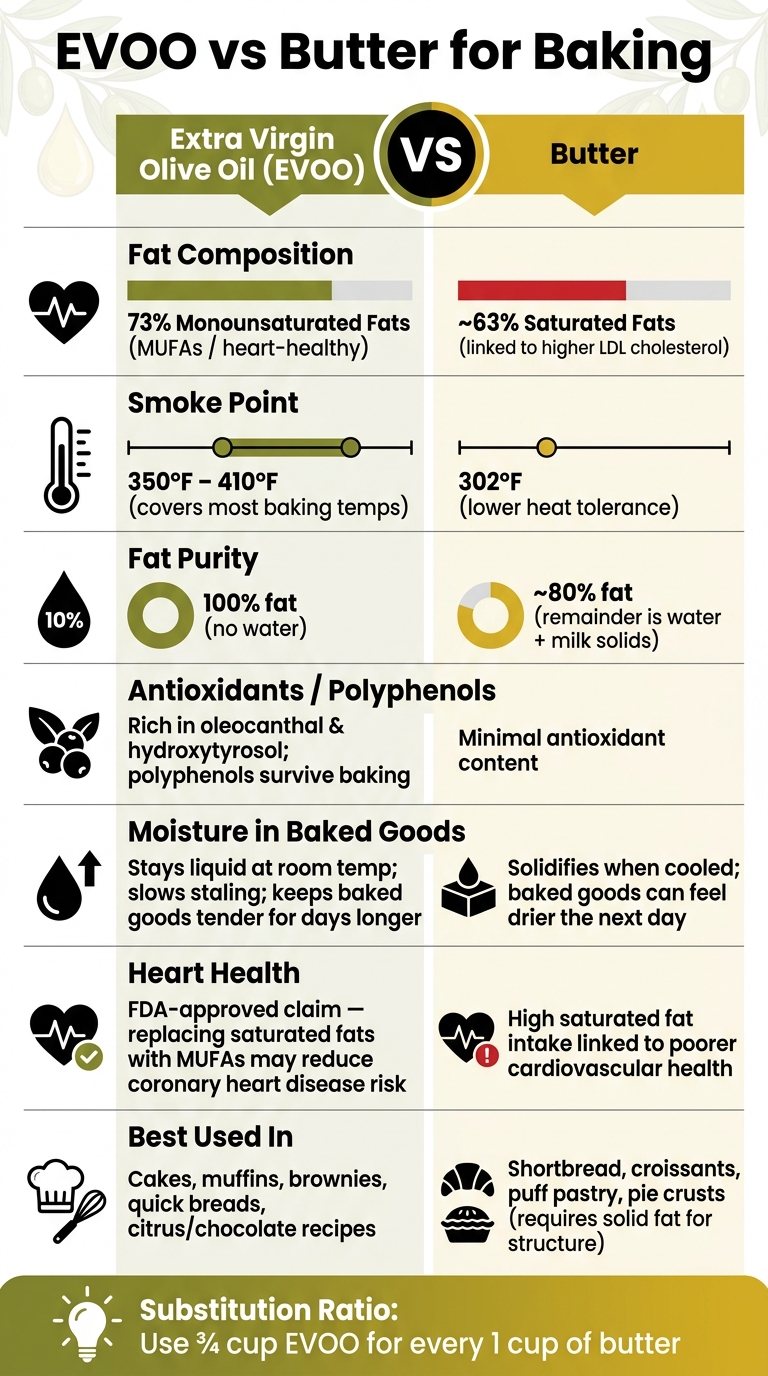
EVOO vs Butter for Baking: Nutrition & Performance Compared
Switching from butter to extra virgin olive oil (EVOO) offers benefits like improved heart health, better nutritional value, and greater heat stability.
Monounsaturated Fats and Heart Health
Extra virgin olive oil is made up of about 73% monounsaturated fats (MUFAs), primarily oleic acid. This sets it apart from butter or shortening, which are rich in saturated fats. MUFAs are known to lower "bad" LDL cholesterol while supporting "good" HDL cholesterol levels.
In 2004, the FDA approved a claim that replacing saturated fats with EVOO's MUFAs could help reduce the risk of coronary heart disease. The American Heart Association backs this up:
"When replacing saturated fats (like those found in butter) with monounsaturated fats (found in olive oil), you may actually reduce your risk of heart disease."
So, the next time you bake banana bread or muffins with EVOO instead of butter, you're making a choice that supports cardiovascular health.
Antioxidants and Polyphenols That Survive Baking
One of EVOO's standout features is its rich polyphenol content. These compounds, like oleocanthal and hydroxytyrosol, act as natural antioxidants, protecting cells from oxidative damage and inflammation. Interestingly, baking with EVOO retains more of these antioxidants compared to frying or boiling. A 2015 study even found that EVOO's phenols can transfer into the food, enhancing its antioxidant value.
To get the most out of these benefits, go for high-quality EVOO. The European Food Safety Authority (EFSA) notes that olive oil polyphenols help protect blood lipids from oxidative stress, as long as the oil contains at least 5 mg of hydroxytyrosol and related compounds per 20 g. Brands like Big Horn Olive Oil, which cold-press their oils within two hours of harvest, are specifically crafted to preserve these beneficial compounds.
How EVOO Holds Up at Baking Temperatures
A common question is whether EVOO can handle the heat of baking. The answer is a clear yes - for almost all home baking recipes. EVOO has a smoke point of 350°F to 410°F, which comfortably covers typical baking temperatures.
But EVOO's heat resistance goes beyond its smoke point. Thanks to its chemical structure - MUFAs have only one double bond - it resists oxidation better than polyunsaturated fats. A 2018 study highlighted this:
"Extra virgin olive oil was the most chemically stable cooking oil after exposure to high temperatures of heat." - Acta Scientific Nutritional Health
For comparison, butter's smoke point is just 302°F, making it less suitable for many baking applications. EVOO not only offers a healthier fat profile but also stands up to the heat, making it an excellent choice for your favorite baked goods.
How to Bake with EVOO: Practical Tips
If you're ready to bring the health benefits and stability of extra virgin olive oil (EVOO) into your baking, these tips will make the process straightforward.
How to Swap Butter for EVOO in Recipes
The conversion is pretty simple: use ¾ cup of EVOO for every cup of butter. This adjustment works because butter is about 80% fat, while EVOO is 100% fat. A direct 1:1 swap would throw off the balance of fat to flour in your recipe.
EVOO works best in recipes where ingredients are mixed, like muffins, quick breads, brownies, or oil-based cakes. However, it can’t replicate the creaming method, which relies on solid butter to trap air during beating. This means EVOO isn’t suitable for recipes like shortbread, croissants, puff pastry, or pie crusts, where solid fat is essential for texture and structure.
Once you’ve got the substitution down, the next step is choosing the right EVOO to match your recipe.
Choosing the Right EVOO Flavor for Your Recipe
EVOOs vary widely in flavor, and that can make a big difference in your baking. They generally fall into three categories: delicate/mild, balanced/medium, and robust/bold.
| EVOO Intensity | Flavor Notes | Best Baking Use |
|---|---|---|
| Delicate / Mild | Subtle fruity notes | Light cakes, muffins, everyday baking |
| Balanced / Medium | Gentle earthy or grassy notes | Recipes with stronger secondary flavors |
| Robust / Bold | Peppery, grassy, or bitter | Savory breads, bold chocolate desserts |
For most baked goods, a mild EVOO is a safe choice - it enhances flavors without overwhelming them. If you’re making something like a lemon olive oil cake or citrus muffins, a lemon-infused EVOO can add an aromatic boost. As Erica Booth explains:
"Extra virgin olive oil adds moisture to baked goods, enhances complementary flavors like citrus and chocolate, and keeps cakes and quick breads fresh for days longer than butter-based versions."
To explore your options, companies like Big Horn Olive Oil offer both traditional and infused EVOOs. Their flavored varieties can bring a natural aromatic layer to your baking without relying on artificial ingredients.
Keeping Texture and Moisture on Track
EVOO’s lack of water content helps create a moist, tender crumb that keeps baked goods fresher for longer. This is especially useful if you want your muffins or cakes to stay soft and flavorful for days.
When shopping for EVOO, check the label for a harvest date, often listed as "raccolta" or "annata". This ensures you’re using oil at its peak quality.
Conclusion: Better Baking Starts with EVOO
Making the switch to extra virgin olive oil (EVOO) can transform your baking. It cuts down on saturated fats while providing heart-healthy monounsaturated fats and antioxidants that hold up to the heat of baking. Plus, its 100% fat content guarantees moist, tender baked goods every time.
EVOO also brings a flavorful twist. As Vivek Salunkhe, Chef and Partner at Crackle Kitchen, explains:
"Olive oil works beautifully in baking and can be a fantastic substitute for butter, adding moisture and a subtle richness to the dish."
This added richness elevates everything from cakes to cookies, enhancing both taste and texture.
Whether you're whipping up a citrus loaf, fudgy brownies, or simple muffins, choosing the right EVOO makes a noticeable impact - not just on nutrition, but also on the overall flavor and feel of your baked goods.
For the best results, go for high-quality EVOO. Brands like Big Horn Olive Oil offer Ultra Premium Extra Virgin Olive Oils. These oils are cold-pressed within two hours of harvest and delivered fresh within three months. Starting at $8.99, they’re available in both traditional and infused varieties.
The swap is easy, and the benefits are undeniable. Try a mild EVOO in your next recipe and see the difference for yourself.
FAQs
Will EVOO make my baked goods taste like olives?
Using a mild or balanced extra virgin olive oil (EVOO) variety ensures your baked goods won't have a strong olive flavor. Its gentle taste complements other ingredients, adding depth to the overall flavor without dominating the dish.
How do I adjust liquid ingredients when swapping butter for EVOO?
When swapping butter for extra virgin olive oil (EVOO) in baking, include about 1 tablespoon of water, milk, or juice for every ½ cup of butter you replace. This is because butter naturally contains water, while EVOO does not. Adding this liquid helps maintain the right moisture and texture in your baked goods.
Which baked recipes should not use EVOO?
Recipes that depend on solid fats - like pie crusts or cookies that need to hold their shape - usually don't work well with extra virgin olive oil (EVOO). Its liquid nature can interfere with the texture and structure required for these types of baked goods.