

Top 5 Facts About DOP and IGP Balsamic Vinegar
When choosing balsamic vinegar, understanding the difference between DOP (Protected Designation of Origin) and IGP (Protected Geographical Indication) is key. These certifications reflect production methods, aging, and ingredients, helping you select the right vinegar for your needs. Here's what you should know:
- Aging: DOP requires at least 12 years, while IGP needs just 60 days.
- Ingredients: DOP uses 100% cooked grape must; IGP blends grape must with wine vinegar.
- Production Standards: DOP involves strict oversight within Modena or Reggio Emilia; IGP is more flexible.
- Flavor & Texture: DOP offers a thick, rich flavor, ideal for finishing dishes. IGP is lighter and tangier, suited for everyday cooking.
- Price: DOP is a premium product ($85–$200+ for 100 ml), while IGP is more affordable ($5–$60 per bottle).
Quick Comparison:
| Feature | DOP Balsamic Vinegar | IGP Balsamic Vinegar |
|---|---|---|
| Minimum Aging | 12–25 years | 60 days–3 years (some up to 10) |
| Ingredients | 100% cooked grape must | Grape must + wine vinegar |
| Additives | None | Up to 2% caramel coloring |
| Use | Finishing dishes | Everyday cooking |
| Price Range (100 ml) | $85–$200+ | $5–$60 |
DOP is perfect for specialty dishes, while IGP offers a cost-effective option for daily use. Whether you’re drizzling over cheese or mixing into a marinade, these certifications ensure quality vinegar from Modena, Italy.
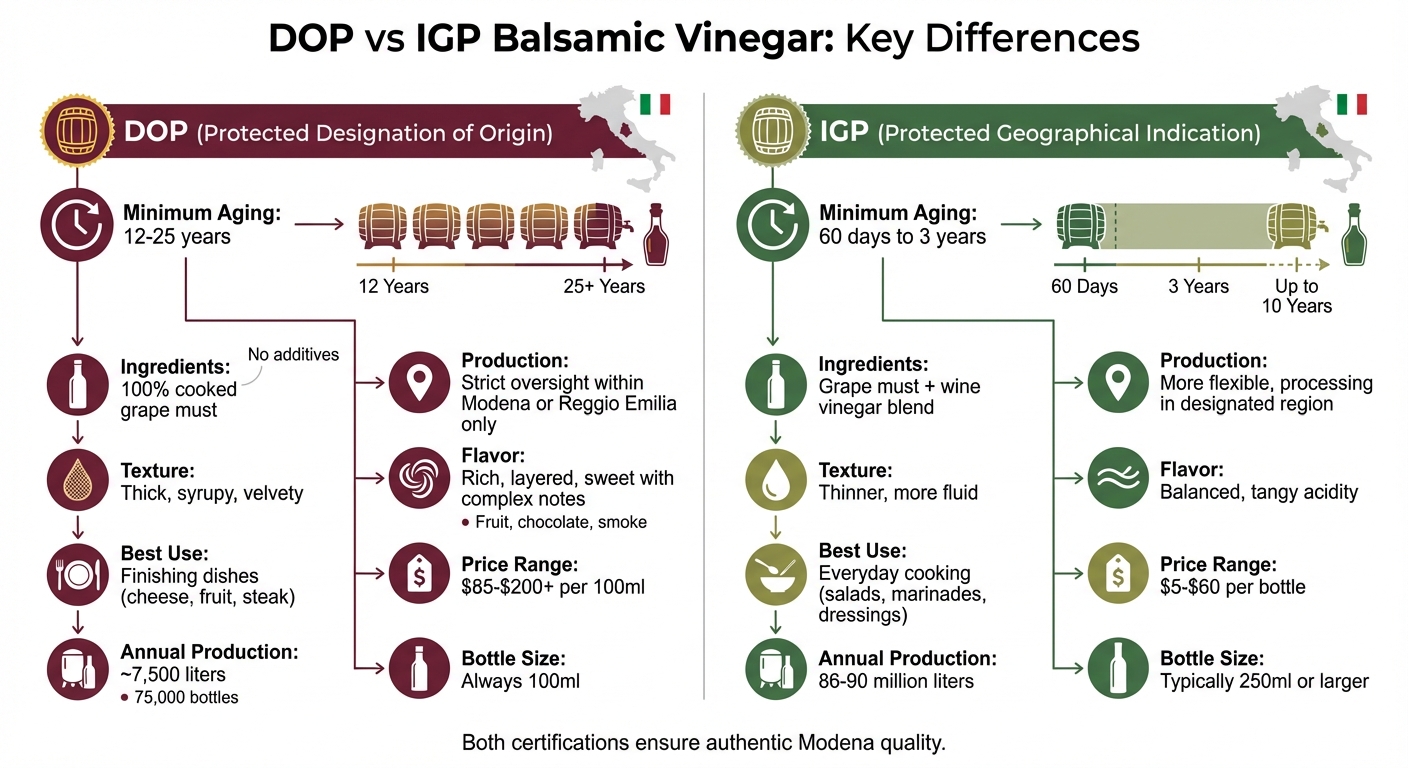
DOP vs IGP Balsamic Vinegar Comparison Chart
Traditional vs. Commercial: The Balsamic Vinegar Truth
sbb-itb-4066b8e
1. DOP Requires 12 Years of Aging; IGP Requires Only 60 Days
DOP balsamic vinegar undergoes a minimum aging process of 12 years, while IGP balsamic vinegar requires just 60 days. This drastic 72-fold difference in aging impacts everything from texture and flavor to price and culinary use.
For DOP vinegar, those 12+ years are spent aging in a batteria - a series of barrels made from different types of wood. Over time, evaporation naturally thickens the vinegar and develops complex flavors like fruit, chocolate, and smoke. As Acetaia Marchi explains:
The thicker consistency is the result of years of aging and concentration of the product.
IGP vinegar, on the other hand, achieves its consistency in just two months. By combining cooked grape must with red wine vinegar, fermentation is sped up. This creates a thinner vinegar with a sharper acidity of at least 6%. Additionally, up to 2% caramel coloring can be added to give it the appearance of aged vinegar. As noted, the red wine vinegar "inoculates the cooked grape must with acetic bacteria, initiating fermentation".
This stark aging difference also defines their culinary roles. DOP vinegar, with its rich and concentrated profile, is best used as a finishing touch - drizzled over dishes to highlight its depth. Meanwhile, IGP vinegar, with its quicker production and lighter consistency, is perfect for everyday cooking, including marinades, dressings, and sauces.
The price difference further highlights their distinct markets. DOP’s extra vecchio variety, aged for at least 25 years, can cost between $150 and $300 for a 3.4 oz (100 ml) bottle. In contrast, IGP balsamic vinegar is much more affordable, ranging from $5 to $50, making it a practical choice for regular kitchen use.
2. DOP Uses Pure Cooked Grape Must; IGP Mixes Must with Wine Vinegar
DOP balsamic vinegar is crafted exclusively from 100% cooked grape must, with no additives involved. On the other hand, Balsamic Vinegar of Modena IGP is made by blending concentrated grape must with wine vinegar, which typically makes up 6% to 50% of the mix.
This difference in ingredients plays a big role in the vinegar's texture and flavor. DOP vinegar, made from pure must, develops a rich, syrupy consistency with layered flavors that are sweet, woody, and have just a hint of acidity. In contrast, the addition of wine vinegar in IGP results in a lighter, more fluid texture and a tangier taste that balances sweetness and acidity.
The inclusion of wine vinegar in IGP also speeds up the aging process, creating a flavor profile and texture that make it suitable for everyday use.
When shopping for IGP balsamic vinegar, it’s worth checking the ingredient list. High-quality options will list cooked grape must as the primary ingredient, meaning the product contains mostly pure must. Lower-quality versions may rely more heavily on wine vinegar and sometimes even include caramel coloring to imitate the look of well-aged vinegar.
DOP balsamic vinegar, with its concentrated and complex flavor, is perfect for finishing dishes. A few drops can elevate aged cheeses, fresh strawberries, or even vanilla gelato. Meanwhile, the lighter and tangier IGP vinegar shines in everyday cooking, such as in salad dressings, marinades, or sauces. Understanding these differences can help you choose the right vinegar for both your pantry and your recipes.
3. Both Certifications Require Grapes from Modena and Reggio Emilia Provinces
The authenticity of both DOP and IGP balsamic vinegars hinges on the use of grapes from specific regions. For DOP certification, grapes must be exclusively grown in the Modena and Reggio Emilia provinces. These areas provide the perfect conditions, with the right balance of sugar and acidity, to produce high-quality vinegar. In contrast, IGP standards allow for approved grape varieties grown outside these provinces, as long as all processing takes place within the designated region. These regional rules are key to shaping the distinct flavors of each type of vinegar.
DOP balsamic vinegar relies solely on 100% cooked grape must from native varieties like Trebbiano and Lambrusco. Meanwhile, IGP certification permits the inclusion of other cultivars, such as Sangiovese, Albana, Ancellotta, Fortana, and Montuni.
Diamantis Pierrakos of Laconiko highlights the region's exceptional grape-growing conditions:
This area yields an abundance of grapes with the perfect sugar and acidity balance.
To meet the standards, grapes are harvested late in the season to achieve a minimum sugar concentration of 30% Brix. This high sugar level is crucial for creating the vinegar's signature sweetness and thick, syrupy texture after cooking. Additionally, the local climate plays a vital role. The intense summer heat, particularly in the attics where barrels are traditionally stored, drives the fermentation and evaporation processes that intensify the grape flavors.
Due to these strict regional requirements, the production of commercial DOP balsamic vinegar is limited to just 7,500 liters annually - roughly 75,000 bottles.
4. Limited DOP Production; IGP Dominates Sales
The numbers paint a clear picture of the market's structure. In 2014, Italy produced between 86 and 90 million liters of balsamic vinegar, with the bulk of it labeled as IGP, catering to the mass market. The difference between the two categories is striking: DOP balsamic vinegar requires a minimum aging period of 12 years, while IGP can be ready for sale in just 60 days. This creates a significant gap in production capacity.
The shorter aging process of IGP products allows manufacturers to produce and export large volumes efficiently. This scalability meets global demand for affordable, good-quality balsamic vinegar. In fact, approximately 70% of Italy's balsamic vinegar is exported. The United States alone accounts for $100 million of these exports. By 2015, Italy's share of global vinegar exports reached nearly 50%, valued at $271 million.
Price is another key factor in this divide. DOP balsamic vinegar, with its lengthy aging process and stringent production standards, is the most expensive option. It’s positioned as a premium, artisanal product. On the other hand, IGP balsamic vinegar is far more affordable and widely accessible, making it ideal for everyday use rather than specialty applications. This affordability ensures IGP’s dominance in the market, while DOP remains a niche luxury item.
5. DOP Follows Strict EU Protected Designation Rules; IGP Allows More Production Flexibility
This distinction highlights how certification impacts both tradition and accessibility. The key difference lies in how the European Union defines production standards. For DOP (Protected Designation of Origin), every step - from grape cultivation to bottling - must take place within the traditional regions of Modena or Reggio Emilia. In contrast, IGP (Protected Geographical Indication) requires only minimal processing within the designated area.
"The DOP is the most strict of the designations and its use requires that all major stages of production and processing occur in the stated geographic area... The IGP designation is the less strict of the two and only guarantees that one stage of production occurs in the geographic area." – Supreme Vinegar
Ingredient regulations further emphasize the divide. DOP-certified vinegar must adhere to uncompromising standards: it is made exclusively from 100% cooked grape must with no additives - no caramel coloring, no thickeners like xanthan or guar gum, and no wine vinegar. The process involves strict controls, including specific cooking methods, limits on grape yields, and packaging requirements, all designed to preserve its traditional character.
IGP, on the other hand, allows much more flexibility. Producers can blend between 20% and 90% grape must with 10% to 80% wine vinegar. They may also add up to 2% caramel for color and use thickeners to replicate the texture of aged vinegar. Additionally, packaging does not need to occur within the aging region.
DOP products undergo rigorous testing before bottling. Each batch is subject to analytical and sensory evaluations by a certification body. The finished product must meet specific standards, including a density of at least 1.240 at 68°F (20°C) and a total acidity of at least 4.5 grams of acetic acid per 100 grams. To ensure authenticity, every bottle is sealed with a tamper-proof seal bearing a unique serial number.
While DOP's strict controls preserve artisanal tradition, IGP's more relaxed standards make it suitable for everyday use and larger-scale production.
DOP vs IGP Comparison Table
Seeing the differences between DOP and IGP balsamic vinegars laid out side by side helps clarify what sets them apart. From aging to ingredients, the table below breaks it all down:
| Feature | Traditional Balsamic DOP | Balsamic Vinegar of Modena IGP |
|---|---|---|
| Minimum Aging | 12 years (Affinato) or 25 years (Extravecchio) | Minimum 60 days, usually 1–3 years (some varieties up to 10 years) |
| Ingredients | 100% cooked grape must, no additives | Cooked grape must mixed with wine vinegar |
| Additives Allowed | None | Up to 2% caramel color and approved thickeners |
| Grape Source | Limited to Modena or Reggio Emilia provinces | Grapes can be sourced worldwide |
| Texture | Thick, syrupy, and velvety | Thinner, more fluid |
| Flavor Profile | Rich, layered, and sweet | Balanced with a tangy acidity |
| Bottle Size | Always 100 ml | Typically 250 ml or larger |
| Typical Price Range | Around $85–$200+ per 100 ml | Around $5–$60 per bottle |
This comparison table highlights how the production methods and ingredients lead to very different products. DOP vinegar’s strict standards and long aging process result in its luxurious texture and intricate flavor, while IGP vinegar offers a more accessible and versatile option.
"Traditional Balsamic Vinegar DOP is considered the ultimate Italian vinegar, is aged for 12 or more years, and has the most complex flavors." – Eataly
The price gap reflects the labor-intensive process and pure ingredients behind DOP vinegar. Its extended aging creates a thick, syrup-like consistency and a depth of flavor that stands out.
Conclusion
Knowing these five key facts can guide you in choosing the vinegar that fits both your cooking style and budget. DOP certification signifies that the vinegar is crafted using strict traditional methods, while IGP certification ensures it’s processed in Modena, using regional grape varieties but with more flexibility in ingredient sourcing and aging.
These two certifications are the only ones recognized by both the Italian Government and the EU to protect traditional production methods and maintain regional integrity. Spotting one of these labels on a bottle means you’re getting a product that adheres to rigorous quality standards.
"PGI and DOP are very strict protective systems used to preserve the traditional methods of food production for specific areas and regions." – Allo Foils
Your choice between DOP and IGP depends on how you plan to use the vinegar and your budget. DOP vinegar offers a rich texture and flavor, perfect for enhancing dishes like cheese, fruit, or steak. On the other hand, IGP vinegar provides a balanced acidity, making it ideal for salads, marinades, and everyday cooking. Whether you're after the luxurious finishing touch of DOP or the versatile utility of IGP, both bring the authentic flavors of Modena straight to your kitchen. Explore your options at Big Horn Olive Oil.
FAQs
How can I spot a real DOP or IGP label on the bottle?
To spot an authentic DOP or IGP label, look for certifications such as Denominazione di Origine Protetta (DOP) or Indicazione Geografica Protetta (IGP). These labels guarantee both quality and authenticity. Additionally, the product should clearly state its origin, like Traditional Balsamic of Modena or Reggio Emilia, confirming it’s from a certified production area.
Which balsamic is best for salad dressing vs finishing food?
When it comes to salad dressings, Balsamic Vinegar of Modena IGP stands out as a great choice. Its versatility makes it perfect for everyday use, adding a balanced tang to your greens. Meanwhile, Traditional DOP balsamic is in a league of its own. This variety is best saved for elevating gourmet dishes or desserts, where its deep, complex flavor and handcrafted quality can take center stage.
Does IGP balsamic have added caramel or thickeners?
IGP balsamic vinegar can legally include up to 2% caramel coloring or thickening agents. However, not every IGP balsamic contains these additives. To be sure, always read the label carefully to check the ingredients.