

French Confit: Preserving Meat with Olive Oil
The French confit method is a centuries-old way to preserve meat by cooking it slowly in fat and storing it in an oxygen-free environment. Originally from southwest France, it was used to keep meat edible for months before refrigeration. Today, it’s prized for its rich flavor and tender texture.
Here’s the process in a nutshell:
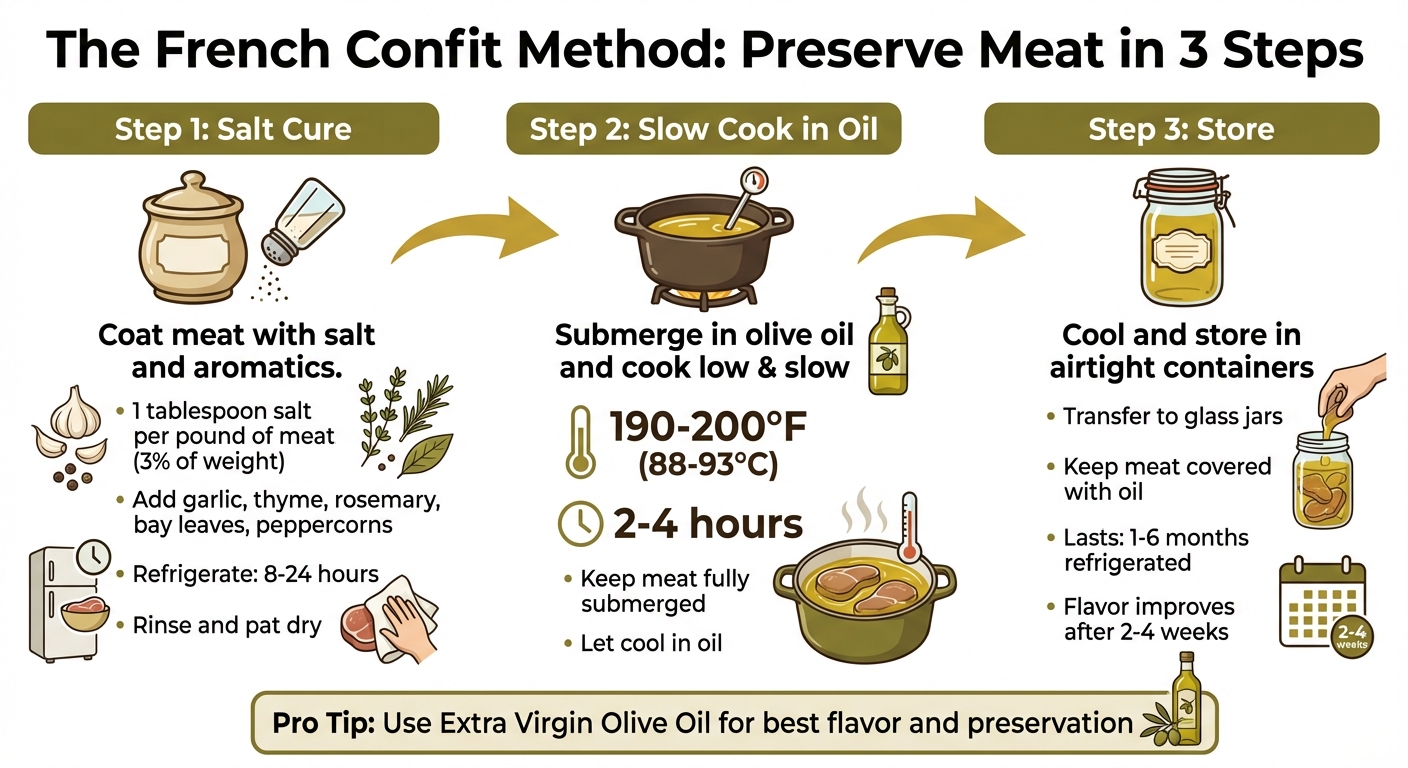
- Salt Cure: Coat meat with salt and aromatics (e.g., garlic, thyme), refrigerate for 8–24 hours, then rinse and dry.
- Cook in Oil: Submerge meat in extra virgin olive oil and cook at 190–200°F for 2–4 hours.
- Cool and Store: Let the meat cool in the oil, then store in airtight jars fully covered with oil. It lasts up to 6 months in the fridge.
Modern recipes often swap animal fat for olive oil, which adds depth of flavor and contains antioxidants that prevent spoilage. High-quality extra virgin olive oil, like those from Big Horn Olive Oil, ensures better taste and preservation. Once cooked, the infused oil can be reused for other dishes, making it a flavorful bonus.
This method transforms cuts like duck legs or chicken thighs into long-lasting, tender, and flavorful meals. Pair with sides like potatoes, roasted vegetables, or a citrusy salad for balance, and crisp the meat before serving for added texture.
French Confit Method: 3-Step Process for Preserving Meat in Olive Oil
How to Make French Confit
Making confit at home is straightforward as long as you follow each step carefully. When done right, the result is tender, flavorful meat that can be stored for months.
Salt Curing the Meat
Start by generously coating duck legs or chicken thighs with coarse sea salt. Mix the salt with aromatics like crushed garlic cloves, fresh thyme, rosemary, bay leaves, and cracked peppercorns for a deep, savory flavor. Traditional recipes suggest using about 1 tablespoon of salt per pound of meat (around 3% of its weight).
Place the salted meat in a container and press it with a weighted lid to ensure the salt penetrates evenly. Refrigerate this for 8 to 24 hours. During this time, the salt draws out moisture while infusing the meat with seasoning. For a more controlled approach, some cooks prefer equilibrium brining, using 1.5% to 1.75% salt by weight to avoid over-salting.
After curing, rinse the meat thoroughly under cool water to remove excess salt, then pat it dry with paper towels. Skipping this step could leave the confit too salty. Once prepped, the meat is ready for slow cooking in oil.
Slow Cooking in Olive Oil
Arrange the cured meat in a heavy pot in a single layer, ensuring every piece is fully submerged in extra virgin olive oil. Complete submersion is key to keeping the meat moist and preventing it from drying out.
Set your oven to maintain a low, steady temperature of 190°F to 200°F (88°C to 93°C) and cook the meat for 2 to 4 hours. This gentle cooking process breaks down connective tissues, resulting in rich, tender meat.
As Wade Truong from MeatEater explains:
Allowing the meat to slowly cool down in the fat is, in my opinion, the most defining step in making confit. This period allows the meat to essentially swim in the fat, soaking it up as it gradually cools.
Let the meat cool to room temperature in the same pot, keeping it submerged in the oil. This gradual cooling prevents the muscle fibers from contracting too quickly, which helps retain juices and flavor.
Cooling and Storage Methods
Once cooled, transfer the meat along with the oil to airtight glass jars or plastic containers. Strain the oil first to remove any particles or moisture. Make sure every piece of meat is completely covered with oil for safe preservation.
In the refrigerator, the oil will solidify, forming a protective seal. Properly stored confit can last anywhere from 1 to 6 months, and many cooks find the flavor improves after aging in the fat for 2 to 4 weeks. When you're ready to serve, simply take out the portion you need, ensuring the rest stays fully submerged in oil.
With your confit safely stored, the next section will cover how to choose the best olive oil for this process.
Selecting Olive Oil for Confit
Why Quality Matters
For confit, extra virgin olive oil (EVOO) is the top choice. Its unrefined, chemical-free nature enhances both flavor and aroma, especially when paired with ingredients like garlic and herbs. Ultra Premium EVOOs, in particular, boast higher antioxidant levels. As the Jordan Culinary Team notes:
The more pungent and fresh the olive oil (Jordan is milled within six hours of picking), the higher the antioxidants.
When selecting an oil, look for an acidity level of 0.8% or lower. A peppery or slightly bitter profile often signals a high-quality product.
Pair the oil's intensity with the type of meat you're using. Lighter, fruitier options like Arbequina are ideal for chicken or other mild poultry, while bolder varieties such as Picual are perfect for richer meats. After cooking, the leftover oil can be strained and reused for roasting potatoes, making vinaigrettes, or even drizzling over fresh bread. Choosing the right oil does more than preserve your confit - it elevates its flavor.
For cooks who value excellence, sourcing from reliable suppliers is key.
Big Horn Olive Oil: A Trusted Source
Big Horn Olive Oil stands out as a reliable choice for high-quality EVOOs that meet the demands of confit. Their oils are cold-pressed within two hours of harvest and delivered fresh within three months, ensuring both antioxidant preservation and robust flavor. Their lineup includes traditional single-source oils like Picual and Coratina, starting at $8.99, as well as infused varieties. Options like garlic- or rosemary-infused oils come ready with aromatics, giving your dish a flavorful boost during the slow cooking process. Each bottle is crafted from premium olives and meets internationally recognized quality benchmarks, making it a trusted companion for confit preparation.
sbb-itb-4066b8e
Serving Confit Meats
Side Dish Pairings
When serving tender confit meats, the right sides can make all the difference. Potatoes are a timeless match - whether you prefer them roasted until crisp, mashed to creamy perfection, or smashed with garlic and parmesan for extra flavor. To balance the richness of the meat, opt for sides that bring texture or crunch.
Acidity can also play a key role. Think of an arugula salad dressed with honey lemon vinaigrette or Greek-style potatoes brightened with lemon and feta. These elements cut through the fat and add a refreshing contrast. As Emmeline Kemperyd, Founder of Always Use Butter, puts it:
Duck loves carby and earthy, sweet, and citrusy tones - so depending on which flavors you season the duck with, you might want to balance it with another flavor from this triad.
For a touch of sweetness and earthiness, roasted carrots, butternut squash, or fennel pair beautifully with the savory richness of confit. Green vegetables, like garlic-roasted broccoli, asparagus with Hollandaise, or a smooth pea puree, add a pop of color and freshness to the plate. If you're looking for something heartier, serve the meat over rice or pasta tossed with lemon zest and fresh herbs to soak up all those flavorful juices.
To finish, consider a drizzle of flavored olive oil to tie everything together.
Finishing with Infused Olive Oils
After slow cooking and storing your confit, a few finishing touches can elevate the dish even further. Start by crisping the skin - just sear or broil it for 5–8 minutes until golden and irresistible. Then, enhance the flavors with a drizzle of infused olive oil. The oil you used during cooking, often referred to as "liquid gold", can be strained through a fine-mesh sieve and repurposed as a flavorful finishing touch.
Big Horn Olive Oil's infused varieties are a fantastic choice here. Their garlic- or rosemary-infused oils bring out the dish's aromatic notes, while their traditional extra virgin olive oils (EVOOs) offer either a peppery kick or a fruity undertone, depending on your preference. Choose the oil based on your protein: lighter, fruitier oils work well with chicken, while bold, peppery options complement duck or pork. For a cohesive meal, use the same oil to drizzle over roasted veggies or toss with salad greens. It’s a simple yet impactful way to unify the flavors on your plate.
Conclusion
The French confit method turns ordinary cuts of meat into tender, flavorful dishes that can last for weeks - or even months - if stored correctly. By cooking meat slowly in olive oil, you’re keeping alive a preservation technique that’s been cherished for centuries. The oil not only locks in the meat’s natural juices but also adds layers of rich, savory flavor.
This approach offers a twofold benefit: you get melt-in-your-mouth meat and a batch of infused oil that can be used to enhance future recipes. While traditional confit often uses animal fats, olive oil brings a lighter touch with its heart-healthy monounsaturated fats.
To get the best results, it’s crucial to use premium extra virgin olive oil. Lower-quality oils may develop a bitter taste during the long cooking process, but high-quality oils - like those from Big Horn Olive Oil - ensure consistent flavor and texture. Their Ultra Premium EVOOs are cold-pressed within two hours of harvest and delivered fresh within three months, offering a vibrant array of fruity, peppery, or herbaceous notes that make your confit stand out. With this level of quality, every bite of your confit becomes a rich and satisfying experience.
Whether you’re preparing duck legs, chicken thighs, or other meats, the process remains straightforward: salt cure the meat, submerge it in oil, cook it gently at 190°F to 200°F, and let it cool completely while still immersed in the fat. The end result is a versatile ingredient that can elevate your everyday meals or add a touch of sophistication to special occasions. Dive into this timeless tradition and bring new depth to your cooking. Check out Big Horn Olive Oil's selection at bhooc.com to see how the right oil can transform a classic preservation method into a true flavor experience.
FAQs
What meats work best for making confit?
When it comes to making confit, the best choices are meats with higher fat content or tougher cuts that thrive with slow cooking. Some popular picks include duck legs, goose legs, chicken thighs, turkey legs, pork shoulder, and even wild game. These cuts transform into tender, deeply flavorful bites when cooked gently in olive oil.
For the best results, opt for a high-quality olive oil, such as Ultra Premium Extra Virgin Olive Oil. Not only does it elevate the flavor, but it also helps preserve the meat. This technique locks in moisture, delivering a rich and savory dish that’s perfect for both long-term storage and immediate indulgence.
How does olive oil improve the flavor and preservation of meat in confit?
Olive oil is essential in confit, acting as a protective shield that limits oxygen exposure and slows bacterial growth, which helps preserve the meat for extended periods. As the meat cooks slowly at a low temperature, the olive oil works its magic, infusing the meat with delicate, aromatic flavors. The result? A texture that's tender, rich, and almost buttery.
Choosing a high-quality olive oil, like Ultra Premium Extra Virgin Olive Oil, takes the dish to another level. It not only keeps the meat moist but also adds a subtle, fruity note that enhances both the flavor and the overall experience of the dish.
Can I reuse olive oil after making meat confit?
Yes, you can absolutely reuse the olive oil after making meat confit. Once you’ve strained it to remove any leftover bits, transfer the oil into an airtight container and store it in the refrigerator. Properly stored, this flavorful oil can last several weeks to a few months.
Because the oil absorbs the rich, savory flavors of the confit, it’s perfect for recipes that pair well with those tastes. Try using it to add depth to roasted vegetables, as a base for marinades, or even in salad dressings. Just make sure to check for any signs of spoilage, like unusual odors or cloudiness, before using it again.