

5 Fruit Chutneys with Balsamic Vinegar
Balsamic vinegar brings a rich, tangy-sweet depth to fruit chutneys, making them excellent pairings for meats, cheeses, and more. Here’s a quick overview of five chutneys you can try:
- Fig and Apple Chutney: Sweet figs and tart apples balanced with cinnamon or ginger. Pairs well with pâté, pork, or cheese.
- Cherry Tomato Chutney: Sweet and umami-rich tomatoes simmered with balsamic. Great on steak, chicken, or veggie burgers.
- Peach Chutney: Juicy peaches with red pepper and thyme for a jam-like consistency. Perfect with pork or grilled chicken.
- Raisin Chutney: Sweet raisins with honey and roasted garlic. Works well with cheeses or as a spread.
- Tomato Chutney: Tangy-sweet tomatoes with Thai chilies and ginger. Ideal as a condiment or glaze.
Using quality balsamic vinegar, like Big Horn Olive Oil’s aged options, enhances the flavor without needing extra sugar. These chutneys are simple to prepare and elevate everyday dishes into something special.
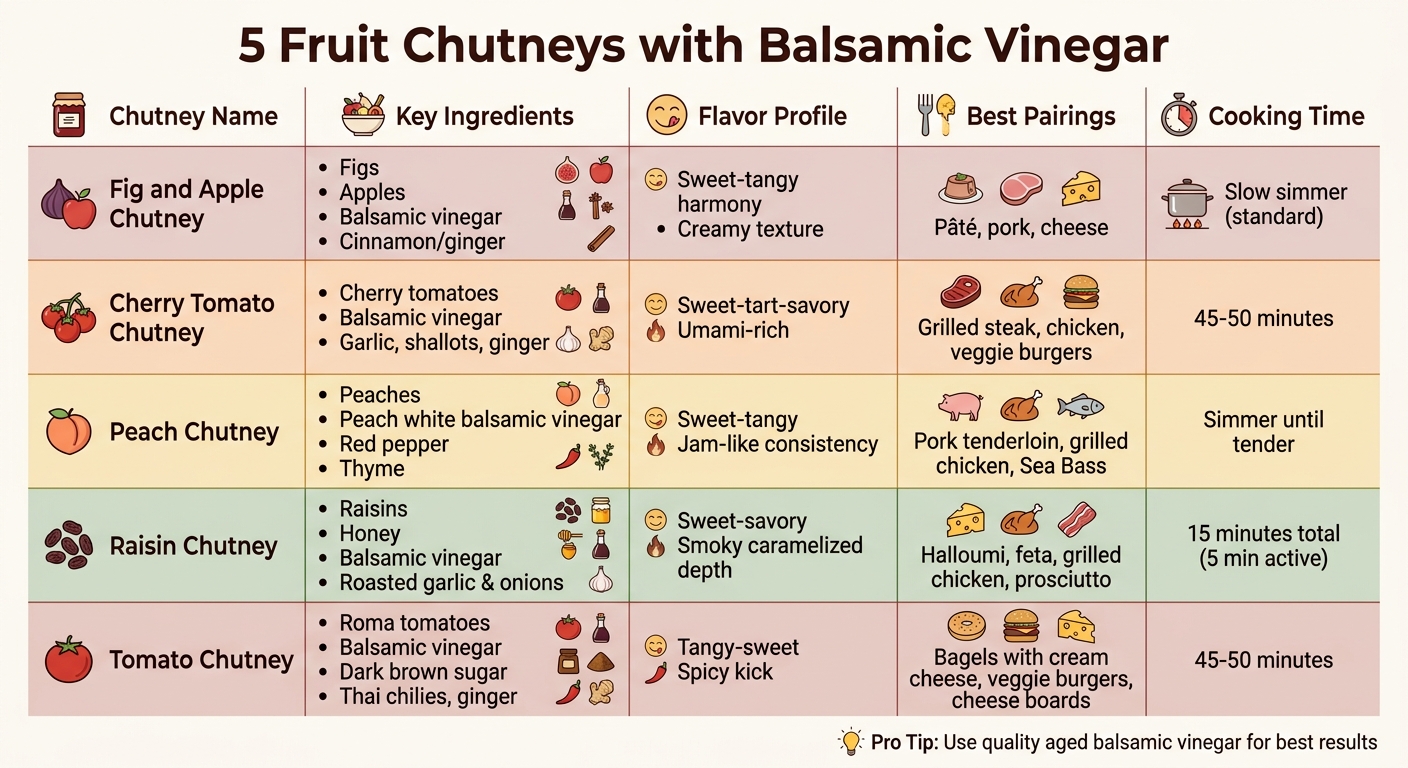
5 Balsamic Vinegar Fruit Chutneys: Ingredients, Flavors & Pairings Guide
Blueberry Chutney With Canadian Blueberries
sbb-itb-4066b8e
1. Fig and Apple Chutney
Figs bring a natural sweetness and creamy texture to this chutney, while apples add a tart, crisp contrast. Together, they create a sweet-and-tangy harmony, with balsamic vinegar stepping in to balance the flavors with its mild, syrupy acidity.
You don’t need to splurge on expensive balsamic vinegar for this recipe - standard quality works perfectly. The slow simmering process intensifies and smooths out the vinegar’s flavor, especially when paired with warming spices like cinnamon or ginger. The result? A chutney that complements everything from starters to main courses.
This chutney shines when paired with rich, fatty dishes. For example, Cookpad users have shared creative ideas like serving balsamic-fig chutney with chicken liver pâté and avocado as a starter, or using apple chutney to elevate pork tenderloin into a quick but elegant entrée [[2]](https://cookpad.com/eng/search/balsamic vinegar chutney). These examples show how a well-made chutney can turn everyday dishes into something special.
2. Cherry Tomato Chutney
This cherry tomato chutney highlights how balsamic vinegar can balance sweetness and acidity, much like other fruit-based chutneys. Cooking cherry tomatoes with balsamic vinegar enhances their natural sugars and deepens their savory, umami qualities. Bon Appétit describes this transformation beautifully:
"Nothing packs the same umami punch as a sauce made from cooked-down tomatoes. Their sweet-tart-savory qualities become deeper and more majestic as they reduce".
The balsamic vinegar adds a sharp, tangy backbone that contrasts with the tomatoes' sweetness and any sugar you might include. To create this chutney, simmer the mixture on low heat for 45–50 minutes. This allows the vinegar's sharpness to mellow while the flavors combine. For extra depth, consider adding garlic, shallots, ginger, cumin, and fennel seeds.
The result? A wonderfully balanced condiment that pairs well with a variety of dishes. Try it as a topping for grilled steak, roasted chicken, eggplant, bagels with cream cheese, or even veggie burgers.
If you're short on time, you can roast the cherry tomatoes instead. Toss them with balsamic vinegar, minced garlic, and olive oil, then roast at 375°F for 20–25 minutes until they're tender and flavorful. If the acidity feels too strong, adjust with a touch of sugar or a pinch of salt. A drizzle of olive oil can also add a smoother, richer texture.
For the best flavor, consider using a high-quality aged balsamic vinegar like those from Big Horn Olive Oil. It can make all the difference in elevating this dish.
3. Peach Chutney
Peach chutney brings together the sweetness of ripe peaches and the tangy acidity of balsamic vinegar, creating a perfectly balanced flavor profile. This blend is enhanced with red or cracked black pepper, red onions, and fresh thyme, resulting in a jam-like condiment that works beautifully as a jelly alternative or a topping for grilled proteins like pork or chicken. Its versatility makes it a fantastic addition to both sweet and savory dishes.
To prepare, peaches are simmered until tender, and the mixture thickens to a spreadable consistency. Using Peach White Balsamic Vinegar is key to achieving the perfect flavor harmony. Culinary instructor Camine Pappas highlights its importance:
"You would do well to use the Olive This! brand Peach White Balsamic Vinegar in this chutney as the peach quality is authentic, and the tang perfect. It's seems to bind all the flavors into something new and perfect".
Want a citrusy twist? Swap in Sicilian Lemon Balsamic Vinegar from Big Horn Olive Oil for a refreshing variation.
This chutney pairs wonderfully with pork tenderloin, chicken breasts, or even Sea Bass for a refined touch. Serve it warm over grilled meats or chilled as part of a charcuterie board alongside creamy or hard cheeses on artisan crackers. If stored in the refrigerator, homemade balsamic peach chutney will stay fresh for up to one week.
4. Raisin Chutney
Raisin chutney brings together a sweet and savory combination, with balsamic vinegar adding a rich depth to its flavor. The honeyed undertones of balsamic vinegar balance the natural sweetness of raisins and honey, while a subtle spicy kick keeps it from feeling overly sugary. Roasted onions and garlic add a smoky, caramelized layer that elevates this condiment to the next level.
This recipe is quick and easy, taking just 15 minutes to prepare, with only 5 minutes of active work. The version from Living the Gourmet has earned a 5/5 star rating from 12 reviewers, who rave about its "punch of flavor" and versatility. As Living the Gourmet describes:
"The roasted elements bring a delightful depth, while the plump raisins add a touch of sweetness and plump texture. It is then beautifully balanced by the honey and balsamic vinegar."
Despite its simplicity, this chutney is incredibly versatile. It pairs beautifully with cheeses like halloumi, Parmigiano Reggiano, or feta. It’s also a fantastic match for proteins like grilled chicken skewers, prosciutto, salami, or roasted pork loin. For a simple yet satisfying snack, try spreading it on warm pita, toasted baguette slices, or crostini.
A couple of tips to make the most of this recipe: use high-quality extra virgin olive oil for its fresh, raw flavor, and stick to balsamic vinegar for the perfect balance. Avoid substituting with white wine vinegar, as it may introduce an unwanted bitterness. If needed, apple cider or red wine vinegar can work as alternatives. For premium ingredients, consider sourcing your extra virgin olive oil and balsamic vinegar from Big Horn Olive Oil.
5. Tomato Chutney
Tomato chutney strikes a satisfying balance between tangy and sweet. The key here is the combination of balsamic vinegar and dark brown sugar. The vinegar brings a sharp acidity that complements the natural sweetness of vine-ripened tomatoes, while the sugar adds depth. Simmer everything on low heat for about 45–50 minutes until the mixture reduces to a jam-like consistency, rich in flavor and texture.
Getting the texture just right starts with preparing the tomatoes properly. Roma tomatoes work best for this recipe. Blanch them for about a minute to make peeling easier before adding them to the mix. The balsamic vinegar plays a dual role - it not only enhances the sweetness but also acts as a bridge between spicy Thai chilies and savory aromatics like shallots and ginger. This creates a sweet and spicy flavor profile that’s perfect as a condiment or even a glaze.
As Food52 suggests:
"It is delicious on bagels with cream cheese, on tostadas with cheddar cheese, or in place of relish in your favorite veggie burger."
When choosing balsamic vinegar, go for a standard variety rather than an aged one. Standard balsamic holds up better during the long simmering process, maintaining its robust flavor and dark color. If you’re adding Thai chilies, you can control the spice level by deciding whether to include the seeds. The vinegar helps smooth out the sharpness of the heat, making the chutney more balanced [[2]](https://cookpad.com/eng/search/balsamic vinegar chutney).
This tomato chutney offers incredible versatility. It’s not just a condiment - it’s also a fantastic glaze for barbecue meats or oily fish. It pairs beautifully with cheese boards and cold cuts, adding a flavorful twist. For a top-notch balsamic vinegar to elevate your chutney, check out Big Horn Olive Oil’s traditional dark balsamic vinegar, sourced straight from Modena, Italy. They’re ideal for achieving that rich, layered flavor.
Conclusion
These five fruit chutneys highlight how balsamic vinegar transforms fruit into rich, versatile condiments. Each recipe brings its own twist: the balance of fig and apple, the tangy brightness of cherry tomato, the warm spices of peach, the caramel-like sweetness of raisin, and the classic tang of tomato. They pair beautifully with everything from morning bagels to grilled meats.
Quality ingredients are key to making chutneys shine. Traditional Modena balsamic vinegar, known for its thick, syrupy texture, adds authentic depth. For example, Big Horn Olive Oil's Traditional 18-Year Aged Dark Balsamic Vinegar, priced at $8.99, is a great choice.
Elevate these chutneys further with premium extra virgin olive oils (EVOOs). Drizzle Big Horn Olive Oil's Picual EVOO over fig and apple chutney for a peppery kick, or brighten up peach chutney with Coratina EVOO for a fruity finish - both also available at $8.99.
These chutneys are perfect year-round, whether you're glazing turkey or topping burgers. Keeping high-quality balsamic vinegar and EVOO in your pantry ensures bold, delicious flavors every time.
FAQs
Can I can these chutneys for long-term storage?
Yes, you can preserve these chutneys for long-term storage by canning them. Start by sterilizing your jars and filling them with chutney, leaving about ½ inch of headspace. Seal the jars tightly and process them in a water bath, adjusting the time based on your altitude. When stored in a cool, dark place, properly canned chutneys can last for at least 6 months or even longer.
Which balsamic vinegar should I use (aged, standard, or white)?
When it comes to chutneys, aged balsamic vinegar works wonders. Its deep, concentrated flavor brings out the fruity and spiced elements of the recipe beautifully. For top-notch results, try an 18-Year Aged Dark Balsamic Vinegar, such as the one offered by Big Horn Olive Oil.
How do I fix chutney that’s too thin or too acidic?
If your chutney turns out too thin, you can fix it by reheating and adding a thickening agent such as cornstarch or arrowroot powder. Alternatively, simmer it in a wide pan to naturally reduce the excess liquid. On the other hand, if the chutney tastes too acidic, try balancing it with a sweetener like sugar or honey. Adding fruits like apples or pears can also help mellow the sharpness while improving the texture.