

Greek Olive Oil Cookies: Ladokouloura Recipe
If you want Ladokouloura that taste right, keep 3 things in check: use a mild to medium extra virgin olive oil, stop adding flour as soon as the dough is soft, and bake only until lightly golden. That’s the whole recipe in one line.
I’d sum this up like this: these Greek olive oil cookies are usually dairy-free and egg-free, they make about 30 to 36 cookies, and they lean on orange zest, orange juice, cinnamon, and a little clove for flavor. The dough should stay soft, not stiff, and the bake time changes the texture: about 20 to 25 minutes at 350°F gives a softer center, while 30 to 35 minutes gives a crisper cookie.
Here’s the short version you can use right away:
- Main fat: 1 cup olive oil
- Main flavors: orange, cinnamon, cloves
- Flour range: start with 4 cups, then add a little more only if needed
- Texture control: thicker shapes stay softer; thinner shapes turn crisp
- Best oil style: mild to medium EVOO
- Rest time: 20 to 30 minutes
- Storage: airtight container at room temperature for several days
- Good to know: many people like them even more on day 2
If I were making them, I’d focus less on fancy shaping and more on the small details that change the result: don’t overmix, don’t overbake, and don’t let a strong olive oil take over the orange and spice. That’s what makes the batch work.
Greek Olive Oil Cookies: Vegan Ladokouloura
sbb-itb-4066b8e
Ingredients, Measurements, and Basic Equipment
A batch makes about 30–36 cookies. The ingredient list is simple and pantry-friendly, and it keeps the cookies close to their olive-oil, fasting-friendly roots.
You'll need:
- 1 cup extra virgin olive oil
- 1 cup granulated sugar
- 1 cup fresh orange juice
- Zest of 2 large oranges
- 2–3 tablespoons cognac or brandy (optional)
- 4–4½ cups all-purpose flour
- 2 teaspoons baking powder
- 1 teaspoon baking soda
- 1–2 teaspoons ground cinnamon
- ¼–½ teaspoon ground cloves
- ½–1 cup sesame seeds or chopped nuts, optional
Start with 4 cups of flour, then add more 1 tablespoon at a time until the dough is no longer sticky. Stop as soon as the dough feels soft and easy to shape. More flour isn't better here. Too much can make the cookies dry.
Each ingredient pulls its weight.
What Each Ingredient Does in the Recipe
Olive oil is the main fat, so it sets the tone for both flavor and texture. Granulated sugar adds sweetness and helps the edges brown a little. Orange juice brings moisture and a light acidity that reacts with the baking soda. If the mixture foams a bit, that's normal. It helps give the dough some air. Orange zest brings aroma, while cinnamon and cloves build the spice flavor. Go easy on the cloves, since they can take over fast.
Baking powder gives the dough a steady lift. Baking soda reacts with the orange juice and helps create a slightly more open crumb. Used together, they help the cookies stay light instead of heavy.
The optional add-ins change the texture more than the base flavor. Cognac or brandy adds warmth and depth, but the cookies won't taste boozy after baking. Sesame seeds give a nutty crunch and that classic look many people expect. Chopped nuts make the cookies a bit heartier and show up often in some regional versions.
How to Pick the Right Olive Oil for Ladokouloura
The intensity of the EVOO has a big effect on the final flavor. For baking, a fresh, clean EVOO with mild to medium intensity usually works best.
| Style of EVOO | Flavor Impact | Best Use for Ladokouloura | Texture Result |
|---|---|---|---|
| Mild | Soft, buttery, gently fruity | Classic, family-friendly cookies | Very tender, clean finish |
| Medium | Balanced fruitiness with subtle pepper | Everyday Ladokouloura | Tender with a more aromatic finish |
| Robust | Strong, grassy, slightly bitter | Bold batches for olive oil enthusiasts | Still tender, but richer and more intense |
Once you've picked the oil, set out the tools.
Bowls, Sheet Pans, and Other Tools You Will Need
You'll want a large mixing bowl for the wet ingredients and a medium bowl for the dry ones. A whisk works well at the start. After the flour goes in, switch to a rubber spatula or wooden spoon so you can fold the dough gently without overworking it.
Standard U.S. measuring cups and spoons help keep the ratios steady, especially for the leaveners and spices. A microplane or fine grater makes fine zest that spreads through the dough instead of clumping in strips. Line your baking sheet with parchment paper too. Olive-oil dough can brown fast on the bottom, and parchment helps keep that in check. A cooling rack helps air move around the cookies after baking, so the bottoms stay firm instead of turning soggy.
With everything measured and set out, you're ready to mix the dough.
How to Make Greek Olive Oil Cookies Step by Step
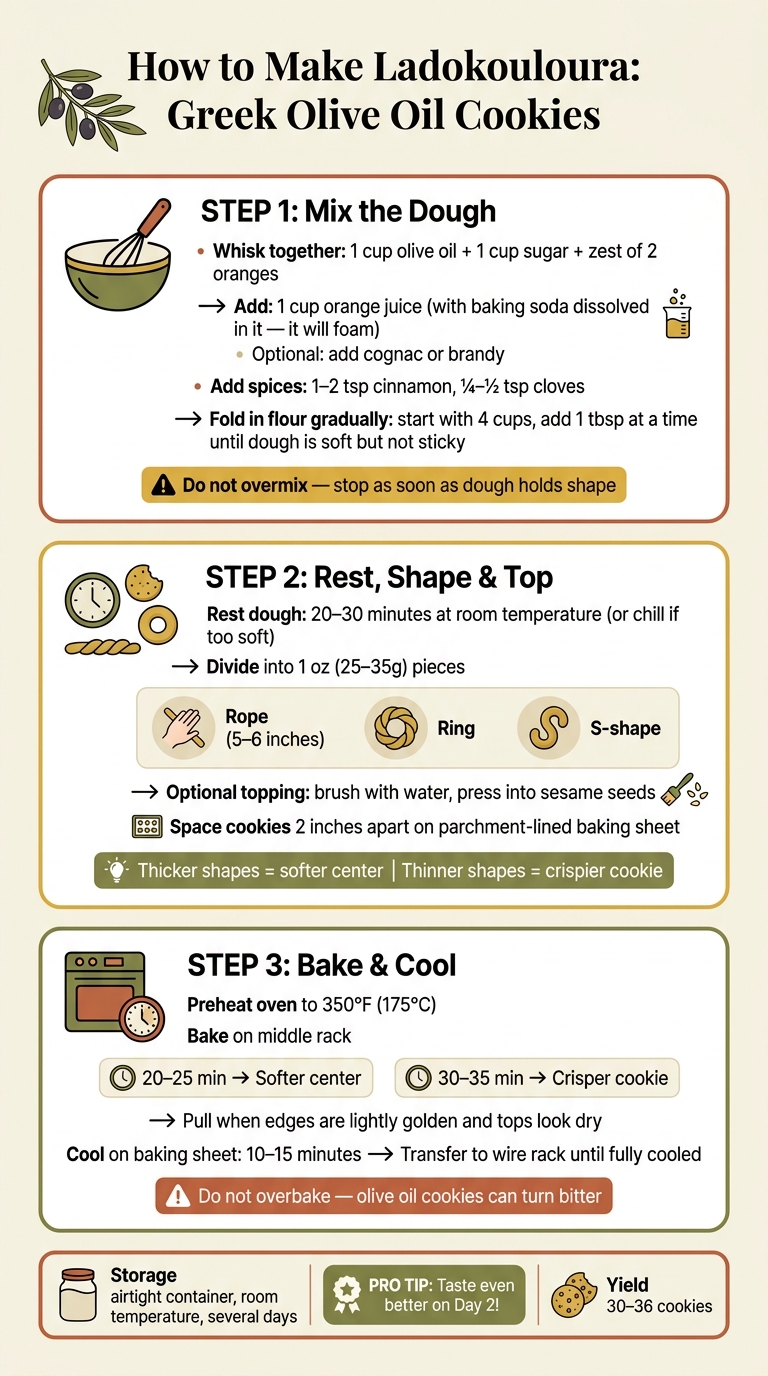
How to Make Greek Olive Oil Cookies (Ladokouloura): Step-by-Step Guide
Step 1: Mix the Wet Ingredients, Then Add the Dry Ingredients
Once your ingredients are measured, the dough comes together in a single bowl.
Start by whisking the olive oil, sugar, and orange zest in a large mixing bowl until combined. Keep whisking until the zest is spread evenly through the mixture, then pour in the orange juice.
Next, dissolve the baking soda in the orange juice. It should foam a little. Add that to the oil and sugar mixture, then pour in the cognac or brandy, if using. Add the cinnamon and cloves, and whisk until everything is mixed evenly.
Now add the dry ingredients little by little, about 1 cup at a time, folding gently with a spatula or wooden spoon. Stop as soon as the dough comes together and you no longer see dry flour. It should feel soft, easy to shape, and able to hold its form without cracking. Don't knead it hard or keep mixing past that point. Overworking the dough can make the cookies dense.
Step 2: Rest, Shape, and Top the Cookies
Cover the bowl and let the dough rest for 20 to 30 minutes at room temperature. That short rest gives the flour time to absorb the liquid and makes shaping much easier. If the dough feels too soft, chill it for a bit.
After resting, divide the dough into pieces that weigh about 1 ounce (25–35 g) each. Roll each piece between your palms into a smooth ball, then shape it into a rope, ring, or S-shape. If you're making ropes, aim for 5 to 6 inches long so they bake evenly. Thinner ropes bake faster and come out crisper. Thicker rings keep a softer middle.
If you want sesame seeds on top, place them in a shallow bowl. Brush each cookie lightly with water, then press it into the seeds. Set the shaped cookies about 2 inches apart on a parchment-lined baking sheet.
Step 3: Bake at 350°F and Cool for the Right Texture
Preheat the oven to 350°F and bake the cookies on the middle rack. That spot helps the heat stay even and keeps the bottoms from browning too much before the centers are done.
Bake until the edges are lightly golden and the tops look dry and set. The cookies may still seem a little soft when you press them, but they'll firm up as they cool. Don't wait for them to turn deep golden brown. Olive oil cookies can dry out or take on a slight bitter taste if baked too long. Bake for 20–25 minutes if you want a softer center, or 30–35 minutes for a crisper cookie.
Let the cookies sit on the baking sheet for 10 to 15 minutes before moving them to a wire rack. That short wait helps them set up and cool more evenly. Once cooled, they're ready for regional shaping and topping changes.
Regional Styles and Baking Adjustments for U.S. Kitchens
Cretan, Orange-Spice, and Sesame-Topped Versions
Once the base dough is mixed, the big differences come down to shape, topping, and bake time. Ladokouloura aren't one locked-in recipe. Around Greece, bakers change the spice blend, toppings, and shape based on local habits and whatever they have in the kitchen.
| Style | Key Ingredients | Texture | Typical Shape |
|---|---|---|---|
| Cretan sesame | Olive oil, sesame seeds, orange zest, orange juice, cinnamon, and cloves | Crisp with a toasted finish | Ring or twisted rope |
| Orange-spice | Olive oil, orange juice and zest, cinnamon, cloves, optional brandy, cognac, or raki | Tender-crisp to crumbly-soft | Ring, twisted rope, or short log |
A lot of home bakers lean on orange and cinnamon as the lead flavors. Some also add a splash of brandy, cognac, or raki for more aroma. And if you like a bit of texture, sesame seeds pressed onto the surface give the cookies a light toasted finish.
Tips for Baking with Extra Virgin Olive Oil at Home
Keep a close eye on doneness. Pull the cookies when the edges are lightly golden and the tops look dry. If you're using sesame seeds, they should look lightly toasted, not dark. If you smell anything sharp or burnt, they've stayed in too long.
In U.S. kitchens, all-purpose flour works well, and most home ovens handle these cookies just fine. Since ovens often run a little hot or a little cool, it's smart to check them a few minutes early. If your recipe uses orange juice with baking soda, the cookies may come out with a slightly more rustic, crackled surface.
How to Store Ladokouloura and Plan Ahead
Let the cookies cool all the way before storing them. After baking, the only thing left to decide is how far ahead you want to make them. Once cooled, keep them in an airtight container at room temperature. They hold well for several days.
They often taste better on day two. The orange, cinnamon, and olive oil have more time to meld, so baking them a day ahead can improve the flavor and make serving easier.
Conclusion: Key Steps for Reliable, Flavorful Ladokouloura
After shaping and baking, a few small choices make all the difference. Olive oil quality matters most. Since there's no butter in the dough, the oil's flavor comes through clearly. A fresh, medium-intensity extra virgin olive oil gives Ladokouloura their cleanest taste.
Mix the dough only until it comes together. If you keep going, the cookies can turn dense.
Texture comes down to thickness and bake time. Thicker ropes turn out tender-crisp, while thinner ones bake fully crisp. Pull the cookies when the edges are lightly golden, then leave them on the sheet for 10 to 15 minutes before moving them to a wire rack. Once they're fully cool, store them in an airtight container at room temperature.
Use high-quality olive oil, mix gently, keep an eye on the bake, and let the cookies cool all the way for steady Ladokouloura every time.
FAQs
Can I make Ladokouloura without brandy?
Yes. Some classic recipes use brandy for flavor, but you can skip it.
If you'd like to swap it out, try another liquid, like fruit-infused balsamic vinegar from Big Horn Olive Oil. It adds a subtle layer of flavor and helps the dough keep its moisture and texture.
Why did my dough turn out too dry?
If your dough looks dry or a little crumbly, and you see small bits hanging out in the bowl, don’t pour in more liquid. Just keep going and gently press the dough together until it forms a smooth ball.
Go easy here. If you mix too much, the cookies can turn out tougher than you want. A light hand and a bit of patience are all it takes to bring everything together.
Can I freeze these cookies?
Yes. Let the Ladokouloura cookies cool all the way to room temperature. Then wrap them tightly in plastic wrap and place them in an airtight container or freezer-safe bag.
That helps stop freezer burn and keeps the cookies in good shape until you're ready to serve them.