

Spanish Olive Oil Recipes for Fall
Looking to bring Spanish fall flavors to your kitchen? This guide highlights olive oil's role in elevating simple ingredients into unforgettable dishes. Spain, producing 40–45% of the world’s olive oil, uses extra virgin olive oil (EVOO) as a key component in its cuisine. From hearty stews to light desserts, the recipes here showcase how choosing the right olive oil enhances taste and texture.
Key Takeaways:
- Olive Oil Varieties: Picual (bold), Hojiblanca (balanced), Arbequina (mild) – each suited for specific dishes like roasting, sautéing, or baking.
-
Recipes to Try:
- Roasted Padrón Peppers – blistered with olive oil and sea salt.
- Spanish Tortilla – creamy potatoes poached in EVOO.
- Pisto Manchego – slow-cooked vegetable stew.
- Gambas al Ajillo – garlic shrimp in olive oil.
- Chickpea and Spinach Stew – a hearty Andalusian dish.
- Pollo Asado – roast chicken marinated with olive oil, garlic, and lemon.
- Roasted Fall Vegetables – seasoned with smoked paprika.
- Bacalao al Pil Pil – cod in a silky olive oil sauce.
- Orange and Fennel Salad – a bright, citrusy side.
- Olive Oil Almond Cake – moist and flavorful with citrus zest.
Quick Tip:
Use high-quality EVOO like Big Horn Olive Oil for the best results. Their Manzanillo EVOO offers a rich almond note and peppery finish, perfect for both savory and sweet dishes.
Start with a simple recipe like roasted vegetables or Padrón peppers, and experience how olive oil transforms your cooking.
Spanish Garlic Shrimp (Gambas al Ajillo) - Food Wishes
How To Use Spanish Olive Oil In Fall Cooking
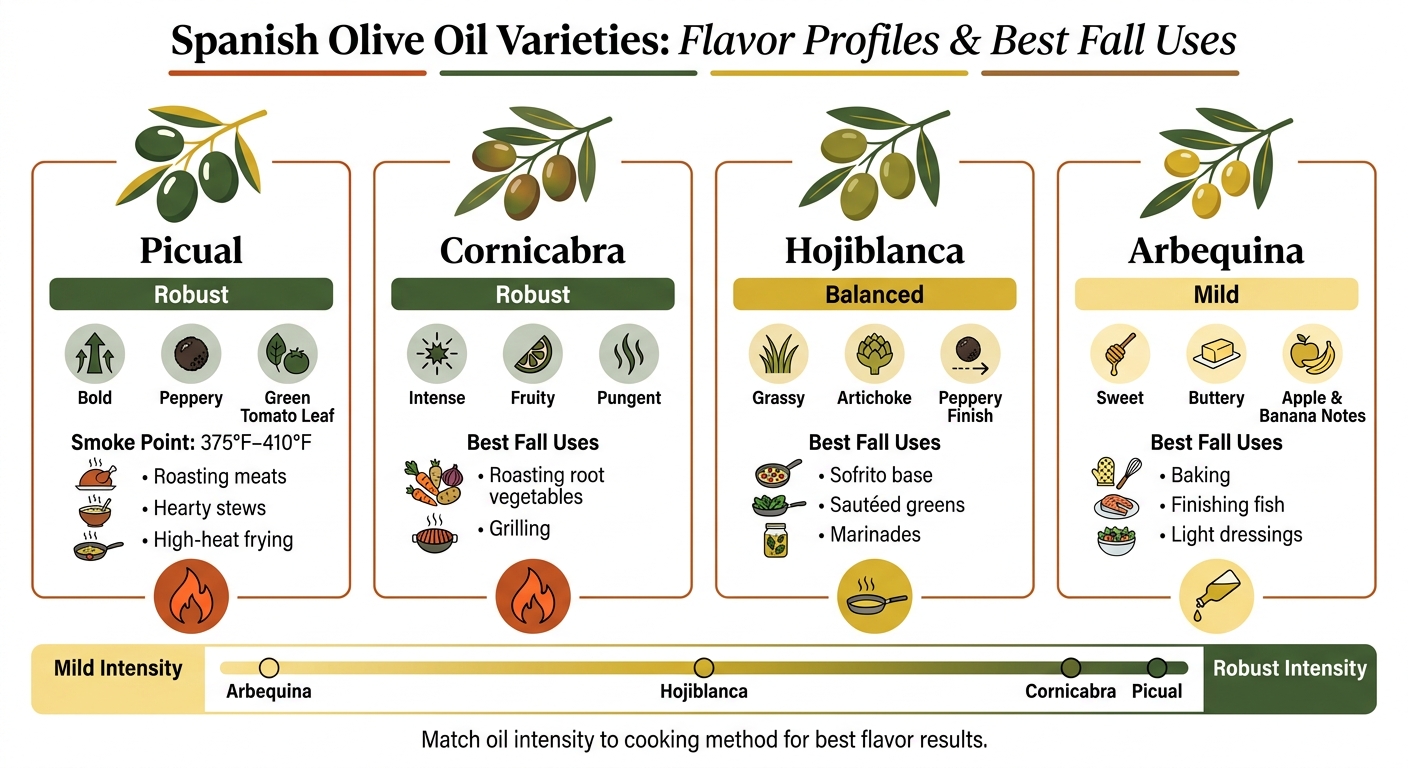
Spanish Olive Oil Varieties: Flavor Profiles & Best Fall Uses
Spanish extra virgin olive oils come in different intensities - robust (Picual, Cornicabra), balanced (Hojiblanca), and mild (Arbequina). Picking the right oil for your cooking method can elevate your dish in surprising ways. For high-heat techniques like roasting root vegetables or searing meats, a robust oil is your best bet. Picual, in particular, thrives under high temperatures. As olive oil taster Alfonso Fernández explains:
"A hearty variety in general, with a lot of flavor and the green notes of tomatoes or the tomato plant... magnificent for cooking at high temperatures."
With a smoke point of 375°F–410°F, Spanish EVOO is perfect for roasting and sautéing. When it comes to finishing dishes - like drizzling over a warm chickpea stew or a hearty lentil soup - a high-polyphenol oil adds a peppery kick that complements the earthy flavors of fall. For desserts, Arbequina’s sweet and buttery notes (with hints of apple and banana) make it a great alternative to butter in recipes like almond cake. And for a balanced choice, Hojiblanca is ideal for making a sofrito, providing a subtle yet aromatic base for your dish. Matching the oil’s intensity to the cooking method ensures every recipe gets the flavor boost it deserves.
If you want to try these oils yourself, go for high-quality options that maintain their distinct profiles. Big Horn Olive Oil offers Picual Extra Virgin Olive Oil ($8.99), cold-pressed within hours of harvest, making it perfect for high-heat fall dishes. Their Estate Reserve Ultra Premium EVOO ($8.99) is a versatile choice for finishing or baking, ensuring your meals showcase the oil’s freshness.
| Olive Variety | Flavor Profile | Best Fall Use |
|---|---|---|
| Picual | Bold, peppery, green tomato leaf | Roasting meats, hearty stews, high-heat frying |
| Cornicabra | Intense, fruity, pungent | Roasting root vegetables, grilling |
| Hojiblanca | Grassy, artichoke, peppery finish | Sofrito base, sautéed greens, marinades |
| Arbequina | Sweet, buttery, apple and banana | Baking, finishing fish, light dressings |
1. Roasted Padrón Peppers With Sea Salt
This dish captures the essence of the season, using Spanish olive oil to blister the iconic Padrón peppers to perfection.
Pimientos de Padrón is one of the simplest and most enjoyable tapas to prepare. Hailing from Galicia, these peppers are harvested through October, making them a perfect addition to early autumn menus, whether you're hosting a gathering or just need a quick appetizer for a weeknight.
What makes this dish exciting is its unpredictable heat. There's a Spanish saying, "Pimientos de padrón, unos pican y otros no", which translates to "Some Padrón peppers are spicy, and some are not." Most are mild, but about 1 in 10 packs a fiery surprise, sometimes reaching up to 2,500 Scoville Heat Units (SHU) - still gentler than a jalapeño.
The preparation is straightforward yet flavorful. High heat from olive oil blisters the peppers, drawing out their natural sweetness, while flaky sea salt provides a satisfying crunch. To get the best results, preheat a cast-iron skillet until it's almost smoking. Add the peppers in a single layer, ensuring they're dry to prevent splattering and steaming. Overcrowding the pan can hinder that perfect blistered texture.
Cook the peppers for roughly 5 minutes, tossing occasionally until their skins are beautifully blistered. Once done, transfer them to a plate, drizzle with premium Spanish extra virgin olive oil, and sprinkle generously with flaky sea salt like Maldon.
Culinary expert J. Kenji López-Alt shares his insight on this method:
"I've tried frying Padrón peppers in pure, smoking hot olive oil, but the high heat produces a more intense peppery, pungent flavor than the softer and sweeter Spanish Arbequina olive oil I prefer to finish this dish."
This approach highlights how olive oil elevates even the simplest of tapas.
Padrón peppers are easy to find in many U.S. grocery stores, and the dish comes together in just 5–10 minutes. They pair wonderfully with a cold beer or a glass of crisp Albariño, making them an ideal snack or starter.
2. Spanish Tortilla With Potatoes, Onions, And Olive Oil
Spanish tortilla is a perfect way to celebrate fall's cozy flavors, proving how olive oil can transform humble ingredients into something special. Tortilla española, a classic potato-and-egg dish, brings warmth and comfort to chilly autumn evenings.
The secret to an exceptional tortilla lies in how you handle the olive oil. Instead of frying, gently poach the potatoes in ½ to 2 cups of extra virgin olive oil over medium-low heat (around 270°F). This slow cooking method ensures the potatoes become tender and silky, creating the dish's signature creamy, almost custard-like texture.
"It's essential to bathe the potatoes and onions in ample oil so that everything tenderizes evenly and so that olive oil flavor can work its way into all of the vegetables." - Daniel Gritzer, Editorial Director, Serious Eats
While some traditionalists skip onions, adding them can bring a touch of sweetness and extra moisture. After draining the potatoes and onions, mix them with 6–8 beaten eggs. Let the mixture rest for 5 to 15 minutes - this step helps the potatoes soak up the egg and ensures everything comes together beautifully.
For a seasonal twist, serve thick slices with roasted mushrooms or a crisp green salad. Opt for thinly sliced Yukon Gold potatoes to guarantee even cooking. And don’t toss that infused poaching oil - it’s great for salad dressings or sautéing, highlighting olive oil’s role in enhancing this fall-inspired Spanish favorite.
3. Rustic Pisto Manchego With Olive Oil Fried Eggs
Spanish tortilla might be the go-to for showcasing eggs and potatoes, but pisto Manchego is all about how olive oil transforms simple vegetables into something extraordinary. This hearty stew hails from La Mancha, a central region in Spain, and is often dubbed "Spanish ratatouille." It’s a slow-cooked blend of tomatoes, peppers, zucchini, and onions, with extra virgin olive oil (EVOO) as the star ingredient.
The secret to this dish lies in its deliberate preparation. Each vegetable is added at just the right time and cooked slowly to develop layers of flavor. Over 30–45 minutes on low heat, the EVOO melds with the tomato juices, creating what recipe developer Mark Beahm calls a rich, jam-like consistency:
"The secret to the best pisto is adding the vegetables one by one to ensure each one is perfectly tender, but not mushy." - Mark Beahm, Recipe Developer
This dish shines in the fall. You can swap out summer zucchini for heartier options like potatoes, yams, or cremini mushrooms, which hold up well during long cooking. If fresh tomatoes aren’t in season, canned fire-roasted diced tomatoes are a great substitute and can even enhance the flavor. A splash of sherry vinegar at the end balances the dish’s natural sweetness.
For U.S. home cooks, making pisto is straightforward. All you need is a large skillet or heavy-bottomed saucepan and some pantry basics. Start by sautéing onions, peppers, garlic, and tomatoes in stages, letting each ingredient release its flavor before moving on to the next. When the oil begins to separate from the vegetables, the pisto is done.
To complete the dish, fry two eggs in a small amount of extra virgin olive oil until the edges are crispy and golden, but keep the yolks runny. Place the eggs on top of the pisto and finish with a drizzle of Big Horn Olive Oil's Ultra Premium Extra Virgin Olive Oil. As Food52 describes it, "You want every bite of the pisto to be silky and soft, and coated with the unctuous runny yolks of your fried eggs."
4. Garlic Shrimp Gambas Al Ajillo In Olive Oil
Gambas al ajillo is a quick, 15-minute dish that originated in the lively tapas bars of Madrid and has since become a beloved part of Spanish coastal cuisine. The recipe is straightforward: shrimp, garlic, dried chili, and a generous amount of extra virgin olive oil (EVOO). Like many dishes in our fall collection, it showcases olive oil as more than just an ingredient - it's the heart of the dish.
What makes this recipe special is how the olive oil transforms into the sauce itself. As culinary consultant J. Kenji López-Alt describes:
"The oil sings with a chorus of layered garlic flavors, it can be transcendent."
For every pound of shrimp, use ½ cup of high-quality EVOO. This allows the oil to soak up the garlic and spices, creating a rich and aromatic sauce. The quality of the EVOO matters here - its fresh, fruity notes are key to the dish's flavor.
Traditionally served sizzling in a cast-iron skillet or a clay cazuela, this dish can be elevated with a pinch of smoked paprika (pimentón) for a touch of earthy warmth. A splash of dry sherry adds depth, enhancing the complexity of the flavors.
One common mistake? Overcooking the shrimp. Remove them from the heat as soon as they turn pink; the residual heat from the oil will finish the cooking. Serve immediately with crusty sourdough or baguette. As Lauren Aloise, founder of Spanish Sabores, emphasizes:
"It wouldn't be true gambas al ajillo without a loaf of crusty bread to sop up all of the delicious garlic sauce!"
To tie it all together and highlight the fall theme of using olive oil to enhance seasonal dishes, drizzle Big Horn Olive Oil's Ultra Premium EVOO over the top just before serving. This final touch preserves its fresh, fruity flavor, ensuring every bite is unforgettable.
5. Chickpea And Spinach Stew Potaje De Garbanzos Y Espinacas
If gambas al ajillo is all about quick cooking and bold flavors, Potaje de Garbanzos y Espinacas takes the opposite approach. This slow-cooked, hearty stew is made for chilly evenings, offering comfort and nourishment with every spoonful. Deeply rooted in Andalusian and Castilian traditions, this dish has been a staple for generations. As Oleoestepa puts it:
"There are recipes that do not go out of style because they do not need to. Chickpea stew has been resolving meals for generations, warming winters and nourishing families with simple pantry staples."
At the heart of this dish is the sofrito, a base made by sautéing garlic, onion, and tomato in extra virgin olive oil. This step is key to unlocking the smoky, earthy flavors of smoked paprika and cumin. To get the most out of your spices, toast them gently in the oil for 20–30 seconds over medium-low heat - this prevents bitterness while enhancing their aroma. Lauren Aloise, Founder of Spanish Sabores, emphasizes the importance of quality oil:
"Choose a good quality, extra virgin olive oil not only for its health benefits, but also for its wonderful flavor."
Using a premium oil, such as Big Horn Olive Oil, can elevate the dish, bringing out the richness of its traditional flavors.
This stew is especially satisfying during fall. The main ingredients - chickpeas and spinach - are affordable and easy to find. A 15 oz can of chickpeas costs about $1, and a 12 oz bag of frozen spinach is around $1.26. Combine these with vegetable or chicken broth, canned tomatoes, and a few pantry spices, and you’ve got a meal that costs just $1–$2 per serving. For a creamier texture, you can mash some of the chickpeas directly into the stew or blend a ladleful of the mixture with a slice of stale bread before stirring it back in. Julia Frey, a recipe developer at Vikalinka, shares:
"Spanish spinach and chickpeas is thick and velvety, almost creamy. Later, I discovered the secret is actually down to breadcrumbs [and olive oil]."
To finish, add a splash of sherry or red wine vinegar for brightness, and drizzle a bit of Big Horn Olive Oil's Ultra Premium EVOO over each bowl just before serving. That final touch of fresh, fruity oil ties all the flavors together beautifully. Nutritionally, this dish packs a punch, delivering about 12g of protein, 10g of dietary fiber, and 135% of the Daily Value for Vitamin A per serving.
sbb-itb-4066b8e
6. Roast Chicken With Olive Oil, Garlic, and Lemon Pollo Asado
This roast chicken recipe draws inspiration from the rich traditions of Spanish autumn cooking, where olive oil takes center stage in creating bold, unforgettable flavors. Pollo Asado is a staple of Spanish family dinners, filling the air with the mouthwatering scents of garlic, citrus, and herbs. As Rubi Spanish Table explains:
"Pollo al Horno, or roasted chicken, is a staple in Spanish cuisine, celebrated for its bold flavors and simple yet delicious ingredients."
The magic of this dish lies in its olive oil marinade, which transforms a simple chicken into a fall favorite.
Olive oil plays a dual role here: it crisps up the skin while locking in the chicken's natural juices. Acting as a rich, fruity base, it carries the flavors of lemon, garlic, and smoked paprika (known as pimentón). To prepare, pat the chicken dry, then rub a mixture of olive oil, freshly squeezed lemon juice, minced garlic, and smoked paprika both over and under the skin. For an extra touch of richness, try using Big Horn Olive Oil's Ultra Premium EVOO, which brings a fruity depth to the dish.
Elle Gourmet highlights the importance of preparation:
"The true secret is in the previous marinade. Letting the chicken rest the night before with olive oil, garlic, lemon and spices allows the meat to absorb all the flavors and reach the oven much juicier."
Marinating the chicken overnight ensures the flavors fully infuse the meat, resulting in a tender and flavorful roast. Once marinated, roast the chicken at 375°F, basting with pan juices every 20–30 minutes. Toward the end, increase the temperature to 425°F for the final 10 minutes to achieve perfectly crisp skin. The chicken is ready when the internal temperature hits 165°F. Let it rest for 10–15 minutes before carving to allow the juices to redistribute.
Carlos from Viva Spanish Kitchen beautifully captures the essence of this dish:
"The combination of lemon, garlic, rosemary, thyme, and white wine reflects the heart of Mediterranean cooking: fresh, honest ingredients that deliver great flavor without complication."
7. Roasted Fall Vegetables With Smoked Paprika And Olive Oil
Looking for a hearty, plant-based side to pair with the Pollo Asado? This dish is quick to prepare - just 10 to 15 minutes of chopping, one baking sheet, and the oven takes care of the rest. It’s the perfect match for the bold flavors of other Spanish-inspired fall recipes.
The real star here is the vibrant mix of fall vegetables. Think butternut squash, sweet potatoes, parsnips, Brussels sprouts, carrots, red onions, and mushrooms - all roasting together to create a medley of textures and flavors. As Lauren Aloise, author of Spanish Sabores, notes:
"Extra virgin olive oil is the ideal choice for roasting vegetables. It is the healthiest choice, absolutely delicious... and allows the vegetables to cook to crispy perfection."
What ties it all together? Smoked paprika (pimentón de la Vera). The Kitchen Team at Spooning and Forking describes its magic perfectly:
"A sprinkle of smoked paprika gives a gentle depth... It adds a subtle smoky note that ties the vegetables to Spanish flavour territory. It contrasts sweet onions and peppers, rounding out the earthy herbs."
For the best results, roast your vegetables at 425°F and make sure they’re in a single layer on the baking sheet - overcrowding leads to steaming instead of caramelizing. Start with denser veggies like carrots and potatoes, giving them a 10-minute head start before adding softer ones like mushrooms or peppers. Albert Bevia, author of Spain on a Fork, shares a handy tip:
"The secret to these roasted vegetables is on how you prep them. You want to cut all vegetables into large chunks, except potatoes, which should be smaller, ensuring even roasting."
To finish, sprinkle a touch more pimentón and drizzle with a high-quality extra virgin olive oil. For an elevated touch, try Big Horn Olive Oil's Ultra Premium EVOO - it adds a fruity brightness that complements the smoky and earthy flavors beautifully.
8. Cod In Olive Oil Sauce Bacalao Al Pil Pil
This Basque specialty highlights olive oil in a sauce that feels almost magical. Bacalao al Pil Pil is a treasured dish from the Basque Country in Northern Spain, made with just four ingredients: salt cod, extra virgin olive oil, garlic, and dried chili peppers. The secret? The sauce. As the cod gently cooks in olive oil, its skin releases collagen, which blends with the oil to create a luscious, creamy emulsion - no cream or flour required. Carlos, author of Viva Spanish Kitchen, explains it best:
"The magic lies in creating a silky pil pil sauce by emulsifying the cod's natural gelatin with olive oil."
To prepare the cod, it needs to be soaked and seasoned properly to bring out its best.
For those in the U.S., finding skin-on salt cod can be a bit of a challenge, but the skin is absolutely essential. Shanna Killeen, Basque Program Intern at the Smithsonian Folklife Festival, emphasizes its importance: "It can be difficult to find salt cod with skin in the United States, but it is worth the extra effort since the sauce can't be made without the natural gelatin in the skin." To remove excess salt, soak the cod in cold water in the refrigerator for 24 to 48 hours, changing the water every 8 to 12 hours. If Spanish guindilla peppers aren’t available, dried cayenne or chile de arbol make excellent substitutes.
Temperature control is key when making this dish. The oil needs to stay between 140°F and 160°F - never let it boil. Overheating will toughen the fish and ruin the emulsion before it even starts. Once the cod is poached, remove it and let the oil cool to 113°F–122°F before emulsifying. Traditionally, a clay pot (cazuela) is swirled in slow circles for 10 to 30 minutes to create the sauce. A quicker modern option? Use a small fine-mesh strainer to stir the warm oil and gelatin rapidly, which incorporates air and produces a thick sauce in just 3 to 5 minutes. If the sauce separates, an immersion blender can save the day, but as chef Chad Hyatt advises: "If your sauce breaks you can often bring it back with an immersion blender. Just make sure it's not too hot."
Serve Bacalao al Pil Pil straight from the clay pot with crusty bread or boiled potatoes to soak up the garlicky goodness. For the best results, try Big Horn Olive Oil's Ultra Premium EVOO. Its fresh, fruity flavor complements the cod perfectly without overpowering the dish. This recipe is a testament to how olive oil can transform simple ingredients into something extraordinary.
9. Warm Orange and Fennel Salad with Olive Oil
This salad brings a lighter, brighter touch to the table after indulging in richer, heavier dishes. With its sweet, citrusy notes and a hint of Spanish flair, it’s a perfect nod to late fall and early winter when fennel and navel oranges are at their best.
The magic begins in the oven. Raw fennel has a bold, licorice-like flavor, but roasting it at 425°F for 25–30 minutes transforms it completely. The caramelization process softens its sharpness, drawing out a natural sweetness and turning the fennel golden and mellow. Pair that with juicy orange segments, and you’ve got a vibrant combination. Want to take it up a notch? Add cubed Spanish chorizo during the last 10–15 minutes of roasting. It crisps up beautifully, bringing a smoky, savory depth that complements the sweetness of the fennel and oranges.
The dressing is as simple as it gets but relies heavily on quality ingredients. A mix of extra virgin olive oil and fresh orange juice creates a clean, bright flavor profile. As Gabriela, pastry chef and founder of The Bossy Kitchen, emphasizes:
"This is not the place for cheap oil. You will taste it."
Marcellina from Marcellina in Cucina shares a similar perspective:
"Good quality extra virgin olive oil is best here. This salad has no intricate vinaigrette, just a combination of olive oil and orange juice. So it's important to use a nice olive oil."
An olive oil like Big Horn Olive Oil’s Ultra Premium EVOO, with its fruity and peppery notes, is a perfect fit for this dish.
To assemble, slice the fennel as thinly as possible - using a mandoline ensures precision - and segment the oranges over a bowl to catch every drop of juice for the dressing. Once the roasted fennel is ready, sprinkle freshly grated orange zest on top, gently fold in the orange segments, and garnish with fennel fronds for a fresh, aromatic finish. These delicate green fronds shouldn’t be overlooked; they tie the dish together beautifully. Best of all, the salad comes together in under 40 minutes, making it a quick and flavorful addition to any fall meal.
10. Olive Oil and Almond Cake with Citrus (Tarta De Almendra Y Aceite De Oliva)
There's something about fall baking that calls for warmth and aroma, and this Spanish almond cake fits the bill perfectly. Made with extra virgin olive oil, it stays moist and showcases olive oil's unique qualities - unlike butter cakes that can firm up when chilled.
The addition of citrus zest gives this cake a seasonal twist. A mix of orange and lemon zest balances the almond flavor beautifully. For the best results, blend the zest into the sugar to release the essential oils. Navel oranges are a great choice here, and you can even add spices like cinnamon or cardamom for extra coziness.
Lauren Aloise, the founder of Spanish Sabores, highlights the advantages of using olive oil:
"The main difference is flavor and texture. Depending on the olive oil you use, you may taste the unique flavor of the oil in the end result. You'll also have a moist cake when using olive oil in most recipes."
Her Spanish Lemon Olive Oil Cake has earned an impressive 4.97 out of 5 rating from 30 reviews, with many noting it "tastes better the next day." That makes this recipe even more appealing to try.
The process is straightforward, making it ideal for home bakers. Prep time is around 15 minutes, and baking takes 45–60 minutes. Most of the ingredients - eggs, sugar, ground almonds, citrus, and olive oil - are pantry staples. The key technique here is emulsification: whisk the eggs and sugar until the mixture doubles in volume, then gradually drizzle in the olive oil while continuing to whisk. After adding the dry ingredients, gently fold them in with a spatula, stopping as soon as everything is combined. Overmixing is a no-go for this cake.
Using Big Horn Olive Oil In Spanish Fall Recipes
The olive oil you choose can make or break a dish, and in fall recipes, it becomes even more essential. High-quality extra virgin olive oil does more than just add fat - it enhances flavor, aroma, and even brings health perks to the table. Packed with polyphenols, the slight peppery kick from oleocanthal is a sign of freshness and quality. Big Horn Olive Oil offers precisely this kind of premium product, making it a must-have for the Spanish-inspired fall dishes mentioned here.
Big Horn Olive Oil features a standout product: the Spanish Manzanillo Ultra Premium EVOO. Harvested in November 2025 and cold-pressed within two hours, this oil boasts an impressive phenol count of 664 ppm and a free fatty acid level of just 0.25% - far below the 0.8% threshold for extra virgin classification. Here’s how Big Horn describes it:
"Our Ultra-Premium Manzanillo Extra Virgin Olive Oil from Spain is what cooking oil is supposed to taste like. Robust in intensity but surprisingly well-balanced, it opens with a rich, creamy almond note and finishes with pleasantly bitter, lingering greens." - Big Horn Olive Oil
This oil's unique flavor profile shines in both savory and sweet Spanish fall dishes. Its creamy almond undertone is perfect for desserts like Almond Cake, while its bold intensity complements the smoky, charred flavors of roasted fall vegetables. The Garlic Olive Oil amplifies the aroma of dishes like Gambas al Ajillo and Pisto Manchego, and the Chipotle Olive Oil adds a subtle smoky depth to recipes featuring smoked paprika.
Big Horn's balsamic vinegars also bring out the best in fall flavors. For example, a simple vinaigrette - mixing one tablespoon of aged balsamic with three tablespoons of EVOO - creates a dressing that perfectly coats roasted vegetables. Their Traditional 18-Year Aged Dark Balsamic Vinegar is especially delightful as a glaze for root vegetables like carrots or parsnips.
Here’s a quick guide to pairing Big Horn products with your Spanish fall recipes:
| Big Horn Product | Best Pairing | Flavor Notes |
|---|---|---|
| Manzanillo EVOO | Roasted vegetables, Almond Cake | Creamy almond, bittersweet finish |
| Garlic Olive Oil | Gambas al Ajillo, Pisto Manchego | Pungent, savory |
| Chipotle Olive Oil | Roasted Padrón Peppers, Smoked Paprika Vegetables | Subtle smoky heat |
| Traditional Dark Balsamic | Glazed root vegetables | Classic, balanced sweetness |
To keep your olive oil fresh and flavorful, store it in a cool, dark place and aim to use it within six months. This ensures every Spanish fall recipe you create benefits from the oil’s peak freshness and rich flavor.
Conclusion
Fall is a fantastic time to dive into Spanish cuisine, and olive oil is the ingredient that brings it all together. From slow-cooked chickpea stews to caramelized roasted vegetables or a final drizzle over a hearty bowl of soup, the olive oil you choose can transform the entire dish.
As Spanish chef Albert Bevia wisely says: "Use the highest quality ingredients. It makes all the difference in the world." This is especially true for olive oil - it's not just a cooking tool; it's a key flavor component.
Using a fresh, cold-pressed extra virgin olive oil ensures every recipe in this collection shines. Big Horn Olive Oil's Spanish Manzanillo Ultra Premium EVOO delivers the bold and balanced flavor that perfectly complements the essence of Spanish fall cooking.
Start simple - try something like Roasted Padrón Peppers this week - and experience firsthand how a high-quality olive oil can elevate your cooking.
FAQs
Which Spanish olive oil variety should I use for roasting, sautéing, and baking?
Picual Extra Virgin Olive Oil is ideal for roasting, sautéing, and baking thanks to its strong heat resistance. Its bold flavor brings a rich depth to your dishes, all while holding up beautifully under high cooking temperatures.
How do I keep extra virgin olive oil from smoking or tasting bitter at high heat?
When cooking with extra virgin olive oil, stick to medium or medium-high heat to prevent smoking or bitterness. Start by adding the oil to a cool or slightly warm pan instead of one that's already hot. If you notice it smoking, reduce the heat right away. For high-heat frying, opt for refined olive oil and reserve your high-quality EVOO for finishing touches or uncooked dishes.
How can I store EVOO so it stays fresh, peppery, and flavorful?
To maintain the freshness and flavor of your Big Horn Olive Oil, store it in a cool, dark place, like a pantry, where the temperature stays between 57–70°F. Use opaque containers to protect it from UV light, and always keep the lid tightly sealed to minimize oxidation. If you purchase in bulk, transfer smaller portions into a daily-use bottle to make handling easier. Steer clear of storing it near stoves or other heat sources, as heat can compromise its quality.