

Health Benefits of EVOO in Vegetable Dishes
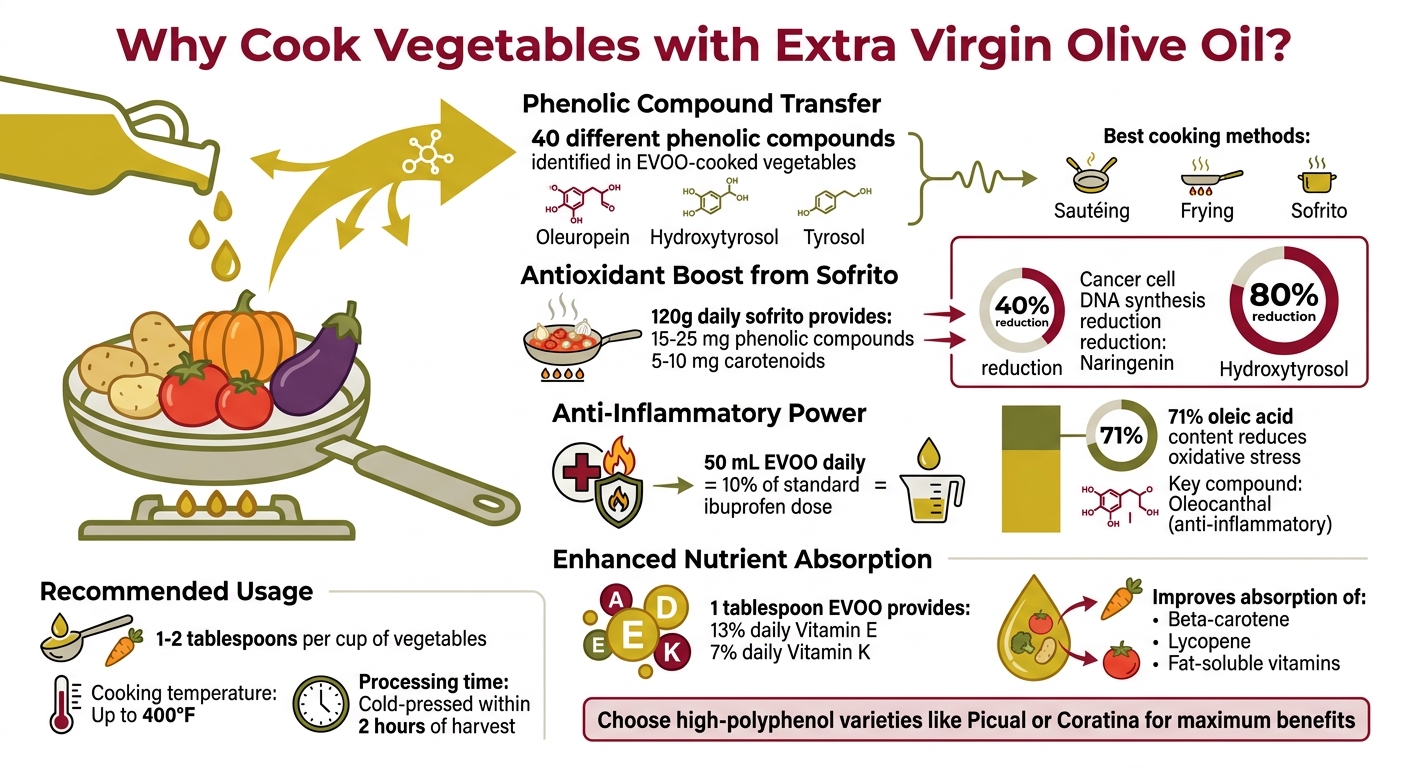
Cooking vegetables with extra virgin olive oil (EVOO) does more than just improve their taste - it increases their nutritional value. Research shows that cooking methods like sautéing or frying with EVOO transfer antioxidants and phenolic compounds from the oil into the vegetables, boosting their health benefits. These compounds can help reduce the risk of chronic diseases like cancer, diabetes, and macular degeneration. EVOO also enhances the absorption of fat-soluble vitamins (A, D, E, K) and carotenoids like beta-carotene and lycopene, making nutrients more accessible to your body.
Key points:
- EVOO transfers antioxidants to vegetables during cooking, raising their health benefits.
- Best methods: Sautéing, frying, or using the Mediterranean sofrito technique.
- Improves nutrient absorption: Helps your body absorb fat-soluble vitamins and carotenoids.
- Anti-inflammatory effects: Compounds like oleocanthal mimic ibuprofen's properties.
- Recommended use: 1–2 tablespoons of EVOO per cup of vegetables balances nutrient gain and calorie intake.
For premium results, try high-quality EVOOs like Picual or Coratina varieties, which retain high levels of antioxidants. These oils are ideal for cooking techniques like sofrito, which further amplifies the nutritional benefits of your dishes.
Health Benefits of Cooking Vegetables with Extra Virgin Olive Oil
Phenolic Compound Transfer in Sautéed Vegetables
Findings from Spanish Studies
In January 2016, researchers at the University of Granada uncovered something fascinating: sautéing or frying vegetables in extra virgin olive oil (EVOO) can transfer phenolic compounds from the oil into the vegetables. Led by Professor Cristina Samaniego Sánchez, the team experimented with four cooking methods on potatoes, pumpkin, tomatoes, and eggplant. Their results showed that frying in EVOO was the most effective way to increase the phenolic content in these vegetables. Compounds like oleuropein, hydroxytyrosol, and tyrosol were found to migrate into the vegetables during the cooking process. This phenomenon highlights how EVOO enhances the nutritional value of vegetable dishes, further cementing its role in health-conscious cooking. It also explains the notable rise in antioxidant properties seen in sautéed vegetables.
Increased Antioxidant Properties in Vegetables
This transfer of phenolic compounds doesn’t just preserve nutrients - it actually boosts antioxidant levels, surpassing those found in raw or boiled vegetables. Boiling often causes nutrients to leach out or degrade, but sautéing or frying in EVOO infuses vegetables with oil-based antioxidants. These antioxidants are linked to potential health benefits, including a reduced risk of chronic conditions like cancer, type 2 diabetes, and macular degeneration. While cooking with oil does slightly increase the calorie content due to oil absorption, the added bioactive compounds provide a meaningful nutritional advantage.
sbb-itb-4066b8e
Joel Feren - Cooking vegetables with Extra Virgin Olive Oil
Sofrito Technique and Bioactive Extraction
Sautéing vegetables with extra virgin olive oil (EVOO) is already known to boost antioxidant levels. But the sofrito technique takes this a step further, using EVOO to unlock an even richer array of bioactive compounds. This cooking method doesn't just enhance flavor - it also amplifies the nutritional benefits of its ingredients.
What is Sofrito?
Sofrito is a time-honored Mediterranean cooking method that involves gently sautéing a mix of tomatoes, onions, and garlic in EVOO. This process creates a deeply flavorful base for many dishes while offering significant health benefits. Unlike quick cooking methods like stir-frying or boiling, sofrito relies on slower cooking over low heat, allowing the ingredients to blend and release their nutrients. While Mediterranean families have been using this technique for generations, modern research has uncovered the science behind its nutritional perks. By combining these ingredients with EVOO and cooking them slowly, sofrito not only enhances taste but also optimizes the bioavailability of key nutrients.
Health Benefits of Sofrito with EVOO
One of the standout features of sofrito is how it facilitates the transfer of bioactive compounds from vegetables into the olive oil. Studies have identified up to 40 different phenolic compounds in sofrito, with antioxidant levels exceeding those found in raw tomatoes.
Rosa M. Lamuela, a researcher from the University of Barcelona, highlights how cooking with EVOO enhances the absorption and activity of these compounds:
"The main result of the study is that cooking vegetables with extra virgin olive oil favours the bioactive compounds, such as carotenoids and polyphenols that are present in vegetables we find in sofrito, to move to the olive oil, which enables the absorption and bioactivity of these compounds."
In practical terms, consuming just 120 grams of sofrito daily provides 15–25 mg of phenolic compounds and 5–10 mg of carotenoids. The method also encourages the formation of lycopene isomers, which are easier for the body to absorb compared to the lycopene found in raw tomatoes. On a more advanced level, research using cancer cell cultures has shown that bioactive compounds like naringenin and hydroxytyrosol in sofrito can reduce DNA synthesis in cancer cells by approximately 40% and 80%, respectively, after 48 hours of exposure.
This combination of tradition and science makes sofrito not just a culinary staple but also a powerful tool for health.
Nutrient Retention with EVOO Cooking Methods
The way you cook your vegetables has a big impact on how many nutrients they retain. While boiling tends to drain vegetables of water-soluble nutrients, cooking with extra virgin olive oil (EVOO) - like sautéing or frying - helps preserve fat-soluble vitamins and enhances the absorption of beneficial phenolic compounds. A study by the University of Granada tested this with vegetables like potatoes, pumpkins, tomatoes, and eggplants, showing that EVOO-based methods maintain a higher nutrient content compared to water-based techniques.
Professor Cristina Samaniego Sánchez from the University of Granada explains why this happens:
We can confirm that frying is the method that produces the greatest associated increases in the phenolic fraction, which means an improvement in the cooking process although it increases the energy density of the vegetables because of the amount of oil absorbed.
Improved Absorption of Nutrients
Cooking with EVOO doesn’t just preserve nutrients - it also makes them easier for your body to absorb. The oil acts as a carrier for fat-soluble antioxidants, ensuring your body gets the most out of them. According to researchers Jose Fernando Rinaldi de Alvarenga and Rosa Maria Lamuela-Raventos, this process improves the extractability of polyphenols and carotenoids, boosting the health benefits of the dish. The result? A meal that’s not only delicious but also nutritionally rich, paving the way for EVOO’s anti-inflammatory properties, which we’ll dive into next.
Anti-Inflammatory and Health Benefits of EVOO and Vegetables
EVOO's Role in Reducing Inflammation
Pairing extra virgin olive oil (EVOO) with vegetables creates a powerhouse of anti-inflammatory benefits. According to Dr. Artemis Morris, a Doctor of Naturopathy and Acupuncture, EVOO's oleocanthal works similarly to ibuprofen in reducing inflammation:
"Oleocanthal is the OG of bioactive compounds in olive oil. It was found to have anti-inflammatory properties that are similar to ibuprofen."
Just 50 mL of EVOO daily (around 3.5 tablespoons) provides an anti-inflammatory effect comparable to 10% of a standard adult dose of ibuprofen. Beyond oleocanthal, EVOO also contains oleuropein, which supports brain health, and oleic acid, making up 71% of its content, which reduces oxidative stress and lowers inflammatory markers like C-reactive protein.
Research by José Fernando Rinaldi de Alvarenga from INSA-UB highlights that when vegetables are cooked with EVOO, bioactive compounds like carotenoids and polyphenols move from the vegetables into the oil, boosting anti-inflammatory effects. By using EVOO thoughtfully, you can magnify both nutrient absorption and its inflammation-fighting properties.
Recommended EVOO Usage for Maximum Benefits
To get the most out of EVOO’s anti-inflammatory and nutrient-boosting properties, it's all about the right amount and technique. Using 1 to 2 tablespoons of EVOO per cup of vegetables strikes a balance between enhancing nutrient absorption and avoiding unnecessary calories. This amount helps your body absorb fat-soluble vitamins like A, D, E, and K while delivering a solid dose of polyphenols. For instance, one tablespoon of EVOO provides about 13% of your daily Vitamin E needs and 7% of your daily Vitamin K.
For the best results, cooking methods matter. Techniques like sautéing or the sofrito method allow beneficial compounds to transfer effectively, while boiling can lead to nutrient loss as compounds leach into the water. Using these methods ensures you retain the maximum health benefits from your EVOO and vegetables.
Big Horn Olive Oil Products for Vegetable Cooking
Recommended EVOO Products from Big Horn Olive Oil
Big Horn Olive Oil offers a range of extra virgin olive oils (EVOOs) crafted to bring out the best in your vegetable dishes while delivering the health perks of EVOO. Their Estate Reserve Ultra Premium EVOO is a top pick for sautéing greens or roasting vegetables, thanks to its ability to transfer essential antioxidants during cooking.
For those seeking robust antioxidant content, the Picual and Coratina EVOOs are standout options. These oils are cold-pressed within just two hours of harvesting, ensuring they retain high levels of polyphenols and tocopherols - key compounds that boost both nutrition and flavor. Plus, these single-source EVOOs can handle cooking temperatures up to 400°F, making them perfect for everything from frying to traditional sofrito preparation. At $8.99 per bottle, they combine premium quality with affordability.
With these EVOOs, you’ll unlock the full potential of olive oil’s health benefits in your vegetable-based meals.
Benefits of Choosing Big Horn Olive Oil
Big Horn Olive Oil’s dedication to freshness ensures their products deliver maximum nutritional value. Freshness is key when it comes to preserving phenolic compounds, and their EVOOs are harvested and processed with care to maintain these vital nutrients.
All of Big Horn Olive Oil’s EVOOs are harvested within the last three months, ensuring peak levels of antioxidants and bioactive compounds. This freshness not only enhances the oils’ nutritional profile but also elevates the flavor of your vegetable dishes.
Conclusion
Main Takeaways
Cooking vegetables with extra virgin olive oil (EVOO) doesn’t just enhance flavor - it also boosts their nutritional value. When you sauté vegetables in EVOO, phenolic antioxidants naturally transfer into the dish, increasing its overall antioxidant power. Plus, the healthy fats in EVOO make it easier for your body to absorb fat-soluble vitamins and carotenoids, as these bioactive compounds move into the oil and become more accessible.
Another bonus? High-quality EVOO protects food by reducing oxidation and preserving key nutrients. These combined benefits make EVOO a perfect choice for preparing health-conscious vegetable dishes.
Try Big Horn Olive Oil for Your Vegetable Dishes
Ready to bring these benefits to your kitchen? Big Horn Olive Oil offers fresh, premium EVOOs that help you harness the nutrient transfer and antioxidant protection mentioned above. Their Estate Reserve, Picual, and Coratina EVOOs are specifically crafted to enhance the nutritional value of your vegetable dishes. With every bottle harvested within the last three months, you’re guaranteed peak levels of essential phenolic compounds. This freshness is the result of Big Horn Olive Oil’s careful harvesting and processing methods.
At just $8.99 per bottle, you’re not only adding incredible flavor to your meals but also investing in your health. Visit Big Horn Olive Oil to explore their full range of ultra-premium EVOOs and discover how fresh, high-quality olive oil can transform your vegetable dishes.
FAQs
Does heat damage EVOO’s antioxidants when cooking vegetables?
When cooking with extra virgin olive oil (EVOO), some phenolic antioxidants may break down under heat. However, many heat-resistant antioxidants, such as oleuropein and hydroxytyrosol, remain intact and can actually transfer into the vegetables being cooked. By roasting vegetables at carefully controlled temperatures, you can help maintain - or even boost - the antioxidant levels in your dish.
How can I cook with EVOO without making my vegetable dish too high-calorie?
When using extra virgin olive oil (EVOO), stick to moderate amounts and avoid overdoing it. Methods like sautéing or roasting at temperatures between 350°F and 400°F work well with controlled portions of EVOO. These techniques not only enhance the flavor of your dishes but also help your body absorb nutrients effectively without piling on unnecessary calories. Keeping cooking times short and using moderate heat can also maintain the oil’s health benefits while keeping calorie intake in check.
Which vegetables benefit most from cooking with EVOO?
Cooking vegetables like eggplant, tomatoes, pumpkin, and potatoes with extra virgin olive oil (EVOO) can do more than just improve their flavor. Methods such as roasting, frying, or sautéing with EVOO help these vegetables absorb beneficial phenolic compounds and antioxidants, increasing their nutritional value.