

7 Health Benefits of High Polyphenol Olive Oils
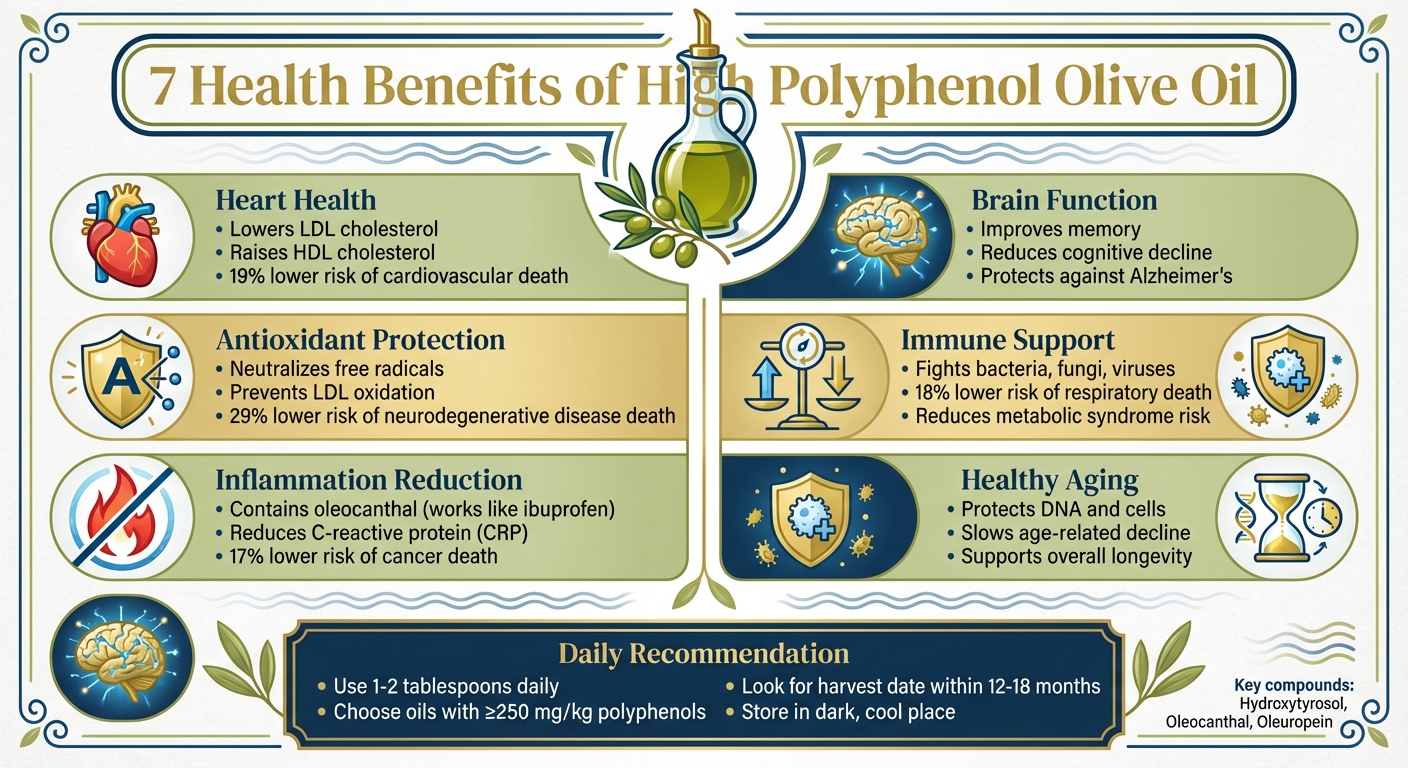
High polyphenol olive oils are more than a flavorful addition to your meals - they're packed with compounds that support your heart, brain, metabolism, and immune system. These oils, rich in antioxidants like hydroxytyrosol and oleocanthal, deliver benefits ranging from reducing inflammation to promoting healthy aging. Here’s what you need to know:
- Heart Health: Lowers bad cholesterol, improves good cholesterol, and reduces cardiovascular risks.
- Antioxidant Protection: Shields cells from oxidative stress linked to chronic diseases.
- Inflammation Reduction: Acts like a natural anti-inflammatory, similar to ibuprofen.
- Brain Function: Supports memory, reduces cognitive decline, and protects against Alzheimer’s.
- Metabolism: Helps with weight management and improves insulin sensitivity.
- Immune Boost: Fights microbes and strengthens immune response.
- Longevity: Linked to lower risks of heart, brain, and respiratory diseases.
To maximize these benefits, choose extra virgin olive oils with high polyphenol content (≥250 mg/kg), early harvest dates, and proper storage in dark, airtight containers. Brands like Big Horn Olive Oil prioritize freshness and quality, ensuring you get the most health advantages from your oil. Just 1–2 tablespoons daily can make a noticeable difference.
7 Science-Backed Health Benefits of High Polyphenol Olive Oil
The Best Tips for Buying Good Quality Polyphenol Rich Olive Oil
What Makes High Polyphenol Olive Oils Different
Not all extra virgin olive oils are created equal when it comes to health benefits. The standout factor? Their polyphenol concentration. Polyphenols are powerful plant compounds that act as antioxidants, offering numerous health benefits, including anti-inflammatory properties. High polyphenol olive oils, like those rich in oleocanthal, contain significantly more of these antioxidants compared to standard commercial options. Achieving such high concentrations requires careful harvesting and processing.
Timing is everything. Olives harvested early - while still green and unripe, typically in September or October - naturally contain more polyphenols than fully ripened ones. However, this early harvest comes at a cost: lower oil yields. For instance, Big Horn Olive Oil selects only the top 5% of olives for their production, ensuring a premium, high-polyphenol product.
Once olives are picked, the clock starts ticking. Polyphenols begin to degrade immediately, so milling the olives within hours is crucial to preserving these valuable compounds. Cold extraction methods, which avoid heat and chemicals, are essential for maintaining antioxidant levels. On the flip side, delays or exposure to high temperatures can significantly reduce these benefits. Big Horn Olive Oil ensures freshness by shipping bottles to customers within 1–3 months of harvest, guaranteeing peak polyphenol content.
You can even taste the difference. High polyphenol olive oils have a bold, peppery burn in the back of your throat - a signature of oleocanthal’s anti-inflammatory punch. Their pronounced bitterness, often mistaken as a flaw, is actually a sign of healthful phenolic compounds. In contrast, milder, sweeter oils made from riper olives typically contain fewer antioxidants.
Proper storage is equally important to protect these healthful compounds. Polyphenols can break down when exposed to light, heat, or oxygen, so producers often use dark glass or tin packaging. They also recommend consuming the oil within nine months of the crush date for maximum benefits. For U.S. consumers, checking the harvest date on the bottle - rather than relying on the "best by" date - is the best way to ensure you're getting oil at its freshest and most potent.
1. Supports Heart Health and Cholesterol Balance
Olive oil rich in polyphenols offers a range of benefits for heart health. Key antioxidant compounds like hydroxytyrosol, oleuropein, and oleocanthal work together to lower LDL ("bad") cholesterol, boost HDL ("good") cholesterol, and reduce triglycerides. These compounds also help prevent LDL oxidation, a process that plays a major role in plaque buildup. There's solid research backing these benefits.
Studies show that adding polyphenol-rich extra virgin olive oil to a Mediterranean-style diet can reduce the risk of cardiovascular death by about 19% when compared to diets that rely on other fats. Regular consumption can also lower blood pressure, improve the flexibility of arteries, and decrease inflammation.
For best results, use 1–2 tablespoons (15–30 mL) daily as your primary added fat, replacing sources of saturated fat like butter or margarine instead of simply adding olive oil to an already high-fat diet. Big Horn Olive Oil's Ultra Premium Extra Virgin Olive Oils are a great option, offering the high polyphenol content needed for these heart-protective effects.
Incorporating olive oil into your meals is easy. Make simple vinaigrettes for salads, drizzle it over roasted vegetables or grilled fish, or use it for light sautéing. Pair it with whole grains, legumes, nuts, and lean proteins to maximize heart health benefits.
To get the most out of your olive oil, choose extra virgin varieties with a recent harvest date (within the past year). Look for oils packaged in dark glass or tins and with lab-verified polyphenol levels of at least 250 mg/kg. Specialty producers like Big Horn Olive Oil provide detailed harvest dates and prioritize freshness, ensuring you get the highest polyphenol potency.
2. Provides Antioxidant Protection
Extra virgin olive oil is a powerhouse when it comes to combating oxidative stress, thanks to its polyphenols. These compounds work by neutralizing free radicals, which can otherwise lead to oxidative damage - a key factor in chronic conditions like cardiovascular disease, certain cancers, and neurodegenerative disorders such as Alzheimer's. By donating electrons, olive oil polyphenols help shield cells from harm and promote overall health.
One of the standout benefits of these polyphenols is their ability to improve blood lipid profiles. They prevent the oxidation of LDL cholesterol (often called "bad" cholesterol), a process that can damage arterial walls and contribute to plaque buildup. By reducing LDL oxidation, high-polyphenol olive oil plays a role in lowering cardiovascular risks. In fact, the European Food Safety Authority recognizes this benefit, stating that consuming at least 5 mg of hydroxytyrosol and related compounds daily can protect blood lipids from oxidative damage.
Research backs up these claims. Studies have shown that higher consumption of olive oil is associated with up to a 29% lower risk of death from neurodegenerative diseases. Laboratory findings also highlight the ability of hydroxytyrosol and oleuropein - key polyphenols in olive oil - to inhibit cancer cell growth. Additionally, human studies confirm that diets rich in polyphenols reduce oxidative stress and are linked to better health outcomes.
Incorporating high-polyphenol olive oil into your daily routine is a practical way to harness these benefits. Use it as your go-to fat for cooking or finishing dishes. Sauté, dress, or drizzle 1–4 tablespoons (15–60 mL) daily, replacing less healthy fats. For a trusted source, Big Horn Olive Oil offers Ultra Premium Extra Virgin Olive Oils packed with antioxidant biophenols, surpassing standard EVOO levels to ensure maximum freshness and quality.
When selecting olive oil, look for recent harvest dates (within 12–18 months), early-harvest labels, and lab-tested polyphenol levels of at least 250 mg/kg. To preserve its antioxidant properties, store the oil in dark glass or tin containers and keep it in a cool, dark place.
3. Reduces Chronic Inflammation
Olive oil, already celebrated for its antioxidants, also plays a crucial role in tackling chronic inflammation, thanks to its high polyphenol content. Chronic inflammation is a persistent immune response that harms tissues and organs, contributing to major health issues like heart disease, type 2 diabetes, obesity, arthritis, Alzheimer’s, and certain cancers. Everyday habits such as a sedentary lifestyle, consuming processed foods, smoking, excess weight, and chronic stress can exacerbate this type of inflammation.
Extra virgin olive oil, particularly high in polyphenols, provides strong anti-inflammatory support. One standout polyphenol, oleocanthal, works by inhibiting COX enzymes in a way similar to ibuprofen. That peppery sensation you feel in your throat after tasting robust olive oil? That’s oleocanthal at work - providing the same anti-inflammatory effect as liquid ibuprofen. Other polyphenols, including hydroxytyrosol, oleuropein, and oleacein, help reduce oxidative stress and block inflammatory signals in areas like blood vessels, joints, and the brain.
Scientific research backs up these benefits. Polyphenol-rich extra virgin olive oil has been shown to lower C-reactive protein (CRP), a key marker of systemic inflammation. Regular consumption of olive oil has been linked to reduced inflammatory biomarkers and a lower risk of diseases driven by inflammation. For example, people who use olive oil regularly have a 19% lower risk of dying from cardiovascular disease, a 17% lower risk of dying from cancer, and a 29% lower risk of dying from brain-related diseases like Alzheimer’s. These benefits stem largely from olive oil’s combined anti-inflammatory and antioxidant properties.
Incorporating this into your routine is simple. Aim for 1.5–3 tablespoons daily of high-polyphenol extra virgin olive oil instead of less healthy fats. Add it to salad dressings, sauté vegetables and proteins at moderate heat, or drizzle it over soups, roasted vegetables, or grilled meats. Brands like Big Horn Olive Oil offer Ultra Premium Extra Virgin Olive Oils with elevated polyphenol levels, ensuring both health benefits and exceptional quality.
To get the most out of olive oil's anti-inflammatory properties, look for bottles labeled "extra virgin" and opt for oils described as robust or peppery - these traits often signal higher polyphenol levels. High-polyphenol olive oils typically contain at least 250 mg of polyphenols per kilogram, with premium varieties exceeding 500 mg/kg. This simple addition fits perfectly into a Mediterranean-style diet.
4. Supports Brain and Cognitive Function
Extra virgin olive oil, particularly those high in polyphenols, offers remarkable benefits for both the brain and heart. Compounds like oleocanthal, hydroxytyrosol, and oleuropein play a key role in reducing inflammation throughout the body, including the brain. These polyphenols act as antioxidants, helping to minimize oxidative stress in brain cells while curbing chronic inflammation - two major contributors to cognitive decline and conditions like Alzheimer's disease. Beyond overall health, these properties directly contribute to better cognitive function.
Research backs this up. A long-term study comparing a Mediterranean diet rich in extra virgin olive oil to a standard low-fat diet revealed that participants in the olive oil group experienced improved brain function and memory over a 6.5-year period. In animal studies, oleocanthal-rich olive oil showed promise in preventing Alzheimer's-like changes by improving blood-brain barrier function and reducing brain inflammation.
Each polyphenol contributes uniquely to brain health: oleocanthal helps lower neuroinflammation, hydroxytyrosol shields neurons from oxidative damage and maintains cell membrane integrity, and oleuropein enhances blood flow to the brain while reducing harmful protein buildup. Together, these mechanisms support healthier brain cells, better communication between neurons, and slower cognitive aging.
Adding high-polyphenol olive oil to your diet is easy. Aim for 1–2 tablespoons daily - use it as a cooking fat, mix it into salad dressings, or drizzle it over your favorite dishes.
When choosing olive oil, look for bottles labeled "extra virgin" with a fresh, peppery taste. That peppery sensation indicates a higher polyphenol content. Brands like Big Horn Olive Oil offer ultra-premium options with elevated polyphenol levels, combining health benefits with exceptional flavor. To preserve the oil's quality, store it in a cool, dark place in a tightly sealed dark bottle. This simple addition to your routine can make a big difference in supporting brain health and overall well-being.
sbb-itb-4066b8e
5. Improves Metabolic Health and Weight Management
High polyphenol olive oils play a key role in supporting metabolism and managing weight. These oils stand out due to their rich polyphenol content, such as oleuropein, hydroxytyrosol, and oleocanthal, which team up with monounsaturated fats to boost fat oxidation, regulate appetite, and lower inflammation - key factors for maintaining a healthy metabolism.
Research on Mediterranean-style diets, where extra virgin olive oil is the primary fat source, consistently shows lower rates of obesity, type 2 diabetes, and metabolic syndrome compared to typical Western diets. For instance, swapping 1 tablespoon of butter (100 calories) for 1 tablespoon of olive oil (120 calories) can improve insulin sensitivity and cholesterol levels, showcasing the metabolic advantages of this simple change.
On a cellular level, polyphenols in olive oil influence gene expression, reduce oxidative stress, and lower inflammation. These effects help improve insulin response and limit fat storage. By reducing inflammation markers, high polyphenol olive oils create a healthier internal environment, supporting weight management and metabolic balance.
To incorporate these benefits into your routine, aim for 1–2 tablespoons of high polyphenol extra virgin olive oil per meal. Use it as your go-to cooking fat or drizzle it over vegetables, grains, beans, and lean proteins to enhance flavor and increase satiety. Look for bottles labeled "extra virgin" with a harvest date within the last 12–18 months and detailed polyphenol content for the best results. Specialty producers like Big Horn Olive Oil often provide this information, making it easier to select oils that maximize metabolic benefits.
Keep in mind that olive oil is calorie-dense (about 120 calories per tablespoon), so portion control is essential. Pairing it with a Mediterranean-style eating pattern - rich in vegetables, fruits, whole grains, legumes, and fish - and staying physically active provides a well-rounded approach to sustainable weight management and optimal metabolic health.
6. Strengthens Immune Function and Fights Microbes
Olive oils rich in polyphenols can give your immune system a powerful boost. Key polyphenols like hydroxytyrosol, oleuropein, and oleocanthal not only shield immune cells from oxidative stress but also help maintain a balanced immune response. These benefits are further enhanced by their antimicrobial properties.
Research shows that these compounds can directly combat bacteria, fungi, and even some viruses. They work by damaging microbial membranes, interfering with enzyme activity, and preventing replication. For example, a 2018 review published in Oxidative Medicine and Cellular Longevity highlighted the antibacterial, antifungal, and antiviral properties of hydroxytyrosol and oleuropein in lab studies.
In addition to these laboratory findings, a U.S. study found that higher olive oil consumption was associated with an 18% lower risk of respiratory-related deaths, along with notable reductions in deaths linked to heart disease, cancer, and neurodegenerative conditions. These effects are partly credited to olive oil's ability to enhance immune function while supporting overall health.
To tap into these benefits, aim to include 1–2 tablespoons of high polyphenol olive oil in your daily diet. Use it as your go-to fat - drizzle it over salads, roasted veggies, or swap it in for butter. Look for extra virgin olive oil with polyphenol levels of ≥250 mg/kg and a harvest date no older than 12–18 months. Brands like Big Horn Olive Oil offer Ultra Premium EVOOs that meet these standards and deliver the immune-boosting polyphenols your body needs.
For best results, store your olive oil in a dark, cool place in an airtight container to preserve its antimicrobial properties. Pairing it with a Mediterranean-style diet - rich in vegetables, fruits, legumes, and fish - can further amplify its immune-supporting effects. This makes high polyphenol olive oil a valuable addition to a healthy lifestyle, complementing its heart and metabolic health benefits discussed earlier.
7. Supports Healthy Aging and Longevity
High polyphenol olive oils are a powerful ally in promoting healthy aging. Packed with polyphenols like hydroxytyrosol, oleuropein, and oleocanthal, these oils help neutralize free radicals and reduce oxidative stress - two major contributors to aging. By doing so, they protect vital components of your body, including DNA, cell membranes, and proteins, potentially slowing the natural decline that comes with age.
The connection between olive oil and longevity is striking. Studies show that regularly using extra virgin olive oil as your primary added fat can lower your risk of dying from various diseases: 19% for cardiovascular disease, 17% for cancer, 18% for respiratory illnesses, and an impressive 29% for brain-related conditions like Alzheimer's. These benefits align with broader health advantages linked to heart, brain, and immune system support.
On a deeper level, polyphenols may influence aging at the molecular level. They can trigger positive epigenetic changes and regulate microRNA activity, both of which play a role in aging-related processes and even cancer risk. While much of this research comes from lab and animal studies, early findings are promising. Experts agree, however, that more large-scale human trials are needed to solidify these connections.
In line with the Mediterranean diet, incorporating high polyphenol olive oil into your daily routine is key to reaping these benefits. Aim for 1.5–4 tablespoons per day. For instance, use 1 tablespoon in a salad dressing and drizzle another over your dinner. Opt for early-harvest oils with a peppery kick - an indicator of higher polyphenol content - from trusted producers like Big Horn Olive Oil, known for their fresh, ultra-premium extra virgin olive oil. To keep those polyphenols potent, store your oil in a cool, dark place and use it within a few months of opening.
How to Choose High Polyphenol Olive Oils in the United States
When selecting high polyphenol olive oil, there are a few key details to keep in mind. First, make sure the label specifies "Extra Virgin." This guarantees the oil is minimally processed and retains its natural antioxidants. Look for a printed harvest date rather than just a "best by" date - polyphenols diminish over time, so choosing oil harvested within the last 12–18 months ensures higher antioxidant levels.
Pay attention to the packaging, too. Dark or opaque bottles are ideal for preserving the oil’s quality, as they block out light that can degrade it. Avoid clear plastic containers, which offer little protection and can leach chemicals. Smaller bottles, typically 375–500 ml (12.7–16.9 fl oz), are a smart choice for many U.S. households. They’re easier to finish quickly, reducing the oil’s exposure to oxygen each time you open it. Once at home, store your olive oil in a cool, dark place - like a cupboard away from heat sources - and aim to use it within a few months of opening to maintain freshness.
Taste can also guide your decision. High polyphenol oils often have a bold, peppery flavor that may cause a slight tingle in your throat - this is thanks to oleocanthal, a compound known for its anti-inflammatory properties. Look for labels that mention "early harvest" or use terms like "robust" or "intense." Sampling the oil can reveal fresh, grassy, and peppery notes, which are hallmarks of high-quality, high-polyphenol olive oils.
For an example of these standards in action, consider Big Horn Olive Oil. They specialize in Ultra Premium Extra Virgin Olive Oils, focusing on freshness, strict quality controls, and high antioxidant content. Their oils are shipped within 1–3 months of harvest, and they recommend using them within 9 months of the crush date for the best flavor and health benefits. Whether buying from Big Horn or another trusted supplier, always ask about harvest dates, the oil’s origin, and flavor intensity (mild, medium, or robust) to ensure you’re getting a product rich in polyphenols.
It’s worth noting that high-quality olive oils come at a higher price. Early-harvest, lab-tested oils typically range from $20 to $35 for a 375–500 ml bottle. While this may seem pricey compared to bulk supermarket brands, using just 1–2 tablespoons daily allows you to enjoy the oil’s heart, brain, and longevity benefits without significantly impacting your budget. For the best results, use high polyphenol olive oil as a finishing touch - drizzle it on salads, roasted vegetables, or bread to enhance both flavor and health benefits. Investing in a premium, high polyphenol olive oil supports the many health advantages, from improving cardiovascular health to promoting cognitive function and healthy aging.
Conclusion
High-polyphenol extra virgin olive oils offer a powerful combination of health benefits that can support your well-being over the long term. These oils help protect your heart by improving cholesterol levels and regulating blood pressure, while also combating chronic inflammation and oxidative stress. They’ve been shown to enhance brain function, support memory, strengthen the immune system, aid in weight management, and promote healthier aging. Research even highlights that regular olive oil consumption is associated with a 19% lower risk of dying from cardiovascular disease, an 18% lower risk of dying from respiratory disease, and a 29% lower risk of dying from brain diseases like Alzheimer’s.
Incorporating high-polyphenol olive oil into your daily routine is simple and effective. Swap out less healthy fats like butter, margarine, or refined oils, and use this oil to drizzle over salads, roasted vegetables, grilled proteins, or whole-grain toast. Just 1–2 tablespoons a day can contribute to better cardiovascular health, reduced inflammation, and improved cognitive function. The key is consistency - daily use allows these benefits to build over time.
When choosing olive oil, freshness and quality are essential. Big Horn Olive Oil specializes in Ultra Premium Extra Virgin Olive Oils, which are crafted to retain their polyphenols and deliver maximum health benefits. Selecting a high-quality source ensures you’re getting the most out of this superfood.
Switching to high-polyphenol olive oil is more than just a dietary change - it’s a science-backed step toward better health. Studies link these oils to reduced risks of heart disease, stroke, neurodegenerative disorders, and even certain cancers. Protective compounds like hydroxytyrosol, oleuropein, and oleocanthal are the driving forces behind these benefits. By choosing a trusted producer focused on freshness and antioxidant content, you’re investing in a healthier future.
Make high-polyphenol extra virgin olive oil a daily staple to support your heart, brain, and overall health.
FAQs
What are polyphenols, and why do they matter in olive oil?
Polyphenols, natural antioxidants found in olive oil, are known for their ability to support overall health. They work to protect your cells from oxidative stress, help lower inflammation, and contribute to better heart health.
Olive oils rich in polyphenols are particularly prized for their anti-inflammatory benefits and their role in boosting cardiovascular well-being, making them a smart addition to a healthy diet.
How can I tell if an olive oil is high in polyphenols?
When searching for high polyphenol olive oils, pay attention to labels that use terms like “high polyphenol” or “rich in antioxidants.” Also, check for harvest dates - the fresher the oil, the more likely it is to retain its polyphenols. Certifications that focus on quality and health benefits can also be a helpful indicator. Trusted sources, like specialty providers, often highlight these attributes and ensure their oils are fresh and packed with nutrients.
Can high polyphenol olive oil support brain health?
High polyphenol olive oil can play a role in supporting brain health. Thanks to its antioxidant properties, it helps fight oxidative stress and lowers inflammation - two factors often associated with cognitive decline. By shielding brain cells from damage caused by free radicals, regular consumption might also aid in improving memory and enhancing mental clarity.