

Health Benefits of Preserving Vegetables in Olive Oil
Preserving vegetables in extra virgin olive oil can make them easier to eat, help your body absorb nutrients like lycopene and beta-carotene, and cut food waste - but home storage has a clear safety risk.
If I had to sum it up fast, it would be this:
- Olive oil helps with nutrient absorption. Even 1–2 teaspoons of oil with vegetables can help the body take in more fat-soluble nutrients.
- Tomatoes cooked with olive oil showed big gains in lycopene absorption, including an 82% increase in one form in a human study.
- Oil-packed vegetables are easy to use, which can make it simpler to eat more vegetables during the week.
- Olive oil adds calories too: 1 tablespoon = about 120 calories.
- Safety comes first. Low-acid vegetables in oil can support botulism if they are not acidified, chilled, and handled the right way.
- Home-prepared jars should stay refrigerated at or below 40°F and are best used within a short storage window - often up to about 3 weeks, while garlic or herbs in oil should be used within 4 days or frozen.
Here’s the plain-English takeaway: I’d look at olive-oil preservation as a short-term fridge method, not a long-term pantry method. It can help you keep vegetables ready for salads, pasta, sandwiches, and grain bowls, while adding fat that helps your body use some of the nutrients already in the vegetables.
| Method | Main nutrition point | Storage style | Main drawback |
|---|---|---|---|
| Olive oil preservation | Adds fat that helps absorb carotenoids and vitamin E | Refrigerated, short-term | Botulism risk if done wrong; adds calories |
| Brine pickling | Often higher sodium | Can be shelf-stable if processed right | No added fat for absorption |
| Freezing/canning | Often low sodium | Better for long storage | No oil unless added later |
So yes - vegetables in olive oil can fit a health-focused kitchen. I’d just treat nutrition, convenience, and safety as a package deal.
Preserving food for winter | Oil-packed tomatoes
sbb-itb-4066b8e
Why extra virgin olive oil works well for preserving vegetables
Extra virgin olive oil does more than keep air out. It also adds nutrition to the jar, which is one reason it works so well for preserving vegetables.
Monounsaturated fats and heart health
EVOO is made up mostly of oleic acid, a monounsaturated fatty acid. When olive oil takes the place of butter, lard, or other saturated fats, it can help support healthier LDL cholesterol levels as part of a balanced diet. That’s why olive oil is often recommended as an unsaturated fat instead of solid fats. During storage, these fats also work with EVOO’s natural antioxidants.
Polyphenols and antioxidant support during storage
Fresh EVOO contains natural antioxidants, including key polyphenols, that help slow oxidation. Oxidation is what turns oil rancid and can wear down the quality of preserved vegetables over time. Fresh oil tends to hold up better than older oil, especially when you store it in a cool, dark place. Those fats also help the body use certain nutrients in the vegetables.
Why fresh, high-quality EVOO matters
Not all olive oil is the same. Cold-pressed, minimally processed EVOO usually keeps more of its polyphenols and flavor compounds than oil that has been refined or sitting around for a long time. Fresh, high-quality EVOO helps protect both flavor and antioxidant content.
How olive oil preservation can support nutrient absorption
Dietary fat helps the body absorb carotenoids and vitamin E
There’s a nutritional upside to this kind of preservation too. Some of the most useful nutrients in vegetables - beta-carotene, lycopene, lutein, and vitamin E - are fat-soluble, which means the body absorbs them better when fat is part of the meal. Fat helps free carotenoids from plant cells and carry them into mixed micelles that the intestine can absorb.
One human study makes that pretty clear. Tomatoes cooked with about 1.7 tablespoons of olive oil increased plasma trans-lycopene by 82% and cis-lycopene by 40% compared with tomatoes cooked without oil. The same idea applies to vegetables like roasted peppers and carrots: the fat in fresh extra virgin olive oil helps make their carotenoids easier for the body to take in.
The good news is that you don’t need much. Research suggests that about 1–2 teaspoons of oil per serving can make a meaningful difference in carotenoid and vitamin E absorption, with the effect leveling off at around 1 tablespoon. When vegetables are stored in EVOO, that fat is already part of each serving.
Vegetables stored in oil are easier to use in meals
In day-to-day cooking, that matters. Oil-packed vegetables don’t just store well - they come ready to eat with fat already included. So there’s no extra step and no need to add oil later.
That small bit of convenience can make vegetables easier to reach for. A jar of oil-packed roasted peppers or marinated cherry tomatoes in the fridge can slip into a grain bowl, salad, or sandwich without much effort. And each time you use them, the fat helps keep nutrients like lycopene, beta-carotene, and vitamin E in a form the body can absorb more easily.
Practical health benefits and trade-offs
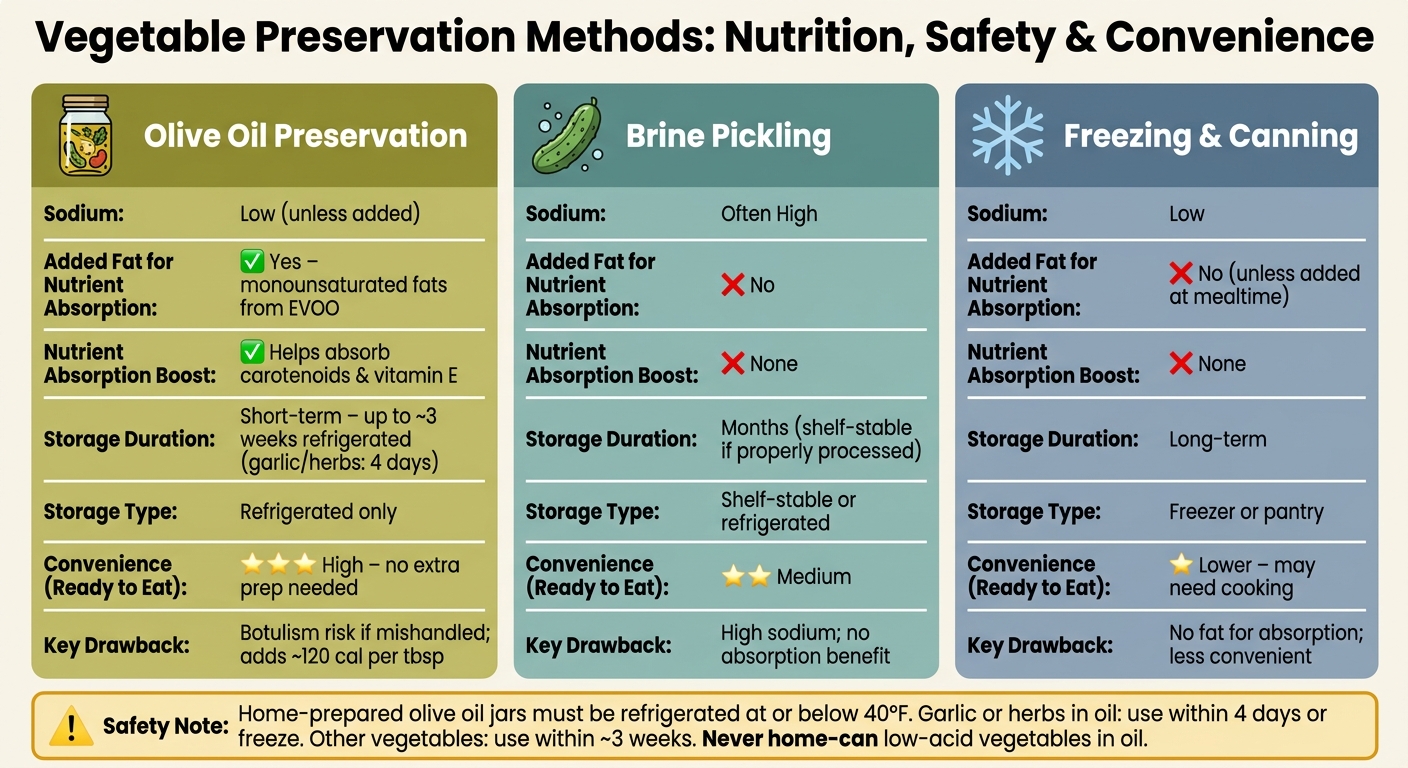
Olive Oil vs. Brine Pickling vs. Freezing: Which Preservation Method Wins?
Ready-to-eat vegetables can help increase daily vegetable intake
Those nutrition perks matter most when preserved vegetables are easy to use.
Ready-to-eat vegetables can make it simpler to eat more vegetables on a regular basis. If they’re already sitting in the fridge in olive oil, there’s less prep and less mental effort at mealtime. That small bit of convenience can make a big difference on busy days.
A jar of roasted red peppers, zucchini, or cherry tomatoes in olive oil can go straight into scrambled eggs, grain bowls, sandwiches, or pasta without extra cooking. It’s the kind of thing that helps people move closer to the recommended 2–3 cups of vegetables per day.
Olive oil can help cut food waste too by giving extra produce a longer use window. Instead of tossing peak-season vegetables, you can turn them into meals for later. They can also step in for less nutritious snack options.
How olive oil preservation compares with other methods
That convenience comes with trade-offs, especially next to other ways of preserving food.
- Olive oil preservation: Low sodium unless added; monounsaturated fats from EVOO support absorption; very convenient when you’re ready to eat; refrigerated shelf life of several days to a few weeks.
- Brine pickling: Often high in sodium; no added fat to support absorption; shelf-stable for months when properly processed.
- Freezing and canning: Low sodium; no fat unless added at mealtime; better for long-term storage.
Olive oil preservation stands out because it helps with nutrient absorption and is easy to use right away. That’s because it adds monounsaturated fat, polyphenols, and antioxidants.
Brine pickling can last for months on the shelf when it’s processed the right way, but it’s usually high in sodium and doesn’t provide the dietary fat that helps with carotenoid absorption. Freezing and canning fit better when the goal is longer storage.
Home-prepared versus store-bought vegetables in oil
Method choice also depends on whether you want full control in the kitchen or a ready-made jar.
Both options can work. It comes down to what matters more to you: control, convenience, or confidence in the safety process.
| Factor | Home-Prepared | Store-Bought |
|---|---|---|
| Oil quality | You choose - can use high-quality EVOO | Varies; may use blends or lower-cost oils |
| Ingredient control | Full control over salt, herbs, and acidity | Fixed recipe; may include preservatives or flavorings |
| Seasoning | Fully customizable (garlic, chili, citrus, etc.) | Consistent but less flexible |
| Convenience | Requires initial prep; tailored to your week's meals | Ready immediately; shelf-life and storage guidance are on the label |
| Food safety | Requires strict refrigeration, a short use window, and proper acidification | Typically follows validated processing standards; label guidance helps |
Home-prepared vegetables in oil make sense if you want to use high-quality EVOO, control the ingredients, and don’t mind following safe handling steps. But the batch needs to be used within a short window, usually no more than about 3 weeks refrigerated.
Store-bought products are a good backup when time is tight or when you want more confidence in steady safety controls. Even then, it’s smart to check the label for sodium and oil type.
The biggest nutrition trade-off is calories: 1 tablespoon of olive oil adds about 120 calories.
Safe handling matters most when making it at home.
Safe preparation and key takeaways
Safe steps for preserving vegetables in olive oil at home
That convenience only helps if you store everything safely.
The health upside disappears fast if the food isn't safe to eat. The main danger with vegetables stored in oil is botulism, caused by Clostridium botulinum. This bacterium grows in low-acid, oxygen-free conditions, and oil creates exactly that kind of setting. Even worse, the toxin has no taste, smell, or visible sign, so spoiled food can look completely fine.
Start with fresh, unblemished vegetables. Wash them well under running water, then dry them thoroughly before packing. Place them in clean glass jars, make sure the vegetables stay fully submerged under oil, seal the jars tightly, and refrigerate at or below 40°F. Keep the jar in the main part of the refrigerator, not in the door, where the temperature goes up and down.
Garlic or herbs in oil should be refrigerated for 4 days or frozen, based on guidance from the National Center for Home Food Preservation. For other vegetable-in-oil mixtures, keep storage to about 3 weeks refrigerated. If a recipe uses vinegar or a citric acid solution, follow it exactly. Guessing or changing the amounts is not safe.
Do not home-can low-acid vegetables in oil. There are no validated home-canning recipes for this method. Use high-quality EVOO only in properly acidified, tested recipes meant for safe storage.
These steps protect both safety and food quality.
Key takeaways: nutrition, convenience, and safety
Put simply, olive oil can help from a nutrition standpoint, but it does not replace safe handling.
Preserving vegetables in EVOO can support a healthier kitchen when it's done the right way. Here are the main points:
- EVOO adds nutritional value. Its monounsaturated fats and polyphenols support heart health and help the body absorb fat-soluble compounds like carotenoids and vitamin E from vegetables.
- Convenience can help you eat better. A small jar of vegetables in olive oil in the fridge makes it easier to add vegetables to meals without extra cooking.
- Safety is not optional. Low-acid vegetables in oil can harbor botulism toxin even under refrigeration if they aren't prepared with care.
- Core rules: Dry vegetables, use clean glass jars, keep them fully covered, refrigerate at or below 40°F, and discard anything left out for more than 2 hours.
EVOO adds value only when safety comes first.
FAQs
Which vegetables work best in olive oil?
Choose vegetables that are firm and not packed with water. That gives you the best texture and flavor.
Good picks include:
- Bell peppers
- Eggplant
- Zucchini
- Summer squash
- Carrots
- Beets
- Green beans
- Mushrooms
- Broccoli
- Cauliflower
- Brussels sprouts
- Artichoke hearts
- Onions
- Firm cherry tomatoes
Eggplant can be a little hit or miss, so go with younger, smaller ones when you can. They tend to taste better and hold up well.
It also helps to skip watery vegetables like cucumbers and standard tomatoes. They usually don’t give the same result.
Can I reuse the olive oil after the vegetables are gone?
Yes. Once the vegetables are gone, you can reuse the leftover olive oil. Since it’s infused with their flavor, it works well in salad dressings, for sautéing, or as a finishing drizzle.
Before you use it, check for signs of spoilage, like off smells, mold, or an unusual texture. After opening the jar, refrigerate the oil and use it within 2 weeks.
How can I tell if vegetables in oil are unsafe to eat?
Watch for spoilage signs like a rancid or foul smell, visible mold, bubbles in the jar, leakage, or a bulging lid. If you spot any of these, throw the jar out.
Botulism toxins can't be seen or smelled, which is why proper prep matters so much. These preserves are not shelf-stable and need to stay refrigerated at or below 41°F. If you're not sure whether it's safe, discard it.