

How Subsidies Impact Olive Oil Exports
Government subsidies shape the olive oil market by giving producers in regions like the EU a competitive edge, while others, like U.S. and Tunisian farmers, face challenges. Here's the key takeaway:
- EU Advantage: Spain, Italy, and Greece dominate the market, largely due to EU subsidies like the Common Agricultural Policy (CAP), which provides billions annually. Spanish farmers, for example, receive up to $7.7 billion each year, allowing them to stabilize prices and boost exports.
- U.S. Struggles: U.S. olive farmers receive minimal support compared to crops like corn and soybeans, making it harder to compete with subsidized imports. Over 95% of U.S. olive oil is imported.
- Global Demand: Rising demand for olive oil, driven by health-conscious consumers, has boosted exports from the EU, with the U.S. and China among the largest importers.
- Pricing Impact: Subsidies allow EU producers to lower prices during market fluctuations, while non-subsidized producers like Tunisia and California rely on quality to stay competitive.
Subsidies not only influence pricing but also allow producers to invest in technology and quality improvements. For non-subsidized regions, focusing on premium products and balsamic sets and branding offers a path to compete.
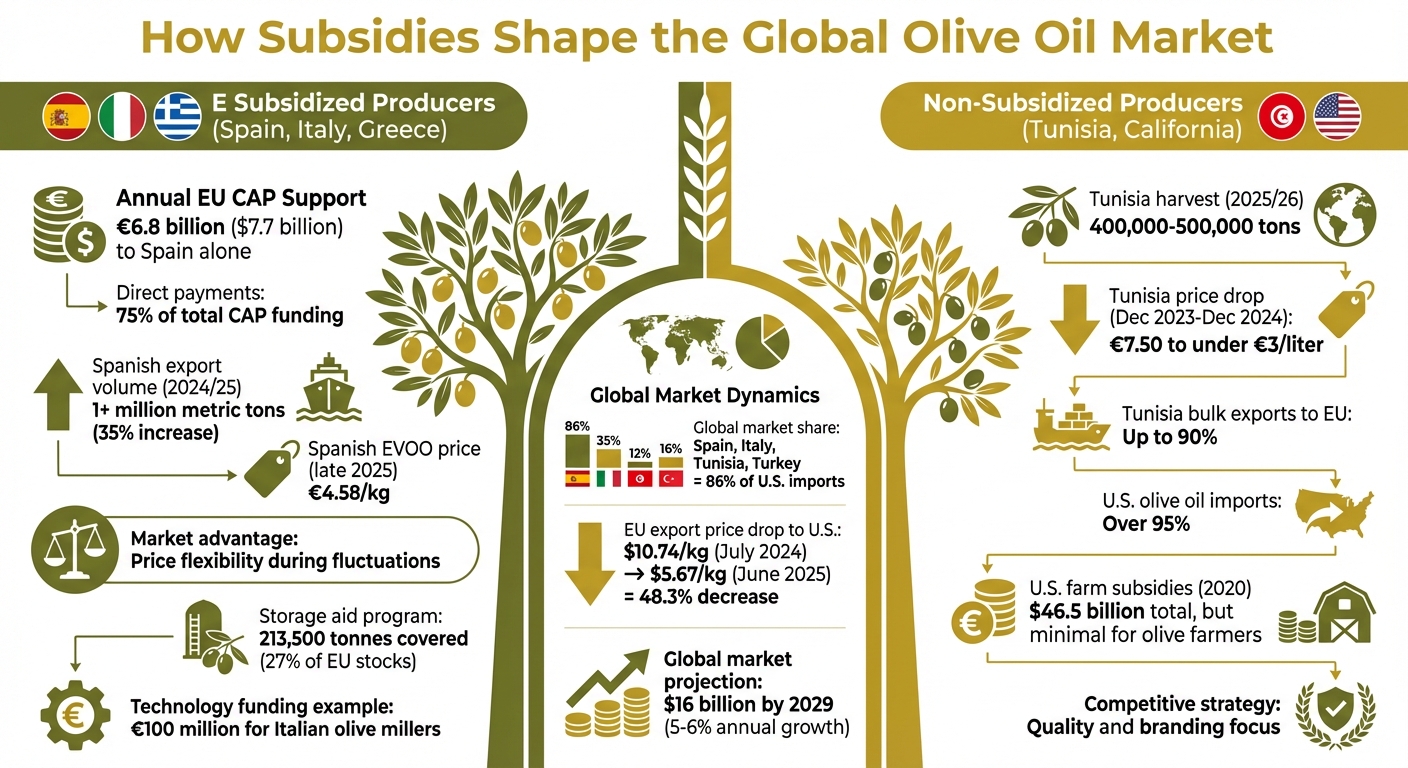
EU vs Non-Subsidized Olive Oil Producers: Subsidy Impact Comparison
Spain olive industry hit by US tariffs on EU products
sbb-itb-4066b8e
Types of Subsidies for Olive Oil Exports
Governments offer various subsidies to olive oil producers to address production and export challenges. These programs play a critical role in shaping the global olive oil market, helping some producers thrive internationally while others face difficulties. Below, we explore the main types of subsidies and their influence on export competitiveness.
Direct Financial Support to Producers
One of the most common forms of aid is direct income payments. In the European Union (EU), these payments are part of the Common Agricultural Policy (CAP), designed to stabilize farmers' incomes. For example, Spanish farmers receive capped payments of up to €60,000 per farm or €100,000 per company under this policy. These funds act as a safety net, helping farmers weather poor harvests, fluctuating prices, and unexpected expenses.
Spain, a leading olive oil producer, benefits significantly from the CAP, receiving around €6.8 billion ($7.7 billion) annually. Of this, 75% is distributed as direct payments to farmers. In contrast, U.S. farm subsidies amounted to $46.5 billion in 2020, but olive farmers received only a small fraction compared to major crops like corn and soybeans.
Export Incentives and Trade Policies
Governments also implement measures to stabilize markets and support exports. One example is the EU’s private storage aid program, which provides financial incentives for producers to temporarily remove olive oil from the market during times of oversupply. In 2020, this initiative covered 213,500 tonnes of olive oil, accounting for about 27% of the EU’s total stocks at the time. Producers storing extra virgin, virgin, or lampante olive oil for at least 180 days could receive up to €0.83 per day per tonne.
These policies help prevent price collapses during surplus years and ensure producers can sell their products when market conditions improve. Janusz Wojciechowski, the EU Commissioner for Agriculture and Rural Development, highlighted the importance of such measures:
"The European Commission has shown once again its commitment and support to European farmers, especially when faced with market disruption".
Funding for Technology and Quality Control
Modernization grants are another crucial form of support, aimed at improving efficiency and product quality. For instance, in October 2022, the European Commission approved a €100 million subsidy package for Italian olive millers to upgrade their machinery and adopt advanced technologies. As part of Italy's "Agriculture 4.0" initiative, this program covered up to 50% of costs for equipment upgrades, energy efficiency improvements, and precision farming techniques.
These investments significantly enhance export competitiveness. Savino Muraglia, president of Coldiretti Puglia, emphasized the broader impact:
"It is an opportunity for the whole production chain, which is worth €1.2 billion [for growers] and €3 billion [for millers and bottlers]".
How Subsidies Affect Global Competition
Subsidies play a major role in shaping global competition, often giving producers in regions like the EU a strong edge, while those without similar support struggle to keep up. Programs such as the EU's Common Agricultural Policy (CAP) provide financial backing that allows producers in countries like Spain, Italy, and Greece to dominate international markets. Below, we’ll break down the impact of subsidies through market share trends, the hurdles faced by non-subsidized producers, and a real-world example of how quality can be a competitive strategy.
Market Share of Major Producers
Countries like Spain, Italy, and Greece lead the global olive oil market, largely due to substantial government subsidies. For instance, Spain benefits from approximately €6.8 billion ($7.7 billion) annually through the EU CAP, with 75% of this funding going directly to farmers. This financial safety net allows Spanish producers to offer competitive pricing, even when market conditions are tough. In the 2024/25 season, Spain exported more than 1 million metric tons of olive oil - a 35% increase compared to the previous year.
Subsidies also influence global trade dynamics. Together, Spain, Italy, Tunisia, and Turkey account for 86% of olive oil imports into the United States. With such financial backing, subsidized producers can afford to price their products at levels that are tough for non-subsidized competitors to match. For example, as of late 2025, Spanish extra virgin olive oil was priced at €4.58 per kilogram, while producer prices in Jaén were €4.39/kg in November of the same year.
Challenges for Producers Without Subsidies
For producers without access to subsidies, the playing field is far from level. Tunisia offers a clear example. Despite a record harvest of 400,000 to 500,000 tons in the 2025/26 season, Tunisian olive oil prices plummeted from €7.50 to under €3 per liter between December 2023 and December 2024. Much of Tunisia’s oil - up to 90% - is exported in bulk to the EU, where it’s blended and rebranded under European labels. This limits Tunisian producers’ ability to compete on price or build their own brand identity.
California olive farmers face similar challenges. While U.S. government aid accounted for 39% of net farm income in 2020, totaling $46.5 billion, California’s olive growers received minimal support compared to major crops like corn and soybeans. Without significant subsidies, these farmers must rely on quality and brand reputation to remain competitive. For example, companies like Big Horn Olive Oil focus on premium quality to carve out a niche in the market.
Case Study: Big Horn Olive Oil's Quality Standards
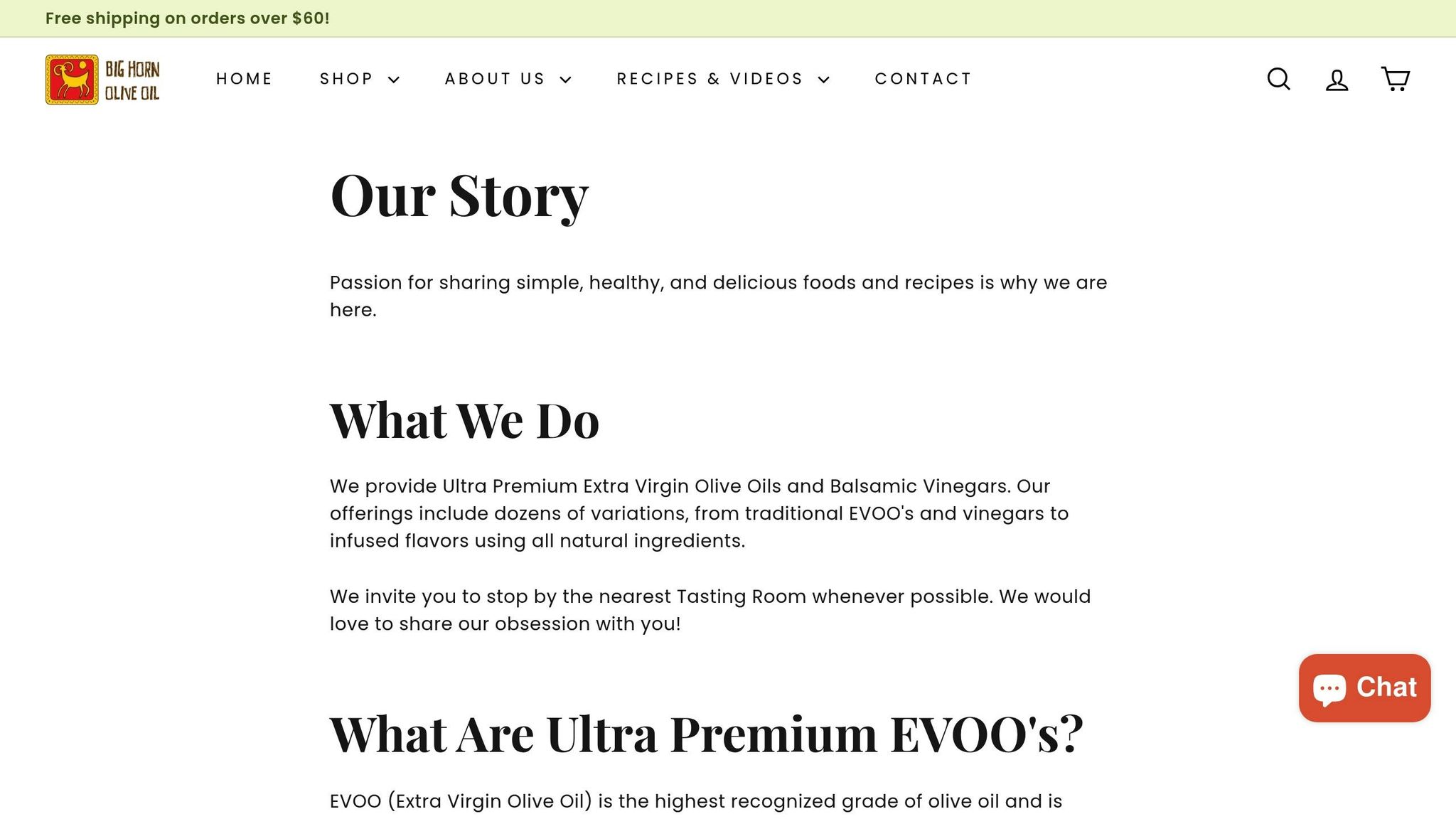
Big Horn Olive Oil provides a roadmap for how producers can thrive despite subsidy-driven price competition. Their strategy focuses on delivering exceptional quality and earning international recognition for their standards. By sourcing Ultra Premium Extra Virgin Olive Oils that meet strict global benchmarks, they create a product that stands out for its freshness and health benefits.
The company’s process underscores their commitment to quality. They cold-press olives within 2 hours of harvesting and ensure their oils reach customers within 3 months of harvest. This meticulous approach preserves high antioxidant levels and enhances flavor, appealing to consumers who value traceability and freshness. Big Horn Olive Oil offers a range of products, from single-origin varieties like Picual and Coratina to specialty items like their Estate Reserve Ultra Premium EVOO.
Subsidies and Export Pricing
Managing Production Costs and Export Prices
Government subsidies play a crucial role in helping producers manage rising costs, which in turn allows them to stay competitive in global markets. A prime example is Spain, which benefits from approximately $7.7 billion annually through the EU's Common Agricultural Policy (CAP). Notably, 75% of this funding goes directly to farmers. This financial support helps producers handle market fluctuations without immediately passing increased costs onto buyers.
This financial buffer directly impacts export pricing strategies. In May 2025, producer prices for extra virgin olive oil in Jaén, Spain, fell to around $3.86 per kilogram - a significant 53% drop compared to the previous year. During the 2024/25 season, Spanish producers exported over 1 million metric tons, marking a 35% increase in export volume. Subsidies give producers the flexibility to maintain high export levels even during challenging market conditions.
The EU's storage aid program further illustrates how subsidies stabilize prices. EU Commissioner Janusz Wojciechowski remarked:
"After months of market imbalance, I'm proud to see the last tendering under the private storage aid scheme for olive oil conclude on a positive note... first signs of price recovery are already visible."
These mechanisms, supported by subsidies, allow producers to adapt their pricing strategies and remain competitive, even during periods of market instability.
Price Competition in Major Markets
Subsidies also create a noticeable edge in key export markets like the United States, where European producers often outcompete local growers. For example, limited federal support in the U.S. has left California olive oil producers struggling to compete with heavily subsidized European exporters, leading to a shift in the U.S. foodservice sector toward European products.
The pricing disparity is striking when comparing market data. In late 2025, Tunisian extra virgin olive oil was priced at about $4.11 per kilogram, while Spanish oil from Andalusia sold for roughly $5.23 per kilogram. Meanwhile, the unit value of EU olive oil exports to the U.S. dropped sharply - from around $10.74 per kilogram in July 2024 to about $5.67 per kilogram by June 2025, reflecting a 48.3% year-on-year decrease. This steep decline demonstrates how subsidies enable European producers to sustain export volumes by lowering prices, whereas non-subsidized competitors face mounting challenges to remain profitable in increasingly competitive markets.
Conclusion: The Role of Subsidies in Olive Oil Exports
Key Lessons for Producers and Exporters
Government subsidies play a pivotal role in shaping how olive oil producers compete globally, but relying solely on financial aid isn't a recipe for success. The most impactful strategies blend subsidy-driven modernization with a focus on quality. Producers should prioritize efficiency improvements - like reducing energy costs - and seek certifications such as organic, non-GMO, or PDO (Protected Designation of Origin) to validate premium pricing in competitive markets. Instead of engaging in price wars, successful exporters often lean into branding that highlights heritage and sustainable practices, which appeal to informed and discerning consumers.
These insights highlight the evolving role of subsidies and how they can influence future export strategies.
The Future of Olive Oil Exports
The global olive oil market is expected to grow to around $16 billion by 2029, with a steady annual increase of 5–6%. Subsidies are likely to focus more on sustainability and technological progress rather than simple price supports. For instance, in January 2026, Italy's Ministry of Agriculture introduced the "Coltiva Italia" plan, which dedicates €500 million over five years to revitalize the olive oil sector. Of this, €300 million for 2026–2028 is earmarked for developing super-intensive olive groves and reclaiming abandoned ones, aiming to restore Italy’s competitiveness after slipping to third place in global production.
Emerging players like Turkey illustrate the potential of government-backed export initiatives. Turkish olive oil exports surged by over 80% during the 2022–2023 season, with a goal of surpassing 130,000 tons annually by 2025. In this dynamic environment, producers can maintain their edge by targeting ultra-premium segments. Big Horn Olive Oil offers a great example, focusing on international recognition and transparent sourcing to stand out. As Undersecretary Patrizio La Pietra aptly stated:
"We must better explain the differences to consumers, make them understand why products have different prices and thus enable them to choose".
Producers who educate consumers about the unique qualities of premium extra virgin olive oil - versus standard blends - are well-positioned to thrive in this evolving market.
FAQs
Do subsidies make olive oil cheaper in the U.S.?
Subsidies don’t always lead to cheaper olive oil in the U.S. Other factors, like tariffs and trade disputes, have played a role in driving up costs and limiting access to European olive oils. Even with these hurdles, exports have largely continued without major interruptions, proving that subsidies alone aren’t enough to ensure lower prices for consumers.
Why don’t U.S. olive farmers get similar subsidies?
The U.S. government hasn’t prioritized subsidies for olive farmers, largely because its agricultural policies have traditionally centered on other crops and sectors. In contrast, the European Union has programs like the Common Agricultural Policy (CAP), introduced in 2003, which aims to promote market stability and maintain fair competition - benefiting olive growers among others.
How can non-subsidized producers compete on exports?
Non-subsidized producers can stay competitive by prioritizing quality, efficiency, and originality in their operations. Strategies like controlling the entire value chain help cut costs, while implementing eco-friendly practices appeals to conscious consumers. Offering distinctive or organic products can also carve out a space in niche markets. Additionally, building a strong brand and fostering direct relationships with buyers can boost visibility and trust. By focusing on what sets them apart and streamlining operations, these producers can hold their ground in global markets - even without subsidies.