

How to Make Balsamic Vinaigrette at Home
You can make balsamic vinaigrette in about 5 minutes with a simple 3:1 ratio: 3 tablespoons olive oil to 1 tablespoon balsamic vinegar. Add Dijon mustard, a little honey or maple syrup, garlic, salt, and pepper, then whisk or shake until smooth.
Here’s the short version:
- Base ratio: 3:1 oil to vinegar
- For more tang: move to 2:1 or even 1:1
- For a milder taste: use 4:1
- To keep it mixed: add Dijon mustard and pour oil in slowly
- To fix the taste: add more oil if it’s too sharp, more vinegar if it’s too oily
- To store it: refrigerate it for 1 to 2 weeks, with best flavor in 7 to 10 days
- If it hardens in the fridge: let it sit out for 5 to 15 minutes, then shake again
I like homemade vinaigrette because I can control the sweetness, salt, and texture without bottled extras. The article also covers ingredient picks, batch amounts, mixing methods, flavor add-ins, common fixes, and storage tips.
If I wanted to sum it up in one line, it would be this: <u>start with the ratio, emulsify it well, then taste and adjust</u>.
Shake Up the Homemade Balsamic Vinaigrette in 2 Minutes
sbb-itb-4066b8e
Ingredients for a Balsamic Vinaigrette
Use this core ingredient list as your starting point.
| Ingredient | Function |
|---|---|
| Balsamic Vinegar | Brings tang, deep sweetness, and dark color |
| Extra Virgin Olive Oil | Adds body plus fruity or peppery flavor notes |
| Dijon Mustard | Helps oil and vinegar stay together for a creamy, steady texture |
| Honey or Maple Syrup | Softens acidity and helps the dressing hold together |
| Garlic | Adds savory depth and bite |
| Salt and black pepper | Pulls out the flavor of the other ingredients |
Why Balsamic Vinegar and Extra Virgin Olive Oil Quality Matter
Quality makes a big difference here. Lower-quality balsamic can taste flat or too sharp, so choosing a premium dark balsamic is key for depth. A better pick usually has grape must near the top of the label.
The olive oil matters just as much. Fresh extra virgin olive oil brings fruity or peppery notes and gives the dressing a richer texture.
With the ingredients picked out, the next step is mixing them in the right ratio.
The Basic Oil-to-Vinegar Ratio
Start with a 3:1 oil-to-vinegar ratio - 3 tablespoons olive oil to 1 tablespoon balsamic vinegar.
If you want a dressing that tastes bolder and more tangy, move toward a 2:1 or 1:1 ratio. If you'd rather keep it richer and milder, a 4:1 ratio tones down the acidity quite a bit.
Ingredient Amounts for One Small Batch
For a small test batch, use these amounts:
| Ingredient | Amount |
|---|---|
| Extra Virgin Olive Oil | 3 tablespoons |
| Balsamic Vinegar | 1 tablespoon |
| Dijon Mustard | 1 teaspoon |
| Honey or Maple Syrup | 1/2 to 1 teaspoon |
| Garlic | 1 small clove (minced) or 1/2 teaspoon |
| Kosher Salt | 1/8 teaspoon |
| Black Pepper | A few grinds |
How to Make Balsamic Vinaigrette Step by Step
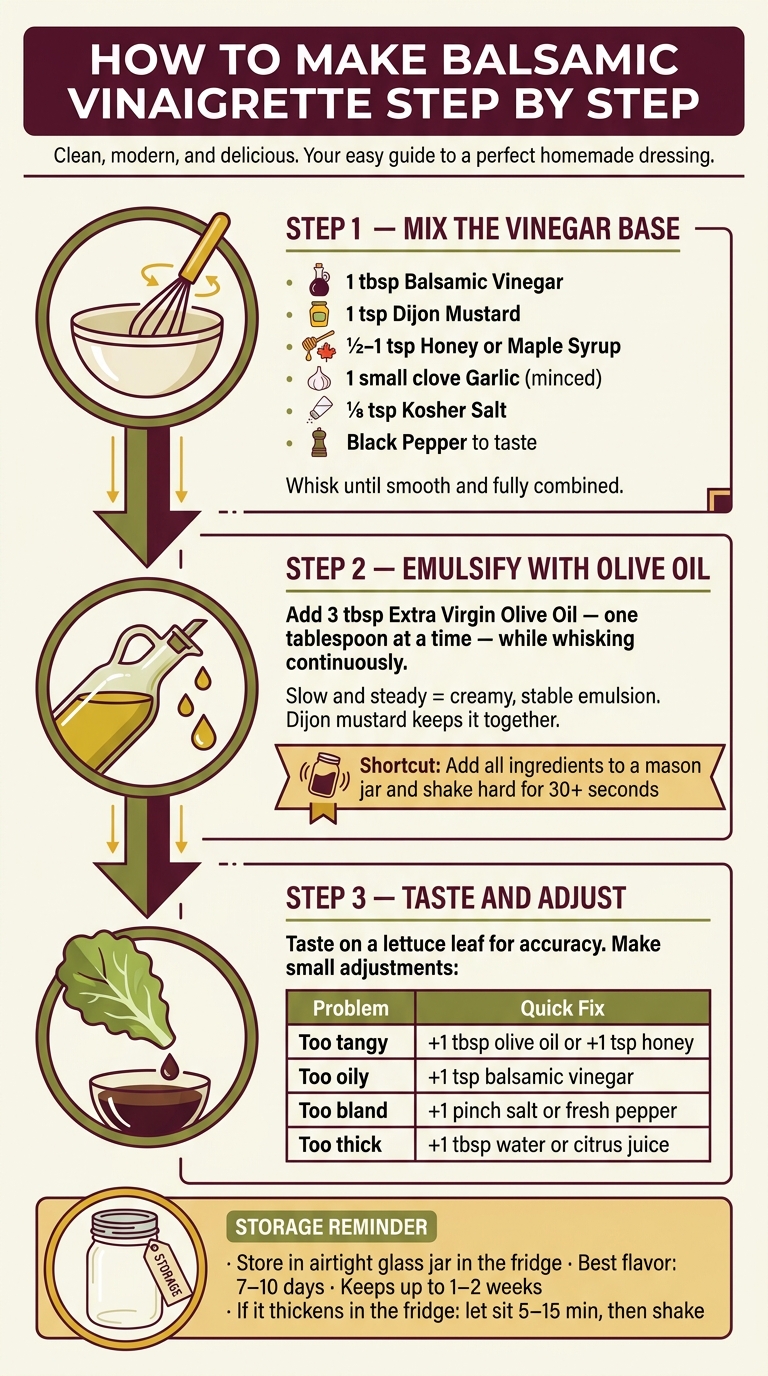
How to Make Balsamic Vinaigrette: Step-by-Step Visual Guide
Once your ingredients are measured, start with the vinegar base.
Start by Mixing the Vinegar, Mustard, and Seasonings
Grab a medium bowl so you have enough space to whisk without making a mess. Add the balsamic vinegar, Dijon mustard, honey or maple syrup, minced garlic, salt, and a few grinds of black pepper. Whisk until the mixture looks smooth and even.
It helps to blend the mustard and sweetener well at the start so the flavor stays balanced throughout. Stick with the measured batch from the ratio above.
Add Olive Oil Slowly to Emulsify
When the base is smooth, pour in the olive oil one tablespoon at a time while whisking nonstop. Go slow here. That steady stream helps the dressing turn smooth and creamy instead of splitting.
Dijon mustard helps the oil and vinegar stay mixed. When it comes together, the vinaigrette should look creamy and a little thicker.
If you want a faster option, add everything to a mason jar and shake hard for at least 30 seconds. It’s simple, fast, and works well.
Taste and Adjust Before Serving
Before you pour it over salad, give it a taste. Better yet, try it on a lettuce leaf so you get a more accurate sense of how it will taste when served.
"Dip a piece of lettuce into the vinaigrette and taste. Adjust the salt, pepper, or the proportion of oil and vinegar to taste." - Emma Christensen, Editor, The Kitchn
Make small changes, then taste again. A little goes a long way.
| Problem | Quick Fix |
|---|---|
| Too tangy | +1 tbsp olive oil or +1 tsp honey |
| Too oily | +1 tsp balsamic vinegar |
| Too bland | +1 pinch of salt or a little fresh-ground pepper |
| Too thick | +1 tbsp water or a little lemon or orange juice |
How to Adjust Flavor, Texture, and Mixing Method
Start with small changes. A bit more oil can soften the acidity. A bit more vinegar can make the dressing taste sharper.
If your base dressing is close but still a little off, these tweaks usually do the job.
Make It More Tangy, Sweeter, Thicker, or Lighter
If you want more sweetness, add 1 teaspoon to 2 tablespoons of honey or maple syrup. You can also use an aged balsamic for deeper natural sweetness. A well-aged balsamic has more sweetness and less acidity.
Want a thicker dressing? Add a little more Dijon mustard. It helps the dressing emulsify and gives it a creamier texture.
Simple Add-Ins That Work with the Classic Recipe
If the dressing needs more depth, add one supporting ingredient instead of reworking the whole thing. Small changes go a long way.
Add one extra flavor at a time:
- Minced shallot: about 1 tablespoon for a mild savory note that’s softer than raw garlic
- Dried herbs: about 1/2 teaspoon of oregano, basil, thyme, or rosemary for more depth
- Red pepper flakes: a pinch for subtle heat
- Fresh lemon or orange juice: 1 to 2 tablespoons for a citrus lift
If raw garlic tastes too sharp, let the minced cloves sit in the vinegar for about 10 minutes before adding the oil.
Ratio and Mixing Method Reference Tables
| Ratio (Oil:Vinegar) | Flavor Profile | Best Use |
|---|---|---|
| 2:1 | Bold, tangy, and acidic | Hearty greens like kale or as a meat marinade |
| 3:1 | Classic, balanced, and smooth | Standard garden salads and spring mixes |
| 4:1 | Mild, rich, and oil-forward | Delicate herbs or fruit-heavy salads |
Flavor balance comes first. Texture mostly comes down to how you mix it.
| Method | Texture Result | Emulsion Stability |
|---|---|---|
| Whisking in a Bowl | Velvety, smooth, and glossy | High; stays blended longer when oil is drizzled slowly |
| Shaking in a Jar | Light and liquid | Moderate; separates faster but easy to re-shake |
| Blending | Thick, creamy, and opaque | Very high; most stable emulsion |
Once the flavor and texture feel right, move the dressing to storage.
How to Store, Serve, and Wrap Up
Once you've finished tasting and making small tweaks, pour the vinaigrette into an airtight glass jar, like a mason jar. A tight-fitting lid makes it easy to shake, store, and pour without a mess.
How to Store and Serve It
Homemade balsamic vinaigrette usually keeps in the refrigerator for about 1 to 2 weeks, though it tends to taste best during the first 7 to 10 days. If the recipe has only oil and vinegar, it can last longer at room temperature. But once you add fresh garlic or shallots, refrigerate it.
Since the dressing was emulsified earlier, it may thicken a bit in the fridge. That's normal. Olive oil can firm up when cold, but the dressing is still fine to use. Let it sit at room temperature for 5 to 15 minutes, then shake it again. Need it fast? A brief 20-second microwave can help loosen it up. After that, shake or whisk until it's blended again.
A couple of small habits help here:
- Pour out only what you need instead of dipping utensils into the jar
- Don't freeze it, because freezing can break the emulsion
FAQs
Can I make it without mustard?
Yes - you can make balsamic vinaigrette without mustard.
Mustard adds a bit of sharpness and helps the dressing stay mixed. But you don’t need it to make a good vinaigrette.
Without mustard, the oil and vinegar will separate more easily. That’s normal. Just shake or whisk the dressing again right before you serve it.
Which salads pair best with balsamic vinaigrette?
Balsamic vinaigrette works with a lot of salads, but it’s especially good on classic green salads. Think mixed lettuce, spinach, butter lettuce, radicchio, endive, and arugula. That tangy-sweet flavor gives simple greens a little more life without taking over.
It also goes well with earthy vegetables like beets and sweet potatoes. And if your salad leans sweet, it still fits right in. Apples, strawberries, and pears all pair nicely with balsamic vinaigrette.
You’ll also see it used in Mediterranean-style salads and similar dishes, including:
- Caprese salads
- Greek salads
- Pasta salads
- Grain bowls
Can I use different oils or vinegars?
Yes. You can tweak your vinaigrette with different oils and vinegars.
For the oil, try avocado, grapeseed, walnut, or hazelnut oil. For the vinegar, white balsamic gives you a milder, fruitier taste and won't darken greens. You can also swap in lemon juice or red wine vinegar if you want a brighter finish.