

How to Make Herb Olive Oil Cubes
I make herb olive oil cubes by chopping washed, well-dried herbs, covering them with olive oil in an ice cube tray, and freezing immediately at 0°F or below. They’re ready-to-use portions for cooking - not garnishing.
Here’s my short checklist:
- Portion: Use single herbs or blends in cavities that hold 1 to 1½ tablespoons. Leave a little space at the top.
- Pack: Once firm, move cubes to a sealed freezer bag or container. Label with the herbs, freezing date, and oil amount per cube. Use within 3 months for best flavor.
- Cook: Add directly to soups and sauces, or melt over low to medium heat for skillet dishes. Count the oil toward your recipe’s cooking fat.
- Thaw safely: For roasting or marinades, thaw in the refrigerator at 40°F or below. Discard marinade that touched raw protein.
My main safety rule: <u>keep herb-in-oil cubes frozen</u>. Herbs stored in oil can support botulism-causing bacteria, so I never store these cubes at room temperature or drop them into very hot oil, where moisture can spatter.
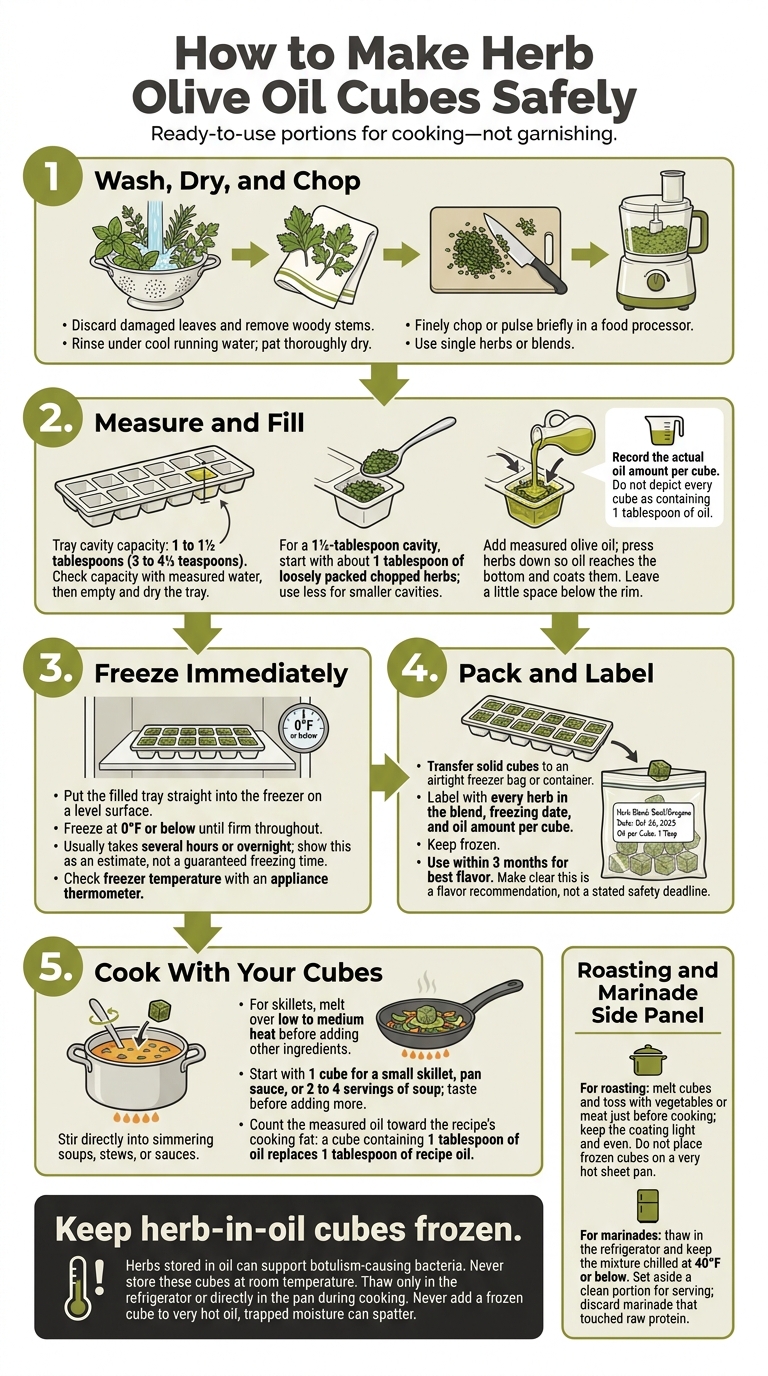
How to Make Herb Olive Oil Cubes Safely
OLIVE OIL HERB CUBES! 💚
sbb-itb-4066b8e
Gather Ingredients and Fill the Tray
Gather just-picked herbs, extra virgin olive oil, a knife or food processor, measuring spoons, a towel, and a freezer-safe silicone or plastic ice cube tray. Have a freezer bag or airtight container ready, too.
Step 1: Wash, Dry, and Chop Herbs
Start by preparing the herbs. Rosemary, thyme, sage, and oregano suit hearty dishes like roasted vegetables, chicken, beans, and stews. Basil and parsley work well in tomato sauces, pasta, soups, and lighter skillet dishes. These cubes are for cooking, not garnishing.
Discard damaged leaves and remove woody stems. Rinse the herbs under cool running water, then pat them thoroughly dry with the towel.
Finely chop them with a knife for small, distinct pieces, or pulse briefly in a food processor. For a smoother paste, add a little olive oil while processing.
Step 2: Measure Herbs and Oil Into the Tray
Use tray cavities that hold 1 to 1½ tablespoons, or 3 to 4½ teaspoons. Check the capacity by measuring water into one cavity, then empty and dry the tray. Flexible silicone makes the cubes easier to remove. If you're using a rigid plastic tray, set it on a sheet pan for support.
For a 1½-tablespoon cavity, start with about 1 tablespoon of loosely packed chopped herbs. Use less for smaller cavities.
Add oil with a measuring spoon, then press the herbs down so the oil reaches the bottom and coats them. Leave a little room below the rim instead of filling each cavity to the top. Record how much oil goes into each cube so you can account for it when planning recipes.
Freeze and Store Cubes Safely
Put the filled tray straight into the freezer. Keep herb-in-oil cubes frozen, and thaw them only in the refrigerator or directly in the pan.
Step 3: Freeze Immediately Until Firm
Set the tray on a level surface and freeze at 0°F or below until the cubes are firm throughout. This usually takes several hours or overnight. Use an appliance thermometer to check the freezer temperature.
Step 4: Pack and Label Frozen Cubes
Once solid, transfer the cubes to an airtight freezer bag or container. Label each package with every herb in the blend and the freezing date. Use within 3 months for the best flavor.
Choose Single Herbs or Herb Blends
Before packing, group single-herb cubes so you can mix and match seasonings later. Keep blends together for recipes you make often.
Prevent Overflow, Odors, and Sticking
Start with dry tray cavities, and leave a small gap at the top of each one when filling. Flex the tray to pop out the frozen cubes, then seal packages tightly to help keep freezer odors out.
Cook With Herb Olive Oil Cubes
Once your cubes are frozen and labeled, they’re ready for the stove or oven. You can add them straight to hot dishes - no thawing needed.
Step 5: Add Cubes to Soups, Sauces, and Skillets
Stir cubes into simmering soups, stews, or sauces until they melt.
For skillet dishes, melt a cube over low to medium heat, then add aromatics, vegetables, poultry, or seafood. Never add a frozen cube to very hot oil; trapped moisture can spatter.
Start with 1 cube for a small skillet, pan sauce, or 2 to 4 servings of soup. Once it melts, taste before adding more, especially when using strong herbs like rosemary or sage.
Count the oil in each cube toward the recipe’s cooking fat. A cube containing 1 tablespoon of oil replaces 1 tablespoon of the oil called for.
Use Cubes for Roasting and Marinades
For roasting, melt the portioned cubes and toss the herb oil with vegetables or meat just before cooking. Keep the coating light and even. Don’t place frozen cubes on a very hot sheet pan.
For marinades, thaw cubes in the refrigerator and keep the mixture chilled at 40°F or below. Set aside a clean portion for serving, and discard any marinade that touched raw protein.
Conclusion: Portion, Label, and Keep Frozen
Once the cubes are firm, transfer them to an airtight container. Label it with the herbs, freezing date, and amount of oil per cube, then keep the cubes frozen. Start with a familiar herb or blend, and use consistent portions so they’re easy to add to soups, sauces, and skillets.
FAQs
Can I refreeze thawed herb olive oil cubes?
No - don’t refreeze herb olive oil cubes after they’ve thawed. Take out only the cubes you’ll use right away. Thawing and refreezing can lower the oil’s quality and may increase the risk of bacterial growth, especially when using raw herbs.
Check the oil before using it. Discard it if it smells unpleasant or shows other signs of spoilage. A bitter taste can also be a warning, but don’t taste it to check for safety. Cloudiness can occur when olive oil gets cold, so it doesn’t necessarily mean the oil has spoiled.
Can I add fresh garlic to the cubes?
Yes, but keep the cubes frozen. The moisture in fresh garlic can let dangerous bacteria grow in oil, creating a botulism risk. Straining out the garlic won’t make the oil safe, and refrigerating the cubes for 1–2 weeks is not safe storage advice.
Why are my cubes still soft after freezing?
Olive oil usually thickens or turns cloudy when cold. Unlike water, it doesn’t freeze into a rock-hard solid, so your cubes may stay soft or slushy.
If they aren’t firming up as expected, check that your freezer is set cold enough and give them more time.