

How to Make Zhoug at Home
Zhoug is a spicy, herb-packed Middle Eastern sauce made with cilantro, parsley, chilies, and olive oil. It's perfect for adding bold flavor to dishes like falafel, shawarma, or even eggs. Here's a quick breakdown of how to make it:
- Ingredients: Fresh cilantro, parsley, Thai bird chilies (or dried chiles de árbol), garlic, toasted spices (cumin, coriander, cardamom), olive oil, lemon juice, and salt.
- Preparation: Toast spices, grind them with garlic and chilies, then blend with herbs. Slowly add olive oil and lemon juice to create a smooth, textured paste.
- Tips: Use high-quality olive oil for better flavor and adjust the spice level to your liking.
- Storage: Store in an airtight container in the fridge for up to a week.
Zhoug is quick to make (10–15 minutes) and pairs well with meats, vegetables, and dips. Ready to spice up your meals? Let’s get started!
How to make Zhoug in less than 5 minutes
sbb-itb-4066b8e
Ingredients for Zhoug
Making zhoug relies on a simple lineup of fresh, flavorful ingredients. For a standard one-cup recipe, you'll need about 2 ounces of fresh herbs - mainly cilantro and parsley - to create its signature balance of heat and brightness. Here's a closer look at the key ingredients that bring this spicy, herb-packed sauce to life.
Fresh Herbs and Chilies
Cilantro and parsley are the foundation of zhoug, giving it a vibrant, green flavor. Choose herbs with fresh, lively leaves, and don't toss those delicate stems - they add both texture and flavor.
For heat, authentic zhoug recipes call for 4–6 Thai bird chiles per batch. These chilies pack a punch with their sharp, clean heat. As culinary expert J. Kenji López-Alt points out:
"I prefer [Thai bird chiles'] intense heat and fresh flavor to the more bitter, grassy flavor of the jalapeños that many recipes call for".
If you can’t find Thai bird chiles, dried chiles de árbol (with stems and seeds removed) are a solid alternative.
Spices and Aromatics
Whole spices like cumin, coriander, black pepper, and cardamom seeds are toasted to release their essential oils, enhancing zhoug’s complex, warm flavor. Fresh garlic adds a bold aromatic kick, while salt not only seasons the mixture but also helps break down tougher ingredients when blended. A splash of fresh lemon juice ties everything together with a hit of acidity, brightening the herb and spice base.
Picking the Right Olive Oil
Olive oil plays a critical role in zhoug’s texture and flavor. As López-Alt explains:
"The olive oil gets emulsified into the sauce, while also picking up flavors from the herbs, chiles, garlic, and spices".
For the best results, use a high-quality extra-virgin olive oil. A premium option like Big Horn Olive Oil's Ultra Premium EVOO - cold-pressed within hours of harvest and bottled fresh - ensures a smooth, stable emulsion when drizzled in slowly during blending. The oil not only binds the ingredients but also enhances the overall richness of the sauce.
How to Make Zhoug
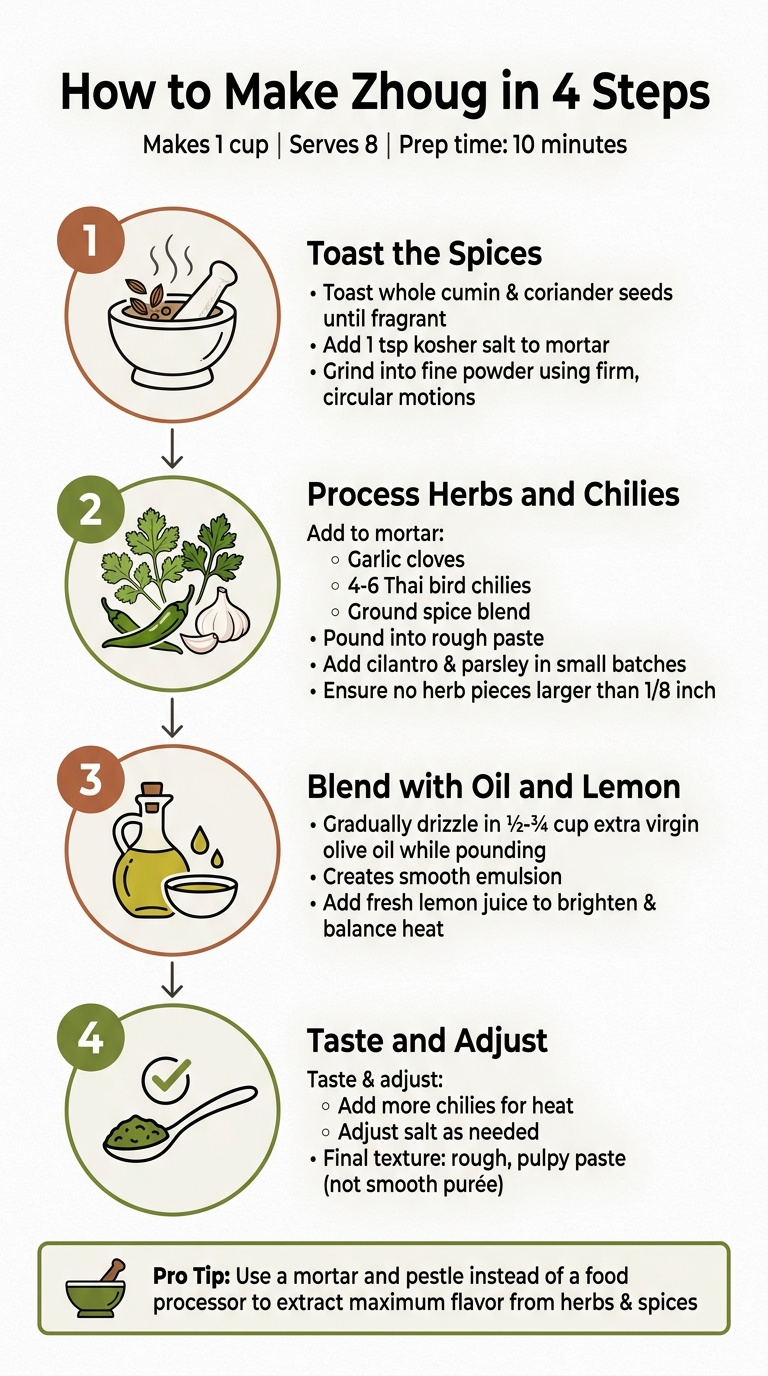
How to Make Zhoug: Step-by-Step Recipe Guide
Ready to whip up some zhoug? This flavorful condiment takes just about 10 minutes to prepare and makes roughly 1 cup, enough to serve 8 people. While a food processor can speed things up, using a mortar and pestle brings out deeper flavors. As J. Kenji López-Alt puts it:
"This tool [mortar and pestle] will actually extract more flavor from herbs and spices than a food processor or blender ever can, producing chile paste that's more aromatic, spoonful for spoonful."
Here’s the process: start with dry spices, then add aromatics like garlic and chilies, mix in fresh herbs, and finish with oil. Let’s break it down step by step.
Toast the Spices
For the best aroma, use whole cumin and coriander seeds. If cardamom is in the mix, remove the seeds from the green pods before toasting. Toast the spices until fragrant, then add a teaspoon of kosher salt to the mortar. The coarse salt helps grind the spices into a fine powder when you use firm, circular motions.
Process Herbs and Chilies
Next, move on to the herbs and chilies. Start by adding garlic, 4 to 6 Thai bird chilies, and your freshly ground spice blend to the mortar. Pound and twist until you form a rough paste. Then, add cilantro and parsley in small batches, ensuring no herb pieces are larger than 1/8 inch. Once everything is combined into a paste, it’s time to add the oil and lemon.
Blend with Oil and Lemon
Drizzle in olive oil gradually as you continue pounding, creating a smooth emulsion. A high-quality olive oil, like Big Horn Olive Oil's Estate Reserve Ultra Premium EVOO, works beautifully - it’s cold-pressed within hours of harvest for a rich, fresh flavor. Add fresh lemon juice to brighten the mix and balance the heat. Once everything is well blended, give it a taste.
Taste and Adjust Heat
Try your zhoug and tweak it as needed. If it’s not spicy enough, add more chilies, and don’t hesitate to adjust the salt. The final texture should be a rough, pulpy paste - not a silky smooth purée. Serve it up and enjoy!
Balancing Heat and Herbs
Now that you’ve nailed the basics of making zhoug, it’s time to perfect the balance between its fiery heat and fresh, herbaceous flavors.
The secret to great zhoug lies in harmonizing these two elements. Thai bird chiles bring a sharp, intense heat with a fresh undertone, while other peppers offer unique flavor profiles that can subtly shift the sauce’s character. For a traditional spice level, start with 4 to 6 fresh Thai bird chiles, adding them gradually until you hit the perfect heat for your palate.
Adjusting Spice Levels
When it comes to spice, a gradual approach works best. Begin with fewer chiles, tasting as you go. This way, you can increase the heat without overpowering the herbal brightness. If you’re using dried chiles de árbol, prep them first - remove the stems and seeds, then break them into smaller pieces. This gives you better control over the spice level while ensuring a smoother blend.
Herb Variations
A standard zhoug recipe calls for about 2 ounces of fresh herbs, which translates to roughly 2 loosely packed cups of a cilantro and parsley mix. A 1:1 ratio of cilantro to parsley creates a vibrant, balanced flavor similar to salsa verde. Want to tweak it? Add more parsley for a softer, earthier taste or increase the cilantro for a punchier, citrus-like zest. Don’t forget to include the fine stems - they add depth and enhance the sauce’s texture. Once you’ve nailed the herb balance, you’ll be ready to focus on the next essential element: high-quality olive oil.
Using Quality Olive Oil for Better Texture
The olive oil you choose plays a critical role in achieving the ideal zhoug texture. Slowly drizzle in extra virgin olive oil as you blend or pound the ingredients. This method helps create an emulsion, preventing the sauce from feeling greasy while ensuring the flavors meld seamlessly. Opt for premium extra virgin olive oil, such as Big Horn Olive Oil's Estate Reserve Ultra Premium EVOO, to elevate the sauce’s smoothness and cohesion. Typically, you’ll need about ½ to ¾ cup of oil for every 2 cups of herbs.
Storage and Serving Ideas
Once you've whipped up a batch of zhoug, storing it correctly is key to keeping its flavors vibrant.
Refrigeration and Shelf Life
To maintain the freshness of the herbs and chilies, transfer the zhoug into an airtight container and refrigerate it right away. Culinary expert J. Kenji López-Alt explains:
"Zhug can be served immediately or stored in an airtight container in the refrigerator for several weeks."
For the best taste, aim to use it within a week. If you’ve emulsified the olive oil correctly during preparation, the sauce should stay smooth and avoid separating into a greasy layer after chilling. Proper storage ensures your zhoug is always ready to elevate your meals.
Pairing with Yogurt, Hummus, and Meats
Zhoug is traditionally paired with Middle Eastern staples like falafel and sabich sandwiches - pita filled with eggplant, eggs, hummus, and tahini. But its uses go far beyond these dishes. Try drizzling it over grilled meats or fish, spooning it onto roasted vegetables, or stirring it into plain yogurt for a quick and flavorful dip. With its bold, spicy kick, zhoug brings a lively touch to dishes, much like chimichurri or salsa verde.
Conclusion
Making zhoug at home is both quick and satisfying. In just 10–15 minutes, you can whip up a bold, flavorful condiment that pairs beautifully with everything from grilled chicken to scrambled eggs. The key lies in balancing spicy chilies, fresh herbs, and high-quality olive oil, as outlined in this simple guide.
The olive oil you choose plays a big role in the final flavor and texture. Culinary consultant J. Kenji López-Alt highlights this perfectly:
"Drizzling in olive oil while pounding creates an emulsion that ensures the sauce won't taste greasy or bland".
Using a premium extra-virgin olive oil, like Big Horn Olive Oil's Ultra Premium Extra Virgin Olive Oil, can elevate the richness and smoothness of your zhoug.
Beyond ingredients, your method matters too. Whether you go for the traditional mortar and pestle to maximize flavor or a food processor for convenience, adding the oil gradually ensures a well-emulsified sauce. This careful step keeps the texture smooth and consistent, even after refrigeration.
Start with the basic recipe, tweak the spice level to your liking, and don’t hesitate to experiment with different herbs. Once you’ve made your first batch, you’ll have a versatile condiment ready to enhance meals for weeks when stored properly in an airtight container.
As López-Alt puts it:
"The final sauce is fresh and bright from the herbs, while also having an intensely spicy kick to it".
Get ready to enjoy a vibrant burst of flavor in every bite!
FAQs
Can I make zhoug without a mortar and pestle?
Yes, you can absolutely make zhoug without a mortar and pestle. While the traditional method does help bring out bold flavors and creates a smoother blend with olive oil, a food processor or blender is a great substitute. The texture might not be exactly the same, but the taste will still be fantastic!
How do I keep zhoug from turning bitter or separating?
To keep your zhoug from turning bitter or separating, focus on using the right techniques. Start by pounding the herbs and aromatics with a mortar and pestle. This method not only releases their full flavor but also helps create a smooth, cohesive mixture.
When adding olive oil, drizzle it in slowly as you continue to pound. This gradual incorporation prevents separation and keeps the flavors balanced. Be careful not to over-process the mixture or include ingredients that might destabilize it. The key is to strike the right balance between the herbs and oil for a well-blended, flavorful zhoug.
Can I freeze zhoug to store it longer?
Freezing zhoug is an option, though it might alter its texture and flavor a bit. To store it properly, transfer the sauce into an airtight container and freeze it for up to a few months. While the fresh, herbal texture may not stay exactly the same, freezing is a handy way to make zhoug last longer - just aim to use it within this timeframe for the best taste.