

Infusing Olive Oil Sous Vide: Temperature Checklist
Sous vide makes olive oil infusion faster, safer, and more precise than traditional methods. Instead of waiting weeks for room-temperature infusions, sous vide delivers flavorful oils in just 1 to 5 hours by maintaining a consistent temperature. Here's what you need to know:
- Temperature affects flavor: Lower ranges (130°F–135°F) keep flavors light, while higher settings (up to 185°F) bring out deeper, roasted notes.
- Use dried ingredients: Dried herbs, spices, or citrus are safer and reduce the risk of harmful bacteria like Clostridium botulinum.
- Essential tools: An immersion circulator, Mason jars or vacuum-seal bags, and sterilized bottles ensure a smooth process.
- Safety first: Sterilize jars, cool infused oil in an ice bath, and refrigerate oils with fresh ingredients for short-term use.
Sous vide is ideal for creating custom oils - from delicate basil infusions to bold garlic blends - by tailoring time and temperature to your desired flavor intensity.
Preparation and Safety Before You Begin
Picking the Right Olive Oil and Ingredients
The type of olive oil you choose sets the stage for the flavor of your infused oil. Extra virgin olive oil (EVOO) is a popular choice, thanks to its fruity and peppery profile, which pairs well with bold aromatics like chili flakes or garlic. For lighter flavors, such as rosemary or thyme, a milder olive oil is better to let the herbs shine without being overpowered. For example, Big Horn Olive Oil's Ultra Premium EVOO is cold-pressed close to harvest, offering higher polyphenol content and better flavor stability, which extends the shelf life of your infusion.
When it comes to aromatics, dried ingredients are safer than fresh. Dried herbs, chili flakes, and dehydrated citrus peel contain little to no moisture, reducing the risk of mold and bacterial contamination in the oil.
"The safest way for home cooks to prepare flavored or infused oils is to use properly dried herbs, garlic, or vegetables. Since dried ingredients have no water, C. bot bacteria will not grow." - Jason Bolton, Assistant Extension Professor and Food Safety Specialist, University of Maine Cooperative Extension
Once you've got your oil and aromatics, it's time to gather the necessary tools.
Setting Up Your Equipment
Having the right tools on hand makes the process smoother and safer. Here's what you'll need:
| Equipment | Purpose |
|---|---|
| Immersion circulator or water oven | Keeps the infusion at a controlled temperature |
| Large pot or sous vide container | Holds the water bath for heating |
| Heat-safe Mason jars or vacuum-seal bags | Contains the oil and aromatics during infusion |
| Fine-mesh sieve or cheesecloth | Filters out solids after infusion |
| Ice bath (bowl, ice, and water) | Quickly cools the oil after heating |
| Sterilized glass bottles | Provides airtight storage for the infused oil |
If you're using Mason jars, make sure the lids are only "finger tight." This allows steam to escape and prevents pressure buildup, which could crack the glass.
While having the right setup is important, following safety guidelines is non-negotiable.
Safety Precautions to Follow
The biggest safety concern with oil infusions is Clostridium botulinum, a bacterium that thrives in low-acid, oxygen-free environments. This microorganism is particularly dangerous because it doesn't produce any visible signs like smell or cloudiness.
To minimize the risk, always use dried aromatics. If you prefer fresh ingredients like garlic or herbs, treat the oil as a same-day product or refrigerate it and consume it within 7 days. For longer storage, fresh ingredients require acidification. Lower the oil's pH to 4.6 or below by adding vinegar with 4–5% acidity, and verify the pH with a meter. Also, sterilize your jars by boiling them for at least 10 minutes and letting them air-dry completely before use.
"It is very important when infusing oil that you use clean and dry herbs, because of a dangerous microorganism known as Clostridium botulinum." - Madeline, SousVide Supreme Blog
sbb-itb-4066b8e
Myers Lemon and Tarragon Infused Olive Oil using the Sous Vide Method
Temperature Ranges for Sous Vide Olive Oil Infusion
The temperature you choose for sous vide oil infusion doesn’t just affect how quickly flavors are extracted - it also shapes the flavor profile of the final product. As Jason Logsdon, a modernist cooking expert, explains:
"The temperature used affects the flavor profile of the infusion as different flavors are extracted more quickly from the flavoring agents at different temperatures."
Here’s a handy table summarizing the key temperature ranges, infusion times, and best ingredients for each flavor style:
| Flavor Style | Temperature Range | Time | Best Ingredients |
|---|---|---|---|
| Delicate / Fresh | 130°F–135°F | 1–3 hours | Basil, parsley, tender herbs |
| Medium Intensity | 140°F–150°F | 1–3 hours | Rosemary, citrus peels, red pepper flakes |
| Bold / Cooked | 160°F–185°F | 1–5 hours | Garlic, dried chiles, ginger, hard spices |
Let’s break down each range and the ingredients that shine at those temperatures.
Delicate Fresh Aromatics: 130°F–135°F
This is the go-to range for keeping flavors light and fresh. It’s perfect for tender herbs like basil and parsley, which are sensitive to heat and can develop bitterness if exposed to higher temperatures. Infusing at 131°F (55°C) for 3 hours gently extracts the essential oils while preserving the herbs’ bright, grassy character. This method is ideal for oils where a "just-picked" flavor is desired.
Medium Intensity Flavors: 140°F–150°F
For a balance between freshness and depth, this temperature range works wonders. Heartier aromatics like rosemary, citrus peels, and red pepper flakes thrive here. A good starting point is 145°F for 1 to 3 hours.
In January 2021, America’s Test Kitchen showcased this range with a Spicy Rosemary-Chile Oil recipe. They used a 150°F water bath for 2 to 3 hours, combining 1 cup of extra-virgin olive oil, 1/3 cup fresh rosemary, 1 tablespoon red pepper flakes, and 1 teaspoon smoked paprika. The result? A flavorful oil with herbal depth and a subtle kick of heat, while preserving the olive oil’s fruity undertones.
Bold and Cooked Flavors: 160°F–185°F
If you’re aiming for rich, fully developed flavors, this is the range to explore. Ingredients like roasted garlic, dried chiles, and robust spices release their full potential at these higher temperatures. Infusing at 160°F yields bold, cooked flavors in 1 to 3 hours, while 185°F can extend up to 5 hours for a deeper profile.
Keep in mind, though, that higher temperatures require careful monitoring. Tasting the oil periodically is crucial, as over-infusing can lead to bitterness. This range is perfect for creating oils with a warm, hearty character that pairs beautifully with roasted or grilled dishes.
Use these temperature guidelines as your foundation for crafting infused oils tailored to your desired flavor intensity. The next step? Following the precise steps outlined in our upcoming checklist.
Step-by-Step Temperature Checklist for Infusion
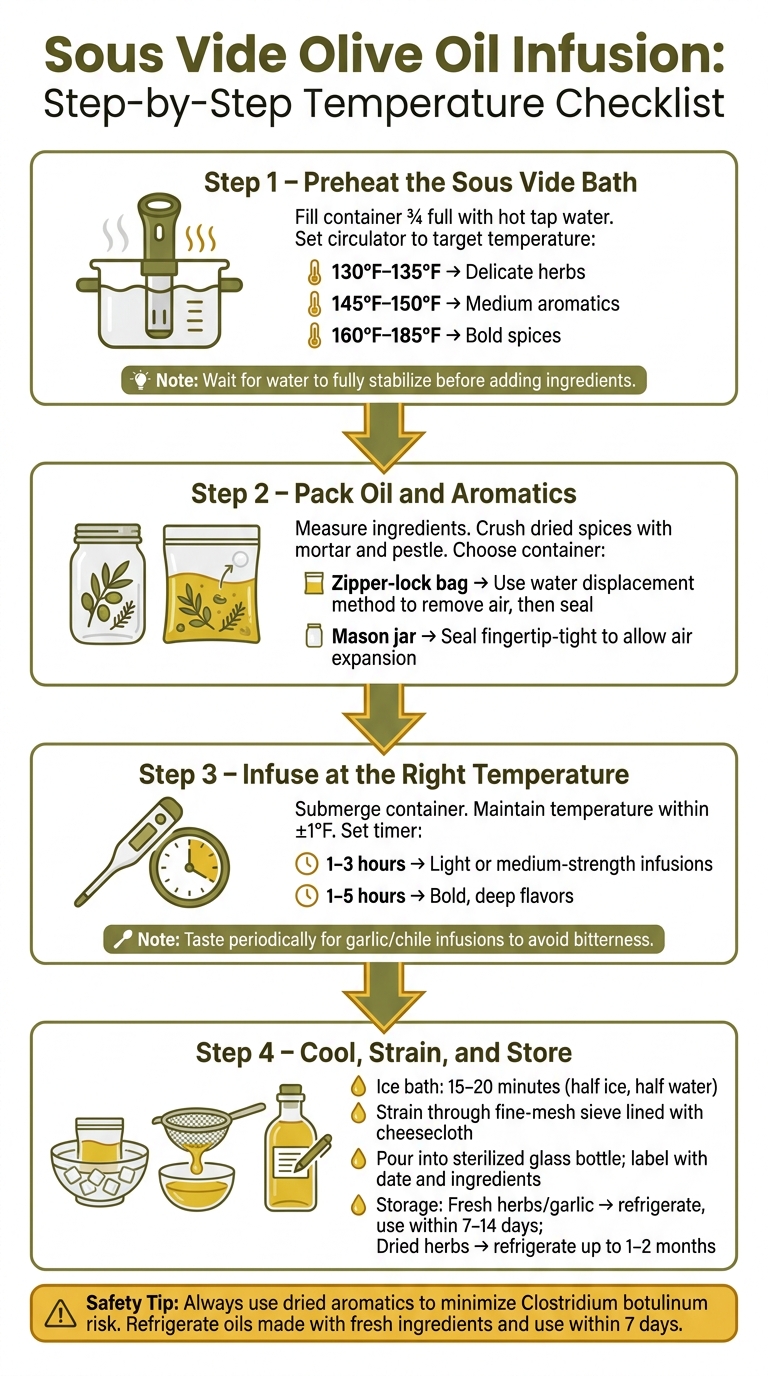
Sous Vide Olive Oil Infusion: Step-by-Step Temperature Checklist
Now that you’ve got a handle on the temperature ranges that suit your desired flavor profile, here’s a step-by-step guide to take you from preheating your sous vide bath to sealing your finished bottle.
Preheating the Sous Vide Bath
Start by filling your container about three-quarters full with hot tap water - this will help speed up the preheating process. Attach your immersion circulator securely to the side of the container and set it to the temperature you need:
- 130°F–135°F
- 145°F–150°F
- 160°F–185°F
Wait until the water reaches and stabilizes at your target temperature before adding any ingredients. Double-check that the water level is high enough to fully submerge your bag or jar but stays below the circulator's maximum fill line.
Packing the Oil and Aromatics
Once your sous vide bath is ready, carefully measure your ingredients. For dried spices, use a mortar and pestle to crush them - this helps release their flavors by breaking the cell structure. If you’re using fresh herbs, make sure they’re thoroughly washed and dried.
Choose between a zipper-lock bag or a Mason jar. Zipper-lock bags work great with the water displacement method: slowly lower the bag into the water until the air is pushed out, then seal it just before it’s fully submerged. On the other hand, Mason jars are naturally heavier and stay submerged easily, making them ideal for larger batches or when using ingredients that might puncture a bag. If you’re using a jar, seal it fingertip-tight to allow for slight air expansion during the process.
Infusing at the Right Temperature
Once the water bath has reached your desired temperature, carefully submerge your container. Set a timer based on the type of infusion you’re creating, and aim to keep the water temperature within ±1°F of your target:
- 1–3 hours for lighter or medium-strength infusions
- 1–5 hours for stronger, bolder flavors
For longer infusions, especially with ingredients like garlic or chiles, taste the oil periodically to ensure it doesn’t develop any bitterness. Once the infusion is complete, move on to cooling and straining immediately to preserve the flavors.
Cooling, Straining, and Storing the Infused Oil
When your timer goes off, transfer the bag or jar straight into an ice bath (a mix of half ice and half water) for 15–20 minutes. This step quickly cools the oil and helps lock in the aromatic compounds.
After cooling, strain the oil through a fine-mesh sieve lined with cheesecloth to remove any solid particles that could encourage bacterial growth. Pour the strained oil into a sterilized, dry glass bottle, ideally using a high-quality extra virgin olive oil as your base. Wipe the rim clean before sealing, and label the bottle with the infusion date, the ingredients used, and a suggested use-by date.
For oils made with fresh garlic or herbs, store them in the refrigerator and use them within 7–14 days. If you’re working with dried herbs or spices, the oil can last 1–2 months when refrigerated.
Fixing Common Infusion Problems
Even with precise temperature control, things can still go wrong during the infusion process. Here’s how to tackle some of the most common issues.
Weak or Flat Flavors
If your infused oil tastes bland, it might be due to a temperature that’s too low or an infusion time that’s too short. Try increasing the water bath temperature to 150°F–160°F and letting the infusion run for 2–3 hours. Alternatively, you can extend the infusion time if you’re working at lower temperatures. As Jason Logsdon, author and professional blogger, explains:
"The hotter the temperature is, the more deep and 'cooked' the flavors will be."
It’s also a good idea to check your equipment’s accuracy. Temperature variations of just ±10–15°F can make a big difference and may result in muted flavors. Another quick fix? Bruise your aromatics before infusing - this helps release more of their essential oils.
Harsh or Overcooked Flavors
If your oil tastes bitter or burnt, it’s likely a sign of too much heat or an overly long infusion time. For more delicate herbs, aim for a temperature range of 130°F–140°F. Researcher Artur Głuchowski highlights the impact of excessive heat:
"Long heat treatment under vacuum at higher temperatures causes a pronounced change in the aroma composition."
To fix this, lower the temperature by 10–15°F or reduce the infusion time by about an hour. Another tip: strain the oil immediately after it cools to prevent further extraction and avoid harsh flavors.
Oil Quality Issues
No infusion technique can save poor-quality oil. Start with a fresh, ultra-premium extra virgin olive oil (EVOO) for the best results. For instance, Big Horn Olive Oil's Ultra Premium EVOO provides a balanced and reliable base. Keep in mind that refrigerated oil may appear cloudy, but this will clear up at room temperature. However, if you notice gas bubbles, off odors, or unusual flavors, it’s time to discard the oil. For a clearer final product, strain the oil using a coffee filter.
Addressing these common problems will help ensure your infusion process delivers the flavors you’re aiming for.
Conclusion: Getting Your Sous Vide Olive Oil Infusion Right
Keeping the temperature steady is the secret to a perfect infusion. Sous vide makes this easy by maintaining a consistent water bath temperature - whether it’s 130°F for delicate herbs or 185°F for bolder, cooked flavors - ensuring reliable results every time without the danger of burning. Plus, it speeds up the process, allowing you to infuse flavors in just 1 to 3 hours. This precision creates the ideal base for standout flavors.
The oil you choose matters just as much as the method. Start with a fresh, high-quality extra virgin olive oil (EVOO) - like Big Horn Olive Oil's Estate Reserve - for a clean, rich foundation. Culinary expert Madeline Fiore from SousVide Supreme explains:
"A SousVide Supreme water oven is the perfect tool for infusions because it injects full flavor into the oil in just a few hours, as opposed to having to let the mixture sit for several days at room temperature or altering the flavor of the olive oil by heating too vigorously on a traditional stove-top."
Don’t forget safety. Always use dried herbs and garlic flakes to reduce the risk of botulism, cool your infused oil in an ice bath immediately after cooking, and store it in a sealed glass bottle in the refrigerator. When stored correctly, most dried herb infusions will last 1 to 2 months.
Once you’ve got the basics down, it’s time to get creative. Experiment with Big Horn Olive Oil's Picual or Coratina single-source EVOOs, each offering unique flavors that pair beautifully with ingredients like rosemary, chili, or citrus zest. Start small with test batches of about 1 cup - a low-risk way to discover exciting new flavor combinations before scaling up.
FAQs
What’s the best sous vide temp for my ingredients?
To infuse olive oil with Big Horn Olive Oil, maintain a temperature between 130°F and 140°F. Stick to 130°F for dried herbs, 135°F for dried spices, and 140°F for dried garlic. Be careful not to go over 140°F, as it can impact the oil's quality. Let the infusion process last anywhere from 1 to 4 hours within this temperature range to create flavorful results using Big Horn Ultra Premium Extra Virgin Olive Oils.
Can I safely use fresh garlic or herbs in infused oil?
Using fresh garlic or herbs in olive oil can lead to a low-acid, oxygen-free environment that allows harmful bacteria like Clostridium botulinum to thrive. The moisture in fresh ingredients increases the risk. If you choose to use fresh ingredients, it’s essential to refrigerate the oil and consume it within 2–7 days. For a safer and longer-lasting option, Big Horn Olive Oil suggests using fully dried herbs and spices. These contain little to no moisture, making them a much safer choice.
How can I make infused olive oil last longer?
To keep your infused Big Horn Olive Oil fresh for longer, opt for dried herbs rather than fresh ones. This reduces moisture and lowers the risk of contamination. Make sure all ingredients are completely dried before starting the infusion process. Once you've used the sous vide method, cool the oil quickly in an ice-water bath. Store it in a sterilized, dark glass bottle and keep it in a cool, dark area. For the best quality, refrigeration is recommended, allowing the oil to stay fresh for 1–2 months.