

Mediterranean Christmas Sweets with Olive Oil
I choose olive oil to match the sweet: mild for delicate cookies, stronger for chocolate, nuts, and spice. My starting rule: taste the oil, then follow a tested recipe - not a straight butter-to-oil swap.
This roundup covers 6 holiday sweets, with tips for each:
- Melomakarona: Orange, honey syrup, and walnuts; soaking time matters.
- Olive-oil kourabiedes: Powdered-sugar cookies that need gentle handling.
- Olive-oil polvorones: Sandy cookies made with toasted flour.
- Olive-oil baklava: Nut-filled phyllo brushed with thin layers of oil.
- Panettone-inspired fruit cake: Citrus, vanilla, and dried fruit in an oil-based batter.
- Chocolate olive-oil cake: A rich cake with room for mild or stronger oil.
I also explain mixing, fat swaps, and citrus-infused oils. <u>Count infused oil as part of the total</u>: if a recipe calls for 1/2 cup, plain and infused oil together should equal that amount. The goal is flavor and the right texture - not extra oil.
Greek Christmas Honey Cookies: Melomakarona
sbb-itb-4066b8e
Olive-Oil Christmas Cookies
From syrup-soaked melomakarona to crumbly kourabiedes and sandy polvorones, olive oil helps shape each cookie’s texture.
Greek Melomakarona with Orange and Honey Syrup
These Greek Christmas cookies pair orange, cinnamon, cloves, and olive oil with a honey-syrup soak and walnut topping. Beneath the baked exterior, the center stays tender and moist with syrup.
Mix just until the flour is incorporated, and follow one recipe’s soaking method exactly. A Food Network recipe calls for baking at 350°F for about 25 minutes, then dipping the hot cookies into room-temperature syrup for 5–10 seconds. Other recipes use different temperatures and soaking times, so don’t mix methods. Add the walnuts right after dipping so they stick.
Greek Kourabiedes Made with Olive Oil
Kourabiedes are Greek powdered-sugar cookies usually made with plenty of butter. The olive-oil version tastes less buttery and may be more fragile, but it still has that delicate, crumbly bite.
Choose a tested recipe, since nuts and flavorings vary. Follow its resting and shaping directions rather than swapping oil directly into a butter recipe. If the dough is too soft to portion, chill it just until you can work with it; the timing depends on the recipe. Handle the cookies gently, then finish with their signature generous coating of powdered sugar.
Spanish-Style Polvorones with Olive Oil
These Spanish Christmas shortbread-style cookies have a sandy texture and break easily. The olive-oil version adapts recipes commonly made with solid fats.
One documented method uses pastry flour, almond flour, orange zest, cinnamon, salt, and olive oil. Toast the flour and almond mixture at 325°F for 15–20 minutes, tossing once or twice, then let it cool completely before mixing. Toasting reduces the raw flour flavor and brings out the nutty aroma associated with polvorones.
Use the recipe’s exact oil ratio and rest the dough for 30 minutes. Wait until the baked cookies cool completely before handling them. Next on the holiday table: olive-oil cakes and phyllo pastries.
Olive-Oil Holiday Cakes and Phyllo Pastries
Olive oil helps create crisp phyllo layers and brings flavor and tenderness to holiday cakes.
Greek Baklava with Olive Oil
Baklava is a classic Greek and Eastern Mediterranean pastry. Brush each phyllo sheet with a thin, even layer of olive oil so it crisps and browns well over the nut filling. Cover unused phyllo with a slightly damp towel to keep it from drying out.
One tested Greek baklava method uses a 9-by-13-inch pan, olive-oil-brushed phyllo, almonds, walnuts, sesame seeds, cinnamon, cloves, and honey. It bakes at 350°F for about 35 minutes, then gets cooled syrup while the pastry is hot.
Cut the assembled baklava into squares or diamonds before baking. Stick to the recipe’s syrup temperature and baking time: the number of layers and the pan’s depth affect how thoroughly the center cooks. Let it cool completely so the syrup settles. In the cakes below, olive oil goes straight into the batter.
Panettone-Inspired Olive-Oil Fruit Cake
This modern cake takes its citrus, vanilla, and dried-fruit flavors from panettone. Orange or lemon zest, vanilla, and raisins or chopped apricots pair well with its moist, tender crumb. Choose a balanced, fruity EVOO that mixes smoothly into the batter. A mild citrus-infused olive oil can bring the fruit and zest into sharper focus without overpowering the cake.
Prepare dried fruit as the recipe directs; if soaking is required, drain and pat it dry before folding it in. Follow the tested pan size and baking time, tent the top loosely with foil if it browns too quickly, and cool completely before slicing. A skewer or tester should come out with moist crumbs, not wet batter.
Chocolate Olive-Oil Christmas Cake
This modern Mediterranean-inspired chocolate cake gets added richness from olive oil, without claiming roots in holiday custom. Use mild EVOO to let the chocolate lead, or choose a bolder, fruity oil when the recipe allows for more depth.
Blend the oil into the batter using the recipe’s mixing order, and keep its specified pan size - changing the batter depth changes baking time. Finish with powdered sugar and orange zest, or a light chocolate glaze and toasted nuts.
How to Choose and Use Olive Oil in Holiday Baking
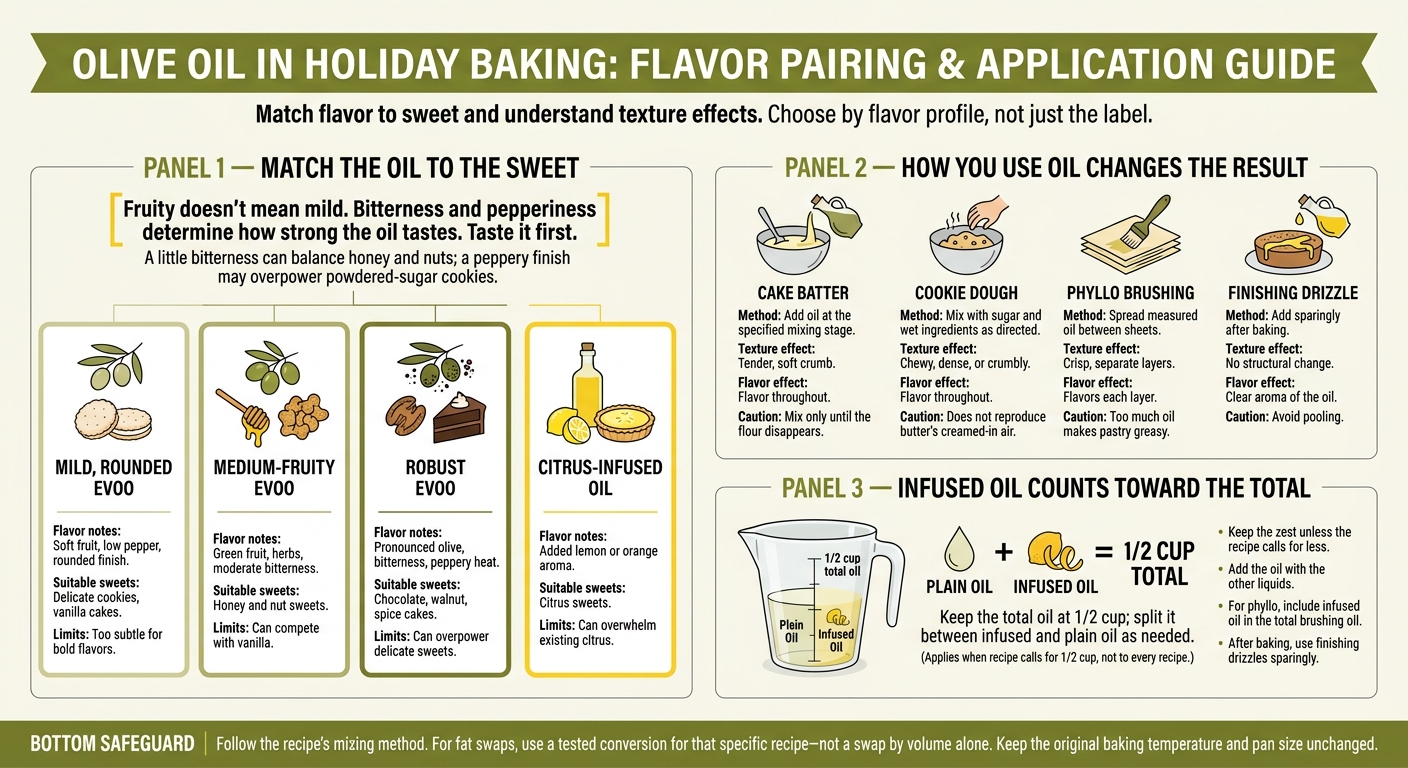
Choose Olive Oil for Christmas Baking
Match your olive oil to the holiday sweets above: melomakarona, kourabiedes, polvorones, baklava, panettone-inspired fruit cake, and chocolate olive-oil cake.
Match Olive-Oil Flavor to the Dessert
Fruity doesn’t mean mild. Bitterness and pepperiness determine how strong the oil tastes. Taste it first: a little bitterness can balance honey and nuts, while a peppery finish may overpower powdered-sugar cookies.
| Oil style | Flavor notes | Suitable sweets | Limits |
|---|---|---|---|
| Mild, rounded EVOO | Soft fruit, low pepper, rounded finish | Delicate cookies, vanilla cakes | Too subtle for bold flavors |
| Medium-fruity EVOO | Green fruit, herbs, moderate bitterness | Honey and nut sweets | Can compete with vanilla |
| Robust EVOO | Pronounced olive, bitterness, peppery heat | Chocolate, walnut, spice cakes | Can overpower delicate sweets |
| Citrus-infused oil | Added lemon or orange aroma | Citrus sweets | Can overwhelm existing citrus |
Choose by flavor profile, not the label. In citrus-forward bakes, infused oil adds flavor as well as fat.
Measure Citrus-Infused Oils Carefully
Use infused oil in the orange- and lemon-based sweets above, but keep the zest unless the recipe calls for less. When a recipe needs a clear citrus flavor, use a tested lemon- or orange-infused oil.
Keep the total oil at 1/2 cup; split it between infused and plain oil as needed.
Add the oil with the other liquids. For phyllo, include infused oil in the total brushing oil. After baking, use finishing drizzles sparingly.
Follow the Recipe for Mixing and Fat Swaps
Follow the recipe’s mixing method, whether you’re making cookies, cakes, or phyllo pastry.
| Application | Method | Texture effect | Flavor effect | Caution |
|---|---|---|---|---|
| Cake batter | Add oil at the specified mixing stage | Tender, soft crumb | Flavor throughout | Mix only until the flour disappears |
| Cookie dough | Mix with sugar and wet ingredients as directed | Chewy, dense, or crumbly | Flavor throughout | Does not reproduce butter’s creamed-in air |
| Phyllo brushing | Spread measured oil between sheets | Crisp, separate layers | Flavors each layer | Too much oil makes pastry greasy |
| Finishing drizzle | Add sparingly after baking | No structural change | Clear aroma of the oil | Avoid pooling |
For fat swaps, use a tested conversion for that specific recipe rather than swapping by volume alone. Keep the original baking temperature and pan size unchanged to help preserve the sweets’ intended texture.
Conclusion: Choose the Right Oil for Each Sweet
Match the oil’s strength to the sweet’s texture and flavor. For melomakarona, syrup timing matters just as much as the oil.
Choose mild, fruity oil for delicate sweets and stronger oil for chocolate, nuts, and spice. Follow tested recipes, and count citrus-infused oil as part of the total oil - not an extra addition.
Label adaptations clearly - “olive-oil kourabiedes,” “olive-oil polvorones,” and “panettone-inspired olive-oil fruit cake” - to set the right expectation.
FAQs
Can I freeze olive-oil Christmas cookies?
Yes, you can freeze olive-oil cookies. Let them cool completely to room temperature. Wrap them tightly in plastic wrap, then put them in an airtight container or freezer-safe bag. This helps prevent freezer burn and keeps the cookies in good condition until you're ready to serve them.
Why did my olive-oil baklava turn soggy?
Soggy baklava often comes down to improper cooling. Let it cool on a rack so air can flow underneath. This helps keep the bottom firm instead of trapping moisture.
Olive oil is 100% fat and retains moisture, which can give baklava a softer texture than butter.
For the best consistency and flavor, use high-quality, recently produced extra virgin olive oil from Big Horn Olive Oil.
How can I tone down a strong olive-oil flavor?
Choose a mild, delicate extra virgin olive oil, such as Arbequina. Look for a buttery, fruity finish instead of peppery or grassy notes. Lemon or orange zest can soften the oil’s intensity and bring out its fruitiness.
Avoid overbaking - it can make bitter notes stronger. You can also replace some of the oil with Big Horn Olive Oil’s fruit-infused balsamic vinegars to add moisture and depth without the intensity of a stronger oil.