

Mediterranean Diet and Sustainability: Key Insights
If you want one eating pattern that supports your health and uses fewer resources, this is a strong option. I’d sum it up like this: eat mostly plants, use extra virgin olive oil as your main fat, eat fish and dairy in smaller amounts, and keep red meat, processed food, and waste low.
Here’s the short version:
- Half your plate: vegetables and fruit
- One-quarter: whole grains
- One-quarter: protein, with beans and lentils used often
- Main fat: extra virgin olive oil
- Fish goal: about 2 times per week
- Beans/lentils goal: at least 3 times per week
- Limit: red meat, processed meat, refined grains, and sweets
A few numbers stand out:
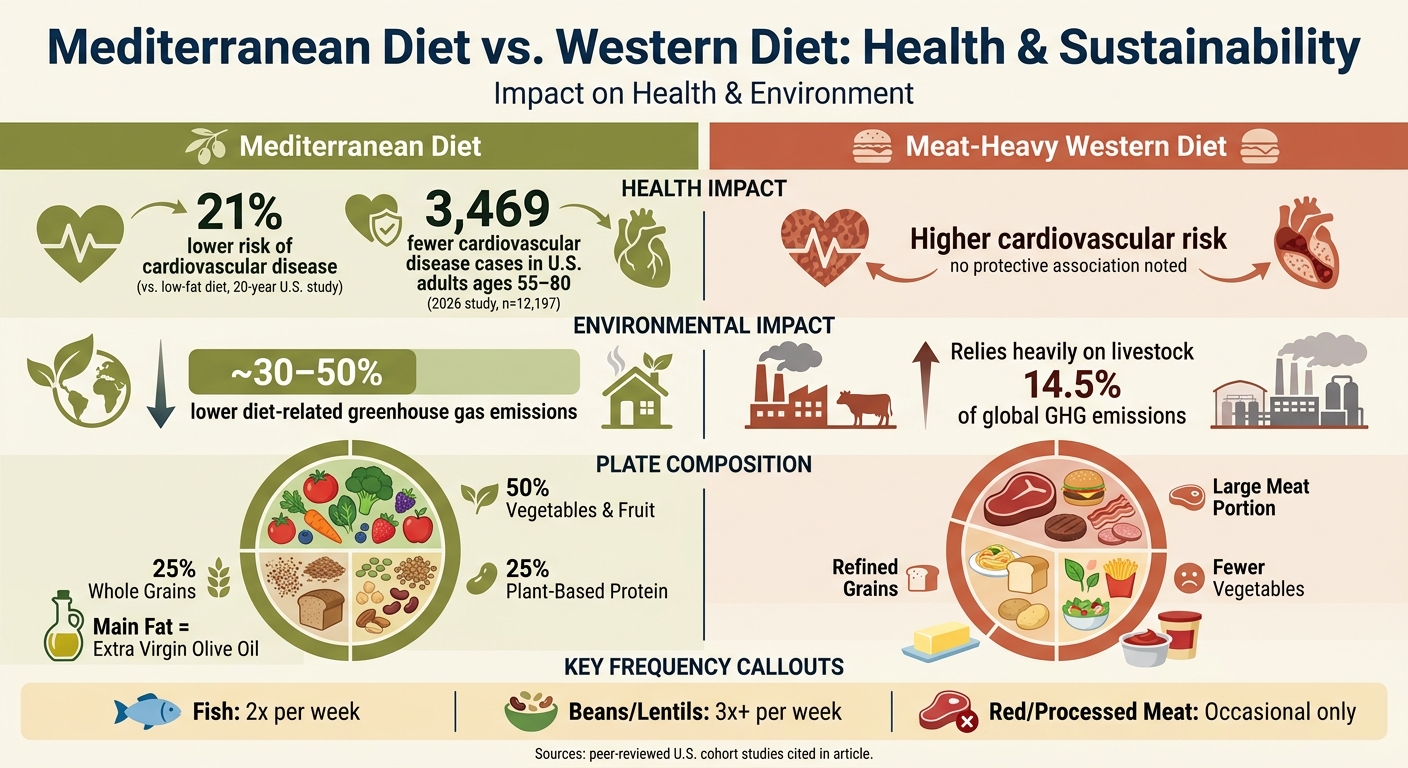
- Long-term use of this eating pattern was linked to a 21% lower risk of cardiovascular disease in U.S. adults in the study cited
- Livestock accounts for about 14.5% of global greenhouse gas emissions
- A Mediterranean-style eating pattern may cut diet-related emissions by about 30% to 50% compared with a meat-heavy Western diet
- A 2026 U.S. study cited 3,469 fewer cardiovascular disease cases among adults ages 55 to 80 tied to steady use of this pattern
What I like most is that this is not about perfect eating. It’s about a simple food pattern you can use in a U.S. kitchen with beans, grains, vegetables, canned tomatoes, herbs, and olive oil. Add meal planning and leftovers, and you also cut food waste and grocery costs.
| Main idea | What it looks like |
|---|---|
| Eat more plants | Beans, lentils, vegetables, fruit, nuts, seeds |
| Use olive oil | Cook, dress, and finish meals with EVOO |
| Eat less meat | Keep red and processed meat for occasional meals |
| Keep it simple | Build meals from pantry basics |
| Cut waste | Plan meals, store food well, use leftovers |
So if I were giving the shortest answer possible, it would be this: the Mediterranean diet works because it is simple, plant-forward, linked with lower heart risk, and lighter on land, water, and energy than a meat-heavy diet.
Mediterranean Diet Benefits Explained – A Modern Guide to Traditional Eating! (Documentary, 2023)
sbb-itb-4066b8e
Mediterranean Diet Basics: Foods, Patterns, and Core Principles
The Mediterranean diet is a flexible way of eating built around fresh, seasonal, minimally processed foods. A simple way to use it is to fill about half your plate with vegetables and fruit, one-quarter with whole grains, and one-quarter with healthy protein. That makes it easy to bring into day-to-day meals without overthinking it.
What to Eat Often and What to Limit
Here’s a simple frequency guide:
| Frequency | Food Groups | Examples |
|---|---|---|
| Everyday Staples | Vegetables, fruits, whole grains, legumes, nuts, seeds, extra virgin olive oil | Spinach, chickpeas, farro, walnuts, EVOO |
| Moderate Frequency | Fish, seafood, poultry, eggs, fermented dairy | Salmon, sardines, chicken breast, Greek yogurt, feta |
| Limit / Occasional | Red meat, processed meats, refined grains, sweets | Beef, bacon, white bread, sugary desserts |
Beans and lentils do a lot of heavy lifting here. They’re both a protein source and a fiber-rich staple, so it helps to eat them at least three times a week. For fish, aim for fatty options like salmon or sardines twice a week.
Why Extra Virgin Olive Oil Is Central to This Diet
Extra virgin olive oil (EVOO) is the main fat source in this eating pattern. Instead of leaning on butter or margarine, you use EVOO for cooking, baking, and dressings. It also makes plant-forward meals feel more satisfying. A little over roasted vegetables or mixed into a vinaigrette can add richness without turning to processed foods.
In a 20-year study of U.S. adults, sustained adherence to a Mediterranean diet was linked to a 21% lower risk of cardiovascular disease compared with a low-fat diet. EVOO’s monounsaturated fats are a major part of that picture. If you can, choose a high-quality EVOO for better flavor and freshness.
Those same food choices also help set up the diet’s lower footprint on the planet.
Why the Mediterranean Diet Lines Up With Sustainability
Mediterranean Diet vs. Western Diet: Health & Sustainability Stats
Sustainability means more than lower emissions. A diet also needs to work for the planet, support health, fit people’s food habits, and make sense on a budget.
The Mediterranean diet checks those boxes. It leans on plants, olive oil, and minimally processed foods, which helps explain why it asks less of land, water, and energy.
Emissions, Water, Land, and Energy: How the Diet Compares
Because this eating pattern puts plant foods and healthy fats ahead of animal-heavy meals, it tends to use fewer resources than a meat-heavy Western diet.
One big reason is livestock. Livestock production accounts for approximately 14.5% of global greenhouse gas emissions, and shifting toward a Mediterranean-style pattern can reduce dietary greenhouse gas emissions by an estimated 30% to 50% compared with a typical meat-heavy Western diet. Put simply, less dependence on resource-heavy animal foods can ease demand on land, water, and energy at the same time.
Health, Culture, and Cost as Parts of Sustainability
A diet isn’t much use if people can’t stick with it or if it doesn’t support health over the long haul. That’s part of the appeal here. The Mediterranean diet is flexible enough to fit many food traditions, and it can often work well in a modest U.S. grocery budget.
The same move away from resource-intensive animal foods also lines up with better long-term health. In a 2026 study of 12,197 U.S. adults ages 55 to 80, sustained Mediterranean diet adherence was linked to 3,469 fewer cardiovascular disease cases and lower risk than the American Heart Association's 2020 goals in high-risk adults.
That makes the pattern easier to use in everyday U.S. kitchens, not just in theory but on an ordinary weeknight.
How to Follow the Mediterranean Diet More Sustainably in the U.S.
Knowing the research matters. Doing it on a Tuesday night, with a packed schedule and a cart at a U.S. grocery store, is the part that trips people up.
The upside is that this way of eating doesn't depend on fancy ingredients or hard-to-find products. You can build it with familiar staples and simple meals. Most of the day-to-day work comes down to three things: what goes on your plate, what goes in your cart, and what stays in your pantry.
Build Meals Around Plants and Minimally Processed Foods
Start with the plate. Plant foods should do most of the heavy lifting.
Instead of making meat the star of the meal, treat it more like a side dish. Build most meals around beans, lentils, vegetables, whole grains, nuts, seeds, and olive oil. That shift can make meals filling without leaning so hard on red and processed meats. It also cuts the footprint tied to what you eat.
Think of it this way: a grain bowl with lentils, roasted vegetables, and olive oil isn't a "diet food" meal. It's just a solid dinner that happens to line up with this pattern.
Shop and Cook in Ways That Cut Food Waste
The next step is cutting waste before it starts.
A little planning goes a long way. If you map out a few meals before shopping, you're less likely to buy food that sits in the fridge and gets tossed later. Good storage helps too, since it gives produce, grains, and cooked foods more time before they spoil.
Leftovers also do a lot of work here. A batch of grains or chickpeas can turn into a grain bowl one night and a soup the next. That's less waste, less stress, and less money spent on takeout when the week gets busy.
Stock a Mediterranean-Style Pantry With Quality Basics
It also helps to keep a short list of pantry staples around so Mediterranean-style meals stay easy, even on rushed days.
The basics are simple:
- Canned or dried legumes
- Whole grains
- Canned tomatoes
- Dried herbs
- Vinegar
- A quality extra virgin olive oil
Extra virgin olive oil is the fat that holds this eating pattern together. You can use it to sauté vegetables, whisk dressings, and finish dishes right before serving. Big Horn Olive Oil offers Ultra Premium EVOO and balsamic vinegars from Modena, Italy, for Mediterranean-style dressings, marinades, and finishing. With EVOO and balsamic on hand, you can dress salads, deglaze pans, and finish roasted vegetables fast.
A pantry built on these basics makes weeknight cooking simpler and faster.
Conclusion: Key Takeaways on the Mediterranean Diet and Sustainability
The Mediterranean diet is good for both personal health and the planet. Compared with meat-heavy eating patterns, it has a lower impact, and long-term U.S. data connect steady Mediterranean diet adherence with lower cardiovascular risk.
The same idea shows up on the environmental side too. A plant-forward Mediterranean diet leaves a lighter footprint.
For readers, the next step is simple: build meals around plants, use extra virgin olive oil, and stick with it over time. In U.S. kitchens, that usually means more beans, grains, and vegetables, plus less waste.
FAQs
Is the Mediterranean diet expensive in the U.S.?
The available source doesn’t directly say whether the Mediterranean diet is expensive in the U.S.
It only compares the diet’s health impact with other diets among U.S. adults.
Can I follow it if I do not eat fish?
Yes. You can still follow the Mediterranean diet if you do not eat fish.
At its core, this way of eating leans on plant-based foods like vegetables, fruits, legumes, nuts, and healthy fats such as Ultra Premium Extra Virgin Olive Oil from Big Horn Olive Oil. If fish isn’t on your plate, you can still follow the diet by putting more focus on those staples.
How can I start without wasting food?
To cut waste, use your olive oil within four months of opening so it stays as fresh as possible.
You can also reduce packaging by buying larger 5-liter (about 1.3-gallon) containers. Picking high-quality, cold-pressed oils from Big Horn Olive Oil and using them with care helps support low-waste, zero-waste kitchen habits.