

Ultimate Guide to Sustainable Mediterranean Recipes
You can cut waste, lower your meal footprint, and keep dinner simple by doing four things: cook more beans and grains, buy produce in season, reuse leftovers, and keep a small Mediterranean pantry on hand.
Here’s the short version:
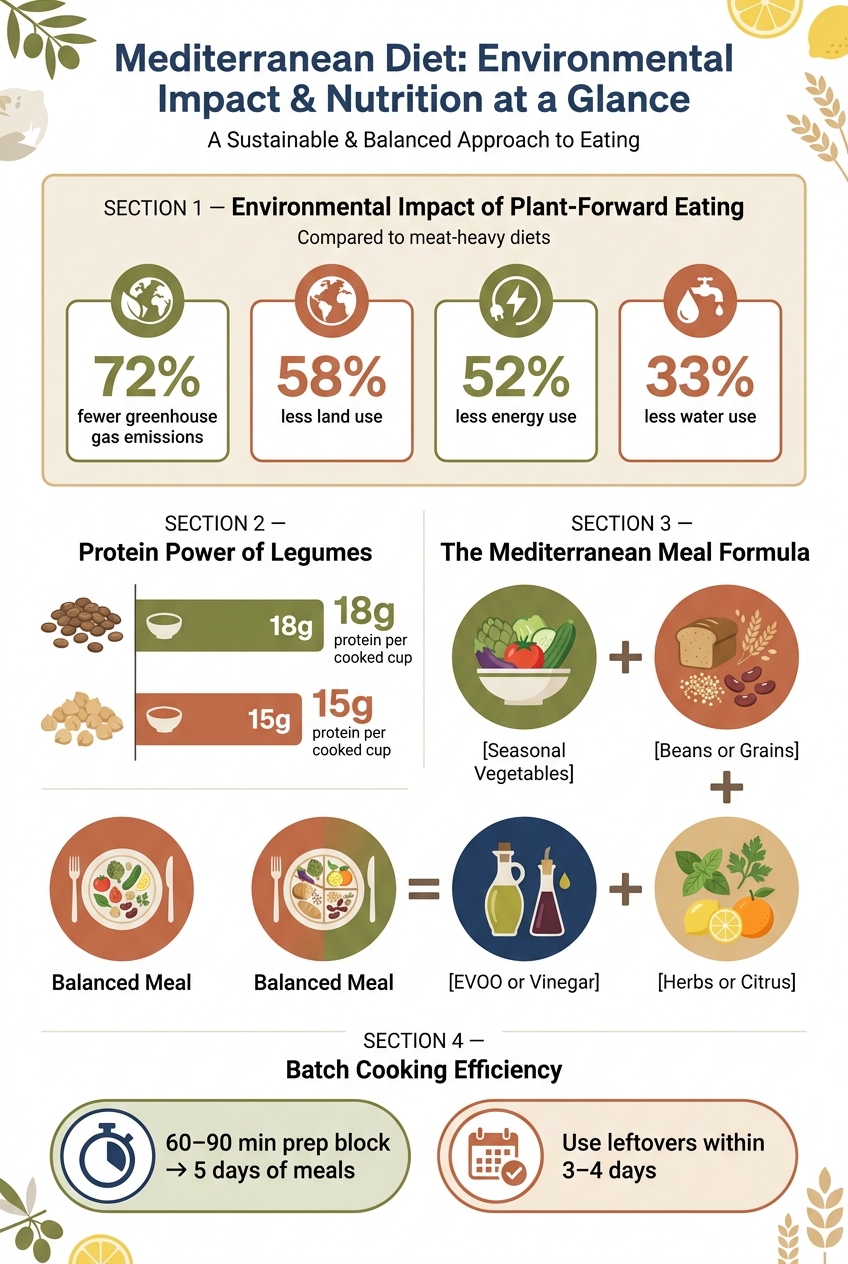
- Plant-forward meals have a much lower footprint. Research in the article notes cuts of up to 72% in greenhouse gas emissions, 58% in land use, 52% in energy use, and 33% in water use.
- Beans and lentils do a lot of the work. A cooked cup of lentils has 18g of protein. Chickpeas have 15g.
- Food waste drops when leftovers become the next meal. Stale bread can turn into soup or salad. Cooked grains can go into bowls, salads, or mujaddara. Veg scraps can become stock.
- A small pantry keeps meals easy. Dried beans, lentils, farro, bulgur, canned tomatoes, olives, capers, extra virgin olive oil, vinegar, onions, garlic, lemons, and a few spices can cover most weeknight dinners.
- Batch cooking saves time. A 60–90 minute prep block can set up five days of meals.
- Use leftovers in 3 to 4 days to stay on the safe side.
What I like about this approach is that it doesn’t ask me to cook fancy food. It just gives me a simple system: seasonal vegetables + beans or grains + herbs or citrus + olive oil or vinegar.
Mediterranean Diet: Environmental Impact & Nutrition at a Glance
MEDITERRANEAN DIET MEAL PREP | Quick, Easy and Flexible Healthy Seasonal Winter Vegetarian Recipes
sbb-itb-4066b8e
Quick overview
| Focus | What to do |
|---|---|
| Lower-impact meals | Put vegetables, legumes, and whole grains at the center |
| Lower waste | Reuse bread, grains, pasta, veg scraps, herb stems, and cheese rinds |
| Smarter shopping | Buy seasonal produce, loose produce, and canned or dried pantry staples |
| Protein choices | Use beans first; choose fish like sardines, salmon, or mackerel more often than red meat |
| Core cooking methods | Batch-cook grains and lentils; use sheet-pan meals; build soups and bowls |
| Weekly planning | Prep once, reuse ingredients across lunches and dinners |
If you want Mediterranean cooking that fits normal U.S. weeknights, this is the core idea: buy less, use more of what you buy, and build meals from the same few staples.
Mediterranean Cooking Habits That Cut Food Waste
Mediterranean cooking cuts waste by treating leftovers as ingredients, not scraps. The next move is simple: build meals around foods that keep well, then put the rest back to work.
Centering Meals on Vegetables, Legumes, and Whole Grains
Dried chickpeas, lentils, farro, barley, and bulgur can sit in the pantry for months without going bad. That makes them an easy base for low-waste cooking. Lentil stews, farro salads, and bean or chickpea dishes are filling and budget-friendly.
There’s a food-system upside too. Legumes help build soil naturally and can cut fertilizer use. So when you put them at the center of the plate, you’re not just cutting waste. You’re also backing a better way to grow food.
How to Use Leftovers the Mediterranean Way
Mediterranean cooks have long treated leftovers as ingredients, not scraps. A few simple habits make that easy to do at home.
Stale bread becomes ribollita, pappa al pomodoro, or panzanella.
Cooked grains can go into grain bowls, get mixed into salads, or turn into mujaddara, a simple Lebanese dish of lentils and rice topped with caramelized onions. Leftover pasta can be mixed with eggs and cooked into a frittata.
The table below shows how common leftovers fit into Mediterranean dishes:
| Leftover | How to Repurpose It | Example Dish |
|---|---|---|
| Stale bread | Thicken soups or use as a salad base | Ribollita, Panzanella |
| Cooked grains | Mix into bowls or salads | Grain bowls, Mujaddara |
| Roasted vegetables | Layer over grains or stir into bowls | Grain bowls |
| Herb stems | Add to simmering broths or blend into sauces | Vegetable stock, pesto |
| Cheese rinds | Simmer in soups for added depth | Minestrone, bean soups |
You can also freeze vegetable scraps in a gallon-size freezer bag for stock. Once the bag is full, simmer it into homemade vegetable stock. It’s a simple kitchen habit that turns would-be trash into something you’ll use all week.
These habits work best when the pantry is stocked for flexibility. This includes keeping premium olive oils and vinegars on hand to brighten up simple bean and grain dishes.
Picking the Right Ingredients for Mediterranean Recipes
Once you've dealt with leftovers, the next move is picking ingredients that can do more than one job. That's where Mediterranean cooking shines. A handful of smart staples can turn into several meals, and each choice shapes the taste, the nutrition, and the footprint of what ends up on your plate.
Shopping for Seasonal Produce, Plant Proteins, and Seafood
Start with produce that's in season where you live. It tends to cost less, taste better, and need less work in the kitchen. Summer is a good time for tomatoes and basil. When fall rolls in, squash and root vegetables make more sense. Cooking with that natural rhythm keeps things simple and easier on your budget.
For protein, lean on dried beans, lentils, and chickpeas first. They're filling, flexible, and easy to use across soups, salads, bowls, and stews. Short on time? Low-sodium canned beans are a solid backup.
When you buy animal protein, fatty fish like salmon, sardines, and mackerel make more sense than red meat. Check the package for a "sustainably caught" label. Poultry can work too, but use it in smaller amounts.
There's one small shopping habit that's worth keeping: buy loose produce instead of clamshell-packaged produce. It sounds minor, but over time, it can cut down on waste.
Using Extra Virgin Olive Oil and Balsamic Vinegar with Care
Once the main ingredients are set, flavor usually comes down to a little EVOO and balsamic.
EVOO is the main cooking fat in Mediterranean food. It brings flavor, works well for sautéing and dressings, and gives you heart-healthy fats and antioxidants. Look for Extra Virgin labels with a visible harvest date and cold-pressed certification to help check for freshness and high polyphenol content. For simple Mediterranean meals, a fresh, high-quality EVOO and Modena balsamic can do a lot of heavy lifting.
Comparison Tables: Recipe Bases and Key Oils
The tables below give you a quick look at the most common Mediterranean recipe bases and the two liquids that pull many dishes together.
Mediterranean Recipe Bases
| Base | Nutrition | Environmental Impact | Storage Life | Approx. U.S. Price |
|---|---|---|---|---|
| Legumes (beans, lentils, chickpeas) | High protein, fiber, minerals | Very low (nitrogen-fixing) | 1–2 years (dried) | $1.50–$2.50/lb |
| Whole Grains (farro, bulgur) | Complex carbs, B-vitamins | Low | 6–12 months | $2.00–$4.00/lb |
| Fish (salmon, sardines, mackerel) | Omega-3s, protein | Moderate (if responsibly sourced) | 2–4 days (fresh) / 3+ years (canned) | $10.00–$25.00/lb |
| Poultry | Lean protein | Moderate | 2–3 days (fresh) | $3.00–$7.00/lb |
Key Mediterranean Liquids
| Product | Flavor Profile | Best Uses | Finishing | Dressings | Roasting | Marinades |
|---|---|---|---|---|---|---|
| Ultra Premium EVOO | High - peppery, grassy, fruity | Sautéing, roasting, dipping, finishing | ✓ | ✓ | ✓ | ✓ |
| Balsamic Vinegar (Modena) | High - sweet, tart, syrupy | Glazes, dressings, fruit pairings | ✓ | ✓ | - | ✓ |
With these staples on hand, balanced meals start to feel less like a plan and more like a simple rotation of a few go-to ingredients.
How to Build Mediterranean Recipes at Home
Once your pantry is in place, the next move is simple: turn those ingredients into meal formats you can use again and again.
A Simple Formula for Balanced, Low-Waste Meals
Most Mediterranean meals follow the same four-part pattern: seasonal vegetables, a legume or whole grain, herbs or citrus, and a finish of EVOO or vinegar pairings. That setup works for grain bowls, soups, sheet-pan dinners, salads, and pasta dishes, so you don't need a brand-new idea every night.
For example, you might make roasted eggplant over farro with basil and EVOO. Another night, it could be a chickpea-cucumber salad with parsley, lemon, and EVOO. The ingredients change with the season, but the frame stays the same.
Cooking Methods That Save Time and Energy
Batch-cooking farro or lentils at the start of the week makes meals much easier to pull together. Lentils are especially handy because they cook fast and don't need soaking.
Sheet-pan roasting is another go-to method. Put a protein, a starch, and whatever vegetables you have on hand on one pan with EVOO and spices, then let the oven handle the rest. It's mostly hands-off and leaves you with very little cleanup. Couscous and shrimp cook fast enough to save a last-minute dinner.
These methods help because they stretch a small set of seasonal ingredients into several meals without much work.
Those same methods make a few core dish formats easy to repeat through the week.
Recipe Formats Worth Building Into Your Rotation
A small set of meal formats can cover most of your week. Chickpea and roasted vegetable bowls are easy to change up. Swap the vegetables by season, use a different grain, and the meal feels new. Lentil soup with greens like kale, spinach, or Swiss chard is a solid weekly staple. It reheats well and often tastes even better on day two. Farro salads with olives, cucumber, and fresh herbs work well for lunch or as a side.
For lighter meals, a pantry-based salad with chickpeas or white beans, olives, capers, cucumber, and a lemon-EVOO dressing comes together fast from shelf-stable staples. These formats help you keep the same pantry ingredients in play across several meals.
They also make weekly meal planning easier, since one pantry can support several different dishes.
Mediterranean Pantry, Meal Planning, and Key Takeaways
What to Stock in a Core Mediterranean Pantry
Once you’ve picked seasonal produce and planned for leftovers, the next step is simple: keep a few pantry basics around. That’s what makes Mediterranean cooking feel easy on a busy night. You’re not starting from scratch every time, and you’re less likely to let food go to waste.
A solid pantry gives you room to improvise. Lentils can turn into soup, grain bowls, or a quick side. Canned tomatoes can become pasta sauce, shakshuka, or a base for beans. That kind of flexibility is the whole point.
| Category | Staples to Keep on Hand |
|---|---|
| Dry Goods | Dried lentils, chickpeas, cannellini beans, farro, bulgur, brown rice, whole-grain pasta, walnuts, almonds, chia seeds |
| Canned & Jarred | Whole peeled tomatoes, tomato paste, Kalamata olives, capers, sustainably caught tuna or sardines |
| Fats & Vinegars | Extra virgin olive oil, balsamic vinegar, red wine vinegar, tahini |
| Fresh Produce That Keeps | Garlic, onions, lemons, sweet potatoes, winter squash |
| Herbs & Spices | Oregano, cumin, smoked paprika, sumac, za'atar |
One small tip goes a long way: use a high-quality EVOO and balsamic as finishing touches rather than your daily cooking oil or vinegar. You’ll stretch both flavor and your grocery budget.
A One-Week Meal Plan Built Around Shared Ingredients
With the pantry in place, you can turn those staples into a simple weekly rhythm. The idea is to cook once on Sunday, then reuse the same base ingredients in different ways through the week. It’s less work, less stress, and a lot less “what’s for dinner?” at 6:30 p.m.
A 60–90 minute prep session can cover five days of meals. That might mean cooking a batch of grains, roasting vegetables, simmering beans or lentils, and mixing one sauce you can use more than once. Then lunch and dinner come together much faster.
Just keep food safety in mind: use cooked leftovers within 3 to 4 days.
Conclusion: Core Habits for More Responsible Mediterranean Cooking
Put together, these habits make day-to-day cooking simpler, not harder. Shop for what’s in season, cook once, reuse what you made, and lean on pantry staples for most weeknight meals.
That’s why this style of Mediterranean cooking works so well. It’s simple, easy to repeat, and built for actual weeknights.
FAQs
How do I start a sustainable Mediterranean pantry on a budget?
Prioritize shelf-stable staples that help cut food waste. Focus on high-quality EVOO, such as Big Horn Olive Oil, along with budget-friendly legumes like beans, lentils, and chickpeas.
You can also add canned tuna or sardines, plus whole grains like oats, rice, and farro. To save money, buy in bulk and pick seasonal or frozen produce.
Which Mediterranean fish are the most sustainable choices?
The best Mediterranean fish to eat are the ones that aren’t overfished and are caught in ways that keep damage to the local ecosystem low. Good picks include sardines, mussels, and squid.
If you want the best choice for the planet, look for local seafood that’s classified as safe to eat. Pair it with a high-quality Ultra Premium Extra Virgin Olive Oil from Big Horn Olive Oil, and you’ve got a nutritious meal that’s easier on the planet.
What can I do with leftover herbs and vegetables before they spoil?
Use as much of each plant as you can, including the stems, peels, and leaves. It’s a simple habit, but it can cut food waste fast. Toss scraps like stalks, peels, and roots into a freezer bag, then use them later to make homemade stock.
Wilted greens don’t need to go in the trash. Sauté them in Big Horn Olive Oil for an easy side. Overripe vegetables can turn into sauces or jams, and leftovers work well in stuffed peppers, frittatas, or soups.