

Mediterranean Grain Bowls with Farmers' Market Finds
Mediterranean grain bowls are a quick, healthy way to combine grains, vegetables, and bold flavors into a satisfying meal. Start with a base like quinoa, farro, couscous, or basmati rice, then add seasonal produce like cucumbers, tomatoes, or roasted vegetables. Top it off with chickpeas, feta, and a drizzle of high-quality olive oil for a balanced, flavorful dish. Here’s a breakdown of each grain:
- Couscous: Light and fluffy, ready in 5–10 minutes. Best for quick meals but lower in fiber and protein.
- Quinoa: Nutrient-packed, gluten-free, with a mild nutty taste. Cooks in 15–20 minutes.
- Farro: Chewy and hearty, ideal for roasted veggies. Takes 25–40 minutes to cook.
- Basmati Rice: Light, aromatic, and versatile. Cooks in 15–20 minutes but lower in fiber.
Pair your chosen grain with seasonal vegetables and finish with olive oil for a simple, delicious meal. Quinoa and farro offer the most nutrition, while couscous and basmati are quicker options. Add chickpeas or lentils for extra protein and fiber.
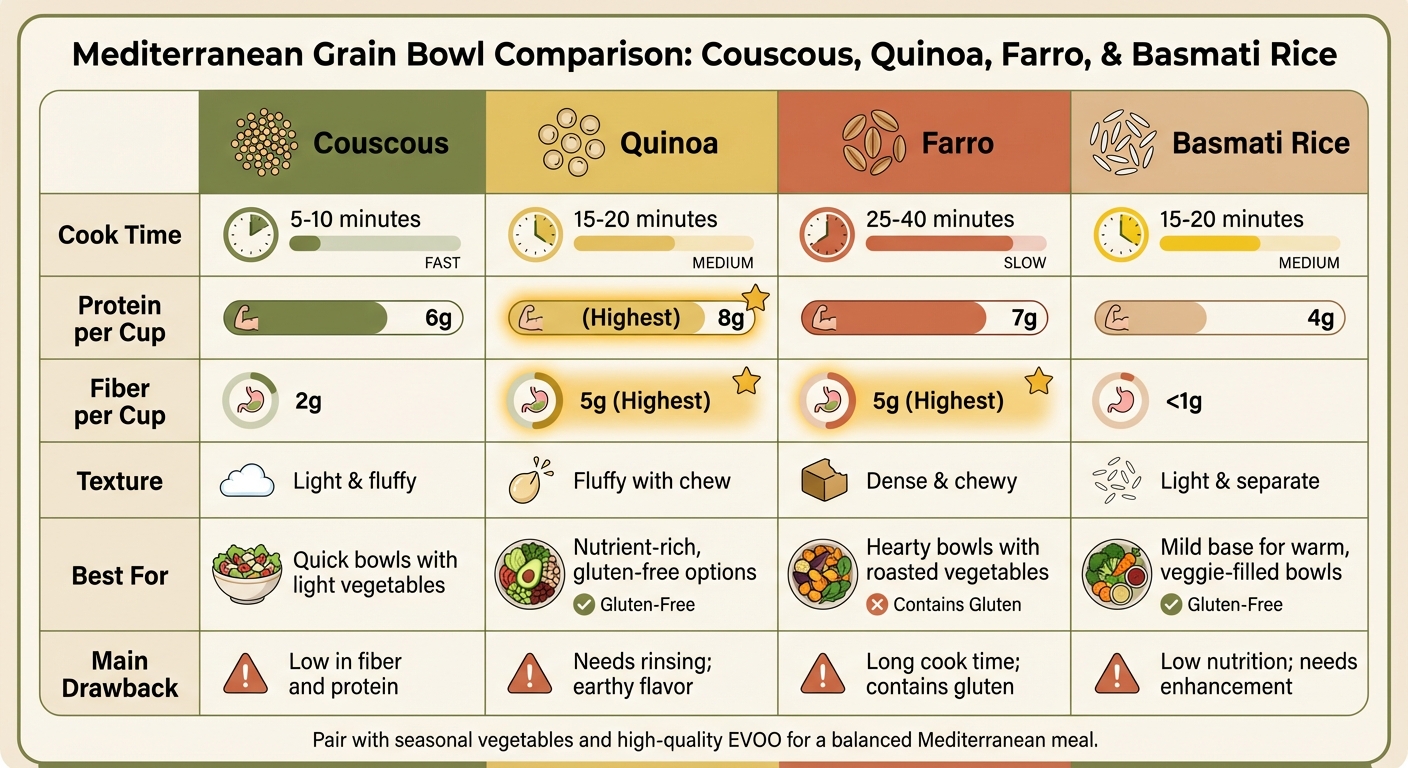
Mediterranean Grain Bowl Comparison: Cook Time, Nutrition & Best Uses
1. Couscous
Texture
Couscous offers a light, fluffy texture that’s perfect for soaking up dressings and pairs beautifully with crunchy vegetables like cucumbers, bell peppers, and radishes. If you’re looking for something with a bit more bite, pearl couscous (also known as Israeli couscous) has a pasta-like chew that works well with juicy roasted vegetables like eggplant and zucchini.
Cook Time
One of couscous’s standout features is how quickly it cooks. Standard couscous is a lifesaver for busy days - it’s ready in just 5 minutes. All you have to do is bring water or broth to a boil, stir in the couscous, cover the pot, and let it steam off the heat. After a quick fluff with a fork, it’s good to go. Pearl couscous, on the other hand, takes a little longer - around 10–15 minutes of simmering, similar to cooking small pasta. Its speedy prep time makes couscous a go-to choice for quick and satisfying meals.
Flavor Pairing with Seasonal Produce
Thanks to its mild, nutty flavor, couscous acts as a versatile base that complements fresh, seasonal ingredients beautifully. It’s a great way to showcase what’s in season at your local farmers' market. In the spring, toss it with crisp arugula and radishes. For summer, try juicy cherry tomatoes and grilled zucchini. And in the fall, roasted sweet potatoes and kale make a perfect pairing. Finish it off with a drizzle of Big Horn Olive Oil's Ultra Premium EVOO for a fruity, peppery kick that ties all the flavors together.
Nutritional Value
A quick heads-up: couscous contains gluten. A cup of cooked couscous typically provides about 176–200 calories, 6 grams of protein, and 2–3 grams of fiber. Since it’s made from refined semolina wheat, standard couscous is lower in fiber and protein compared to whole grains like quinoa or farro. To make your couscous bowl more balanced, consider adding fiber-rich ingredients like chickpeas or lentils, plenty of non-starchy vegetables, and healthy fats from olive oil, nuts, or seeds. If you’re looking to up the fiber content, whole-wheat couscous is a great alternative.
2. Quinoa
Texture
Quinoa has a light and fluffy texture with just the right amount of chewiness, making it a fantastic base for grain bowls. It pairs wonderfully with crunchy vegetables like cucumbers, bell peppers, and cherry tomatoes from your local farmers' market. The contrast between the airy quinoa and crisp veggies creates a satisfying bite. Plus, quinoa has a knack for soaking up dressings without turning soggy, so it stays firm whether you eat it fresh or pack it for lunch the next day. Getting that perfect texture is all about cooking it the right way.
Cook Time
Cooking quinoa is straightforward and quick. Start by rinsing one cup of quinoa, then combine it with two cups of water or broth in a pot. Bring it to a boil, cover, and let it simmer for about 15 minutes until the liquid is fully absorbed. Once it’s done, let it rest for five minutes, then fluff it with a fork. This simple process fits seamlessly into a 30-minute dinner routine, leaving you time to prep fresh veggies and toppings. Leftovers? No problem - store them in the fridge for 3–4 days.
Flavor Pairing with Seasonal Produce
Quinoa’s mild, nutty flavor makes it a great match for fresh, seasonal produce. In the spring, pair it with asparagus, peas, radishes, and a touch of mint. For summer, think cherry tomatoes, cucumbers, and grilled zucchini. Fall calls for roasted squash, peppers, and chickpeas, while winter shines with roasted root vegetables and hearty greens. To bring it all together, drizzle with Big Horn Olive Oil's Ultra Premium Extra Virgin Olive Oil and add a squeeze of lemon juice for a bright, fresh finish.
Nutritional Value
A single cup of cooked quinoa delivers around 222 calories, 8 grams of protein, and 5 grams of fiber. As a complete protein, it includes all nine essential amino acids, making it an excellent choice for plant-based diets. Naturally gluten-free, it’s also packed with magnesium, manganese, folate, and phosphorus. Combine quinoa with chickpeas, fresh veggies, and a drizzle of healthy fats, and you’ve got a balanced, Mediterranean-inspired meal that’s as nutritious as it is delicious.
3. Farro
Texture
Farro has a dense, chewy texture that works beautifully with fresh produce. Its firm bite remains intact even when paired with juicy tomatoes, crisp cucumbers, or roasted vegetables straight from the farmers' market. Unlike couscous, which can get mushy, or rice, which often turns too soft, farro keeps its structure, making it a standout choice for hearty vegetarian meals. The grains are larger and plumper than quinoa, offering a satisfying chew that adds substance to your dishes. Plus, farro's sturdy texture makes it ideal for meal prep - it reheats well and can be stored in the fridge for up to 3–5 days.
Cook Time
The most common types of farro found in U.S. stores - pearled or semi-pearled - cook in about 20–30 minutes. To prepare, rinse 1 cup of farro and simmer it in salted water or broth (using a 3:1 liquid-to-grain ratio) until tender but still chewy, then drain. For busy weeknights, cook a large batch ahead of time. One and a quarter cups of dry farro yield roughly 4 cups of cooked grains, enough for four servings. Store the cooked farro in the fridge and reheat it with a splash of broth for quick and easy meals throughout the week.
Flavor Pairing with Seasonal Produce
Farro’s nutty taste complements both fresh and roasted vegetables. In the summer, toss it with cherry tomatoes, cucumbers, and basil for a refreshing dish. During the cooler months, pair it with roasted squash, Brussels sprouts, carrots, and hearty greens. Add a protein like chickpeas, sprinkle on some Kalamata olives and feta, and finish with a drizzle of Big Horn Olive Oil's Ultra Premium EVOO and a squeeze of lemon juice. The oil’s peppery notes enhance farro’s earthy flavor, tying all the ingredients together.
Nutritional Value
Farro is a nutrient-packed ancient grain that offers more fiber and protein per cup than white rice or couscous, helping you stay satisfied longer. It’s loaded with complex carbohydrates for steady energy, along with essential minerals like iron and magnesium. Pair farro with chickpeas, fresh vegetables, and olive oil for a balanced Mediterranean-style meal that supports gut health and sustained energy. Keep in mind, however, that farro contains gluten - if you’re avoiding gluten, quinoa or brown rice are excellent alternatives.
4. Basmati Rice
Texture
Basmati rice stands out for its light and fluffy texture, with long grains that stay separate rather than clumping together. This makes it a perfect choice for grain bowls, allowing each ingredient to shine on its own. The grains soak up dressings beautifully while maintaining their shape, even when paired with fresh, chunky vegetables like cucumbers and cherry tomatoes. Plus, its natural aroma brings a subtle nuttiness that complements fresh herbs effortlessly.
Cook Time
One of the best things about basmati rice is how quickly it cooks - just 15 to 20 minutes on the stovetop. Start by rinsing 1 cup of rice under water until it runs clear. Then, simmer it with 1.5 cups of water for about 15 minutes. Let it sit, covered, for another 5 minutes before fluffing it with a fork. This quick prep time makes it a go-to option for Mediterranean-inspired grain bowls when you're short on time.
Flavor Pairing with Seasonal Produce
Basmati rice is a natural match for the vibrant flavors of seasonal produce. Its nutty taste pairs seamlessly with classic Mediterranean ingredients. In the summer, toss it with cherry tomatoes, cucumbers, Kalamata olives, fresh dill, mint, and a sprinkle of crumbled feta. For fall, roasted zucchini or eggplant from the farmers' market make great additions. Add chickpeas for protein, then finish with a drizzle of Big Horn Olive Oil's Ultra Premium EVOO and a squeeze of lemon. This simple dressing enhances the rice's mild flavor while letting the freshness of seasonal vegetables take center stage.
Nutritional Value
A single cup of cooked basmati rice provides 205 calories, 45 grams of carbohydrates, 4 grams of protein, and 0.6 grams of fiber. With a glycemic index of 50–58, it helps keep blood sugar levels steady. It also delivers about 20% of your daily manganese needs and 10% of selenium, both of which support antioxidant activity. While basmati has less fiber and protein compared to grains like quinoa or farro, it’s naturally gluten-free. Pair it with fiber-packed veggies and protein-rich options like chickpeas to create a balanced, Mediterranean-style meal.
sbb-itb-4066b8e
Mediterranean Bowls | Healthy and Easy Mediterranean Diet Recipe
Advantages and Disadvantages
Here’s a side-by-side look at how different grains perform in Mediterranean bowls. Each one brings its own perks and challenges to the table.
Couscous is the speed champion - it’s ready in just 5–10 minutes with a quick steaming process. This makes it a go-to for weeknight dinners when you’re working with fresh ingredients like cucumbers and cherry tomatoes. But nutritionally, it doesn’t stack up as well as whole grains.
Quinoa shines as the most nutrient-packed option. Naturally gluten-free and loaded with all essential amino acids, it’s a great choice for vegetarians or anyone looking for a filling meal. The downside? It needs a thorough rinse to remove bitter saponins, and its earthy flavor isn’t for everyone.
Farro delivers a chewy, hearty texture that pairs beautifully with roasted vegetables and tangy dressings, fitting right into the Mediterranean diet. However, its 25–40 minute cook time can be a drawback if you’re aiming to use fresh market produce quickly. Plus, it contains gluten, so it’s not suitable for those with gluten sensitivities or celiac disease.
Basmati rice is a familiar favorite, cooking in 15–20 minutes and offering a mild, versatile base that complements warm ingredients like chickpeas and feta. While its white variety is low in protein (4g) and fiber (less than 1g per cup), you can boost its nutritional value by pairing it with fiber-rich veggies and legumes. A drizzle of high-quality EVOO, like Big Horn Olive Oil’s Ultra Premium Extra Virgin Olive Oil, can elevate both the flavor and heart-health benefits.
Here’s a quick comparison to help you decide:
| Grain | Cook Time | Protein (per cup) | Fiber (per cup) | Best For | Main Drawback |
|---|---|---|---|---|---|
| Couscous | 5–10 min | 6g | 2g | Quick bowls with light vegetables | Low in fiber and protein |
| Quinoa | 15–20 min | 8g | 5g | Nutrient-rich, gluten-free options | Needs rinsing; earthy flavor |
| Farro | 25–40 min | 7g | 5g | Hearty bowls with roasted vegetables | Long cook time; contains gluten |
| Basmati Rice | 15–20 min | 4g | <1g | Mild base for warm, veggie-filled bowls | Low nutrition; needs enhancement |
This breakdown makes it easier to pick the right grain for your Mediterranean bowl. Pair fresh farmers' market produce with your chosen grain and finish with a drizzle of Big Horn Olive Oil’s Ultra Premium EVOO for a flavorful, wholesome meal.
Conclusion
If you're looking for a hearty, nutrient-packed option, quinoa or farro are excellent choices, while couscous or basmati rice are perfect for when you're short on time. Whatever grain you go with, pairing it with fresh, seasonal produce is key to creating a satisfying and flavorful bowl.
Think farmers' market finds like juicy summer tomatoes, crisp cucumbers, and fresh basil, or roasted squash, Brussels sprouts, and carrots during the cooler months. These ingredients can transform a basic bowl into something truly special.
To take it up a notch, add a drizzle of high-quality extra virgin olive oil (EVOO) like Big Horn Olive Oil's Ultra Premium EVOO. Its peppery, fruity notes bring all the elements together beautifully. For added depth, their Modena balsamic vinegars provide a touch of sweetness, while infused oils like Lemon or Rosemary can introduce subtle new flavors with minimal effort.
For the perfect bowl, stick to this simple formula: 1 cup of cooked grain, ½–1 cup of seasonal vegetables, and ¼ cup of chickpeas or beans. Finish it off with a generous drizzle of EVOO. This approach mirrors the Mediterranean diet while allowing you to adapt to whatever fresh produce is available each week.
To keep things interesting, try experimenting with one new vegetable, herb, or flavored oil at a time. It’s an easy way to add variety without feeling overwhelmed.
FAQs
What are the healthiest grains to use in a Mediterranean grain bowl?
For a Mediterranean grain bowl that's as nourishing as it is flavorful, you can't go wrong with quinoa, farro, bulgur, or brown rice. These grains are loaded with fiber, protein, and important nutrients, making them a hearty and wholesome foundation for your meal.
Each grain has its own personality when it comes to taste and texture. Quinoa is light, fluffy, and carries a mildly nutty flavor. Farro, on the other hand, is chewy with a robust, hearty taste. Bulgur stands out for its quick cooking time and earthy undertones, while brown rice offers a comforting, familiar base with a hint of nuttiness. Combine any of these grains with vibrant, fresh produce from the farmers' market, and you've got yourself a meal that's both satisfying and delicious.
What are some tips for making my grain bowl more flavorful with seasonal ingredients?
To add more flavor to your grain bowl, start with fresh, in-season produce from your local farmers' market. Think juicy tomatoes, crisp cucumbers, or sweet bell peppers - they bring a burst of freshness to your dish. A drizzle of high-quality extra virgin olive oil, such as those from Big Horn Olive Oil, can enhance the natural flavors and add a touch of richness. Want to take it up a notch? Finish with a splash of aged balsamic vinegar or try infused olive oils for a creative twist. These small touches can transform your grain bowl into a colorful and satisfying meal.
Why is using high-quality olive oil essential for Mediterranean grain bowls?
Using fresh, extra virgin olive oil (EVOO) is a must for Mediterranean grain bowls - it adds depth to the flavor and boosts the dish’s nutritional profile. A drizzle of high-quality olive oil brings out the natural flavors of the ingredients, giving your bowl that unmistakable Mediterranean character.
Beyond taste, EVOO is loaded with antioxidants and healthy fats that promote heart health and overall well-being. Plus, thanks to its high smoke point, it holds up well during cooking, preserving both its quality and flavor.