

Modena vs. Other Regions: Vinegar Aging
If you want the deepest balsamic, aging is the whole story. In Modena, the top bottles age for 12 to 25+ years in a set of wood barrels, while many other vinegars age for 60 days, 3 years, or use tanks instead of a barrel chain.
Here’s the short version:
- I see Modena PDO as the longest-aged, thickest, and most layered style.
- Reggio Emilia PDO follows a very similar path: 100% cooked grape must and 12+ years in wood.
- Modena PGI is a broader category with a much shorter minimum aging time: 60 days, with 3-year "Aged" and 5-year "Riserva" options.
- Many bottles made outside these Italian protected systems use steel tanks, single barrels, or added sweeteners/coloring, so they often taste sharper and feel thinner.
- For cooking, I’d use PGI. For finishing cheese, steak, or strawberries, I’d use PDO.
What changes as vinegar ages?
- Texture: it gets thicker as water evaporates
- Taste: harsh acidity softens and sweetness stands out more
- Aroma: wood and oxidation add more depth
- Price: long aging, lower yield, and years of barrel care push the cost up
Bottom line: Modena stands out because time, wood, and seasonal attic aging work together to make a dense, glossy vinegar that you use by the drop, not by the splash.
[Documentary] Balsamic Vinegar: The Black Gold of Modena
sbb-itb-4066b8e
Quick Comparison
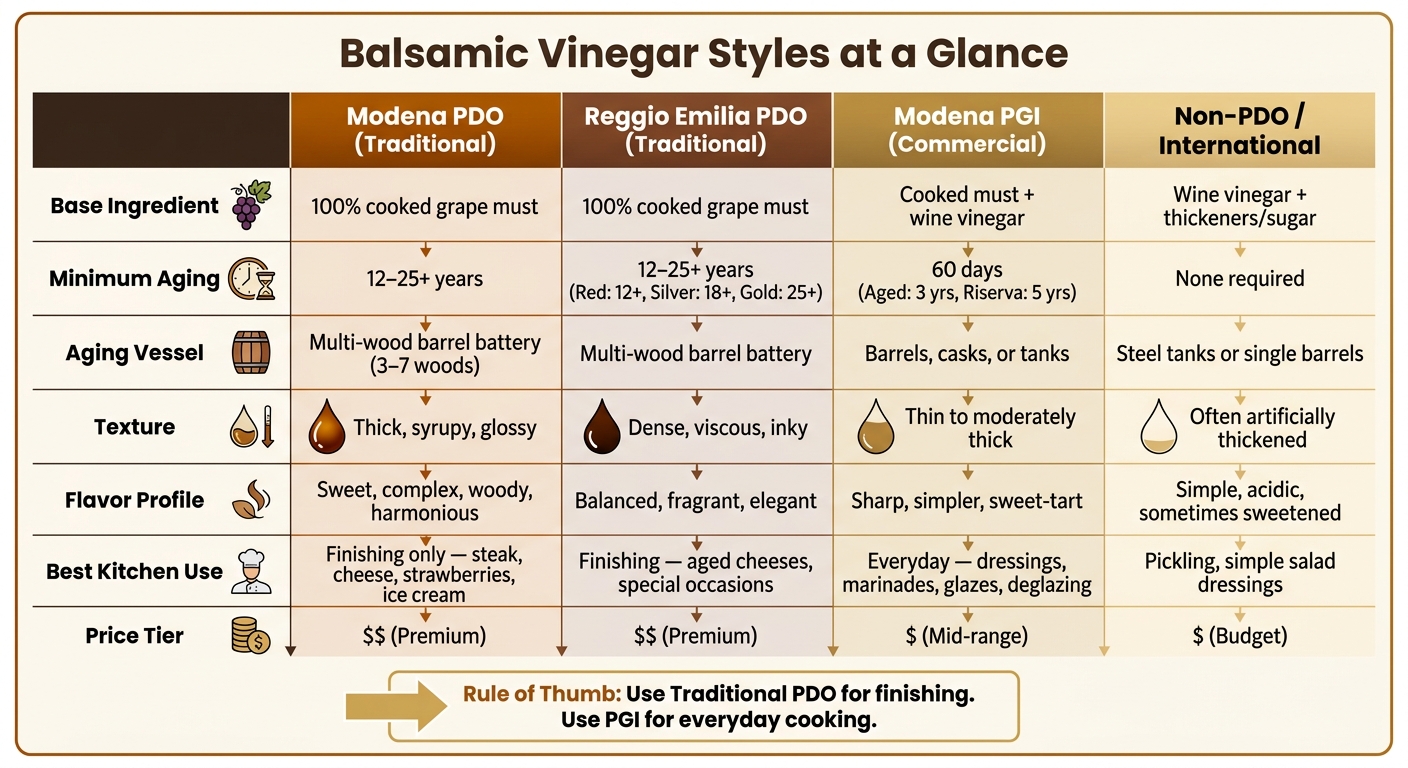
Balsamic Vinegar Styles Compared: Aging, Vessels & Flavor
| Style | Base | Aging | Vessel | What I’d expect |
|---|---|---|---|---|
| Modena PDO | 100% cooked grape must | 12 to 25+ years | Multi-wood barrel set | Thick, dark, smooth, long finish |
| Reggio Emilia PDO | 100% cooked grape must | 12 to 25+ years | Multi-wood barrel set | Close to Modena, often a bit more perfumed |
| Modena PGI | Must + wine vinegar | 60 days to 5+ years | Barrels, casks, or tanks | Sharper, lighter, more for daily use |
| Non-PDO / international styles | Often wine vinegar-based | Varies | Steel tanks or single barrels | Simpler, more acidic, sometimes thickened |
If you’re comparing bottles in a U.S. store, the label usually tells you what matters most: how long it aged, what it was made from, and whether the texture came from time in wood or from additives.
How Modena ages balsamic: barrels, wood, and time
The battery barrel system and attic aging
In Modena, balsamic ages in a batteria: a group of wooden barrels that get smaller as the vinegar moves along. Each year, producers draw off a small amount from the smallest cask, which usually holds 15 to 25 liters. Then they refill that cask from the next-largest barrel, refill that one from the next, and keep going until the biggest barrel gets fresh cooked grape must. This yearly step, known as rincalzo and travaso, keeps the traditional Solera method in motion.
Where those barrels sit matters just as much. In Modena, they rest in attic spaces called acetaie, where the temperature rises and falls with the seasons. Summer heat pushes evaporation through the wood and concentrates the liquid. Winter cold slows things down and helps the vinegar settle and clear. That back-and-forth rhythm shapes the vinegar over time, but it works the way it does because the liquid also passes through different woods.
The barrels aren't sealed shut. They're covered with cloth, which lets oxygen in and allows moisture to escape. Over time, evaporation and oxidation turn the must into a thick, syrup-like liquid with a density of at least 1.240 g/mL at 68°F (20°C).
How wood species affect flavor
The wood isn't just a container. It leaves its mark on the vinegar. As balsamic moves from barrel to barrel, each wood adds something a little different.
| Wood | Sensory Effect |
|---|---|
| Oak | Woody overtones; commonly used for refining |
| Chestnut | High tannins; deepens the dark brown color |
| Cherry | Adds sweetness and delicate fruity notes |
| Mulberry | Porous grain; speeds evaporation and concentration |
| Juniper | Strong, resinous, spicy aromatic lift |
| Ash and acacia | Subtle, neutral, or lightly floral notes |
That mix is a big part of why aged Modena balsamic tastes layered, while younger balsamic can feel simpler.
What longer aging delivers in the bottle
More time in barrel smooths out sharp acidity and blends it with the sweetness of cooked grape must. Younger balsamic tends to taste brighter and harsher. Older balsamic, such as a 25-year aged dark balsamic, comes across as deeper, rounder, and more layered. You also lose volume along the way, and the work takes years, which helps explain why long-aged Modena balsamic costs more. That depth stands out even more when you compare it with vinegars from places that age faster or use simpler containers.
Other regions: shorter aging, different vessels, different results
Reggio Emilia and other Italian balsamic styles
Reggio Emilia's traditional balsamic follows almost the same route as Modena: 100% cooked grape must, a battery of wooden barrels, and at least 12 years of aging.
It also uses its own grading system:
- Red label: 12+ years
- Silver: 18+ years
- Gold: 25+ years
That puts it very close to Modena PDO in depth and balance. Once you move outside that PDO world, though, production methods start to spread out.
Balsamic Vinegar of Modena IGP spends much less time aging than PDO balsamic. That shorter timeline gives you a vinegar that's sharper and thinner, which is why it works well for everyday cooking, marinades, reductions, and vinaigrettes.
International methods: steel tanks, single barrels, and solera aging
Outside Italy, many producers swap barrel-driven depth for speed and consistency. Instead of using a multi-wood battery, they often rely on stainless steel tanks or single barrels. Many also add starch, sugar, or caramel coloring to mimic the thickness of aged vinegar. The end result is often flatter, sharper, and less layered.
Spanish sherry vinegar takes a different path. It uses the criaderas y solera system, where younger and older liquids are blended through a chain of barrels. That's not the same idea as Modena's batteria, which uses smaller and smaller barrels made from different woods to concentrate the vinegar through evaporation. In a solera setup, the barrels are usually uniform, and the focus is blending rather than reduction.
So while sherry vinegar has its own depth and strong regional character, it gets there by a very different method.
| Feature | Traditional DOP (Modena or Reggio Emilia) | Modena IGP | Non-PDO commercial styles |
|---|---|---|---|
| Base Ingredient | 100% cooked grape must | Cooked grape must + wine vinegar | Wine vinegar + thickeners/sugar |
| Aging Vessel | Battery of 3–7 different wood barrels | Large barrels, casks, or tanks | Steel tanks or single barrels |
| Minimum Aging | 12 years | 60 days | None required |
| Texture | Naturally syrupy | Thin to moderately thick | Often thickened |
| Flavor | Complex, woody, balanced | Sharper, simpler | Simple, acidic, often sweetened |
Modena vs. other regions: flavor, texture, and kitchen use
Side-by-side sensory comparison
You can taste the aging process almost right away. It changes the aroma, thickness, balance, and the way the flavor lingers after each bite.
| Style | Appearance | Aroma | Taste balance | Finish |
|---|---|---|---|---|
| Traditional PDO (Modena) | Dark brown, syrupy, shiny | Complex, woody, intense | Sweet, harmonious; minimum 4.5% acidity | Velvety, persistent, intense |
| Traditional PDO (Reggio Emilia) | Deep, inky, viscous | Fragrant, rich | Balanced, complex | Long, smooth, elegant |
| PGI Riserva (5+ years) | Deep brown, clear | Woody, dark fruit | Balanced, mouth-filling | Clean, slightly woody |
| PGI Aged (3+ years) | Deep brown, clear | Mildly acetic, light wood | Sweet-tart, balanced | Clean, brief wood note |
| Standard PGI (60 days) | Brown, liquid | Sharp, acetic | Sweet-tart; minimum 6% acidity | Quick, acidic |
| International/Wine Vinegar | Thin, sharply acidic, brief finish |
Traditional PDO from Modena tends to feel dense and glossy, with a deep sweetness that stays on the palate. Reggio Emilia's version also has depth, but many people find it a bit more perfumed and smooth. PGI styles are lighter and more direct. And once you get to Standard PGI or balsamic vs. wine vinegar, acidity moves to the front.
Best uses for salads, grilled meats, cheese, and desserts
Since each style hits the palate in a different way, each one fits a different job in the kitchen.
Traditional Modena PDO is best used as a finishing condiment, not as a cooking vinegar. Just a few drops can change a dish. It works especially well on grilled steak, Parmigiano Reggiano, fresh strawberries, or vanilla ice cream.
"Riserva is often enjoyed as a meditation vinegar, ideal for aged-hard cheeses like Parmigiano Reggiano... don't cook Riserva."
PGI Riserva fits well in salad dressings and vegetable glazes. PGI Aged is a good match for caprese, grilled poultry, and light finishing. Standard PGI is the everyday bottle for vinaigrettes, marinades, and deglazing. Wine vinegars make the most sense in simple salad dressings and pickling, where bright acidity does most of the work.
How aging affects price
The age gap also explains the price gap.
Aging time is the main driver of price. Traditional PDO vinegar spends at least 12 years - and sometimes 25 or more - in a batteria of wooden barrels. During that time, volume drops, labor adds up, and barrel care becomes a long game. All of that pushes the cost per fluid ounce far above other categories.
In the U.S. market, that creates a clear three-tier price setup. Traditional PDO sits at the top, with pricing tied to time, craft, and concentration. PGI Riserva and Aged land in the gourmet middle, giving you more depth than standard bottles without the PDO sticker shock. Standard PGI and international styles are the lower-cost options, better for everyday cooking when price per use matters more than nuance.
For U.S. shoppers - which absorb roughly 25–27% of Modena balsamic exports - the tradeoff is simple: the older the vinegar, the more concentrated the flavor, and the less you tend to use at one time.
Conclusion: Why Modena aging stands apart
Across regions, Modena’s aging method yields the most concentrated, aromatic vinegar. What sets it apart is the mix of cooked grape must, 12 to 25+ years of aging, and a multi-wood batteria, where seasonal temperature swings slowly concentrate and refine the vinegar. That long, hands-on process is what gives Traditional Balsamic its depth.
For U.S. shoppers, the rule is simple: use Traditional DOP for finishing, and PGI for everyday dressings, marinades, and glazes. The label points to the time, the wood, and the evaporation behind the bottle.
FAQs
How can I tell if balsamic thickness is natural or added?
Natural thickness comes from years of evaporation and concentration during barrel aging. Traditional Balsamic Vinegar of Modena (DOP) gets that texture the old-fashioned way, with no additives in the bottle.
Some industrial-grade balsamic vinegars do the opposite. They use caramel, starch, or other thickeners to mimic a syrupy feel. If you want the real thing, check the label for DOP certification. That standard does not allow thickeners.
Is 12-year PDO always better than 5-year PGI?
Not always. A 12-year PDO and a 5-year PGI are very different products, so the better pick depends on how you want to use them.
PDO is made only from cooked grape must and aged for at least 12 years. That long aging gives it a dense, layered flavor that works best as a finishing touch.
PGI is made with cooked grape must and wine vinegar. That makes it a better fit for everyday cooking and a lot easier to use across different dishes.
Does the type of wood really change the flavor?
Yes. In a batteria, balsamic vinegar ages through a series of barrels, and each type of wood leaves its mark on the final taste and aroma.
- Oak adds structure and soft vanilla notes
- Cherry brings fruity sweetness
- Chestnut deepens color and adds tannins
- Mulberry helps concentrate flavor
- Juniper adds a resinous, spicy edge
- Ash or acacia contribute light floral hints