

Olive Harvest Festivals: What to Expect
Olive harvest festivals celebrate the journey of olives from grove to oil, blending heritage and hands-on experiences. Typically held from October to January, these events offer a mix of olive picking, live milling demonstrations, oil tastings, and regional food pairings. Visitors can learn about olive varieties, sustainable farming, and how to identify high-quality extra virgin olive oil. Popular in Mediterranean regions like Italy and France, these festivals have also gained traction in the U.S., especially in California.
Key Highlights:
- Hands-On Olive Picking: Try traditional harvesting techniques like rakes and nets.
- Live Milling Demonstrations: Watch olives turn into oil in real-time.
- Olio Nuovo Tasting: Sample the season’s first-pressed oil, bursting with bold flavors.
- Workshops & Tours: Learn tasting techniques, varietal differences, and the science of olive oil production.
- Food Pairings: Enjoy dishes like pumpkin risotto, soups, and even olive oil ice cream.
Whether in Tuscany, Provence, or Napa Valley, these festivals offer a sensory journey into the world of olive oil. Prepare by booking early, wearing comfortable clothes, and bringing gloves for picking. Don’t forget to check the harvest year on oil labels to ensure it’s from the latest crop.
Seka Hills Olive Crush Festival
sbb-itb-4066b8e
Activities and Experiences at Olive Harvest Festivals
Olive Oil Milling Process: From Harvest to Bottle
Hands-On Olive Picking
Imagine stepping into a sunlit olive grove during harvest season, surrounded by the earthy aroma of ripe olives. Many festivals let you dive right into the picking process, offering a chance to experience age-old methods firsthand. You might use traditional hand-picking techniques or try specialized tools like small mechanical rakes or long-handled rakes, which can reach up to 8 feet, to shake olives onto nets spread beneath the trees. It's a satisfying, almost meditative activity that connects you to the roots of olive farming.
For example, in September 2025, Sunnylands in Rancho Mirage, California, hosted a public olive harvest where 100 volunteers per day gathered olives from its sprawling 200-acre property. Starting bright and early at 6:30 a.m., participants picked and sorted olives, wrapping up with a harvest festival at noon that included a presentation on the milling process. Other festivals often involve sorting sessions where volunteers help grade olives based on quality.
The excitement doesn’t stop at picking. Many festivals include live milling demonstrations, giving you a chance to see the fruits of your labor transformed into fresh olive oil.
Olive Milling Demonstrations
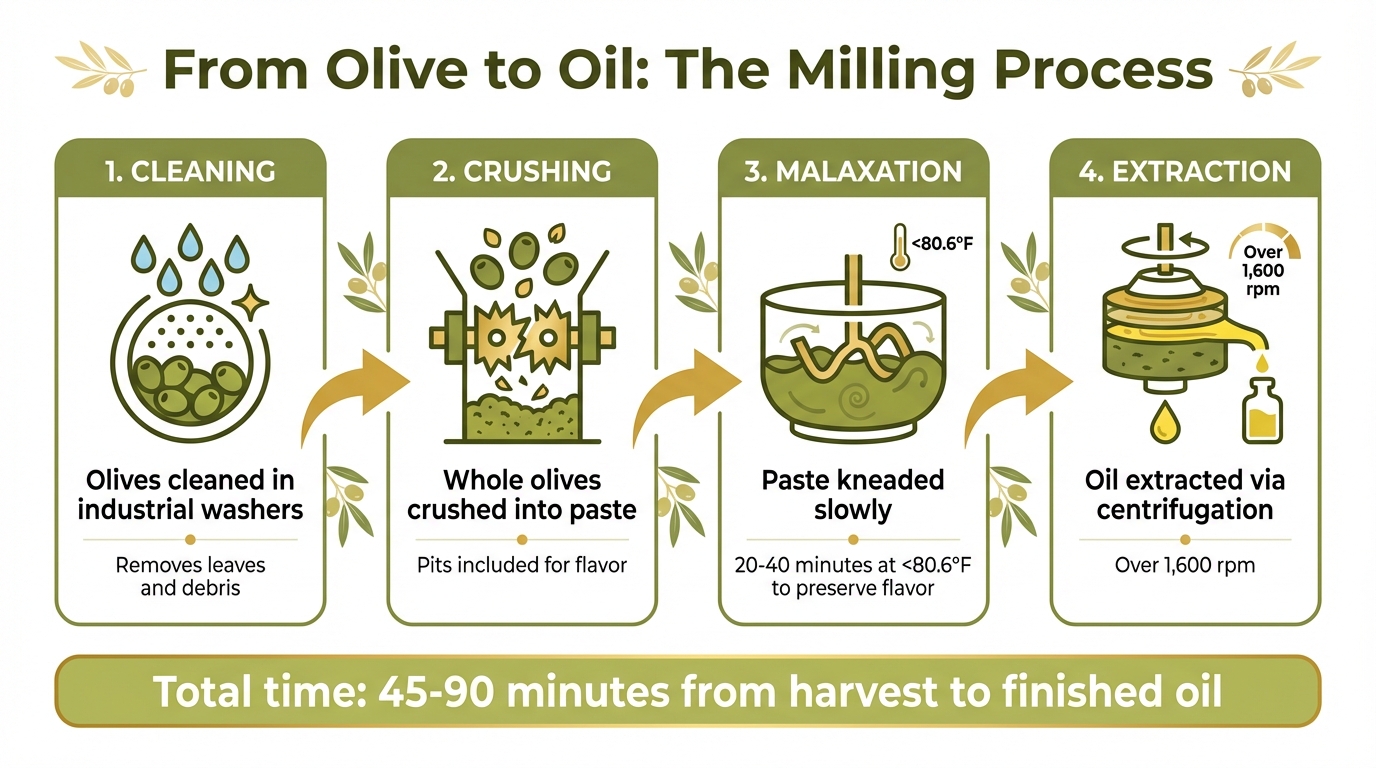
Watching olives become oil is a mesmerizing process. Live milling demonstrations guide you through every step, from cleaning the fruit in industrial washers to crushing whole olives (yes, pits included) into a thick paste using hammer mills. The paste is then malaxed - kneaded slowly for 20–40 minutes at temperatures below 80.6°F to preserve flavors - before the oil is extracted through high-speed centrifugation at over 1,600 rpm.
Take McEvoy Ranch in Petaluma, California, for example. On November 22, 2025, they hosted an "Olio Nuovo Experience", where participants harvested olives, watched the milling process, and tasted freshly pressed oil - an unforgettable flavor - followed by a meal featuring the new oil or a spicy Calabrian pesto olive oil. At professional mills, the entire journey from olives arriving to finished oil can take as little as 45 to 90 minutes.
"The shorter the time [for kneading], the better if your goal is quality." - Furio Battelini, Technical Director, Agraria Riva del Garda
These demonstrations often lead into deeper explorations of olive oil production, including tours and workshops that delve into both tradition and science.
Guided Tours and Educational Sessions
Festivals often include guided tours and workshops that provide a closer look at olive farming and oil production. You’ll learn about everything from varietal differences to eco-friendly farming methods. For instance, heritage grove tours might explain why some olives, like Leccino, ripen earlier than others, such as Moraiolo. You might also hear how shifting climates are causing harvest dates to move up by 7–10 days.
Visits to mills often include technical insights, like how controlling temperature during malaxation helps preserve the oil's polyphenol content - the compounds responsible for that peppery sensation at the back of your throat. Sensory analysis workshops are another highlight, teaching you to detect flavor notes like artichoke, tomato leaf, and fresh-cut herbs, which signal high-quality extra virgin olive oil.
In Tuscany, the town of Pergine Valdarno hosted its "Festa dell'Olio Nuovo" on November 8-9, 2025. Visitors enjoyed guided tours of historic mills still using traditional stone presses, as well as communal walking tours through the groves.
For small-scale growers, some festivals even offer community milling days. These events let participants bring their own olives - sometimes as little as 5 pounds - and have them processed at professional facilities. For instance, Trattore Farms in California charges $1.30 per pound for this service, giving home growers a chance to experience the entire production cycle firsthand.
Food and Tastings at the Festivals
Fresh Olio Nuovo Tasting
After learning about the olive harvest and milling process, the tasting session offers a deeper dive into the festival’s essence. The centerpiece of any olive harvest celebration is Olio Nuovo - the season’s first press, often bottled just hours after the olives are picked. This fresh oil is a cloudy, vibrant green and bursts with flavor. Expect notes of fresh-cut grass, wild herbs, and artichoke, all rounded out with a peppery finish - a hallmark of its rich antioxidant content, much like our Coratina Extra Virgin Olive Oil.
"A good olio nuovo should taste grassy, fruity, slightly bitter, and pleasantly spicy at the back of your throat. That 'bite' means the oil is rich in antioxidants." - Play Italy
To truly appreciate it, pour a small amount - about 1–2 tablespoons - into a small glass. Warm it in your hands, swirl gently to release its aromas, and then take a small sip while exhaling to fully experience its layers of flavor. This tasting ritual sets the stage for the creative culinary pairings that follow.
Pairings and Gourmet Dishes
These festivals don’t just showcase olive oil - they celebrate it through inventive pairings that highlight its versatility. Multi-course menus often include dishes like pumpkin risotto, white beans with sage, roasted chestnuts, and hearty vegetable soups such as zuppa alla frantoiana, each finished with a generous drizzle of fresh oil. Regional specialties like cheeses, cured meats, honey, and wines further enhance the experience.
Olive oil takes center stage in Mediterranean-inspired dishes, blending culinary tradition with artistry. Some festivals even host themed dinners where every course features olive oil in unexpected ways. Think olive oil ice cream, lemon olive oil cakes, or a simple yet flavorful spaghetti tossed with garlic, red chile flakes, and fleur de sel - designed to showcase the oil’s unique character. At the Sagra dell'Olivo in Canino, Lazio, which has been held since 1939, visitors gather in the main piazza to enjoy bruschetta drizzled with the region’s prized Canino DOP oil.
At Big Horn Olive Oil, our Ultra Premium Extra Virgin Olive Oils capture the essence of these time-honored traditions, bringing the vibrant flavors of freshly pressed olives to your table.
History and Meaning of Olive Harvest Festivals
Mediterranean Roots in the US
Olive harvest festivals are more than just celebrations of flavor - they’re a tribute to history and tradition. Olive cultivation stretches back 6,000 years, and in Mediterranean culture, the harvest, known as la raccolta, has long been a time for communities to come together and honor their shared heritage. In Italy, the Festa dell’Olio originally marked the arrival of the season’s first olive oil, replenishing supplies and bringing families closer.
"When I was a child, we all did the harvest together. It was a moment of sharing, of celebration. All our generations, united by this passion." – Adriana Calvaruso
In the United States, areas like California’s Sonoma, Napa, and Santa Cruz regions have embraced these traditions, blending them with local flair. A great example is Jeff Martin, who planted Frantoio olive trees in the Santa Cruz Mountains in 2005 and introduced the Italian Festa dell’Olio tradition. His “California Olio Nuovo” is bottled just hours after hand-picking, keeping the process as fresh and authentic as possible. Similarly, Caltech’s first Olive Harvest Festival in 2007 brought innovation to tradition. Using a custom-built 1,600-pound manual press, they harvested olives from 130 campus trees, with proceeds funding student scholarships. These festivals in the U.S. honor Mediterranean customs, often featuring Tuscan olive varieties, and reflect the enduring connection between past and present. At the same time, they promote sustainable practices that respect both heritage and the environment.
Health and Farming Practices
Modern olive harvest festivals don’t just celebrate tradition - they also shine a spotlight on sustainability and health. Many festivals emphasize manual harvesting methods, such as using rakes, nets, and ladders, which are gentler on the trees and align with regenerative farming practices. These methods nurture healthier soil and produce oils packed with polyphenols, the antioxidants responsible for that signature peppery flavor in high-quality extra virgin olive oil.
Interest in olive oil tourism has also grown. Since Italy officially recognized oleoturismo in 2020, food and wine tourism has increased by 37.1%. Programs like Tenuta Torciano’s “Adopt an Olive Tree” initiative in Tuscany have played a key role in preserving olive groves, rescuing nearly 80 hectares of land from neglect. Participants even receive oil from their adopted tree, creating a personal connection to the land and its traditions.
At Big Horn Olive Oil, we’re proud to uphold these values. Our Ultra Premium Extra Virgin Olive Oils are crafted with care, honoring the same commitment to quality, freshness, and health that has defined olive harvest celebrations for thousands of years.
Tips for Attending an Olive Harvest Festival
Timing and Reservations
Olive harvest festivals are a highlight of the fall season. In Italy, regions like Tuscany, Umbria, and Sicily host events from September through November, while Provence in France keeps the festivities going until December.
If you're planning to attend, book early. Popular events such as Frantoi Aperti (October 25–November 23, 2025) and Camminata tra gli Olivi (October 26, 2025) attract large crowds and fill up quickly. When buying olive oil at the festival, check the harvest year on the label. For the 2025 season, it should display campagna olearia 2025/26 to confirm it's from the current harvest.
Once your plans are set, prepare ahead to make the most of your visit.
What to Bring and Wear
Comfortable and practical clothing is key. Wear sturdy, closed-toe shoes like hiking boots, sneakers, or rubber boots, as you'll likely encounter uneven and muddy terrain. Dress in layers, starting with a breathable base layer and adding a warm mid-layer. Don’t forget a lightweight raincoat just in case, along with a wide-brimmed hat and sunglasses for sun protection.
For olive picking, bring durable work gloves, and pack a small backpack with essentials such as water, wet wipes, and a power bank to keep your devices charged. Being prepared ensures you’ll focus on enjoying the experience without any distractions.
Making the Most of Your Visit
To truly savor the festival, learn the art of tasting olive oil. Warm a small sample in your hand, inhale its aroma, and then take a sip, drawing in air to identify flavors like grass, artichoke, or pepper. Lucia Leone, an oil sommelier from Masseria il Frantoio, offers this advice:
"Real EVOO is fruity, fresh, bitter and spicy. If you don't taste those notes of tomato leaf, fresh-cut herbs or artichokes, the oil isn't extra virgin".
Evening milling sessions are a must-see, where you can watch fresh, neon-green olio nuovo being pressed. Many festivals also offer hands-on experiences like "pick & press", where you can harvest olives, mill them, and even bottle your own oil. For a guaranteed high-quality experience, look for farms with the Oleoturismo autorizzato label. Some places, such as Tenuta Torciano in Tuscany, even let you adopt an olive tree and receive oil shipments from your very own tree.
Dive into these activities to create lasting memories and take home a taste of the harvest.
Conclusion
Olive harvest festivals bring together tradition, flavor, and learning in a truly immersive way. From the rhythmic act of shaking olives onto nets with traditional rakes to watching the vibrant neon-green flow of freshly pressed olio nuovo, these events offer a direct connection to a craft that has evolved over millennia. Tasting oils with bold, peppery notes - an indicator of their high polyphenol content - reveals the unique qualities that make extra virgin olive oil so special.
The heritage behind these festivals runs deep. Italy, for example, carries a long-standing olive tradition that highlights the importance of preserving artisanal methods. Yet, it's striking to note that 75% of olive oil bottles sold today come from overseas sources. As Pierluigi Giachi of Tenuta Torciano eloquently explains:
"They learn that olive oil doesn't come from the supermarket; it comes from a tree that has been tended with so much love. Without love, nothing can grow".
Whether you're wandering through the olive groves of Umbria or attending a milling day in a California community, these celebrations offer more than just insight - they transform how you view premium olive oil. The sensory journey, from detecting hints of tomato leaf and artichoke to the fresh aroma of herbs, fosters a deeper appreciation for this time-honored craft.
Take this newfound connection home with you. Relive the freshness and vibrant flavors by trying Big Horn Olive Oil's Ultra Premium Extra Virgin Olive Oils. Cold-pressed within two hours of harvest and delivered within three months, their oils capture the same essence you experienced at the festivals. Incorporate them into your daily routine and enjoy their natural, wholesome benefits.
FAQs
How do I find an olive harvest festival near me?
To locate an olive harvest festival near you, explore regional event listings or agricultural websites. In California, two standout events are the Corning Olive Festival held in October and the Kelseyville Olive Festival in April. If you're in Wine Country areas like Napa or Sonoma, you'll find celebrations taking place between October and November.
Looking for something abroad? Italy is a fantastic destination, with festivals in regions like Tuscany and Umbria running from late September through November. For additional details, local tourism boards are an excellent resource.
What’s the difference between olio nuovo and regular EVOO?
Olio nuovo is the freshest form of olive oil, bottled straight after the harvest. It’s celebrated for its bold, vibrant flavors and a pronounced pungency. In contrast, regular extra virgin olive oil (EVOO) is usually stored for a few months before bottling, which allows the flavors to settle and develop a smoother, more balanced profile.
How can I tell if a festival olive oil is truly fresh?
To determine if festival olive oil is fresh, check the harvest date on the bottle. This date shows when the olives were picked, and fresher is always better. Trusted producers include this information to ensure quality. Fresh olive oil stands out with its bright flavor and rich aroma, both of which signal its freshness and overall quality.