

Olive Oil in Ancient Ceremonies
Olive oil wasn’t just a cooking ingredient in ancient times - it was a symbol of purity, vitality, and connection to the divine. Across Greece, Rome, and Egypt, olive oil played a central role in religious, social, and even burial practices. Its use spanned from fueling sacred temple lamps to anointing athletes and preserving the deceased for the afterlife. Here’s a quick breakdown of its ceremonial roles:
- Greece: Olive oil was tied to mythology (Athena’s gift of the olive tree), used in temple rituals, and awarded to athletes as a symbol of victory and prosperity.
- Rome: It signified military triumph and was used in religious ceremonies, public baths, and even as part of soldiers’ rations.
- Egypt: Olive oil was reserved for the elite, used in mummification, and offered to gods during rituals.
This ancient "liquid gold" bridged the physical and spiritual worlds, symbolizing peace, health, and eternal life. Its legacy continues today, both in its health benefits and its enduring cultural significance.
Olive Oil in Ancient Greek Ceremonies
Temple Rituals and Offerings to Gods
In ancient Greece, olive oil played a central role in religious ceremonies and temple rituals. As early as the Mycenaean Bronze Age (around 1600–1100 B.C.E.), priests created perfumed olive oils specifically for worship. This practice is well-documented on clay tablets from the palace of Pylos, highlighting the oil's sacred purpose. These specially prepared oils were reserved solely for religious use.
One of the key rituals involved the anointing of cult statues. Priests applied olive oil to these sacred figures to honor the gods and maintain a spiritual connection. Additionally, olive oil lamps burned continuously in temples, symbolizing the unbroken bond between mortals and the divine. Only the purest oil was deemed suitable for these purposes, as its quality was thought to ensure proper communication with the gods.
Olive oil and branches were also essential in purification rituals, sacrificial ceremonies, and harvest celebrations. The olive tree held such significance that in 6th century B.C. Athens, Solon’s laws imposed the death penalty for cutting down olive trees without authorization. These practices extended beyond temple worship, influencing broader aspects of Greek spiritual and social life.
Anointing Athletes and Burial Practices
Outside the temple, olive oil was a key component in rites of passage, athletic rituals, and funerary traditions. Athletes, for instance, anointed their bodies with olive oil before competitions. This not only enhanced their physical performance and protected their skin but also carried a ceremonial significance, symbolizing divine favor and vitality. After competing, they would scrape off the oil and impurities using a strigil, a practice that combined therapeutic and ritualistic elements.
Winners of prestigious events like the Panathenaic Games were rewarded with large quantities of olive oil. For example, the champion of the boy’s 200-meter sprint received 500 gallons of oil, while the men’s champion earned 1,000 gallons. Considering that a 10-gallon vessel of oil was valued at about 12 drachmas, these prizes could amount to three years’ wages for a skilled carpenter, who typically earned 1 drachma per day.
In funerary rites, olive oil was used to anoint the deceased as a final act of purification and honor. Families applied the oil to the bodies before burial, symbolizing respect and vitality. Special vases known as lekythoi, often adorned with scenes of life’s final journey, were used to store this funeral oil. These traditions underscored olive oil’s role as both a practical and sacred substance.
Symbols of Prosperity and Peace
Beyond its ritualistic and ceremonial uses, olive oil symbolized larger societal values in ancient Greece.
"Olive oil... constituted the symbol of peace and well-being of the Ancient Greeks." - Maria Protopapas-Marneli and Antonia Trichopoulou
Olive oil represented not only victory, as seen in the olive wreaths awarded to Olympic champions, but also communal prosperity and spiritual purity. Its economic importance was immense, with evidence of its ritual use in Crete dating back to 4500 B.C.. Interestingly, the Greeks preferred oil from green olives harvested before full ripening, despite the fact that ripe olives produced more oil. This preference highlighted their emphasis on quality, reserving only the finest oil for the gods, athletes, and the deceased.
Olive Oil in Ancient Roman Ceremonies
Religious and Public Ceremonies
The Romans, inspired by Greek traditions, wove olive oil into their religious, military, and daily rituals, adapting its use to fit their unique cultural practices.
Perfumed olive oil played a central role in Roman religious ceremonies. It was offered to deities and used to anoint statues of gods, ensuring these sacred objects remained honored and well-preserved. For instance, Roman priests filled hollow cult statues, such as those of Saturn, with olive oil to maintain their condition. This blending of utility with devotion highlights how olive oil became essential in maintaining the sanctity of worship spaces.
One notable example of olive oil’s symbolic use was seen in the attire of the Flamen Dialis, the high priest of Jupiter. His ceremonial leather cap, known as the pilleum, was adorned with olive boughs tied to the horns of a white bull, reflecting the deep connection between sacred rituals and practical symbolism.
By the 1st century A.D., olive oil was widely cultivated in Italy, making it accessible for both religious purposes and daily life. The Romans also embraced Greek symbolism, linking the olive tree with wisdom and craftsmanship. They associated these traits with their goddess Minerva, mirroring the Greek reverence for Athena.
Olive Wreaths and Military Honors
The Romans upheld the Greek tradition of using olive branches and wreaths as symbols of peace and triumph. Even Mars, the Roman god of war, was occasionally depicted holding an olive branch, signifying the hope for peace amidst conflict.
Beyond its symbolic importance, olive oil served practical purposes in the military. For example, oil produced in Spain's Castellón Province became a staple in the rations of Roman soldiers. In fact, olive oil was such a dietary cornerstone that it accounted for nearly one-fourth of the food consumption in some Roman cities, alongside meat, fish, and cereals.
Pliny the Elder, a Roman author, eloquently captured the significance of olive oil in Roman life:
"There are two liquids that are especially agreeable to the human body: wine inside and oil outside [...] but oil is an absolute necessity."
Daily Rituals and Practical Uses
Olive oil’s influence extended far beyond ceremonial and military contexts, becoming a vital part of daily Roman life. One of its most notable uses was in Roman bathing rituals. Instead of soap, Romans applied olive oil to their skin, which was then scraped off with a metal tool called a strigil to remove dirt and sweat. This practice mirrored the ceremonial anointing of divine statues, blending sacred traditions with everyday habits.
The therapeutic properties of olive oil were also well-documented by Roman medical writers. Celsus, for instance, recommended warm baths with a touch of olive oil for physical rejuvenation, followed by gentle oil massages. Similarly, Soranus advised using olive oil to anoint newborns, a practice rooted in ancient purification traditions dating back to the Hittites. These examples underscore how olive oil bridged the gap between physical health and spiritual care.
Unlike the Greeks, who considered high-quality olive oil a luxury, the Romans produced it in such abundance that it became a staple for all social classes. From religious ceremonies to personal hygiene, olive oil was a ubiquitous and indispensable part of Roman life.
The Oil of Anointing: The Bible's Sacred Secret | Cooking with Kimberly
sbb-itb-4066b8e
Olive Oil in Ancient Egyptian Ceremonies
In ancient Egypt, olive oil held a special place, much like in Greece and Rome. It symbolized purification, luxury, and even the promise of eternal life.
Mummification and Burial Practices
For the ancient Egyptians, olive oil was a key ingredient in preparing the deceased for their journey to the afterlife. During the 70-day embalming process, mixtures containing olive oil were used to treat linen bandages and preserve the skin. At Saqqara necropolis, archaeologists uncovered ceramic jars filled with a blend of olive oil, elemi, cypress oil, and animal fat, applied on the third day of embalming rituals . Analysis of vessels from a 26th Dynasty embalming workshop further confirmed the presence of "plant oil, type olive", highlighting its role in preservation.
Olive oil served multiple purposes: it moisturized and preserved the skin while helping to reduce odors. For the head, embalmers combined it with resins like pistachio, cedar, and juniper to enhance preservation. Since olive oil was imported from the Mediterranean, it was considered a luxury reserved for pharaohs and the elite . Pharaohs were often buried with jars of olive oil to ensure spiritual prosperity in the afterlife.
Salima Ikram, an archaeologist at the American University in Cairo, provided insight into this practice:
"Mummification was a way of transforming the deceased from a human being into a divine one that could live forever. The idea is that the soul can reanimate the body after its metamorphosis".
Sacred oils also played a symbolic role in funeral ceremonies, often linked to the "Udyat eye" (Eye of Horus), a powerful emblem of protection, healing, and rejuvenation. Beyond funerary rituals, olive oil was a key element in temple ceremonies.
Offerings to Gods and Temple Ceremonies
In temple rituals, priests used olive oil both as an offering and as a sacred substance. Representing purity, it was presented to deities during religious ceremonies. Priests combined olive oil with resins from conifers and Pistacia, as well as bitumen, to anoint coffins, mummy cases, and statues of divine figures.
Between 2021 and 2026, researchers studied 20 funerary items from the British Museum's 22nd Dynasty collection (circa 950–700 BC). They identified "Type 2" anointing fluids containing plant oils, which were poured over cartonnage cases and Osiris figures. This practice helped bind mummy cases to coffins as part of funerary rites. The color black, often associated with Osiris and the underworld, symbolized regeneration, night, and the fertile soil of the Nile. Sacred lamps in shrines, such as the one at Saint Menas's tomb, burned fragrant oils believed to have healing properties . This sacred use of olive oil in public rituals naturally extended to the priesthood's private ceremonies.
Priestly Anointing and Ritual Cosmetics
For Egyptian priests, olive oil was reserved for the most sacred tasks. Its purity made it an essential component of ritual cosmetics and medicinal ointments used within temple walls. It played a significant role in the "Opening of the Mouth" ceremony, an act intended to restore vitality to the deceased and sacred statues. Olive oil was also used for anointing rituals, symbolizing a connection between the physical and divine realms. Its heavenly fragrance during ceremonies and its use as a source of light reflected the belief that it embodied the light of the gods.
Comparing Ceremonial Uses Across Civilizations
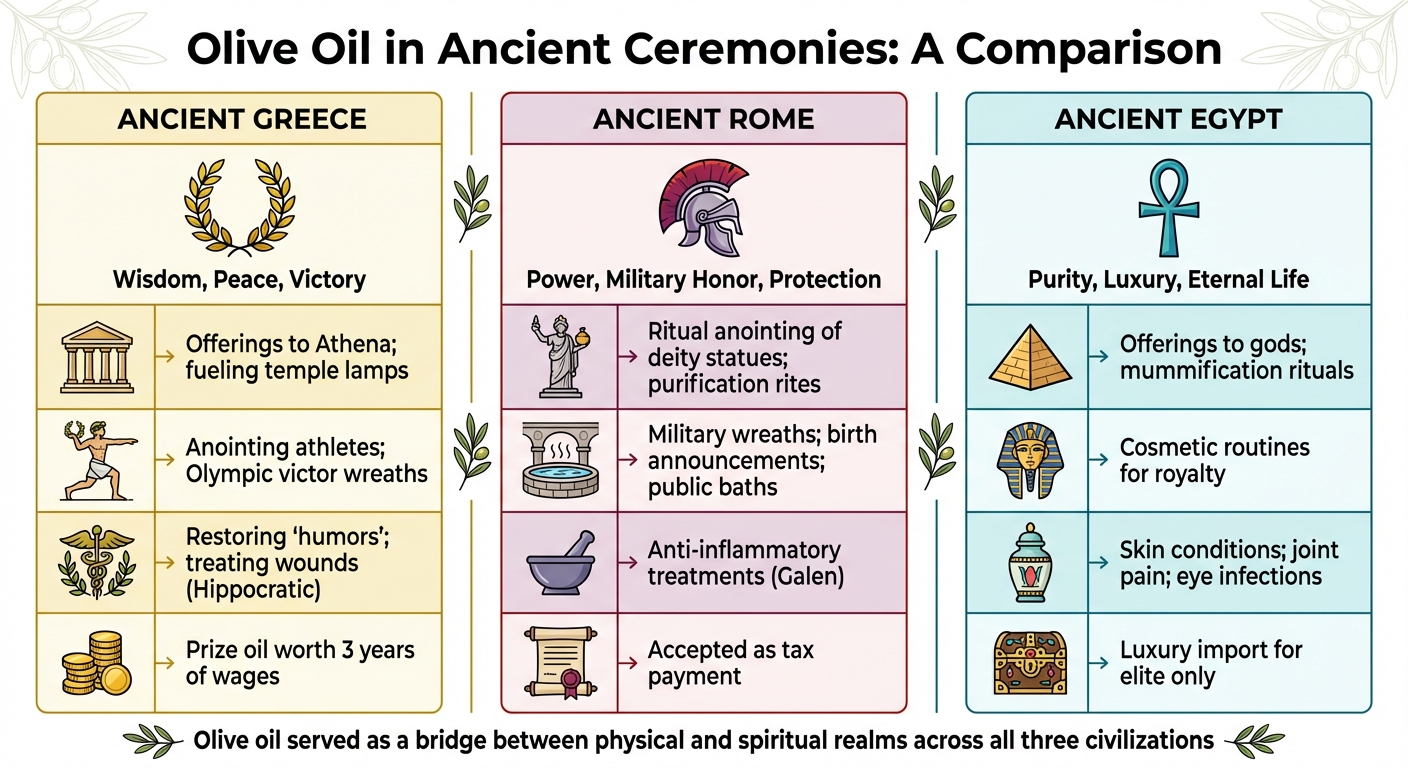
Ceremonial Uses of Olive Oil in Ancient Greece, Rome, and Egypt
Shared Themes of Purity, Prosperity, and Peace
In ancient Greece, Rome, and Egypt, olive oil held a profound spiritual significance. It was more than just a commodity; it was integral to rituals aimed at cleansing and sanctifying individuals before they entered sacred spaces or engaged with the divine. Olive oil often acted as a bridge between the physical and spiritual realms, used to anoint newborns for protection, heal the sick, and prepare the deceased for their journey to the afterlife.
The olive tree itself symbolized peace, resilience, and vitality. This universal reverence for the olive tree and its oil underscored its role in healing and spiritual protection throughout Mediterranean cultures. While these shared values unified the civilizations, each culture developed its own unique ceremonial practices that reflected their distinct priorities.
Distinct Practices in Each Civilization
Despite their shared appreciation for olive oil, the ceremonial uses in Greece, Rome, and Egypt varied, shaped by each civilization's unique cultural focus. In ancient Greece, olive oil was deeply tied to athleticism and civic pride. Greek athletes were generously rewarded with olive oil, a symbol of divine favor and economic prosperity.
In Rome, olive oil became synonymous with public honors and military success. Olive wreaths marked military victories and were used to celebrate the birth of baby boys. Its importance extended beyond ceremonies, even serving as a form of tax payment.
For the Egyptians, olive oil was most closely linked to the afterlife and social status. Since it was imported from the Mediterranean, it was considered a luxury item reserved for the elite and pharaohs. Olive oil played a critical role in mummification, with specific blends used to preserve the body for eternity. This focus on preservation and beauty set Egyptian practices apart from the athletic and martial traditions seen in Greece and Rome.
Comparison Table
Here's a breakdown of the unique and shared attributes of olive oil's ceremonial uses across these civilizations:
| Feature | Ancient Greece | Ancient Rome | Ancient Egypt |
|---|---|---|---|
| Primary Symbolism | Wisdom, Peace, Victory | Power, Military Honor, Protection | Purity, Luxury, Eternal Life |
| Religious Practice | Offerings to Athena; fueling temple lamps | Ritual anointing of deity statues; purification rites | Offerings to gods; mummification rituals |
| Social/Athletic Use | Anointing athletes; Olympic victor wreaths | Military wreaths; birth announcements; public baths | Cosmetic routines for royalty |
| Medicinal Focus | Restoring "humors"; treating wounds (Hippocratic) | Anti-inflammatory treatments (Galen) | Skin conditions; joint pain; eye infections |
| Economic Value | Prize oil worth 3 years of wages | Accepted as tax payment | Luxury import for elite only |
Conclusion
Modern Appreciation of Olive Oil
The health benefits and deep-rooted significance of olive oil in human history are as relevant today as they were thousands of years ago. Modern research highlights compounds like polyphenols and oleocanthal, which are known for their anti-inflammatory properties. The Mediterranean diet, modeled after the eating habits of ancient coastal communities, continues to showcase olive oil as a cornerstone of nutrition. Studies now associate it with lower risks of stroke, heart disease, and cognitive decline.
Contemporary consumers are embracing these time-honored traditions, weaving olive oil into wellness routines once again. Even in prominent events, its symbolism endures. For instance, during King Charles III's coronation in May 2023, olive oil from the Mount of Olives was used for anointing - a practice steeped in ancient ceremonial customs and blessed by archbishops in Jerusalem.
The numbers tell their own story: about 95% of the world’s olive oil is produced in the Mediterranean region, a testament to a 6,000-year-old legacy. As Pliny the Elder once noted, olive oil is indispensable for human well-being. This legacy lives on through the care and precision that define modern production methods.
Big Horn Olive Oil's Commitment to Quality
Big Horn Olive Oil carries forward this rich tradition with a dedication to excellence. Their Extra Virgin Olive Oils are cold-pressed within just two hours of harvest and delivered fresh within three months, ensuring peak quality. By sourcing only the finest olives, Big Horn Olive Oil honors the 6,000-year history of olive oil as both a healthful staple and a symbol of cultural heritage. Every bottle reflects a deep respect for this ancient elixir, connecting the past to the present in every drop.
FAQs
How was olive oil used in ancient religious rituals and ceremonies?
Olive oil carried profound spiritual meaning in ancient civilizations, often playing a key role in religious rituals and ceremonies. In ancient Greece, it was seen as a symbol of purity and holiness. It was frequently used in sacred rites, serving purposes like purification and healing.
In ancient Israel, olive oil held a similarly significant role. It was central to anointing rituals, symbolizing divine blessing and consecration.
For Romans and early Christians, olive oil continued to serve as a vital element in purification and anointing practices. It bridged the physical and spiritual worlds, underscoring its sacred importance. Across these cultures, olive oil was far more than a practical commodity - it embodied sanctity and divine favor.
How was olive oil used in ancient athletic and burial traditions?
Olive oil played a central role in ancient traditions, particularly in athletic and burial practices. Greek athletes, for instance, would apply olive oil to their bodies before competing. This wasn’t just for show - it shielded their skin from the sun and dirt, improved flexibility, and was often combined with massages to prevent injuries and soothe sore muscles.
In burial rituals, olive oil carried deep spiritual meaning. It was used to anoint the deceased, symbolizing purification and a sacred connection to the divine and the afterlife. These practices underscore how olive oil was woven into both the everyday and ceremonial fabric of ancient life.
Why was olive oil seen as a symbol of peace and prosperity in ancient cultures?
Olive oil held a prominent place in ancient societies such as Greece, Rome, and Egypt, cherished both for its symbolic meanings and practical uses. It stood as a symbol of peace, prosperity, and divine blessing, often featured in religious rituals, offerings, and ceremonies to honor deities and mark sacred events.
Beyond its spiritual role, olive oil symbolized abundance and success. Growing olive trees demanded patience, care, and favorable conditions, making the oil a prized product. It was also used to anoint leaders, athletes, and warriors, representing victory, strength, and unity. This rich history underscores the deep cultural and spiritual significance olive oil carried through the ages.