

How Certification Prevents Olive Oil Fraud
If I pay extra for olive oil, I want proof that the bottle matches the label. That’s the whole point of certification: it checks the oil with lab tests, taste panels, lot records, and audits instead of asking me to trust the front label.
Here’s the short version:
- Fraud usually looks like mislabeling, not fake oil.
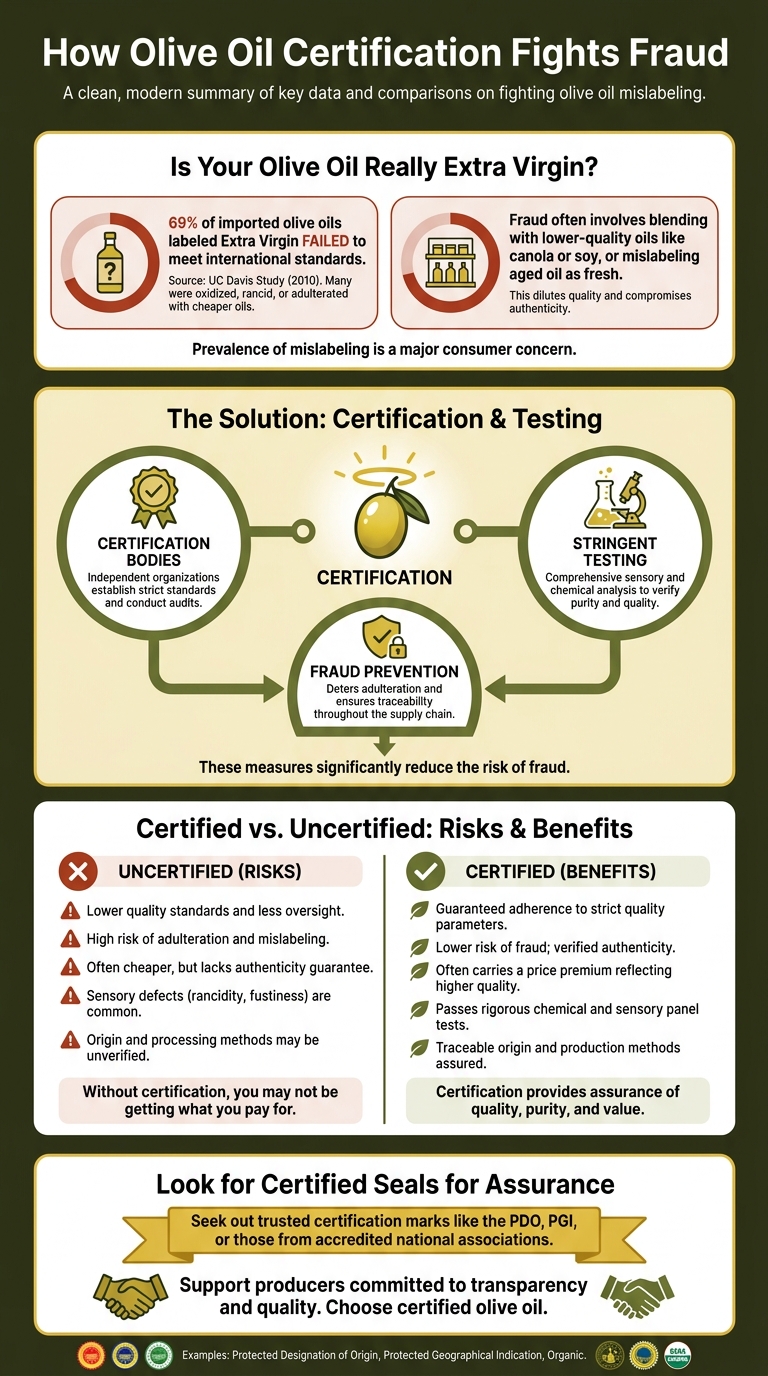
- A 2025 NAOOA review found adulteration was under 1%, but about 11% of oils labeled extra virgin still failed that grade.
- A UC Davis study found 69% of imported supermarket oils labeled extra virgin failed extra virgin standards, mostly due to age, oxidation, or low grade.
- Certification checks things like free acidity, peroxide value, UV absorbance, sterols, fatty acids, and sensory defects.
- It also checks the paper trail: harvest dates, tank records, lot codes, shipping records, and bottling volumes.
- If results don’t match the label claim, a seal can be denied, removed, or followed by a relabel or recall.
What I take from this is simple: certification turns “extra virgin” from a sales claim into something that can be tested.
Quick comparison
| What gets checked | What it can show |
|---|---|
| Chemical tests | Oxidation, low-grade oil, refining, or blending |
| Sensory panel | Rancid, musty, fusty, or other defects |
| Chain of custody | Whether origin, batch, and volume claims line up |
| Shelf sampling | Whether the bottle sold in stores still meets the grade |
So when I look at a certified bottle, I’m not just seeing a seal. I’m seeing a product that had to match a standard on paper, in the lab, and in the bottle.
Certified vs. Non-Certified Olive Oil: What the Label Really Tells You
How to spot FAKE Olive Oil | 7 science-backed tips
sbb-itb-4066b8e
How Standards Define What Extra Virgin Olive Oil Actually Is
Fraud often hides in the chemistry, so certification starts with numbers you can test. It works by checking set chemical and sensory limits. If an oil misses those limits, it doesn't earn the grade.
The Main Standards Behind Certification
In the U.S., shoppers are most likely to come across IOC, USDA, EU, and California standards. The International Olive Council (IOC) is the main global reference point. It caps free acidity at 0.8% and requires no detectable sensory defects, along with positive fruitiness.
EU marketing standards follow the same IOC limits. USDA grade standards define "U.S. Extra Virgin Olive Oil" with that same 0.8% acidity cap and the same IOC peroxide and UV limits. California's standard is stricter, with a free acidity cap of 0.5%. Some California programs also check freshness markers like DAGs and PPP to help spot oil that is old or overheated.
The basic idea stays the same across all of them: each test looks for a different kind of problem.
The Key Test Results That Matter
Each result tells you something a little different about the oil:
| Test | What It Measures | What a Failing Result Suggests |
|---|---|---|
| Free acidity | Amount of free oleic acid in the oil | Damaged olives, delayed processing, or poor handling |
| Peroxide value | Early-stage oxidation | Oil is going stale or was stored poorly |
| UV absorbance (K232, K270) | Oxidation compounds and refining byproducts | Oil may be refined or heavily oxidized |
| Fatty acid profile | Composition of fats in the oil | Possible blending with cheaper vegetable oils |
| Sterol profile | Plant-specific chemical markers | Adulteration - even small amounts can be flagged |
| Sensory panel | Taste and aroma evaluated by trained tasters | Rancid, musty, or fusty defects chemistry may miss |
Sterol and fatty-acid tests are especially useful for spotting blends with cheaper oils, even when the amount added is low. That's a big deal, because small changes in composition can say a lot.
Lab work catches a lot, but taste still matters. Trained panels can pick up rancid, musty, or fusty defects that chemical testing may not catch. Under IOC, EU, and USDA rules, an oil cannot be labeled extra virgin if a certified panel finds off-aromas or off-flavors, even when the chemical results look fine on paper.
And standards don't do much by themselves. Certification programs make them count through sampling, audits, and chain-of-custody checks.
How Certification Programs Stop Fraud in Practice
Once standards are in place, certification programs make them matter. They do that with sampling, audits, and traceability. A label claim is easy to print. A certification seal has to be earned, and it can be taken away.
What Certification Programs Actually Check
A solid program checks each lot through records, testing, and audits. Producers usually have to keep and submit storage, transfer, and blending records, including tank IDs and dates, so the finished oil can be traced back to its source. During audits, certification bodies may compare those records against production volumes, quality data, and label claims. They may also require producers to keep records for years, so older lots can still be reviewed if fraud concerns come up.
Routine lab work and sensory checks make sure an oil still meets the standard. If a lot fails authenticity or quality testing, the seal can be revoked and the product can be pulled or relabeled. Some programs take an even harder line. The North American Olive Oil Association (NAOOA) can require a recall from stores across North America if a product with its seal fails authenticity testing.
That paper trail is what allows testers to tie a bottle back to one lot.
Examples of Certification and Origin Systems
Different programs use different tools, but they’re trying to do the same thing: turn standards into checks that can be applied to retail products, batch records, and origin claims.
The NAOOA Certified program leans on random shelf testing. It buys oils straight from stores and tests them against recognized standards, which helps spot adulterated or misgraded products that are already being sold.
The California Olive Oil Council (COOC) Seal requires chemical analysis and sensory review from approved labs and panels before the seal is issued, with added freshness checks for larger producers. California state standards also require outside, independent testing for every batch from producers over 5,000 gallons, and they allow random state testing. In the EU, PDO and PGI systems protect geographic origin. If an oil carries one of those designations, it must come from the named region and follow that region’s production rules.
Some private programs set even tighter limits. The Extra Virgin Alliance (EVA) sets free fatty acids at ≤ 0.3% and peroxide value at ≤ 10 meq O₂/kg at production. It also requires a fruitiness median of at least 3.5 and zero detectable defects. The Ultra Premium (UP) standard sets a 14-month age limit from harvest or crush date, which turns freshness from a sales line into a rule that can be checked.
How Big Horn Olive Oil Fits a Quality-First Approach
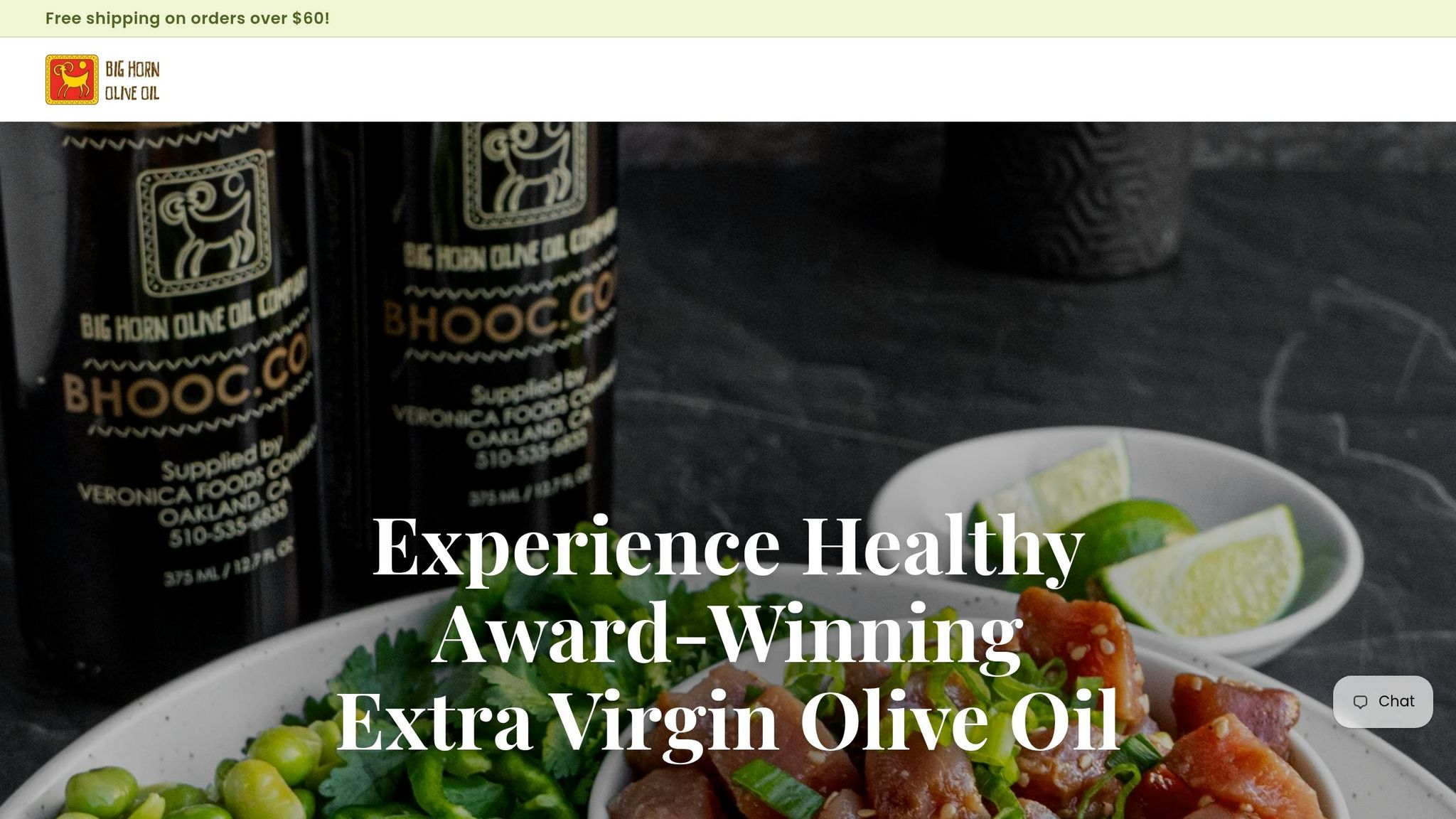
Big Horn Olive Oil cold-presses its Ultra Premium Extra Virgin Olive Oils within 2 hours of harvest and markets oil within 3 months of harvest. Those are the kind of freshness markers a certification program can check. On their own, those claims are just words. With chain of custody records and lab testing behind them, they start to mean something.
Testing and Traceability Tools That Catch Adulteration
Standards don’t mean much on their own. They matter when records and testing show that the oil in the bottle matches the claim on the label. That’s how certification helps catch fraud: it checks chain-of-custody records against lab results.
Chain of Custody From Grove to Bottle
A chain of custody follows the oil from harvest to bottling. It includes harvest dates, grove IDs, mill logs, tank assignments, shipping manifests, and lot codes.
One of the main fraud checks is batch reconciliation. This means comparing the documented supply with the amount that was actually bottled. If bottled volume is higher than documented supply, that gap can point to dilution, relabeling, or blending that was never declared. In many cases, origin substitution shows up in the records before it shows up anywhere else. For example, a label may claim single-origin California oil, while shipping manifests show bulk transfers from several countries.
Once the paperwork checks out, the oil still has to clear the lab.
Lab Methods Used to Detect Fraud
Routine certification testing looks at free acidity, peroxide value, UV absorbance, fatty acid profiles, sterols, waxes, and sensory review. When the goal is to spot adulteration, fatty acid, sterol, and wax tests do much of the heavy lifting because added oils change the chemical fingerprint and push it away from genuine extra virgin olive oil.
Sensory panels matter too. Some oils can pass basic chemical limits and still have defects. Notes like rancid, musty, fusty, winey, or metallic can point to poor processing, age, or contamination.
When routine tests flag a problem, labs can go deeper with GC-MS, LC-MS/MS, NMR, and non-targeted screening. These methods give a more detailed fingerprint and can reveal subtle blending or origin claims that don’t line up with the chemistry.
Comparison Table: Which Tests Detect Which Problems
| Test | What It Detects | Routine in Certification? |
|---|---|---|
| Free acidity | Poor fruit handling, hydrolytic breakdown, age | Yes |
| Peroxide value | Primary oxidation, rancidity | Yes |
| UV absorbance (K232/K270/ΔK) | Refining, oxidation, some adulteration patterns | Yes |
| Fatty acid profile | Seed-oil addition, composition anomalies | Yes |
| Sterols / waxes | Refined oil, pomace oil, non-olive adulterants | Yes |
| Sensory panel | Defects such as rancid, musty, fusty, winey, or metallic notes | Yes |
| GC-MS / LC-MS/MS | Detailed adulteration and minor-compound abnormalities | Mostly advanced |
| NMR / non-targeted screening | Broader fingerprint anomalies and mismatched origin claims | Mostly advanced |
What makes certification useful is the way these checks work together. Records show where the oil came from. Routine chemistry checks the basics. Sensory review catches faults that numbers alone can miss. Advanced lab methods step in when something looks off. Put together, they give shoppers and producers proof they can actually use.
What Certification Means for Shoppers and Producers
How Certification Helps Shoppers Make Better Buying Decisions
For U.S. shoppers paying premium prices, certification gives a label claim something to stand on: a record that can be checked.
That matters more than many people think. Research from UC Davis found that 69% of imported and 10% of California-produced oils labeled "extra virgin" failed IOC/USDA standards based on sensory and chemical tests. When that much can go wrong, label details stop being small print.
A few details are worth checking before you buy:
- A harvest date
- A lot or origin code
- A recognized certification mark such as NAOOA Certified, COOC, or USDA QMP
The harvest date matters because olive oil breaks down over time. Origin details help with traceability. Certification is what ties those details to records, testing, and oversight instead of leaving them as words on a bottle.
Big Horn Olive Oil's 2-hour cold-pressing and 3-month harvest window are good examples of the kind of freshness controls certification programs are built to check.
Comparison Table: Certified vs. Non-Certified Olive Oil
The clearest difference comes down to how much outside proof backs the bottle.
| Factor | Certified Olive Oil | Non-Certified Olive Oil |
|---|---|---|
| Fraud risk | Lower - independent checks required | Higher - relies on producer's own claims |
| Traceability | Documented lot, origin, and harvest records | May vary; often limited or absent |
| Independent testing | Yes - chemical and sensory testing required | Not guaranteed |
| Level of oversight | Periodic audits and off-the-shelf testing | No external oversight required |
| Confidence in extra virgin claim | Stronger - tied to verified test results | Weaker - based on label alone |
Conclusion: Certification Turns Label Claims Into Verifiable Proof
Standards spell out what extra virgin olive oil must be. Certification puts those rules into practice through testing, audits, and traceability records.
When chain-of-custody documentation is matched with lab analysis, shoppers get more than a marketing claim. Honest producers do too. They get proof that the oil matches its label. For producers, certification also signals verified quality and helps build buyer trust.
FAQs
Does certification guarantee olive oil is authentic?
Certification is one of the best signs that an olive oil is authentic, but it isn't a 100% guarantee. A better way to think about it: it's a strict verification process, not a magic shield.
Groups like the IOC, COOC, and NAOOA check oils through chemical testing, sensory evaluation, traceability, and independent lab review. Those checks help enforce tough standards and reduce fraud, including cases where producers mix extra virgin olive oil with cheaper oils.
So if you're shopping for extra virgin olive oil, reputable certification seals are still one of the most effective ways to pick an authentic, high-quality bottle.
Which certification seals should I look for?
Look for third-party certification seals that show the olive oil has passed chemical and sensory testing. Reliable seals include COOC, NAOOA, PDO, PGI, and the USDA Quality Monitoring Program (QMP).
It also helps to check for a harvest date on the label. That date gives you a better sense of how fresh the oil is.
Taken together, these markers give you more confidence that the olive oil is genuine, pure, and well made.
Can certified olive oil still go bad on the shelf?
Yes. Certification means the oil met strict standards at the time it was tested. But olive oil doesn’t stay the same forever. It’s perishable, and its quality can drop with time.
Light, heat, and air speed up oxidation. That can lead to quality loss and off flavors like rancid, fusty, or musty notes.
To help keep the oil in good shape, check the harvest date. Then store it in a dark glass or metal container in a cool, dark place.