

Intensity Levels in Olive Oil: A Flavor Guide
Olive oil comes in three main intensity levels: delicate, medium, and robust. Each type brings unique flavors and works best with specific dishes. Choosing the right intensity can elevate your cooking by complementing the flavors of your ingredients. Here's a quick breakdown:
- Delicate oils: Smooth, buttery, and mild. Best for seafood, light salads, soft cheeses, and baking.
- Medium oils: Balanced with grassy and fruity notes. Perfect for roasted vegetables, chicken marinades, pasta, and bread dipping.
- Robust oils: Bold, peppery, and herbaceous. Ideal for steaks, hearty stews, and roasted root vegetables.
To taste olive oil at home, use the "4 S's" method: swirl, sniff, slurp, and swallow. This helps identify bitterness, fruitiness, and pungency - the key traits that define intensity. Matching oil intensity to your dish ensures flavors harmonize rather than clash.
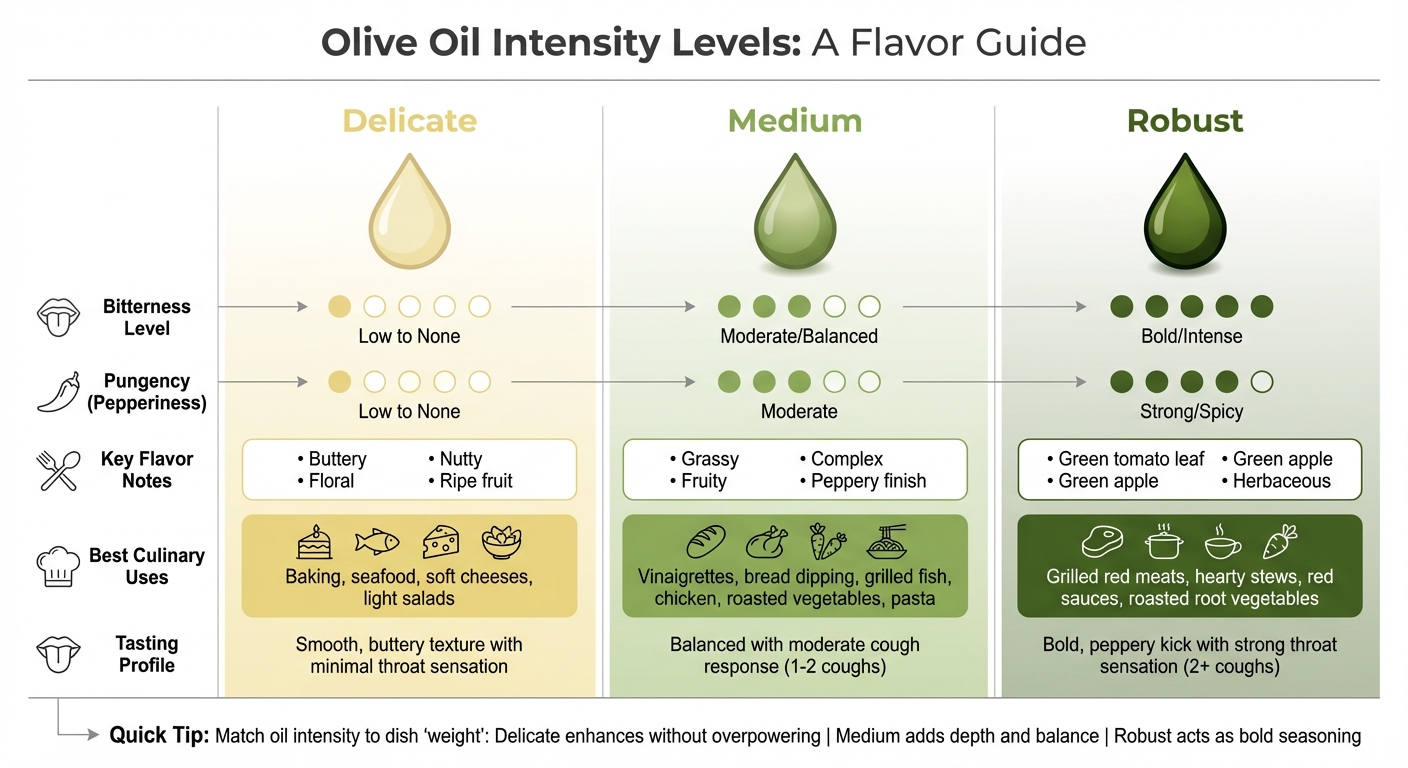
Olive Oil Intensity Levels Comparison Guide: Delicate vs Medium vs Robust
Delicate Intensity Checklist
Tasting Notes for Delicate Intensity
Delicate olive oils sit at the gentler end of the intensity spectrum. They’re known for their buttery, smooth texture and minimal bitterness. When tasting these oils, expect flavors like ripe apple, banana, or stone fruit to stand out. You might also catch faint floral notes, a touch of nuttiness, or a soft sweetness.
The mouthfeel is round and silky, coating your palate without any sharpness. Unlike robust oils, delicate varieties won’t cause a cough or leave a peppery burn in your throat. These subtle traits are key as you move into evaluating their intensity.
How to Evaluate Delicate Intensity
Professional tasters rely on "The 4 Ss" method to evaluate olive oil. Begin by warming the oil to around 82°F in a wine glass - this helps release its aromatic qualities. Swirl the glass and take a gentle sniff from the rim to pick up on its fruity and floral notes.
Next, slurp a small amount of oil while drawing in air. This aerates the oil, spreading it across your tongue so you can detect its mild fruitiness and slight bitterness. Finally, swallow to gauge its pungency - delicate oils should leave only a faint, gentle sting in the throat.
"Bitterness, which is a primary flavor component of fresh olives, is perceived through receptors (taste buds) on the tongue." - California Olive Oil Council
To reset your palate between tastings, use a slice of Granny Smith apple followed by either still or sparkling water. This keeps your taste buds ready to pick up on the oil's subtle nuances.
Culinary Uses for Delicate Olive Oils
Knowing the characteristics of delicate olive oils can guide you in the kitchen. These oils are ideal for enhancing flavors without overshadowing them. They pair beautifully with poached or grilled white fish, bringing out the fish’s natural sweetness without overpowering it. Soft cheeses like fresh mozzarella or ricotta also shine with a light drizzle of delicate oil, adding smoothness without masking their creaminess.
For breakfast, try adding a splash of delicate olive oil to scrambled eggs or an omelet while cooking on low heat - it adds a gourmet touch. These oils are also excellent for finishing soups, steamed vegetables, or salads, preserving their delicate flavor profile. In baking, they can replace butter in cakes, muffins, and cookies, adding moisture and a gentle fruity note.
Big Horn Olive Oil Recommendation
Big Horn Olive Oil’s Picual Extra Virgin Olive Oil is a standout example of delicate intensity. It offers the smooth, buttery qualities expected from this category and is versatile enough for a range of uses - from seafood dishes to baked goods. At $8.99, it’s a cold-pressed option harvested within the last three months, ensuring freshness and quality.
sbb-itb-4066b8e
Medium Intensity Checklist
Tasting Notes for Medium Intensity
Medium intensity olive oils offer a middle ground between the mildness of delicate oils and the boldness of robust ones. When you taste these oils, you’ll experience moderate fruitiness, noticeable bitterness, and a peppery kick that might even make you cough once or twice.
Their flavor profile often includes "green" notes like fresh-cut grass, artichoke, tomato leaf, and herbs, with subtle hints of ripe fruits such as almonds or apple. Unlike delicate oils, which tend to feel buttery and smooth, medium oils bring a grassy complexity and satisfying texture without being overly heavy.
"Bitterness is part of the extra virgin olive oil character... it is indicative of fresh olive fruit."
– Simona Cognoli, Professional Olive Oil Taster
That bitterness, far from being a flaw, reflects the presence of healthy phenolic compounds and fresh olives. Professional tasters rate these attributes on a scale of 0 to 5, with medium oils generally scoring around a 3. These sensory markers are essential for evaluating the oil's overall quality.
How to Evaluate Medium Intensity
To properly assess medium intensity olive oils, start by warming the oil to about 82°F in a wine glass and swirling it gently to release its aromas. Take a deep sniff from the rim to detect fruity, herbal, or nutty scents - look for the signature grassy or artichoke notes of medium oils.
Next, take a small sip, allowing the oil to coat your palate evenly. This helps you measure the bitterness on your tongue. Swallow to evaluate the pungency, or peppery sensation, in your throat - typically strong enough to cause a moderate cough. A well-balanced oil will have bitterness and pepperiness that complement, rather than overpower, its fruity notes. Ideally, these attributes shouldn't differ by more than two points on the tasting scale. Cleanse your palate between oils with a slice of Granny Smith apple and water.
Culinary Uses for Medium Olive Oils
Medium intensity oils shine in the kitchen thanks to their versatility. They pair wonderfully with roasted or grilled vegetables, enhancing their natural sweetness while adding a savory, herbal edge. These oils also work well as marinades for chicken, a finishing touch for pasta, bruschetta, or risotto, and even as a flavorful dip for crusty bread.
When it comes to proteins like steak or grilled fish, medium oils provide a balance - cutting through richness while brightening the overall flavor. They also add a gentle fruity note to baked goods without the stronger bitterness of robust oils.
Big Horn Olive Oil Recommendation
Big Horn Olive Oil's Estate Reserve Ultra Premium EVOO is a standout choice for medium-intensity olive oil. Priced at $8.99, this cold-pressed extra virgin olive oil delivers the hallmark characteristics of the medium category: balanced fruitiness, moderate bitterness, and a peppery finish. Harvested within the last three months, it offers fresh flavors and health benefits, making it perfect for everything from roasted vegetables and chicken marinades to pasta and bread dipping.
Robust Intensity Checklist
Tasting Notes for Robust Intensity
Robust olive oils are all about bold, intense flavors. Picture the smell of fresh-cut grass, the tang of green tomato leaf, or the crispness of green apple skins - these are the hallmarks of a robust oil. Add to that a pronounced bitterness and a peppery kick that’s hard to miss, and you’ve got a flavor profile that’s both complex and unforgettable. The bitterness is a telltale sign of fresh olives packed with phenolic compounds that are great for you. You might also notice a slight astringency, thanks to tannins that contribute to the oil’s layered complexity. Professional tasters score these attributes on a scale from 0 to 5, and robust oils typically hit a 4 or 5 for both bitterness and pungency.
"Robust flavor olive oil has the more intense level of pungency and spiciness. It captivates with a grassy and bold flavor." – Fustini's
These oils are made from olives harvested early in the season, while they’re still mostly green. This early harvest results in the herbaceous, bold flavors that set robust oils apart from their delicate and medium counterparts. They’re the go-to choice for dishes that demand intense flavor.
How to Evaluate Robust Intensity
To properly evaluate a robust olive oil, start by warming it to about 82°F in a wine glass. Swirl the oil to release its aromas. When you take a sniff, you should notice strong, herbaceous scents - if the aroma is faint, the oil might not be as robust. Next, take a small sip and draw air through your teeth. This slurping action spreads the oil across your palate, revealing its full flavor spectrum. Pay attention to the bitterness on the back of your tongue and the sharp, peppery sensation in your throat when you swallow. Between tastings, cleanse your palate with a slice of Granny Smith apple and some water to keep your senses sharp.
These tasting notes are your guide to identifying a robust oil’s signature traits and understanding how it can enhance hearty dishes.
Culinary Uses for Robust Olive Oils
Once you’ve confirmed an oil’s robust intensity, it’s time to put it to work in the kitchen. These oils shine in recipes that call for bold, hearty flavors. Think grilled steaks, pork, lamb, or even wild game - the peppery bite of robust oils cuts through the richness of fatty meats beautifully. They’re also fantastic in thick stews, lentil soups, and minestrone, where their boldness complements the dish’s depth.
For vegetables, robust oils are perfect for roasting root veggies like carrots and parsnips or for preparing bitter greens, as the oil’s natural bitterness pairs wonderfully with those flavors. Drizzle it over bruschetta, toss it with tomato-based pasta sauces, or serve it alongside aged cheeses. The key is to add the oil at the end of cooking or just before serving to preserve its complex aromas and peppery finish. However, steer clear of using robust oils with delicate proteins like white fish or light salads - they can easily overpower more subtle flavors.
Big Horn Olive Oil Recommendation
If you’re looking for a standout robust olive oil, Big Horn Olive Oil’s Coratina Extra Virgin Olive Oil is a fantastic pick at $8.99. This Italian varietal is known for its bold, herbaceous profile, with pronounced bitterness and a peppery finish that’s sure to impress. It’s cold-pressed within two hours of harvesting and bottled within the last three months, ensuring maximum freshness. The result? A grassy, throat-tingling oil that’s perfect for enhancing grilled meats, rich red sauces, or roasted root vegetables. Whenever you’re craving bold, assertive flavors, this oil delivers in spades.
How to Taste Olive Oil with Oleologist Nicholas Coleman
Comparing Olive Oil Intensity Levels
Here's a handy breakdown to help you pair olive oil intensity with your dishes. The key differences between delicate, medium, and robust olive oils lie in their bitterness, pungency (that peppery sensation in your throat), and their overall flavor profiles.
The International Olive Oil Council uses a panel of 8 to 12 expert tasters to evaluate these attributes on a scale from 0 (none) to 5 (very intense). This standardized scoring system ensures oils are classified accurately, though with a little practice, you can start identifying these characteristics yourself. Bitterness and pungency aren’t just flavor markers - they’re also signs of health-boosting antioxidants and polyphenols.
The chart below simplifies how each type of olive oil complements different culinary needs.
Intensity Comparison Table
| Intensity Level | Bitterness | Pungency (Pepperiness) | Key Flavor/Aroma Notes | Best Culinary Uses |
|---|---|---|---|---|
| Delicate | Low to None | Low to None | Buttery, floral, nutty, ripe fruit | Baking, seafood, soft cheeses, light salads |
| Medium | Moderate/Balanced | Moderate | Grassy, fruity, complex, peppery finish | Vinaigrettes, bread dipping, grilled fish, chicken |
| Robust | Bold/Intense | Strong/Spicy | Green tomato leaf, green apple, herbaceous | Grilled red meats, hearty stews, red sauces, roasted root vegetables |
When selecting an olive oil, try to match its intensity to the "weight" of your dish. Delicate oils enhance flavors without overshadowing them. Medium oils strike a balance, adding depth without being overpowering. Robust oils act as a bold seasoning, perfect for standing up to rich, hearty meals. If you’re only buying one bottle, a medium-intensity oil is your best bet for versatility.
This table, combined with tasting tips, makes it easier to choose the perfect oil for your culinary creations.
How to Measure Olive Oil Intensity at Home
You don’t need to be a professional taster to evaluate olive oil intensity at home. With a few simple steps, you can explore the flavors and aromas that make each oil unique.
Home Tasting Checklist
While professionals use blue-tinted glasses to avoid being influenced by color, you can use a small wine glass or snifter for tasting. Pour about 1–2 tablespoons of oil into the glass, cover it, and warm it in your hands for a minute until it reaches about 82°F. This temperature helps release the oil’s full aroma.
Follow the 4 S’s for tasting:
- Swirl the oil to release its aromas.
- Sniff deeply to detect fruity or herbal notes.
- Slurp to evenly coat your palate and identify bitterness.
- Swallow to assess the pungency in your throat.
"An oil's pungency is judged by a sensation in your throat so you must swallow at least a small amount to thoroughly evaluate it".
Some robust oils might even make you cough - these are often humorously rated as "one-cough" or "two-cough" oils. Use a scale from 0 (none) to 5 (very intense) to score bitterness and pungency. Between samples, cleanse your palate with slices of Granny Smith apple and still or sparkling water. Apples are better than bread for resetting your taste buds. Keep notes to track your impressions.
Once you’ve mastered tasting, you’ll notice how different factors influence an oil’s intensity.
Factors That Affect Intensity
The intensity of olive oil isn’t just about taste; it’s shaped by factors like olive variety, harvest timing, and freshness. Different olive cultivars have varying levels of polyphenols, which contribute to bitterness and pungency . Early-harvest green olives, for example, produce oils with bold, peppery flavors and higher phenolic content. In contrast, riper olives yield smoother, milder oils.
To experience an oil’s peak intensity, try to taste it within three months of harvest. Check for harvest dates on bottles - these are more reliable indicators of freshness than "best by" dates.
Pairing Selection Guide
Matching the intensity of olive oil to your dish can elevate your cooking. Here’s a quick guide:
- Delicate oils: These have buttery, mild flavors that complement fish, eggs, potatoes, pesto, and light soups. They add a gentle touch without overpowering.
- Medium oils: With grassy and slightly peppery notes, these pair nicely with steak, pasta, tomato sauces, and bruschetta, offering depth and balance.
- Robust oils: Known for bold, green tomato leaf flavors, these are perfect for hearty dishes like red meats, stews, and steamed vegetables, delivering a strong seasoning element.
When tasting multiple oils, start with the delicate ones and work your way up to robust varieties. This progression prevents your palate from being overwhelmed too soon, allowing you to appreciate each oil’s unique qualities.
Conclusion
Grasping the concept of olive oil intensity can completely change how you approach cooking. As outlined in our guide, understanding these characteristics helps you pick the right oil for each dish. The intensity of olive oil doesn’t just add flavor - it defines it. Whether it subtly supports or boldly enhances, the right oil can transform your meal.
By using a simple checklist, you can break down what you’re tasting. Pay attention to the oil’s fruitiness, bitterness, and pungency. Those sharp, peppery notes that tingle your throat? They’re not defects - they’re signs of freshness and high polyphenol levels. These qualities bring vibrant flavors and added health benefits to your kitchen.
This method takes the guesswork out of tasting and makes it approachable.
"Olive oil is not just a cooking fat, it is a principal ingredient with a deep flavor, like liquid herbs." - Rachel Roddy, Chef and Culinary Writer
Big Horn Olive Oil offers a range of Ultra Premium Extra Virgin Olive Oils tailored to every intensity. Their oils are cold-pressed within two hours of harvest and delivered fresh within three months, ensuring you enjoy their flavors at their peak.
Experiment with different intensities in your cooking to discover how each one can elevate your dishes. With practice, you’ll master the art of pairing oils with meals, turning every dish into something extraordinary.
FAQs
Does peppery olive oil mean it’s bad?
Peppery olive oil isn’t a bad thing - quite the opposite. It’s actually a hallmark of high-quality, freshly pressed extra virgin olive oil. That peppery kick comes from antioxidants and other beneficial compounds that enhance both its flavor and health benefits. Rather than being a flaw, this characteristic signals freshness and top-notch quality.
How can I tell an oil’s intensity from the label?
Olive oil labels often include terms like delicate, medium, or robust to describe the oil's flavor intensity. These terms give you a sense of the oil's strength and unique characteristics, making it easier to pick the perfect match for your cooking.
What’s the best “one bottle” intensity for everyday cooking?
A medium-intensity olive oil works perfectly for everyday cooking. Its balanced flavor adds depth to your dishes without dominating them, making it a versatile choice for all kinds of recipes.