

Provençal Ratatouille with Balsamic Vinegar
If I want ratatouille that tastes balanced instead of watery or flat, I do four things: cut the vegetables the same size, salt the eggplant for 15 to 20 minutes, cook the vegetables in batches, and add 1 tablespoon of balsamic near the end.
This dish uses eggplant, zucchini, yellow squash, bell peppers, onion, tomatoes, garlic, olive oil, thyme, basil, bay leaf, and herbes de Provence. I can keep it on the stovetop or bake it at 300°F to 350°F for a softer, slower finish. Leftovers keep in the fridge for up to 5 days and often taste better after 24 hours.
What matters most:
- Even cuts help the vegetables cook at the same pace
- Salted eggplant loses extra water and browns better
- Batch cooking helps the vegetables brown instead of steam
- Balsamic timing changes the taste: later = brighter, earlier = sweeter
- A short rest of about 10 minutes helps the flavors settle
I’d sum it up like this: good ratatouille is less about fancy steps and more about order, timing, and restraint.
Ingredients and Tools for Provençal-Style Ratatouille
Ingredient List with U.S. Measurements
Get everything out before you start chopping. It makes the whole process smoother.
The main vegetables are 1 pound of eggplant, 2 medium zucchinis, 2 medium yellow squash, 2 bell peppers (red, yellow, or green), 1 large onion, and 4 large ripe tomatoes (about 1 pound). If your tomatoes aren't quite there yet, swap them for 2 cups of pureed canned whole tomatoes for a steadier flavor.
For the flavor base, use 4 to 6 cloves of minced garlic. You'll also need 3 tablespoons of extra virgin olive oil and 1 to 2 tablespoons of high-quality balsamic vinegar. For herbs, gather fresh thyme, 1/4 cup of chopped fresh basil, a bay leaf, and herbes de Provence. Finish with sea salt and freshly ground black pepper.
Kitchen Tools You Will Need
You don't need a fancy setup here. A sharp chef's knife and a large cutting board will take care of the prep work.
For cooking, use a heavy-bottomed skillet or oven-safe Dutch oven so the vegetables cook evenly. Keep a colander nearby for salting and draining the eggplant, plus measuring cups and spoons for the oil, vinegar, and herbs. If you're finishing the ratatouille in the oven, have an oven-safe casserole dish or pot ready to go.
How to Choose Olive Oil and Balsamic Vinegar
For the olive oil, pick a fresh extra virgin olive oil for both cooking and finishing. For the balsamic, go with an aged balsamic from Modena, Italy that has a balanced mix of sweetness and acidity.
If you want to go a bit higher-end, Big Horn Olive Oil sells the Traditional 18-Year Aged Dark Balsamic Vinegar and the Molto Denissimo 25-Year Aged Dark Balsamic Vinegar, both sourced from Modena, Italy.
With the ingredients chosen, move on to prep.
Baked Ratatouille Recipe: A Taste of Provence in Your Kitchen
How to Prep the Vegetables Before Cooking
Ratatouille cooks in stages, so it helps to prep and measure everything before the pan gets hot. Do that first, and each step feels smooth instead of rushed. Once that’s done, focus on cutting the vegetables evenly.
Cut the Vegetables for Even Cooking
The goal is uniform size. Even pieces cook at the same pace and stay tender.
Cut the eggplant, zucchini, and squash into 1/2-inch cubes or rounds. Seed the bell peppers and cut them into 1-inch pieces. Dice the onion finely so it softens fast and melts into the base. For the tomatoes, dice them into 1/2-inch pieces and remove the seeds to cut down on extra liquid.
Salt and Drain Eggplant to Remove Excess Moisture
After cutting the eggplant, place the pieces in a colander and sprinkle them well with coarse salt. Let them sit for 15 to 20 minutes.
Then rinse the eggplant and pat it dry. If it’s still wet, it will steam instead of brown, and that can leave you with flat flavor and a softer texture than you want.
After the eggplant drains, measure out the herbs, oil, and vinegar.
Measure Herbs, Oil, and Vinegar Before You Start
Set out the oil, balsamic, and garlic before heating the pan. Strip the thyme leaves from the stems and chop them now. For the fresh basil, tear or thinly slice the leaves and set them aside. It goes in at the very end so its bright flavor stays sharp.
This kind of prep saves you from scrambling once the cooking starts. If you stop to measure while garlic sits in a hot pan, it can burn fast.
Once everything is prepped, move to the stovetop and build the base in stages.
sbb-itb-4066b8e
How to Cook the Ratatouille and Add Balsamic at the Right Time
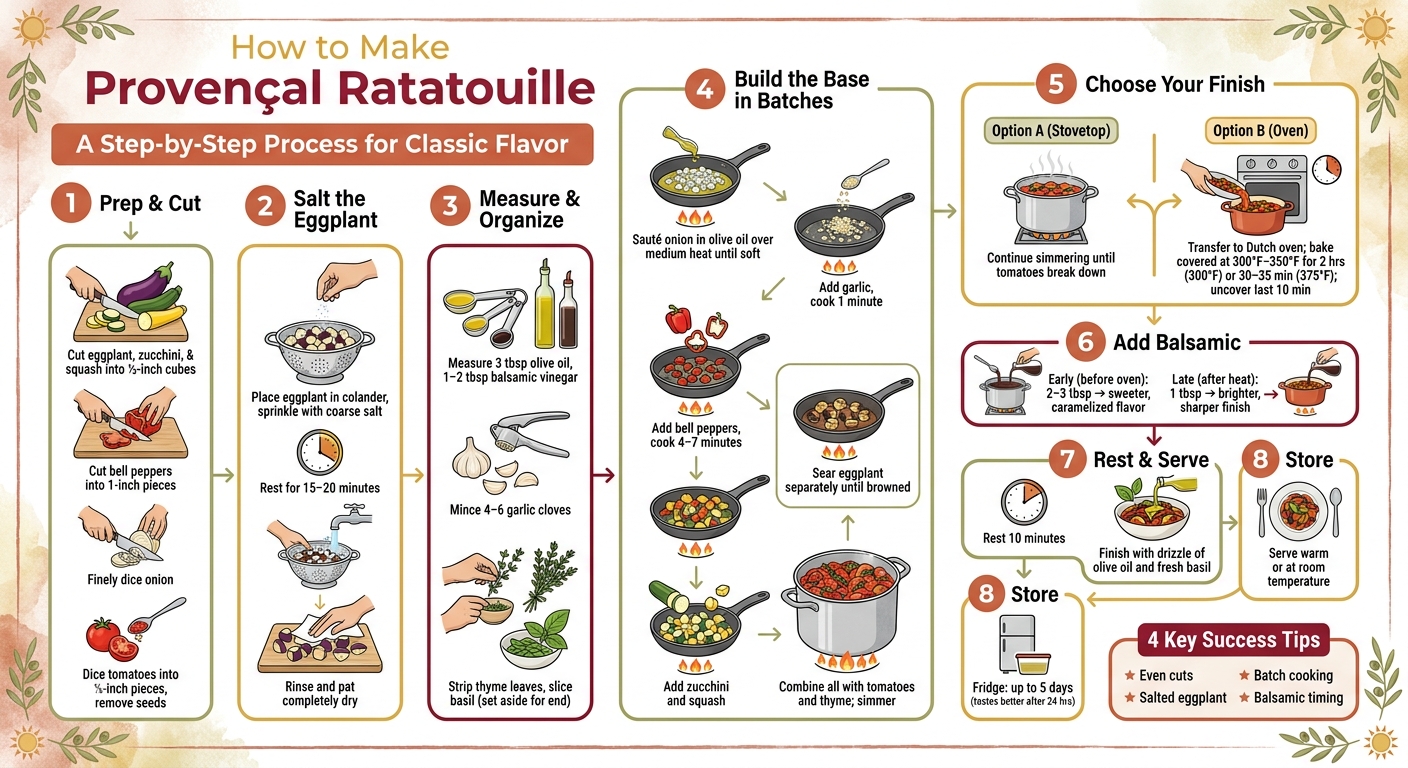
How to Make Provençal Ratatouille: Step-by-Step Visual Guide
Build the Stovetop Base in Stages
Once your vegetables are prepped and drained, start cooking them in batches. That part matters. If you crowd the pan, the vegetables steam and turn limp. If you give them space, they brown and pick up more flavor.
Warm olive oil over medium heat. Cook the onions until soft, then add the garlic and cook for 1 minute. Stir in the bell peppers and cook for 4 to 7 minutes. Next, add the zucchini and squash. Sear the eggplant in a bit more oil until browned, then return everything to the pan with the tomatoes and thyme. Let it simmer until the tomatoes break down into a loose sauce.
If you want the vegetables to soften more and blend together, move the base to the oven for the next step.
Finish in the Oven for a Slower, Hands-Off Result
For a deeper, hands-off finish, transfer the vegetable mixture to an oven-safe Dutch oven. Bake it covered at 300°F to 350°F until tender and concentrated. That usually means about 2 hours at 300°F or 30 to 35 minutes at 375°F. For the last 10 minutes, uncover the pot so the juices reduce and the top gets lightly glazed.
When and How to Add Balsamic for the Best Flavor
Balsamic can shift the whole dish, so timing makes a big difference. Add it after the vegetables are cooked and you get a brighter, sharper finish. Add it earlier and the heat softens the acidity, leaving a sweeter flavor that blends more fully into the ratatouille.
For most home cooks, the easiest move is to stir in 1 tablespoon of balsamic after taking the pan off the heat. Then let the ratatouille rest for 10 minutes so the flavor settles.
If you want something richer, almost glaze-like, add 2 to 3 tablespoons before the oven stage. As it bakes, the sugars caramelize slowly and give the dish a deeper finish.
How to Serve, Store, and Reheat Ratatouille
Serving Ratatouille Warm or at Room Temperature
Once the balsamic settles into the vegetables, you can serve the ratatouille right away or let it sit for a bit if you want the flavor to deepen. It works well warm, at room temperature, and even chilled. That short rest after cooking helps the vegetables, herbs, and balsamic come together, so each bite tastes more rounded.
Finish it with a drizzle of olive oil and fresh basil.
How to Store and Reheat Without Losing Texture
Store leftovers in an airtight container in the refrigerator for up to 5 days. Ratatouille often tastes deeper the next day. In fact, leftovers are often better after 24 hours, once the flavors have fully melded.
A little care goes a long way here. Cool leftovers fast and get them into the fridge soon after serving. When you're ready to warm them up, go gently so the vegetables don't turn mushy.
- Reheat small portions over low heat on the stovetop
- Warm larger batches in a 325°F oven for more even heat
- If it seems a bit tight, add a small splash of olive oil or balsamic
You can also freeze ratatouille for up to 3 months. After thawing, it works best in omelets or frittatas.
These steps help keep the ratatouille's texture, color, and balance in good shape.
Conclusion: Key Steps for a Balanced Provençal Ratatouille
The method is simple: cut the vegetables evenly, salt and drain the eggplant, build flavor in stages, and cook gently until everything is tender. Add the balsamic near the end so its acidity stays bright and the finish stays balanced.
FAQs
Can I make ratatouille ahead of time?
Yes. You can make ratatouille ahead of time, and it often tastes even better the next day. The extra time lets the flavors meld, so the dish feels richer and more rounded.
You can cook it up to 2 days in advance and keep it in an airtight container in the fridge for up to 5 days. When you're ready to eat, warm it gently on the stovetop or in the microwave. It also works well cold or at room temperature.
What if my ratatouille turns out watery?
Pre-salt the eggplant and summer squash before cooking to pull out extra moisture. That small step helps the vegetables caramelize better and brings out more of their natural sweetness, which gives the dish a richer taste.
It also helps to pick firm, ripe vegetables. If the produce is too old or too soft, ratatouille can turn mushy fast. And as the vegetables cook down, aged balsamic vinegar from Big Horn Olive Oil can add more depth to the flavor.
Can I skip the balsamic vinegar?
Yes. Balsamic vinegar is optional.
It can add depth, brightness, and a subtle sweetness. But many ratatouille recipes lean on the natural sweetness of fresh vegetables and herbs instead.
Some versions use red wine vinegar in its place. Others skip vinegar altogether.