

Seville Olive Oil Tasting: What to Expect
Seville offers a hands-on olive oil tasting experience that combines ancient techniques with modern expertise. Located in Andalusia, the global leader in olive oil production, the city provides the perfect setting to learn about the history, flavors, and production of this Mediterranean staple. Here's what you can expect:
-
Two Main Experiences:
- Farm Tours: Visit historic estates, walk through olive groves, and see the production process firsthand. Duration: ~4 hours. Cost: ~$102.
- City Workshops: Learn professional tasting techniques in central Seville. Duration: ~2 hours. Cost: $12–$20.
- Tasting Process: Warm the oil, inhale its aroma, and sip to identify flavors like fruitiness, bitterness, and pepperiness. Cleanse your palate between samples with bread or green apple.
-
Popular Olive Varieties:
- Hojiblanca: Peppery, great for meats and vegetables.
- Picual: Slightly bitter, pairs well with dark chocolate and bread.
- Arbequina: Mild and fruity, ideal for desserts and seafood.
- Food Pairings: Olive oil tastings often include bread, Iberian ham, cheese, and tomatoes, paired with local sherries.
Seville’s tastings are a sensory journey, offering insights into olive oil’s role in Andalusian cuisine and how to select high-quality oils for your kitchen.
Connect With Locals | Meet Juan from Basilippo in Seville, Spain

What Happens During an Olive Oil Tasting
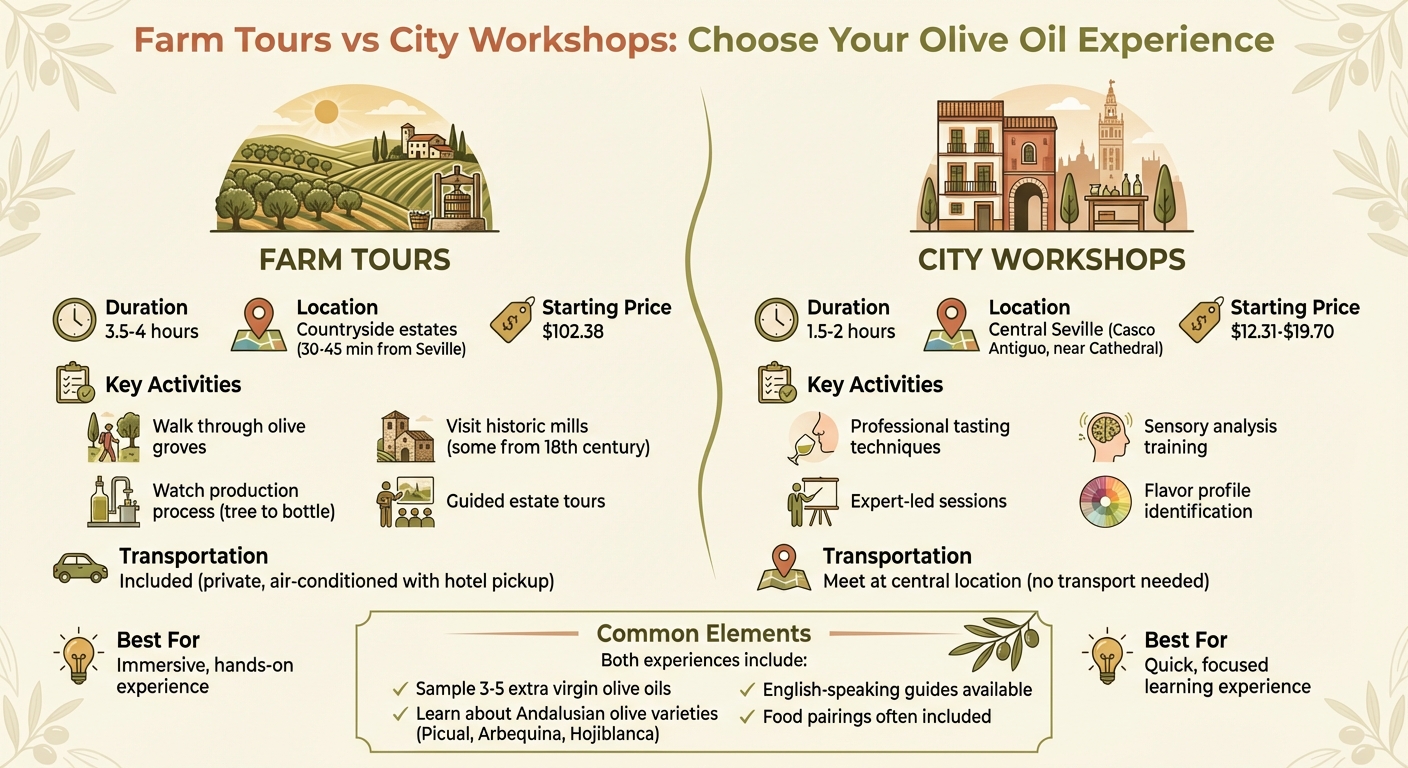
Seville Olive Oil Tasting Experiences Comparison: Farm Tours vs City Workshops
In Seville, olive oil tastings come in two main formats. You can opt for farm tours, which take you into the countryside to explore groves, watch the production process, and taste oils at rustic haciendas. Alternatively, city workshops bring the experience to the heart of Seville, focusing on professional tasting techniques in historic homes or specialty shops in the Old Center.
Types of Tasting Experiences Available
Farm tours typically last 3.5 to 4 hours, including about 45 minutes of round-trip transportation from central Seville. These tours take you to working estates, some dating back to the 18th century. Known as "olive oil tourism", these experiences allow you to walk among olive groves, tour the mills, and see how oil is made - from tree to bottle.
"The guided tour will drive you to the olive trees besides the property and, the owner will give you all explanations and information about the harvesting, selection process, and art of making extra virgin olive oil."
- Basilippo Oleoturismo
City workshops, on the other hand, last 1.5 to 2 hours and don’t require travel. These sessions are held in central Seville, near landmarks like the Cathedral or Feria Market, and focus on sensory analysis and professional tasting techniques. Some workshops are led by internationally recognized experts. For example, Alexis Kerner, a Philadelphia-born olive oil expert, runs The Olive Oil Workshop, which has received an "Excellent" rating from 42 travelers on TripAdvisor.
| Experience Type | Duration | Location | Key Activities | Starting Price |
|---|---|---|---|---|
| Farm Tour | 3.5–4 hours | Countryside estates (30–45 min from Seville) | Grove walks, mill visits, production demonstrations | $102.38 |
| City Workshop | 1.5–2 hours | Central Seville (Casco Antiguo) | Professional tasting techniques, sensory analysis | $12.31–$19.70 |
Both experiences guide participants through the tasting process step by step.
Step-by-Step Guide to Tasting Sessions
Tasting sessions usually kick off with a brief history of Andalusian olive oil, touching on Roman and Moorish influences. You’ll also learn about local olive varieties and the evolution of production methods, from traditional stone mills to modern extraction techniques.
The guided tasting follows, where participants sample 3 to 5 different extra virgin olive oils. Experts help you identify flavor profiles - whether peppery, robust, fruity, or mild - and teach you how to spot the qualities of high-grade oil. Oils from varieties like Picual, Arbequina, and Hojiblanca are often featured.
Many sessions conclude with food pairings. Premium options may even include a full tapas tour or a Mediterranean-style pairing lunch, extending the experience to over three hours.
Duration and Practical Information
To ensure a smooth experience, it’s worth noting some practical details.
Many tastings are led by English-speaking guides, including some workshops founded by American expats who cater to international travelers. If you can’t make it to Seville, some experts now offer online tastings, complete with sample kits shipped to your home.
Booking in advance is highly recommended, especially for farm tours that require a minimum group size. City workshops are generally more flexible and can often accommodate solo travelers in group settings. Most city locations are wheelchair accessible and close to public transportation, but it’s a good idea to confirm accessibility for farm tours, which may involve walking through orchards.
Farm tours usually include private, air-conditioned transportation with hotel pickup and drop-off. City workshops, however, require you to meet at a central location. Prices vary widely - from basic city tastings starting at $12.31 to premium experiences that can cost up to $275, depending on group size and added features.
Big Horn Olive Oil values these immersive experiences, as they help participants understand the markers of exceptional extra virgin olive oil. These same standards are reflected in the oils we carefully select and offer to our customers.
How to Taste Olive Oil Properly
The Tasting Process
In Seville, professional olive oil tastings are a sensory experience that follows a specific method. It all starts with warming the oil to around 82°F by gently cupping the glass in your hand. This releases the oil's aromas, allowing them to bloom. To ensure an unbiased assessment, opaque glasses are often used so the oil's color doesn’t sway your judgment. Once warmed, cover the glass briefly to trap the aromas, then remove your hand and take a deep inhale. You might pick up on scents like freshly cut grass, tomato plant, apple, or ripe olive. As Olivarte puts it, "The olfactory phase is the most decisive part of tasting olive oil, even more so than the actual tasting".
The next step is tasting. Take a small sip of the oil and let it coat your palate while inhaling gently - a technique known as strippaggio. This combines taste and aroma, revealing sweetness at the front of your tongue, while bitterness and a peppery kick emerge toward the back. Between samples, cleanse your palate with water and a slice of bread or green apple. This methodical process helps you fully evaluate the oil’s quality.
Identifying High-Quality Olive Oil
Once you’ve mastered the tasting technique, it’s time to recognize the traits of top-tier olive oil. High-quality Extra Virgin Olive Oil is free of any taste or aroma defects and has very low acidity. During a tasting, experts look for clean, fresh aromas, balanced flavors, and a seamless blend of fruitiness, bitterness, and pungency. Be wary of oils that smell musty, fusty, or rancid - these are clear signs of poor-quality olives or improper processing.
When shopping for olive oil, check for a recent harvest date (ideally within the last 12–24 months) and look for the "Denomination of Origin" (DO) label, which guarantees authenticity. Premium oils are usually packaged in dark glass bottles to shield them from light and heat, preserving their quality.
At Big Horn Olive Oil, we ensure our bottles meet these rigorous standards, offering Ultra Premium Extra Virgin Olive Oil that stands out for its exceptional quality.
sbb-itb-4066b8e
Pairing Olive Oil with Food in Seville
Typical Food Pairings During Tastings
In Seville, olive oil tastings are a feast for the senses, offering a variety of pairings that showcase its ability to elevate local flavors. The journey often begins with artisanal bread, a simple yet perfect way to savor the oil’s unadulterated taste. From there, you'll likely encounter Iberian ham (jamón ibérico de bellota) and locally crafted cheeses, which bring out the oil's savory depth. Fresh tomatoes and an assortment of regional olives round out the experience, adding brightness and complexity.
To complement these foods, many tastings feature dry sherries like Fino or Manzanilla. These wines balance the bitterness and peppery kick typical of Andalusian olive oils. For those with a sweet tooth, some tastings include orange-infused naranjito cookies, a treat from local convents that highlights olive oil’s surprising versatility in desserts.
Of course, olive oil isn’t just for tastings - it’s a key ingredient in Andalusian cooking.
Using Olive Oil in Andalusian Dishes
In Andalusian cuisine, olive oil is more than an ingredient; it’s a foundation. From drizzling it over salmorejo to finishing dishes like espinacas con garbanzos, its presence is everywhere. Even a simple slice of toasted bread with crushed tomato and a sprinkle of salt becomes extraordinary with a drizzle of high-quality olive oil. As Seville-based writer Siobhan Williams puts it:
"We love drizzling olive oil on top of salmorejo - another Andalusian delicacy."
Recreating Pairings at Home
You don’t need to be in Seville to enjoy these pairings. Bring the flavors into your own kitchen by choosing the right olive oil varietal for your dishes. For seafood and desserts, go for the mild, fruity notes of Arbequina. For grilled vegetables or bread, the bold Picual is a perfect match. And for fish, meat, or roasted vegetables, the peppery Hojiblanca adds just the right kick. Alexis Kerner, founder of The Olive Oil Workshop, shares:
"Picual... is delicious on dark chocolate, grilled veggies and bread."
To replicate the quality of Seville’s olive oils, consider options like Big Horn Olive Oil’s Ultra Premium Extra Virgin Olive Oils. They deliver the freshness and richness you’d expect from a top-tier tasting. And don’t forget: store your olive oil in a cool, dark place away from heat to preserve its vibrant flavors.
Conclusion
Experiencing an olive oil tasting in Seville is more than just sampling flavors - it's about awakening your senses and gaining a deeper appreciation for this cornerstone of Mediterranean cuisine. You’ll uncover how to identify top-tier oils through their aroma and taste, distinguish the unique characteristics of varietals like Picual, Arbequina, and Hojiblanca, and understand why freshness is paramount. As olive oil expert Alexis Kerner puts it:
"Extra virgin olive oil is the fresh fruit juice of an olive. Unlike wine it will not get better over time so look for the date and ensure you get one that is well within its expiration date."
This newfound knowledge can transform your cooking. Choosing oils with recent harvest dates, proper packaging, and authentic varietals allows you to bring the vibrant flavors of Andalusia into your kitchen. For instance, Big Horn Olive Oil’s Ultra Premium Extra Virgin Olive Oils deliver exceptional quality, being cold-pressed within just two hours of harvest and arriving fresh within three months.
To make the most of your olive oil, follow these essential tips: store it in dark glass or tin containers away from light and heat, prioritize harvest dates over expiration dates, and pair specific varietals with your dishes. Use Picual for its bold, peppery kick on grilled vegetables, Arbequina for its mild sweetness that complements seafood and desserts, or Hojiblanca for its versatility with meats and roasted vegetables.
Whether drizzled over salmorejo or spread on toasted bread with fresh tomato, quality olive oil is the heart of Andalusian cooking, infusing every dish with a touch of tradition and richness.
FAQs
Why is Seville a great destination for olive oil tastings?
Seville sits at the heart of Andalusia, a region that leads the world in olive oil production, supplying nearly half of the planet's total. Thanks to its Mediterranean climate - marked by hot, dry summers and mild winters - this area provides the perfect environment for growing renowned olive varieties like Picual, Arbequina, and Hojiblanca. These olives create oils with distinct flavors and aromas that are celebrated across the globe.
Beyond the olives themselves, Andalusia’s rich history and long-standing olive-growing traditions add another layer of charm. Visitors can wander through historic olive groves, tour beautifully restored estates, and visit state-of-the-art olive mills to dive into the process of harvesting, selecting, and pressing olives. Guided tastings often feature a range of oils, allowing guests to savor their unique flavors while learning about their health benefits and cultural importance. Whether you’re a culinary enthusiast or just curious, Seville provides an incredible gateway into the world of premium olive oil.
What’s the difference between farm tours and city workshops for olive oil tasting in Seville?
Farm tours provide a hands-on journey into the heart of the countryside. You’ll wander through olive groves, watch the production process up close, and sample oils right where they’re made. These tours usually run for about 3 to 3.5 hours and include walking through the orchards, learning about harvesting and pressing methods, and sometimes even exploring a small museum. It’s an outdoor adventure that brings you closer to the rich history and art of olive oil cultivation.
City workshops, in contrast, dive into the sensory side of olive oil. Often set in charming spots like historic homes, local shops, or bustling markets, these workshops last around 1.5 to 2 hours. You’ll enjoy guided tastings of 3–4 extra virgin olive oils, paired with tapas or simple snacks, in an intimate setting with small groups. The focus here is on exploring flavor profiles and culinary pairings, rather than the production process.
What’s the best way to taste olive oil and recognize high-quality varieties?
To properly taste olive oil and spot high-quality extra virgin olive oils (EVOO), start by setting up in a neutral, scent-free space at room temperature (around 70°F). Use a small opaque glass to avoid being influenced by the oil's color. Gently warm the oil by holding the glass in your hands - this helps release its aromas.
First, take a moment to smell the oil. Fresh, fruity scents like green apple or cut grass are good signs, while rancid or metallic smells point to flaws. Next, sip a small amount, allowing it to coat your palate. Focus on three key characteristics: fruitiness (fresh, vibrant flavors), bitterness (a slight bite from healthy polyphenols), and pungency (a peppery kick in the throat that signals freshness). Also, pay attention to the texture and how long the flavors linger for a well-rounded assessment.
If you're looking for a starting point, try Big Horn Olive Oil’s ultra-premium EVOOs. They’re crafted to deliver a perfect balance of fruitiness, bitterness, and that signature peppery finish that sets great olive oils apart.