

Spring Vegan Pasta with Olive Oil: Recipe Ideas
You can make a spring vegan pasta in about 25–35 minutes, and olive oil is the part that ties it all together. I’d keep it simple: pick a pasta style, use spring produce like asparagus, peas, spinach, or zucchini, and let extra virgin olive oil coat the noodles, cook the garlic, or finish the bowl.
Here’s the short version of the article:
- 5 pasta ideas: primavera, creamy lemon, pesto, avocado herb, and aglio e olio-style
- Main spring produce: asparagus, peas, spinach, arugula, and zucchini
- Main herbs: basil, parsley, dill, chives, scallions, and mint
- Best acid choices: lemon for most dishes, aged balsamic in small amounts for avocado or roasted vegetable pasta
- Main cooking range: most dishes are done in 25 to 35 minutes
- Key sauce tip: pasta water + olive oil helps make a glossy coating for the noodles
If I were choosing fast:
- Go with aglio e olio-style spaghetti for the simplest option
- Pick primavera for the most produce in one bowl
- Choose creamy lemon asparagus pasta if you want a richer sauce
- Make pesto pasta if you like roasted vegetables
- Use avocado herb pasta when you want a no-cook sauce
Quick Comparison
| Pasta idea | Main flavor | Olive oil job | Balsamic | Best pasta shape |
|---|---|---|---|---|
| Lemon basil primavera | Lemony, herby | Sauté + finish | No | Penne, fusilli |
| Creamy lemon asparagus | Citrus, soft creaminess | Sauté + blend | No | Penne, farfalle |
| Roasted vegetable pesto | Basil, nutty, roasted | Roast + blend | Yes, small drizzle | Fusilli, orecchiette |
| Avocado herb pasta | Smooth, rich, herby | Blend + finish | Yes | Linguine, spaghetti |
| Aglio e olio-style spaghetti | Garlic, chili, greens | Infuse + finish | No | Spaghetti |
One more thing matters: timing. Vegetables like asparagus and zucchini need only 2–4 minutes, broccoli takes 4–5 minutes, and peas or spinach should go in during the last 1–2 minutes. That’s how I’d keep the pasta light, green, and in season.
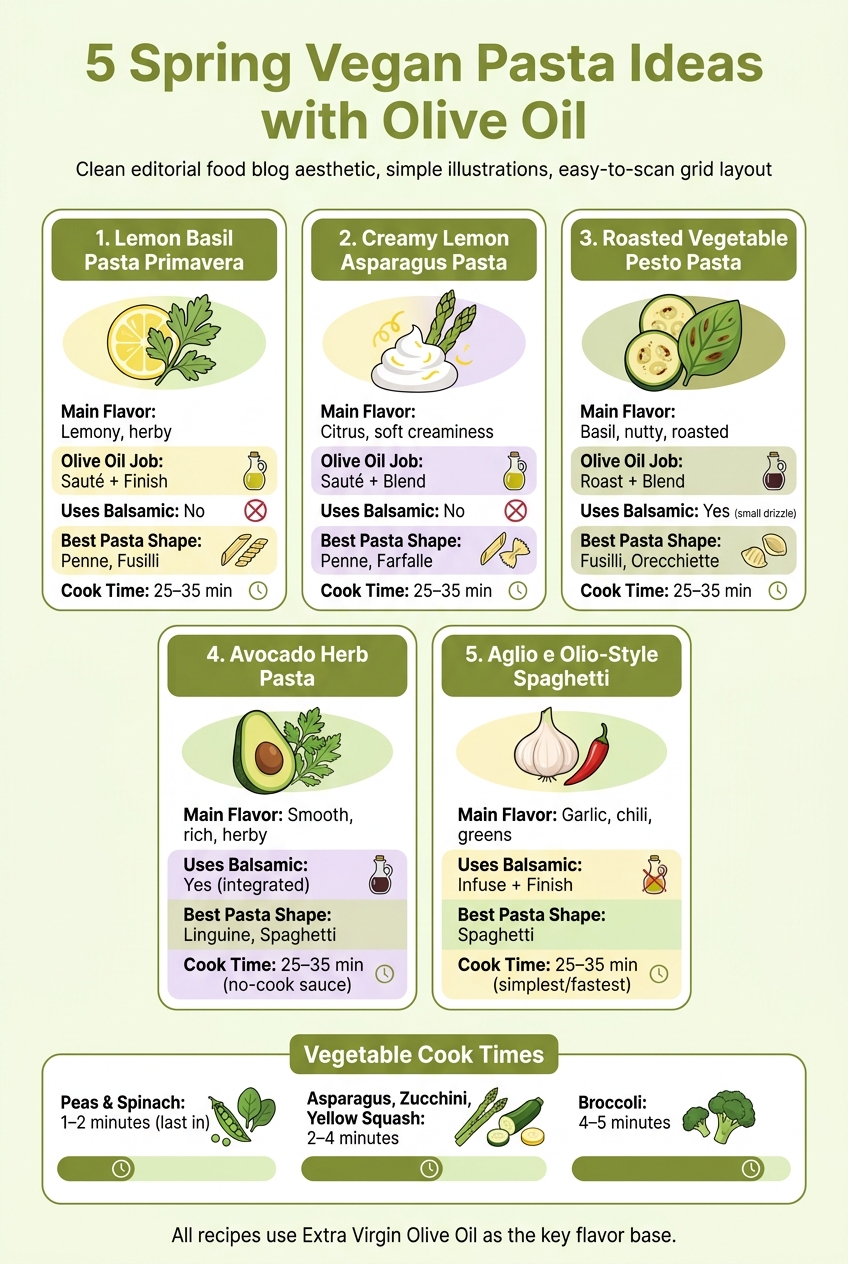
5 Spring Vegan Pasta Ideas: Quick Comparison Guide
5 spring vegan pasta recipe ideas with olive oil
Each recipe below uses olive oil in a different way. In some, it starts the dish. In others, it finishes the pasta. And in a few, it is the sauce.
Lemon basil pasta primavera with asparagus and peas
This is classic spring pasta. Start by cooking asparagus in olive oil, then add the peas near the end so they stay sweet and bright. Toss everything with lemon and basil, then toast garlic and a little nutritional yeast in the same pan for a savory, cheesy finish that stays dairy-free.
In this recipe, olive oil does the early heavy lifting. It coats the pan, brings the garlic together with the other aromatics, and helps the sauce cling to the pasta. Short shapes like penne or fusilli work best here because they catch the vegetables and sauce in every bite.
Creamy lemon asparagus pasta with peas and parsley
This one leans richer, but it still feels light enough for spring. Start with olive oil and gently cook shallots and garlic over medium-low heat. The goal is simple: soften them without browning, so the flavor stays mellow instead of bitter.
Then stir in a dairy-free creamy base like cashew cream or unsweetened soy yogurt, using reserved pasta water to loosen it until the sauce coats the noodles nicely. Asparagus and peas do most of the work on the vegetable side. Parsley or dill keeps the whole dish bright, and lemon zest added off the heat gives the pasta its sharpest citrus note.
Roasted vegetable pesto pasta with zucchini and basil
Roasting gives this version a deeper, sweeter flavor. Toss zucchini and asparagus with olive oil, then roast them at 400°F until the edges turn caramelized and the vegetables pick up more sweetness.
After that, fold them into hot pasta with a vegan pesto made from basil, garlic, olive oil, and toasted pine nuts or walnuts blended until smooth. Extra virgin olive oil works well both for roasting and for the final finish. You can find a variety of premium extra virgin olive oils to suit different flavor profiles.
Avocado herb pasta with olive oil and balsamic
This is the no-cook option, and it comes together fast. Blend a ripe avocado with garlic, lemon juice, fresh herbs like basil or parsley, and a good pour of extra virgin olive oil until the sauce is fully smooth.
The olive oil keeps the mixture silky and easy to toss with pasta. A small drizzle of aged balsamic at the end adds depth and helps balance the avocado’s richness.
Aglio e olio-style spaghetti with spinach, parsley, and chili flakes
This is the simplest version of the bunch, and olive oil carries most of the flavor. Warm extra virgin olive oil in a pan over low heat, add thinly sliced garlic and red pepper flakes, and let them infuse gently without letting the garlic brown.
Toss in cooked spaghetti, then add a handful of fresh spinach or arugula and let it wilt in the heat of the pasta. Finish with chopped parsley and a squeeze of lemon. If the noodles look tight or dry, add reserved pasta water a little at a time until the sauce turns glossy and loose.
sbb-itb-4066b8e
How to use olive oil and balsamic in spring pasta
Once you’ve picked the style of the recipe, the next move is figuring out what job the olive oil should do in the pan. It’s not just there to cook. The moment you add it can change the flavor, the texture, and even that light gloss on the pasta.
Match the olive oil role to each recipe
In these recipes, olive oil does four different jobs: sautéing aromatics, roasting vegetables, blending into sauces, or finishing the dish. That matters because spring ingredients like asparagus, peas, basil, and parsley can taste bright and light - or dull and weighed down - depending on how you use the oil.
Since spring produce is delicate, go with a mild to medium EVOO. A mild to medium EVOO, such as Big Horn Olive Oil's Estate Reserve Ultra Premium EVOO, works especially well in simple aglio e olio and lemon pasta dishes.
If the sauce starts to thicken too much, add a little pasta water and a small splash of olive oil. The starch in the water helps the oil emulsify into a glossy coating that sticks evenly to the noodles.
Use balsamic in small amounts for roasted or creamy pasta
Balsamic only fits a few recipes here. It should stay in the background and sharpen dishes that need a bit more contrast. Use it lightly in the avocado and roasted vegetable pastas, where its sweetness helps balance richness.
A syrupy aged Modena-style balsamic is the best pick because a little goes a long way. And if the dish already has lemon, pull that back a bit so the acids don’t compete.
Comparison table: olive oil role and balsamic use by recipe
| Recipe Name | Olive Oil Role | Uses Balsamic? |
|---|---|---|
| Lemon Basil Pasta Primavera | Sauté & Finishing | No |
| Creamy Lemon Asparagus Pasta | Sauté & Blending | No |
| Roasted Vegetable Pesto Pasta | Roasting & Blending | Yes (Accent) |
| Avocado Herb Pasta | Blending & Finishing | Yes (Integrated) |
| Aglio e Olio-Style Spaghetti | Sauté & Finishing | No |
Easy swaps for pasta shape, herbs, and spring vegetables
Pasta shapes that work with light, creamy, and pesto sauces
Once you know the sauce, the rest gets much easier. Pasta shape matters because it changes how the sauce sticks to each bite.
Long pasta like spaghetti, linguine, and angel hair works best with light olive oil sauces. Those shapes let the sauce coat the noodles without turning heavy, so the dish stays light, glossy, and spring-ready.
Creamy and pesto sauces do better with shapes that can hold more sauce. Penne, fusilli, farfalle, and orecchiette are all solid picks because their curves, ridges, and folds catch thicker sauces and chopped herbs.
Produce and herb swaps that keep the dish seasonal
The same idea works for vegetables and herbs. You don't need every single ingredient to make the dish work. Most of these recipes follow a simple framework, not a strict formula.
If English peas aren't at the store, swap in sugar snap peas or snow peas. Small-cut green beans can work too. If zucchini is out, yellow summer squash is the closest match. Want a bit more heft? Sliced white mushrooms or canned artichoke hearts fit in well.
Herbs are flexible too:
- Fresh parsley is the go-to swap for basil.
- If you're out of parsley, chives or thinly sliced scallions give a similar bright, green finish.
- Fresh mint adds a different spring note if you want to change the feel a bit.
For timing, cook broccoli for 4–5 minutes. Zucchini, yellow squash, and asparagus need 2–4 minutes. Peas or spinach should go in during the last 1–2 minutes.
Conclusion: Pick a spring pasta style and let the olive oil do the work
Across these five ideas, olive oil does the same job every time: it adds flavor, texture, and that glossy finish that makes a pasta dish feel complete. Each recipe uses it a little differently, but they all stay light, bright, and right for spring. Because olive oil sits at the center of these lighter sauces, it makes sense to use one you'd be happy to drizzle over the bowl at the end. Big Horn Olive Oil's Ultra Premium EVOO works well for both cooking and finishing.
In the roasted and avocado-based versions, balsamic brings contrast without taking over the herbs. That's the sweet spot. Balsamic should act like a light accent, not the main event.
If you're short on time, go with aglio e olio. If you want the best of spring produce, make primavera. If you're after a richer finish, pick creamy lemon. Match the pasta to the kind of night you're having, then let the olive oil do the heavy lifting.
FAQs
Can I make these pastas gluten-free?
Yes - these spring pasta dishes are easy to make gluten-free. Just swap in your favorite gluten-free pasta, like brown rice, chickpea, or corn-based pasta.
Cook the pasta according to the package directions, then follow the recipe as written. For the best texture, pick a gluten-free pasta that holds its shape well. After cooking, toss it with a splash of Big Horn Olive Oil extra virgin olive oil to help keep it from sticking.
How do I keep olive oil pasta from turning greasy?
To keep olive oil pasta from feeling greasy, focus on emulsion. Toss the pasta with some reserved starchy pasta water so the sauce grips the noodles and turns into a light, glossy coating instead of a slick layer of oil.
Using a good olive oil, such as Big Horn Olive Oil, helps too. A squeeze of fresh lemon juice or a splash of vinegar cuts through the richness, and cooking the pasta al dente keeps it from soaking up too much oil.
Which spring vegetables can I substitute?
Use what’s in season at the market. Easy swaps include asparagus or green beans instead of zucchini or broccoli.
You can also toss in snap peas, leeks, baby spinach, artichoke hearts, carrots, mushrooms, or fennel. If you want to save time, frozen peas or edamame work well too.