

Tian Provençal Recipe with Olive Oil
If you want a tian that turns out tender, lightly browned, and not watery, I focus on four things: thin even slices, tight layering, light seasoning, and a two-step bake.
This dish is simple: sliced zucchini, eggplant, tomatoes, yellow squash, and sometimes potatoes, baked with garlic, herbs, and olive oil. In most home ovens, I use 375°F, slice vegetables 1/8 to 1/4 inch thick, bake covered first, then uncovered so the top browns. A full 9x13-inch dish serves 6 to 8 people and leftovers keep for 3 to 4 days in the fridge.
Here’s the short version:
- Best vegetables: zucchini, eggplant, Roma or plum tomatoes, yellow squash, and Yukon Gold potatoes
- Best slice thickness: 1/8 to 1/4 inch
- Best pan size: 9x13-inch rectangular or 10- to 12-inch round
- Oil amount: about 1 to 2 tablespoons for the dish, plus 2 to 3 tablespoons over the vegetables
- Bake plan at 375°F: about 25 to 35 minutes covered and 15 to 20 minutes uncovered
- What “done” looks like: tender center, lightly golden top, and only a small amount of liquid in the dish
- Best way to serve: let it rest 10 minutes, then finish with a small drizzle of olive oil
I’d keep the flavors simple and let the vegetables do most of the work. Good slicing, tight packing, and the right amount of olive oil matter more here than a long ingredient list.
If you only remember one thing: don’t leave the vegetables loose in the dish. Pack them close together so they steam, soften, and hold their shape as they bake.
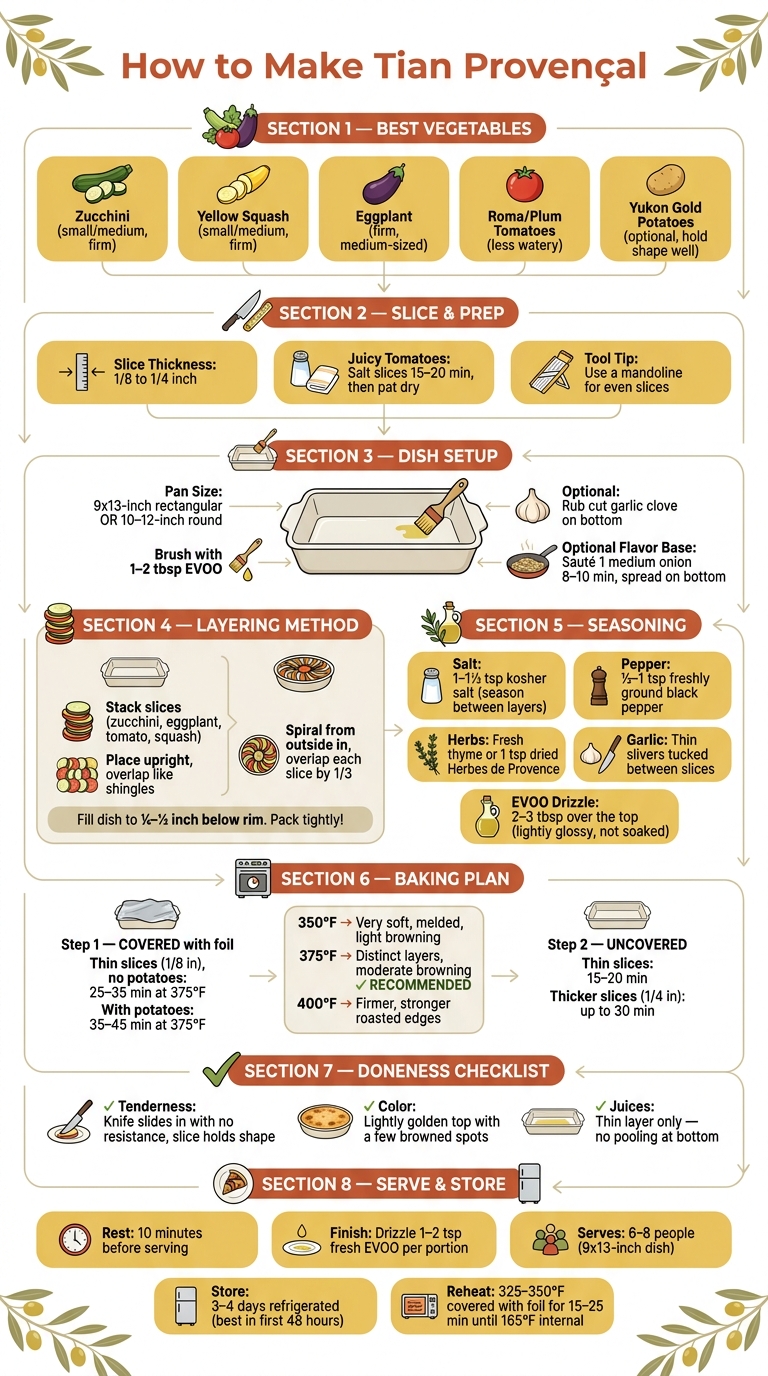
How to Make Tian Provençal: Step-by-Step Visual Guide
Choosing the Right Vegetables, Herbs, and Olive Oil
Best Vegetables for Even Baking
Start with zucchini, eggplant, tomatoes, and yellow squash that are close in size and firmness. That makes the slices line up neatly and helps everything bake at the same rate.
For zucchini and yellow squash, small to medium ones with firm, glossy skin work best. For eggplant, go with firm, medium-sized ones. For tomatoes, plum or Roma tomatoes are the better pick because they give off less water than standard slicing tomatoes. If you want to add potatoes, Yukon Golds hold their shape well and don't turn mealy.
Slice all the vegetables evenly, about 1/8 to 1/4 inch thick. Thinner slices soften more and give the dish a very tender texture. Slightly thicker slices keep their shape better and make the finished tian look a bit more rustic.
A mandoline makes it easier to keep every slice even. That said, a sharp chef's knife works just fine if your cuts stay consistent. And if your tomatoes are extra juicy, lightly salt the slices for 15 to 20 minutes and pat them dry before you assemble the dish.
Once you've picked the vegetables, keep the seasoning simple. That's what lets each slice stay distinct in the oven.
Herbs, Garlic, and Seasoning for the Dish
Keep the flavor base restrained. Tian Provençal works best when the ingredients stay in balance, not when the seasoning takes over.
Use thyme as the main herb. Add rosemary and oregano lightly, then finish with basil near the end. If you want an easier route, Herbes de Provence gives the dish that Provençal feel without much extra work.
Thinly sliced garlic or onions spread across the bottom of the baking dish add a savory base. As they cook, they also bring a gentle sweetness that rounds out the vegetables.
What to Look for in an Extra Virgin Olive Oil
Choose a fresh, medium-intensity EVOO with fruity notes and a peppery finish. You want an oil that complements the vegetables, not one that steals the show.
Skip any oil with musty, stale, or rancid aromas. In a simple baked dish like this, those off-notes stand out fast.
Big Horn Olive Oil's Ultra Premium EVOO fits this recipe well. A fresh, balanced EVOO helps with even browning and carries the flavor of the garlic and herbs through the dish without masking the vegetables.
With the vegetables and oil selected, the next step is assembling the tian.
sbb-itb-4066b8e
How to Prepare and Layer the Tian
Prep the Baking Dish and Optional Flavor Base
Start with a lightly oiled baking dish so the vegetables cook evenly and brown around the edges. Brush a 9x13-inch rectangular or 10–12-inch round baking dish with about 1–2 tablespoons of EVOO, coating the bottom and sides in a thin layer. That layer helps keep the slices from sticking and lets the edges caramelize instead of turning dry. For more flavor, rub a cut garlic clove over the bottom and sides before adding the oil.
If you want a richer base, cook one first. Sauté one medium onion, thinly sliced, in 1–2 tablespoons of olive oil over medium heat for 8–10 minutes, until soft and lightly golden. Then spread it across the bottom of the dish. That onion layer adds a sweeter, deeper note. On a busy night, you can skip it and move straight to the vegetable layers without giving up much.
Once the dish is ready, start layering the sliced vegetables.
Arrange the Slices in Rows or a Spiral
Pack the vegetables in tightly. In a rectangular dish, make small stacks of zucchini, eggplant, tomato, and yellow squash in your hand, then place each stack upright in the dish with the cut sides down and the curved edges facing up. Let them overlap like shingles, and press each new stack snugly against the one before it. In a round dish, work from the outside in, building a spiral. Overlap each slice by about one-third and keep them slightly tilted.
If you spot gaps, slide in half slices or trimmed pieces to fill them. Fill the dish to about ¼–½ inch below the rim. That gives the juices room to bubble while keeping enough vegetables packed together so they soften and steam as one layer. Tight packing helps the slices turn tender without losing their shape.
Season and Drizzle Before Baking
Season as you go, not just on top. Sprinkle kosher salt and freshly ground black pepper between the stacks while layering - about 1–1½ teaspoons of salt and ½–1 teaspoon of pepper total for a full dish - then add a light final sprinkle over the surface. Tuck thin slivers of garlic between the slices and scatter fresh thyme or a teaspoon of dried herbes de Provence over the top.
Then drizzle 2–3 tablespoons of EVOO over everything in a thin stream. You want the vegetables to look lightly glossy, not soaked. If you're using Big Horn Olive Oil Ultra Premium EVOO, that measured drizzle lets the oil’s fruity, peppery flavor come through without taking over. If any edges look dry, brush them with a bit more oil.
From there, the tian is ready for the oven.
Baking for Tender Texture and Light Browning
Covered and Uncovered Baking Times
Bake the tian in two stages: first to soften the vegetables, then to brown the top.
Start by covering the dish tightly with aluminum foil. That trapped steam helps the vegetables cook through at the same pace, which matters a lot for eggplant and potatoes. Once the slices are tender, remove the foil so the top can caramelize and take on some color.
The exact timing depends on what’s in the dish. A vegetable-only tian with thin slices around 1/8 inch baked at 375°F usually needs about 25–35 minutes covered and 15–20 minutes uncovered. If you add potatoes, plan on 35–45 minutes covered at the same temperature. With 1/4-inch slices, finish uncovered for 30 minutes until browned.
How to Tell When the Tian Is Done
Look at three things: tenderness, color, and how much liquid is left in the dish.
Tenderness: Slide a thin knife or fork into the thickest slice near the center. It should go in with almost no resistance, but the slice should still keep its shape.
Color: The top should look lightly golden with a few browned spots. If it still seems pale and wet after the uncovered phase, bake it another 5–10 minutes. If the edges start darkening too fast, loosely tent the dish with foil.
Juices in the dish: Tilt the dish a little. You want to see only a thin layer of juices and oil, not a pool at the bottom.
Start checking 10–15 minutes before the earliest suggested total time. After that, check again every 5–10 minutes.
Adjusting Time and Temperature for Different Textures
Oven temperature changes the final texture more than many people expect.
- 350°F: The vegetables cook more slowly and stay very soft, almost melded together, with light browning. If potatoes are in the dish, the result leans toward a soft baked gratin.
- 375°F: This is the middle ground. The layers stay distinct but tender, and the browning is moderate. Potatoes cook through while still holding their structure.
- 400°F: The slices stay a bit firmer, and the edges brown more. The dish takes on a stronger roasted feel.
These time and texture ranges assume slices about 1/8–1/4 inch thick in a standard home oven. If your oven runs hot or has clear hot spots, rotate the pan once during the covered phase and again halfway through the uncovered phase so the browning stays even.
Serving, Storing, and Finishing with Olive Oil
How to Serve Tian Provençal
Once the top is browned, let the tian rest before serving. About 10 minutes is enough. That short wait gives the bubbling juices time to settle, helps the layers set, and makes each slice easier to lift and serve cleanly.
You can serve tian warm or at room temperature. It pairs well with roast chicken, baked or grilled fish, and grilled meats like pork chops. If you're serving it as a vegetarian main, add crusty bread, farro, quinoa, or brown rice to round out the meal. A 9×13-inch dish serves 6–8.
For the final touch, spoon 1–2 teaspoons of fresh EVOO over each portion. It adds a brighter aroma and a silkier finish.
Storage, Reheating, and Leftover Quality
If you have leftovers, cool them before storing so the texture stays in good shape. Let the tian cool to room temperature for about 30–60 minutes, then cover it and refrigerate. You can store it in an airtight container or cover the baking dish tightly with foil or plastic wrap. In the refrigerator, it keeps for 3–4 days, though the texture is best in the first 48 hours.
When it's time to reheat, use the oven instead of the microwave. Cover the dish loosely with foil and warm it at 325–350°F for 15–25 minutes, depending on portion size, until it reaches 165°F inside. That helps the vegetables stay tender instead of turning soft and waterlogged.
A small splash of fresh EVOO before reheating can help protect the surface and bring the flavor back to life. Leftovers are also great served over toast, folded into a frittata, or paired with poached eggs.
Conclusion: Key Steps for a Better Tian
A better tian comes down to a few simple moves: even slices, tight packing, light seasoning, and two-stage baking. Finish it with a fresh drizzle of EVOO for more brightness and a clean, glossy finish. Use a fresh, high-quality EVOO here, since that last spoonful has a big effect on the final flavor.
Tian Provençal Recipe
FAQs
Can I make tian ahead of time?
Yes. You can prep parts of a Tian Provençal ahead of time, like chopping the vegetables and putting the dish together before it goes into the oven.
For the best flavor and texture, bake it closer to serving. Then finish it with a drizzle of fresh Big Horn Olive Oil right before eating.
The blog also says opened EVOO is best used within about six weeks.
How do I keep tian from getting watery?
To keep your Tian Provençal from turning watery, dry every ingredient well before you layer it into the baking dish. Extra moisture on the surface can stop the vegetables from roasting the way they should and leave liquid pooling in the bottom.
It also helps to wait until the oven is fully preheated. That way, the vegetables roast and cook off moisture instead of steaming.
Can I use other vegetables in a tian?
Yes. A tian works well with all kinds of vegetables, and seasonal produce is an easy way to add more color and nutrition.
Try zucchini, eggplant, bell peppers, fennel, tomatoes, or heartier picks like carrots and potatoes. They roast beautifully with high-quality extra virgin olive oil, which brings out their natural flavor.