

Top IGP Balsamic Vinegar Brands
Key Points:
- IGP Certification: Guarantees production in Modena or Reggio Emilia under strict guidelines.
- Uses: Ideal for cooking, marinades, and reductions due to its ability to hold flavor under heat.
- Price Range: Typically $8–$20, making it an accessible choice for home cooks.
Top Brands:
- Due Vittorie Oro: Aged in oak vats, priced at $6.60 (500 ml) with no artificial additives.
- Villa Manodori: Aged 9 years, made by Chef Massimo Bottura, priced at $46.50 (250 ml).
- Alma Gourmet: Affordable options starting at $39 for 5 liters, with premium aged versions over $100.
- Big Horn Olive Oil Molto Denissimo: 25-year aged, priced at $12.99 for premium quality.
- Kirkland Signature: Aged 3 years, priced at $36.99 for 1 liter, offering great value.
Quick Comparison:
| Brand | Aging Period | Price Range | Notable Feature |
|---|---|---|---|
| Due Vittorie Oro | 60 days+ | $6.60 (500 ml) | No additives; fig and cherry notes |
| Villa Manodori | 9 years | $46.50 (250 ml) | Crafted by a Michelin-starred chef |
| Alma Gourmet | 60 days to 25+ yrs | $39 (5L) to $100+ | Affordable bulk or premium aged options |
| Big Horn Molto Denissimo | 25 years | $12.99 | Thick, syrupy texture |
| Kirkland Signature | 3 years | $36.99 (1L) | Reliable store-brand quality |
When choosing, check for the IGP seal, grape must content, and aging period to match your cooking needs. Opt for younger vinegars for marinades and dressings, and longer-aged ones for finishing dishes.
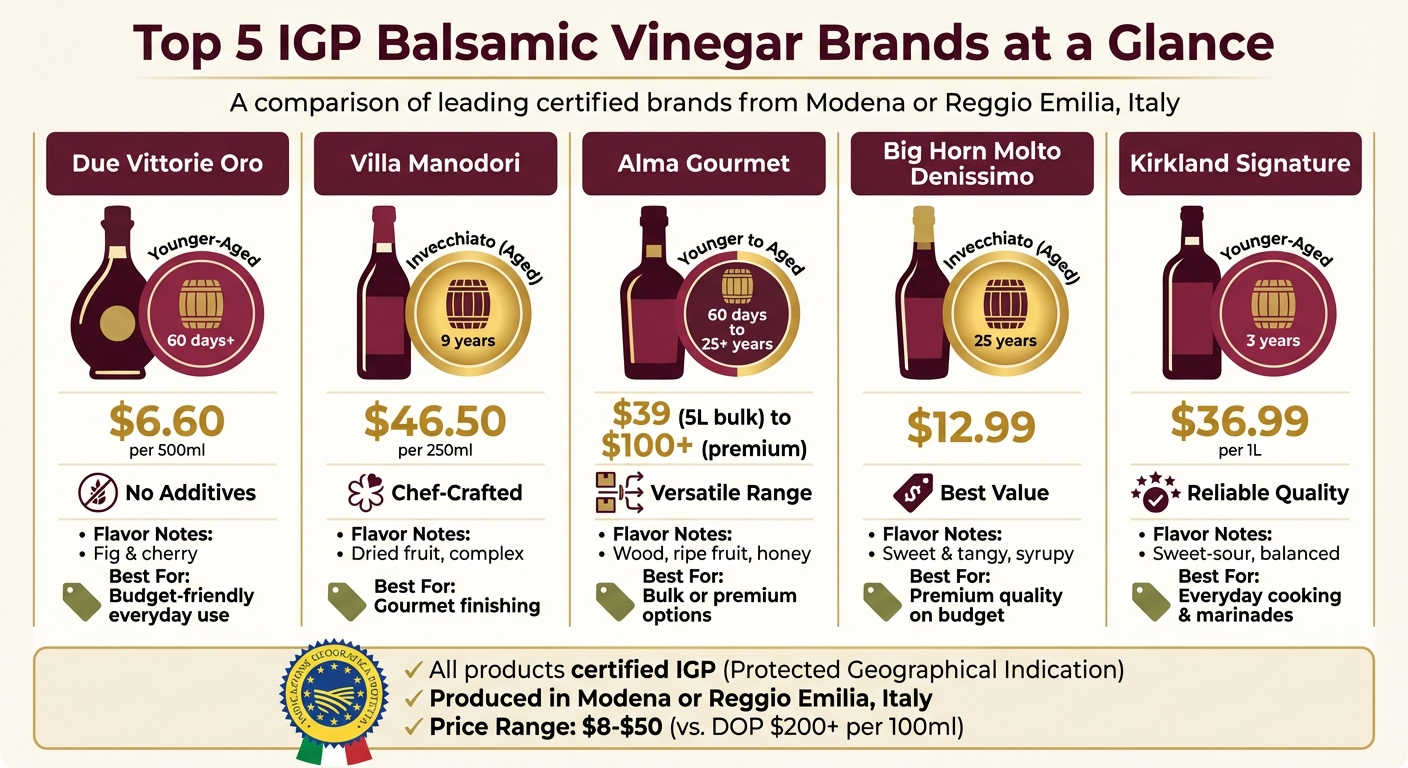
Top 5 IGP Balsamic Vinegar Brands Comparison Chart
IGP Status of Authentic Balsamic Vinegar of Modena
sbb-itb-4066b8e
What is IGP Certification?
IGP, short for Indicazione Geografica Protetta, certifies that balsamic vinegar is produced and bottled exclusively in the regions of Modena and Reggio Emilia, Italy. This certification ensures adherence to specific production standards, including the required ratios of grape must and wine vinegar.
On July 3, 2009, Balsamic Vinegar of Modena officially received its IGP label, protecting a market valued at around €400 million (approximately $440 million) annually at that time. To qualify for IGP certification, the vinegar must consist of 20% to 90% grape must and 10% to 80% wine vinegar, using only approved grape varieties. It also must be aged in wooden barrels for a minimum of 60 days. For premium versions aged three years or more, the label "invecchiato" (aged) is awarded.
IGP certification is distinct from DOP (Denominazione di Origine Protetta), which represents a higher level of certification. While IGP balsamic vinegar is a blend of grape must and wine vinegar with a minimum aging period of 60 days, DOP balsamic vinegar is made solely from 100% cooked grape must, contains no additives, and is aged for at least 12 years - or 25 years for the prestigious "Extravecchio" designation.
The Consorzio Tutela Aceto Balsamico di Modena oversees the production of IGP balsamic vinegar, ensuring that every bottle meets strict criteria. These include a total acidity of 6% and a density of 1.06 (measured at 68°F). To confirm authenticity, IGP-certified products feature a distinctive blue and yellow stamp, guaranteeing both origin and quality.
| Feature | IGP (Balsamic Vinegar of Modena) | DOP (Traditional Balsamic Vinegar) |
|---|---|---|
| Ingredients | Grape must + wine vinegar | 100% cooked grape must |
| Minimum Aging | 60 days (3+ years for "aged") | 12 years (25+ for "Extravecchio") |
| Consistency | Thinner, more acidic | Thick and syrupy |
| Best Use | Daily cooking, marinades, salads | Finishing drops on cheese or meat |
These rigorous standards highlight why IGP-certified balsamic vinegar remains a hallmark of authentic craftsmanship and quality.
1. Due Vittorie Oro Balsamic Vinegar
IGP Certification and Quality Assurance
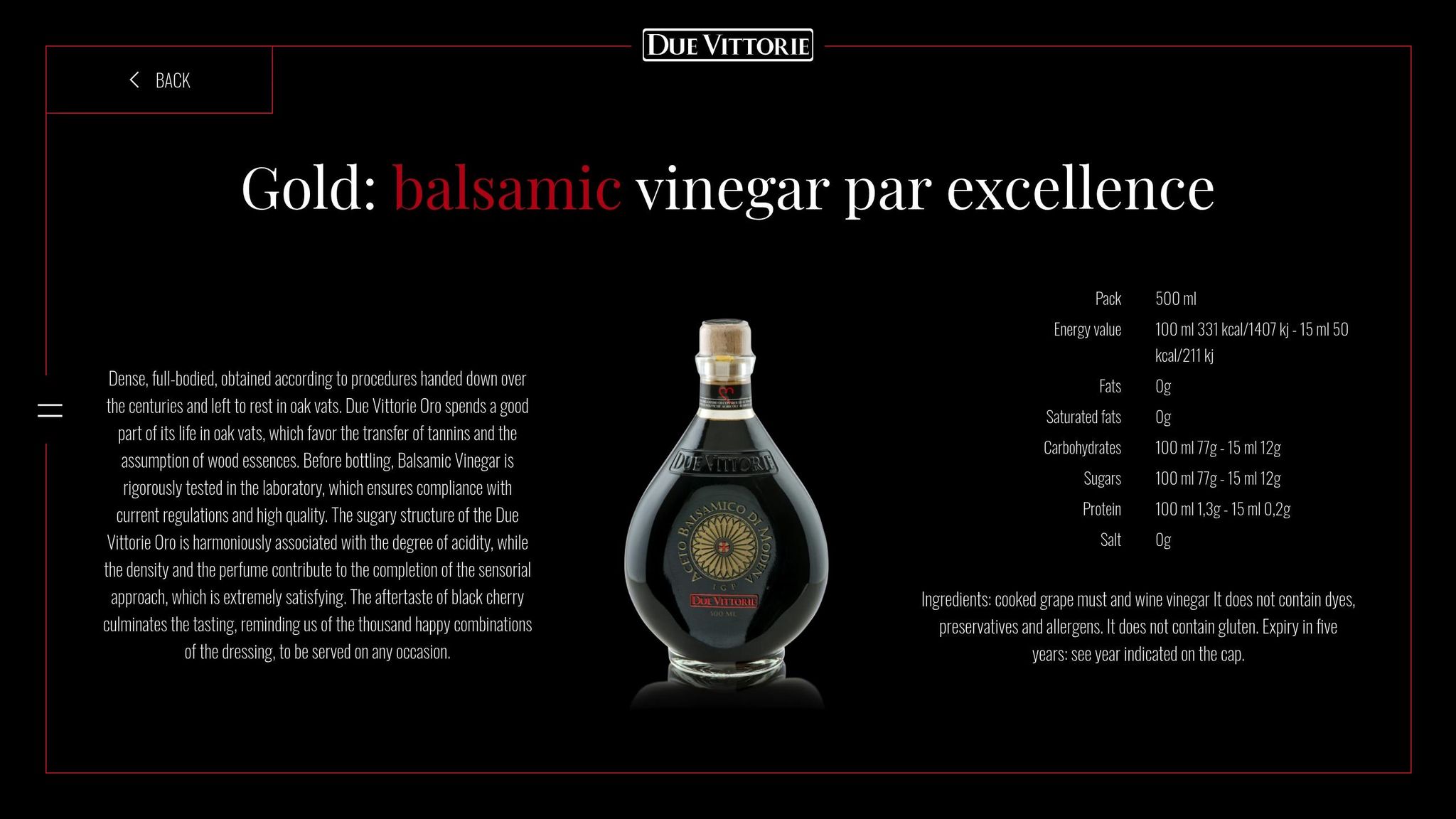
Due Vittorie Oro, crafted in Soliera, Modena, adheres to strict Italian and EU standards. Each batch undergoes rigorous laboratory testing before bottling, ensuring it meets the highest quality benchmarks. Unlike many mass-produced balsamic vinegars that rely on caramel coloring (E150d) or artificial thickeners, this vinegar is made solely from cooked grape must and wine vinegar. It contains no dyes, preservatives, or allergens.
"Before bottling, Balsamic Vinegar is rigorously tested in the laboratory, which ensures compliance with current regulations and high quality." - Due Vittorie
This commitment to quality ensures authentic flavor and purity, setting it apart from standard grocery store options.
Aging Process and Flavor Profile
The aging process of Due Vittorie Oro takes place in oak vats, where the vinegar absorbs tannins and wood essences, adding depth to its texture and taste. It is further matured using a traditional battery system, which involves a sequence of barrels made from oak, chestnut, cherry, and mulberry. This method develops a harmonious flavor profile, blending sweetness and acidity. For a bolder contrast, pair it with a robust Coratina Extra Virgin Olive Oil. The result is a rich taste with notes of fig, plum, raisin, and a lingering black cherry finish.
Affordable Luxury
Despite its premium quality, Due Vittorie Oro remains reasonably priced. A 500 ml bottle costs around $6.60, while a 250 ml bottle is available for approximately $18. Its naturally dense texture and high ingredient standards make it a standout choice without the need for artificial additives.
2. Villa Manodori Balsamic Vinegar
IGP Certification Authenticity
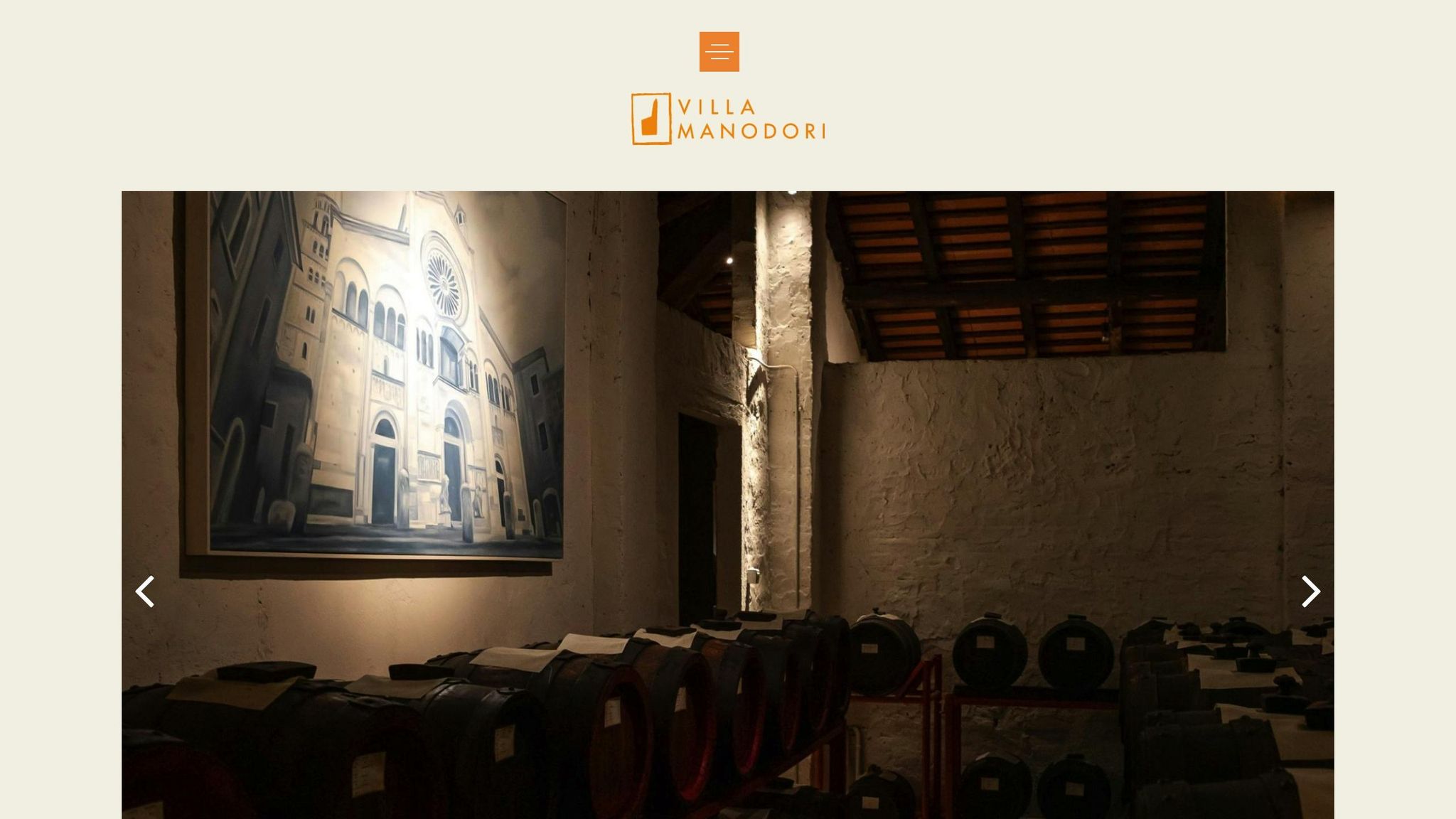
Villa Manodori "Artigianale" stands out as a certified Balsamic Vinegar of Modena IGP, crafted in small batches at Chef Massimo Bottura's estate in Modena. This vinegar is aged for an impressive 9 years - well beyond the minimum 60 days required for IGP certification. Made exclusively from cooked Trebbiano grape must and select red-wine vinegar, it contains no artificial additives like caramel color or thickeners. While it doesn’t meet the 12-year aging requirement of traditional DOP balsamic vinegars, its extended aging brings it closer to that level of quality. The result is a vinegar with exceptional depth and character.
Aging Process and Flavor Complexity
The aging process involves a sequence of oak, chestnut, and juniper barrels, each contributing unique elements to the vinegar's profile. Oak lends structure, chestnut enhances tannins and deepens the color, while juniper adds a resinous, aromatic quality. This meticulous process produces a rich, syrupy vinegar with a deep brown hue, perfectly balanced sweet-tart flavors, and a bouquet of dried-fruit aromas.
"Trebbiano grape must and select red-wine vinegar are patiently aged for nine years through a succession of oak, chestnut and juniper barrels."
Sourcing from Modena, Italy
Villa Manodori is a testament to traditional craftsmanship, created by three-Michelin-star chef Massimo Bottura at his 16th-century estate in the Modena countryside. The vinegar is made following time-honored Modenese methods, using locally sourced Trebbiano grapes. Chef Bottura himself uses this vinegar to elevate dishes like roasted vegetables, grilled meats, strawberries, and even vanilla gelato.
Value for Price
A 250 ml (8.45 fl oz) bottle of Villa Manodori "Artigianale" is priced at approximately $46.50, with the organic version available for around $34.10. While this is more expensive compared to standard IGP balsamic vinegars, which range from $3.20 to $21.50, its 9-year aging and artisanal production justify the higher price point. For those seeking an elevated culinary experience, it’s a worthwhile investment.
3. Alma Gourmet Aged Balsamic Vinegar
IGP Certification and Authenticity
Alma Gourmet Balsamic Vinegar proudly carries the IGP certification, a mark that guarantees its production follows time-honored methods in Modena. This process combines cooked grape must with aged wine vinegar, ensuring an authentic product. The vinegar contains no caramel coloring, thickeners, or artificial additives, relying solely on natural aging to achieve its rich color and smooth texture.
"Buying a balsamic vinegar with a DOP or IGP label is therefore the only way to be sure of having a controlled product that meets quality standards."
This certification underscores the product’s quality and dedication to tradition.
Aging Process and Flavor Profile
Aging in wooden casks is key to Alma Gourmet's distinctive flavor. The vinegar is matured in barrels made from various woods - oak, cherry, chestnut, and juniper - each contributing unique characteristics. Their 25-year aged Extravecchio DOP version, crafted entirely from cooked grape must, delivers a complex flavor profile. Expect deep notes of wood, ripe fruit, and honey, complemented by an intense fig-like finish.
Rooted in Modena, Italy
Alma Gourmet sources its ingredients exclusively from Modena and Emilia-Romagna, maintaining a strong link to the region’s culinary traditions. Grapes like Lambrusco, Sangiovese, Trebbiano, and Ancellotta are used to create the grape must, essential for the vinegar's authentic taste. This geographic connection is a cornerstone of the IGP designation, ensuring the product reflects the rich heritage of the region. Its balanced sweet-and-sour flavor and silky texture make it a versatile choice for dishes like salads, roasted vegetables, or Parmesan cheese.
Cost and Consumer Ratings
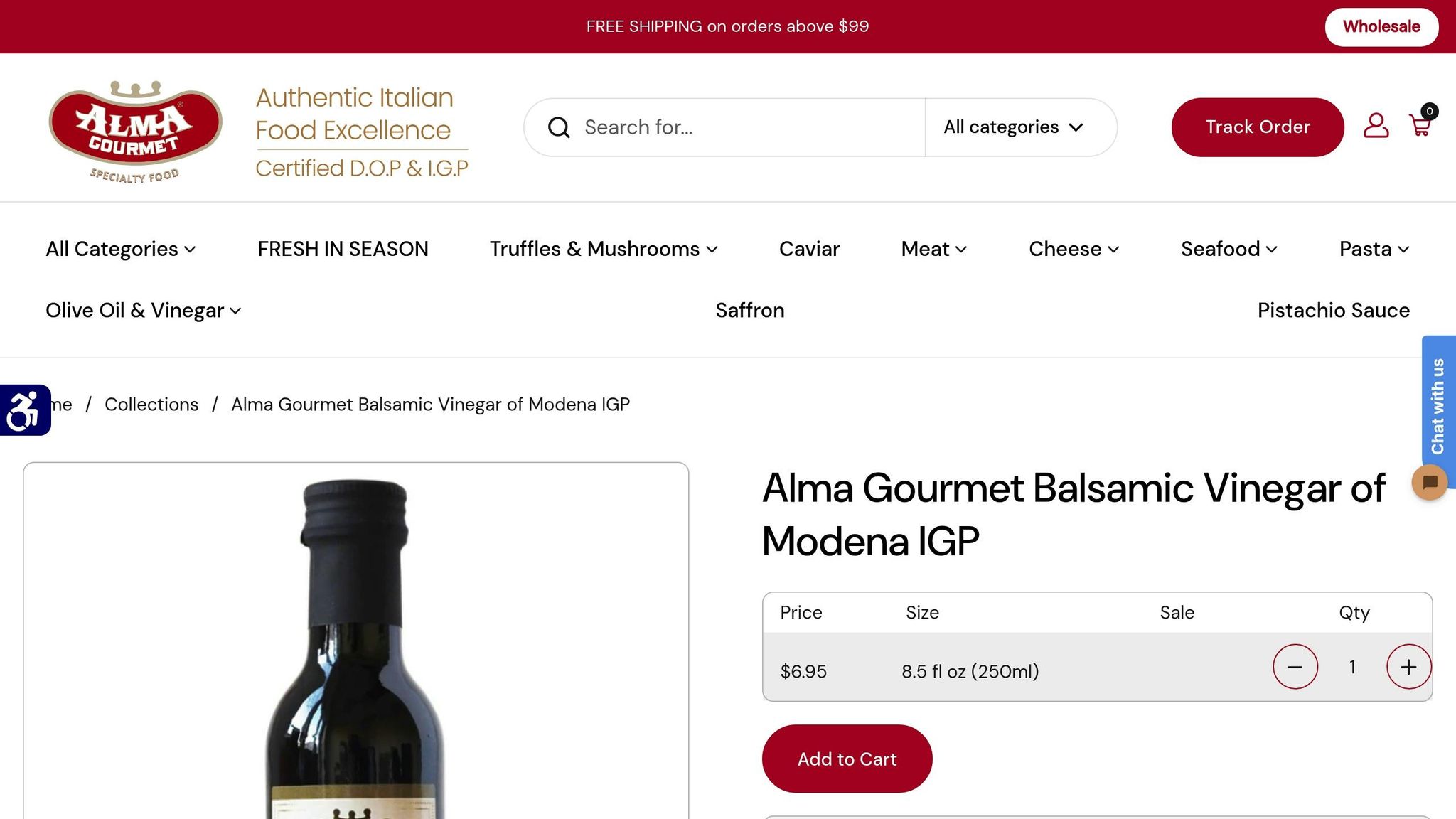
Alma Gourmet offers options for various budgets. A 5-liter jug of IGP balsamic vinegar is priced at $39.00, making it an affordable choice for everyday cooking. For those seeking a premium experience, the 25-year aged Extravecchio DOP is available for over $100 per 3.4 fl oz (100 ml) bottle, reflecting its meticulous aging and craftsmanship. The brand is highly regarded, with a 98% positive rating from 9,226 reviews, and the 25-year aged version boasts a perfect 5.0/5 star rating.
4. Big Horn Olive Oil Molto Denissimo 25-Year Aged Dark Balsamic Vinegar
IGP Certification and Authenticity
Big Horn Olive Oil's Molto Denissimo comes with an IGP certification, ensuring it’s produced and processed in Italy’s Modena region. This certification guarantees the vinegar adheres to the region’s strict traditions. Made primarily from cooked grape must and wine vinegar, it meets the minimum 60-day aging requirement for IGP certification. However, this particular vinegar goes well beyond that, with its premium versions aged for many years to achieve a richer depth and character.
Aging Process and Flavor Complexity
With a 25-year aging process, this balsamic vinegar develops a thick, syrupy consistency and an intricate flavor profile. The traditional Travassi method - aging in wooden barrels - gives it a distinctive depth, enhancing both its texture and aroma. The result is a perfectly balanced blend of sweet and tangy notes that’s ideal for elevating a variety of dishes.
Sourcing from Modena, Italy
Crafted in Modena, this balsamic vinegar uses local grape varieties like Trebbiano, Lambrusco, and Ancellotta. These grapes provide the ideal mix of sugar and acidity needed for long-term aging. The barrels are stored in lofts, where Modena’s natural climate encourages the evaporation and concentration that refine the vinegar’s flavor over time. This dedication to local ingredients and traditional methods ensures the product meets the high standards expected of IGP-certified balsamic vinegars.
"A genuine balsamic vinegar is made within the Emilia Romagna region or Modena, and will either be marked 'DOP' or 'IGP'... Having this on the label confirms the product is made using specific local ingredients and follows a strict recipe: that's your guarantee of quality."
Value for Price
The extended aging process doesn’t just enhance the flavor - it also makes this vinegar an exceptional deal. Priced at just $12.99, the 25-year aged Molto Denissimo offers incredible value compared to traditional 25-year aged DOP vinegars, which often cost around $100 per 100ml. This affordable pricing, combined with its artisanal quality, makes it a fantastic option for home cooks looking to bring restaurant-level flavor to their dishes without breaking the bank.
5. Kirkland Signature Aged Balsamic Vinegar of Modena
IGP Certification and Authenticity
Kirkland Signature has earned its place among top-tier IGP-certified balsamic vinegars, combining authentic production in Modena with a price that’s hard to beat. The vinegar proudly carries the IGP seal, which guarantees it’s produced and bottled in Modena, Italy, following strict European Union standards. Crafted by Acetum, a respected Italian producer, this balsamic vinegar earns its "Aged" (invecchiato) label by maturing in wooden barrels for a minimum of three years - far surpassing the 60-day aging required for basic IGP certification.
Aging Process and Flavor Complexity
The three-year aging process in wooden barrels gives this vinegar a deep, sweet-and-sour flavor profile. Made from a blend of cooked grape must and wine vinegar, it meets IGP standards with at least 20% grape must and 10% wine vinegar. The extended aging not only enhances its flavor but also creates a thicker, syrup-like texture, making it perfect for cooking, marinades, and extra virgin olive oil salad dressings.
Sourcing from Modena, Italy
Although IGP regulations allow grapes to be sourced from outside the Modena region, all processing and aging must occur in Modena itself to ensure authenticity. Acetum uses traditional grape varieties like Trebbiano and Lambrusco to maintain the region’s high-quality standards. The Acetum name is prominently displayed on the Kirkland label, offering a level of transparency that’s rare for store-brand products. This commitment to traditional methods underscores its genuine Modenese heritage, delivering both quality and authenticity.
Value for Price
Priced at around $36.99 for a 1-liter (33.8 fl oz) bottle, Kirkland Signature Aged Balsamic Vinegar provides excellent value. For comparison, traditional DOP balsamic vinegars can cost over $200 for just 100 ml (3.4 fl oz). With this IGP-certified option, home cooks can enjoy authentic Italian balsamic without breaking the bank. It’s no surprise that Costco shoppers have awarded it a 4.7-star rating, with 974 reviews highlighting its dependable flavor and outstanding quality for the price.
How to Choose the Best IGP Balsamic Vinegar
When shopping for IGP balsamic vinegar, look for the official EU Protected Geographical Indication (PGI/IGP) stamp. This blue and yellow circular badge, featuring two hills and stars, guarantees the vinegar meets strict quality standards and is produced and bottled in either Modena or Reggio Emilia. Pay attention to additional seals on the bottle, as they can reveal more about the vinegar's aging and quality.
Check for the Consortium seal on the bottle's neck. A burgundy seal indicates the vinegar has been aged between 60 days and 3 years (referred to as affinato or younger-aged), while a gold seal signifies it has been aged for over 3 years (invecchiato, or longer-aged).
Review the ingredient list carefully. Ingredients are listed in descending order by quantity. If "grape must" (cooked must) is the first ingredient, the vinegar will be sweeter and thicker, making it perfect for finishing dishes. On the other hand, if "wine vinegar" appears first, the vinegar will have a tangier, more acidic flavor, ideal for everyday cooking and marinades. High-quality IGP balsamic vinegars avoid unnecessary additives, so steer clear of terms like "glaze", "cream", or "reduction" on the label, as these often indicate the presence of artificial ingredients.
Consider the aging period based on how you plan to use the vinegar. Younger IGP vinegars (aged 60 days to 3 years) are great for vinaigrettes, marinades, or recipes that benefit from their bright acidity. For finishing touches on grilled meats, roasted vegetables, or cheese, opt for an invecchiato vinegar (aged 3+ years), which offers richer, woody flavors and a thicker consistency.
"I believe that the choice that a consumer has to make is not necessarily between IGP and DOP. It should be between a mass market or a premium, and the premium product could absolutely be IGP."
– Claudio Stefani Giusti, Owner and CEO, Acetaia Giusti
Lastly, ensure the vinegar meets IGP certification standards. It must contain at least 20% cooked grape must, at least 10% wine vinegar, and have a minimum acidity of 6%. The grape must should come from specific varietals, including Lambrusco, Sangiovese, Trebbiano, Albana, Ancellotta, Fortana, and Montuni. While natural caramel is allowed, it must not exceed 2% of the final product. For best results, store your balsamic vinegar in a cool, dark place in a tightly sealed bottle. Avoid refrigerating it, as cold temperatures can cause the vinegar to thicken unnaturally.
Conclusion
Each IGP-certified brand in this guide brings something special to the table. The IGP certification guarantees both quality and authenticity, setting these artisanal vinegars apart from cheaper imitations that might include thickeners or artificial sweeteners.
What’s great is that these premium-quality vinegars come at approachable price points. While traditional DOP balsamic vinegars can be quite expensive, IGP-certified options generally range from $8 to $50. This makes them an excellent choice for everyday cooking, offering layers of flavor that standard wine vinegars just can’t match.
From drizzling aged balsamic over roasted vegetables to crafting marinades for meats or adding a finishing touch to a cheese plate, these vinegars are incredibly versatile. They’re bold enough to handle cooking while being refined enough for garnishing, striking the perfect balance between tangy acidity and nuanced sweetness.
Dive into these brands and discover how they can transform your cooking. Each one offers its own unique flavor - whether it’s a syrupy, rich profile or a brighter, zesty note - giving you the freedom to experiment and find the ideal match for your dishes. These IGP-certified vinegars blend tradition with everyday practicality, bringing a touch of authentic Italian flavor to your kitchen without breaking the bank.
FAQs
How can I spot a real IGP seal on the bottle?
To ensure you're getting authentic balsamic vinegar, check for the PGI logo or the Consortium seal on the bottle's neck. These symbols guarantee that the product adheres to strict quality guidelines and is genuinely produced in Modena, Italy.
What’s the simplest way to tell IGP from DOP balsamic?
The easiest way to tell the difference between DOP balsamic and IGP balsamic lies in how long they age. DOP balsamic spends at least 12 years aging in wooden barrels, giving it a rich and complex flavor. On the other hand, IGP balsamic is aged for a minimum of 60 days and is made by combining grape must with wine vinegar.
Which aging level is best for cooking vs finishing?
Balsamic vinegar aged 12 years or more is perfect for finishing dishes. Its deep, layered flavor adds a touch of sophistication to meals. On the other hand, vinegar aged 6 years or less is better suited for cooking. Its milder taste holds up well under heat, blending seamlessly into recipes without dominating the dish.