

Ultimate Guide to Biogas from Olive Oil Byproducts
Converting olive oil production waste into biogas is a smart way to tackle waste management issues while generating renewable energy and biofertilizer. Olive pomace and olive mill wastewater, the two main byproducts of olive oil production, are rich in organic content, making them ideal for anaerobic digestion. This process not only reduces waste but also creates energy that can be used or sold, along with digestate that enriches soil.
Key points:
- Olive pomace: Solid residue rich in organic matter but challenging to digest without pretreatment or co-digestion with nitrogen-rich materials like pig manure.
- Olive mill wastewater: A liquid waste that can yield higher methane levels through pretreatment methods like freeze-drying or co-digestion.
- Biogas benefits: Can be used for electricity, heat, or even fuel, with potential monthly earnings of up to $43,697 from energy sales.
- Digestate use: A safe, nutrient-rich fertilizer that can replace synthetic options and improve soil health.
- Environmental impact: Reduces pollution, methane emissions, and water contamination from untreated waste.
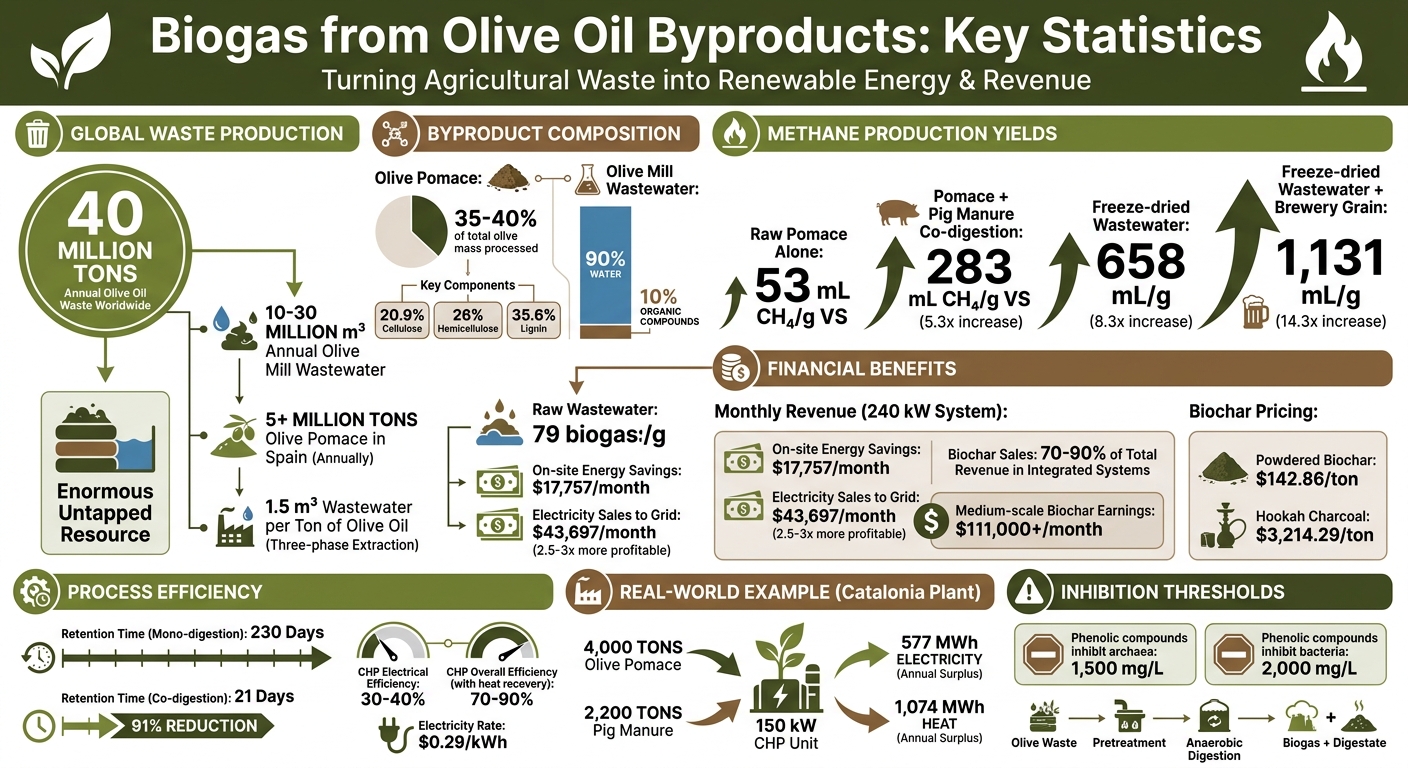
Biogas Production from Olive Oil Waste: Key Statistics and Benefits
PUGLIA: BIOMETHANE FROM OLIVE POMACE THANKS TO AB TECHNOLOGY
sbb-itb-4066b8e
Main Olive Oil Byproducts Used for Biogas
When it comes to olive oil production, olive pomace and olive mill wastewater stand out as the most promising byproducts for biogas generation. These waste streams not only make up the majority of processing waste but also contain high levels of organic matter, making them ideal for anaerobic digestion. By understanding the unique properties of each, producers can fine-tune their processes to maximize biogas output.
Olive Pomace as Biogas Feedstock
Olive pomace consists of a mix of olive skin, pulp, stones, and kernels, making up around 35%–40% of the total olive mass processed. Its composition is mainly lignocellulosic, with olive stones alone containing 20.9% cellulose, 26% hemicellulose, and 35.6% lignin. This structure provides a high energy potential but also introduces challenges for digestion.
One major hurdle is the low pH and high phenolic content of pomace. On its own, it yields just 53 mL of methane per gram of volatile solids. However, when combined with nitrogen-rich materials like pig manure, methane production can soar to 283 mL CH₄/g VS - more than five times the original yield. In Spain alone, the two-phase extraction system generates over 5 million tons of pomace annually, representing a massive, underutilized resource.
Olive Mill Wastewater as a Liquid Feedstock
Olive mill wastewater is a dark liquid that’s roughly 90% water and 10% organic compounds, including sugars, acids, polyalcohols, pectins, tannins, and lipids. The three-phase extraction process produces about 1.5 m³ of wastewater for every ton of olive oil, contributing to a global annual output of 10 to 30 million m³. This makes it a valuable but underexploited substrate for methane-producing bacteria.
Raw wastewater yields around 79 mL of biogas per gram, but pretreatment techniques can significantly improve these results. For example, freeze-drying alters the structure of the waste, boosting methane yields to 658 mL/g - an 8.3x increase. Even better, co-digesting freeze-dried wastewater with brewery’s spent grain can push yields up to an impressive 1,131 mL/g. However, its high phenolic content can inhibit digestion unless diluted or co-digested with other materials.
Both olive pomace and mill wastewater achieve their best results when paired with complementary feedstocks to balance their carbon-to-nitrogen ratios. This sets the stage for a deeper look into anaerobic digestion processes.
How Biogas Is Produced from Olive Oil Byproducts
Understanding Anaerobic Digestion
Anaerobic digestion is a process where organic matter breaks down in the absence of oxygen, producing biogas - a combination of methane (CH₄) and carbon dioxide (CO₂) - along with a nutrient-packed digestate that can serve as fertilizer. This process relies on various bacteria and archaea, including methanogens like Methanosarcina, to drive the conversion.
When it comes to olive oil byproducts, the main hurdle is the initial hydrolysis phase, where complex materials are broken down into simpler sugars. Olive pomace, for example, contains lignocellulosic structures - cellulose, hemicellulose, and lignin - that microbes struggle to digest efficiently, making this step the slowest in the process. Additionally, olive byproducts present challenges like low pH and high levels of phenolic compounds, which can inhibit microbial activity. Studies show that phenolic compounds begin to interfere with anaerobic archaea at concentrations around 1,500 mg/L and with fermentative bacteria at 2,000 mg/L.
According to Biotechnology for Biofuels and Bioproducts, "Anaerobic digestion stands out as a mature and efficient biological process that converts organic matter into biogas and a stabilised digestate that can be used as a biofertiliser."
This highlights the importance of overcoming these challenges to optimize the process.
Preparing Byproducts for Digestion
Before olive pomace and mill wastewater can be digested, they need pretreatment to improve biogas yields. Physical methods, like freeze-drying, can change the structure of olive mill wastewater, significantly boosting biogas production from 79 mL/g to 658 mL/g by increasing the surface area available for microbial activity. Chemical pretreatments are another option, with ionic liquids like a mix of triethylamine and sulfuric acid helping to remove hemicellulose and lignin, making the material more digestible for microbes.
Another key step is co-digestion, where olive waste is combined with nitrogen-rich materials such as pig manure or brewery spent grain. This method balances the carbon-to-nitrogen (C/N) ratio and reduces the inhibitory effects of phenolic compounds. For example, a mix of 65% olive pomace and 35% pig manure has been shown to enhance performance. Additionally, raw pomace often needs to be diluted with water to achieve an organic matter concentration of about 16.7 g VS/L. Buffering agents may also be necessary to neutralize its acidic pH.
Once these pretreatments are complete, the material is ready for full biogas conversion in the digester.
Biogas and Methane Generation
Inside the digester, microbial processes - from hydrolysis to methanogenesis - work together to produce methane, the primary energy-rich component of biogas.
Co-digestion stands out for its efficiency compared to mono-digestion. For instance, combining pig manure with olive waste can increase methane production to roughly 283 mL CH₄/g VS, a more than fivefold improvement. A practical example of this is a facility in Catalonia, Spain, which processes 4,000 tons of olive pomace and 2,200 tons of pig manure annually (sourced from a 1,200-head farm). With a 150 kW combined heat and power unit, the plant generates an annual surplus of 577 MWh of electricity and 1,074 MWh of heat beyond its operational needs.
Additionally, co-digestion significantly shortens the required hydraulic retention time. While mono-digestion might take up to 230 days, co-digestion can reduce this to just 21 days in certain bench-scale tests. This reduction makes the process not only faster but also more practical and cost-effective for olive oil producers looking to turn waste into renewable energy.
Uses for Biogas and Production Byproducts
Biogas for Energy Production
Biogas derived from olive oil waste is a flexible renewable energy source. Olive mills can use it on-site as a solid fuel in steam boilers or to produce electricity and heat for their milling operations. This on-site energy use can save around $17,757 per month for a 240 kW system. Even more lucrative, however, is selling surplus electricity back to the grid. At a rate of approximately $0.29 per kWh, this can generate about $43,697 per month, making it 2.5 to 3 times more profitable than using the energy internally.
Once purified, biogas can be used to fuel vehicles, supply natural gas grids, or power buildings. For example, it can be injected into natural gas grids to provide energy for homes and businesses. These systems are highly efficient, particularly combined heat and power (CHP) units, which achieve 30–40% electrical efficiency and 70–90% overall efficiency when waste heat is reused. Additionally, biogas production creates byproducts that contribute to agricultural practices.
Digestate as Fertilizer
After biogas is generated, the leftover digestate becomes a high-quality organic fertilizer. Unlike untreated olive mill wastewater, which contains high levels of phytotoxic polyphenols, digestate from anaerobic digestion is safe and stabilized for agricultural use. It replenishes essential minerals and carbon in the soil, a critical benefit for Mediterranean regions where maintaining soil health is a priority.
To improve the nutrient content of the digestate, olive waste can be co-digested with nitrogen-rich materials like brewery spent grain. Since olive byproducts naturally lack nitrogen, this step ensures the resulting fertilizer provides a balanced nutrient mix for crops. Additionally, facilities can recover pure water from olive mill wastewater through thermal evaporation and condensation. This creates a zero-liquid discharge system, with the recovered water being used for agricultural irrigation in areas where water is scarce.
Environmental and Economic Advantages
Environmental Impact Reduction
Turning olive oil byproducts into biogas addresses critical environmental issues. Globally, the olive oil industry produces around 40 million tons of waste annually, including 10–30 million cubic meters of wastewater. Without proper treatment, this waste can cause significant harm. For instance, olive mill wastewater contains high levels of phenolic compounds that can pollute groundwater and surface water. Additionally, traditional disposal methods, like using open lagoons, release uncontrolled methane into the atmosphere, contributing to greenhouse gas emissions.
Anaerobic digestion offers a practical solution by transforming waste into energy through a controlled process. Advanced pretreatment techniques improve energy recovery while reducing environmental risks. This not only prevents pollution but also captures energy that would otherwise be lost.
There are further environmental benefits beyond waste treatment. By utilizing residual heat, facilities can evaporate wastewater, achieving zero liquid discharge and recovering clean water for irrigation - especially valuable in areas facing water shortages. The digestate byproduct, rich in essential minerals and carbon, can replace chemical fertilizers, enriching depleted soils. Biogas systems also protect aquatic ecosystems by preventing the discharge of waste with high biological and chemical oxygen demand (BOD/COD). Plus, they eliminate odors and pest problems, creating a cleaner and safer environment. These steps not only benefit the planet but also reduce costs and open up new revenue streams for producers.
Financial Benefits for Olive Oil Producers
The benefits don’t stop at environmental improvements - there’s a strong financial upside for olive oil producers. As regulations tighten around traditional waste disposal, the costs of managing waste are rising. Converting waste on-site can eliminate these expenses while unlocking multiple income opportunities.
The financial returns depend on how the energy is used. Selling electricity to the grid is 2.5 to 3 times more profitable than using it on-site. Beyond electricity, biochar sales can become a major revenue source. In some cases, biochar sales account for 70% to 90% of total revenue in integrated systems. For example, powdered biochar typically sells for about $142.86 per ton, while specialized products like hookah charcoal can fetch as much as $3,214.29 per ton. Medium-scale facilities have reported monthly earnings exceeding $111,000 from briquetted biochar alone.
Another cost-saving strategy is co-digestion, which involves mixing olive pomace with nitrogen-rich materials like pig manure or brewery waste. This approach prevents process inefficiencies, reduces reactor size requirements, and shortens retention times. It can also significantly boost methane production, increasing yields from 53 to 283 mL CH₄ per gram. By adopting such methods, producers can turn a costly waste problem into a profitable, circular economy model.
Conclusion and Key Takeaways
Main Benefits of Biogas from Olive Oil Waste
Turning olive oil byproducts into biogas offers a mix of environmental, energy, and financial perks. This process tackles the massive waste generated globally by olive oil production. By using anaerobic digestion, producers can convert waste into clean energy, cut down on groundwater pollution, and lower greenhouse gas emissions.
Financially, the rewards are equally appealing. Facilities can earn income by selling electricity, biochar, and digestate fertilizers. Plus, advanced pretreatment techniques and co-digestion methods can significantly boost the amount of biogas produced. More biogas means more energy and a better return on investment.
The combination of environmental benefits, energy production, and financial gains makes biogas production from olive oil waste an attractive and practical solution for producers ready to take the leap.
Getting Started with Biogas Production
If you're considering biogas production, here's where to start. Begin with lab-scale testing to figure out the best pretreatment approach for your specific waste stream.
Co-digestion is another smart move. By teaming up with nearby facilities that produce nitrogen-rich waste - like breweries or livestock farms - you can stabilize the digestion process and increase methane production without significant infrastructure upgrades. For solid pomace, gasification combined with ORC (Organic Rankine Cycle) systems can efficiently handle waste while creating useful byproducts.
To further optimize, think about heat recovery systems. These can use leftover thermal energy for wastewater evaporation, helping you hit zero liquid discharge goals and cut down on disposal costs. The trick is to align the technology with your facility's waste output, available space, and the local market demand for energy and byproducts.
FAQs
What pretreatment works best for my olive pomace or wastewater?
For wastewater, freeze-drying works wonders by boosting biogas production through increased microorganism activity. When it comes to olive pomace, incorporating CaCO3 can lead to better biogas yields and improved energy efficiency. Pairing treated pomace with nitrogen-rich materials, such as brewery spent grain, during co-digestion can provide an additional lift to production. However, steer clear of ionic liquids like triethylamine and sulfuric acid - these can actually suppress biogas output.
Do I need co-digestion, and what can I mix with olive waste?
Co-digestion is a popular method for producing biogas from olive oil byproducts because it increases methane production and improves digestion efficiency. By mixing olive waste - like pomace and pits - with organic materials such as manure or agricultural residues, energy production can be significantly enhanced. This combination not only stabilizes the digestion process but also maximizes biogas output, making it an effective way to utilize olive byproducts.
What permits and grid interconnection do I need in the U.S.?
Setting up biogas systems using olive oil byproducts in the U.S. involves navigating a mix of permits and grid interconnection rules, which can differ depending on your location. To get started, it’s crucial to familiarize yourself with the requirements for biogas recovery systems. These typically include environmental permits, construction approvals, interconnection agreements, and compliance with local utility regulations.
The EPA’s resources on biogas permitting and interconnection are a helpful starting point. Additionally, engaging with local authorities early in the process can streamline approvals and ensure you’re meeting all necessary regulations from the outset.