

Ultimate Guide to Olive Oil for Skin Care
Olive oil has been used for centuries as a natural remedy for skin hydration, protection, and soothing. Its nutrient-rich profile - packed with oleic acid, vitamin E, squalene, and polyphenols - makes it a popular choice for those seeking simple, natural skincare solutions. However, not all olive oils are suitable for skin care, and its effectiveness depends heavily on the type and quality of oil used.
Key Takeaways:
- Best Type: Ultra Premium Extra Virgin Olive Oil (EVOO) is the top choice due to its high nutrient content and lack of chemical processing.
- Benefits: Provides deep hydration, antioxidant protection, and supports skin repair.
- Limitations: May not suit oily, acne-prone, or sensitive skin types and should never replace sunscreen.
- How to Use: Apply sparingly on damp skin, use for makeup removal, or treat dry patches. Always patch-test before use.
- Storage Tips: Keep in a cool, dark place and use within 3–6 months of opening.
For optimal results, ensure the olive oil is fresh, unrefined, and stored correctly. While olive oil offers many benefits, it’s not ideal for everyone, so understanding your skin type is crucial.
Olive Oil's Skin Benefits Explained
What's Inside Olive Oil That Helps Your Skin
Olive oil is packed with compounds that can benefit your skin in various ways:
| Compound | Benefit for Your Skin |
|---|---|
| Oleic Acid | Softens skin and enhances the absorption of other ingredients |
| Squalene | Helps retain moisture and may reduce the appearance of wrinkles |
| Hydroxytyrosol & Oleuropein | Fight free radicals and help calm inflammation |
| Vitamin E | Shields skin cells from oxidative damage |
| Triterpenes | Promote collagen production and aid in tissue repair |
While oleic acid is the star for its emollient properties, the minor compounds in olive oil are what set high-quality extra virgin olive oil apart. These include over 230 bioactive substances - like polyphenols, sterols, and pigments - that make up about 2% of the oil's weight. Despite their small percentage, these compounds pack a punch by delivering antioxidant and anti-inflammatory effects.
What the Research Says
Scientific studies highlight olive oil's potential in skincare, though the results can vary. Its polyphenols, such as oleuropein, play a role in reducing inflammation and protecting collagen and elastin from oxidative stress, which may help slow signs of aging. Squalene, another key component, helps maintain hydration by preventing water loss. Additionally, triterpenes in olive oil may speed up wound healing by encouraging cell migration and collagen formation.
Dermatologist Dr. Amy Kassouf from the Cleveland Clinic shares her insights:
"Olive oil can be a great moisturizer for people with dry or sensitive skin."
However, not all skin types respond well to olive oil. Its high oleic acid levels can sometimes disrupt the skin barrier. For example, a study found that applying olive oil for four weeks led to mild barrier damage and redness in some adults. Theodora K. Karagounis from the Vagelos College of Physicians and Surgeons also noted:
"Currently available evidence suggests that olive oil may exacerbate xerosis and atopic dermatitis."
While olive oil offers many benefits, it’s not suitable for everyone, particularly those with specific skin conditions.
When Olive Oil May Not Work for You
Olive oil's tendency to clog pores makes it a poor choice for oily or acne-prone skin. Additionally, individuals with eczema or a weakened skin barrier should avoid using it, as it can worsen these issues.
Even those with resilient skin should proceed with caution. Some people may experience irritation or sensitivity, especially if they have a history of dermatitis. A patch test is always a good idea - apply a small amount and wait 24 hours before using it more broadly.
One important note: olive oil does not protect against the sun. Applying it without sunscreen can increase your risk of UV damage. Dr. Kassouf warns:
"You're priming your skin for sunburn and skin cancer if you apply olive oil and no sunscreen."
sbb-itb-4066b8e
How to Pick the Right Olive Oil for Skin Care
Why Extra Virgin and Ultra Premium Grade Matter
The grade of olive oil plays a key role in preserving its nutrients, such as polyphenols, squalene, and vitamin E - elements that are beneficial for skin health.
Extra Virgin Olive Oil (EVOO) is made through a cold-pressing process that uses only mechanical methods, avoiding heat or chemicals. This method helps retain the oil's beneficial compounds. On the other hand, refined oils - often labeled as "Pure", "Light", or "Pomace" - undergo high-heat processing that strips away most of these nutrients.
For even better results, Ultra Premium EVOO takes it a step further. It's cold-extracted at temperatures below 27°C (80.6°F) from early-harvest olives, which contain 3–5 times more polyphenols. According to the European Food Safety Authority (EFSA), oils with polyphenol levels of at least 250 mg/kg can claim health benefits. Ultra premium oils, however, often exceed these levels, reaching anywhere from 500 to over 1,000 mg/kg. This higher concentration makes a big difference when you're looking for maximum antioxidant protection.
How to Check Olive Oil Quality
The key to choosing a high-quality olive oil lies in understanding the label. The harvest date is the most important detail to look for.
"The harvest date is the single most important indicator. Oil should be consumed within 18 months of harvest." - Mohamed Skhiri, Data Engineer and Olive Oil Expert
Always aim for oil with a harvest date within the last 12–18 months to ensure freshness.
Packaging and aroma also matter. Premium olive oil is typically packaged in dark glass, tins, or ceramic containers to block harmful UV light. When it comes to aroma, fresh EVOO should smell green and herbaceous. If it smells flat or musty, that’s a sign of oxidation and lower quality.
Be cautious of misleading labels. A UC Davis study revealed that 69% of imported extra virgin olive oils in U.S. supermarkets failed to meet the standards for "extra virgin" grade. Labels like "Mediterranean Blend" or "Packed in Italy" can be vague and misleading. Instead, look for specific details like an estate name or certifications such as PDO or PGI.
By following these guidelines, you can ensure your olive oil provides the best skin care benefits.
Big Horn Olive Oil: A Reliable Option for Skin Care
If you're looking for a trusted option, Big Horn Olive Oil offers some excellent choices. Their Ultra Premium EVOOs are cold-pressed within just 2 hours of harvesting and delivered fresh within 3 months.
Two standout varieties for skin care include their Picual Extra Virgin Olive Oil, which contains polyphenol levels ranging from 300–600 mg/kg, ensuring strong oxidative stability. Another great option is their Coratina Extra Virgin Olive Oil, known for exceptionally high polyphenol levels. At just $8.99, these oils offer both traceability and consistency, so you can feel confident about what you're applying to your skin.
Olive Oil For Skin Care: What You Should Know | Evidence-Based
How to Use Olive Oil in Your Skin Care Routine
Incorporating olive oil into your skincare routine can be simple and effective when you know the right techniques to get the most out of its natural properties.
Using Olive Oil as a Daily Moisturizer
After a shower, apply a small amount of olive oil to your skin while it's still damp to help seal in moisture. A few drops are enough to avoid leaving a greasy residue.
For facial use, olive oil works best on dry, mature, or sensitive skin. However, steer clear of using it on oily or acne-prone areas since its comedogenic rating of 2 means it may clog pores.
Curious about olive oil's versatility? It’s also an excellent option for makeup removal.
Removing Makeup and Oil Cleansing with Olive Oil
Olive oil doubles as a gentle makeup remover, breaking down stubborn pigments and waterproof formulas without relying on harsh ingredients like alcohol. Dr. Kassouf explains, "You need a lipid, a type of fat, to remove waterproof mascara."
To use, massage olive oil onto dry skin in circular motions for 30–60 seconds. Wipe away with a warm, damp washcloth, then follow up with a water-based cleanser to prevent residue buildup, which could lead to breakouts.
Treating Dry or Rough Patches
Olive oil can work wonders on dry areas like elbows, knees, cracked heels, and cuticles. Massage a small amount onto damp skin until it’s absorbed.
For cracked heels, clean your feet first, then apply olive oil and wrap them in plastic wrap. Slip on a pair of cotton socks and let the treatment work for at least 30 minutes - or leave it on overnight for deeper hydration. The same method can be used for hands and cuticles; wear soft cotton gloves overnight to enhance absorption.
"Applying olive oil to your skin is a healthy thing to do! It's a natural skin moisturizer that repairs the barrier function of our skin, meaning that it acts like an organic 'plastic wrap' to keep moisture sealed into skin." - Dr. Loretta Ciraldo, Board-Certified Dermatologist
Olive Oil for Hair, Scalp, and Lips
For hair, olive oil makes a great pre-shampoo treatment. Warm a few drops in your palms and apply to dry hair, focusing on the mid-lengths and ends. Leave it on for 20–30 minutes before shampooing to help combat dryness and brittleness. Limit this treatment to once or twice a week.
On lips, a single drop of olive oil can provide instant relief for chapped skin. According to Dr. Hadley King, "because olive oil is safe to ingest, it works nicely as a lip moisturizer". For added benefits, mix it with a pinch of raw sugar to create a gentle lip scrub. Massage lightly for about 30 seconds, then wipe it off for soft, smooth lips.
Safety Tips and DIY Olive Oil Skin Care Recipes
Olive Oil for Skin Care: Which Skin Types Benefit Most?
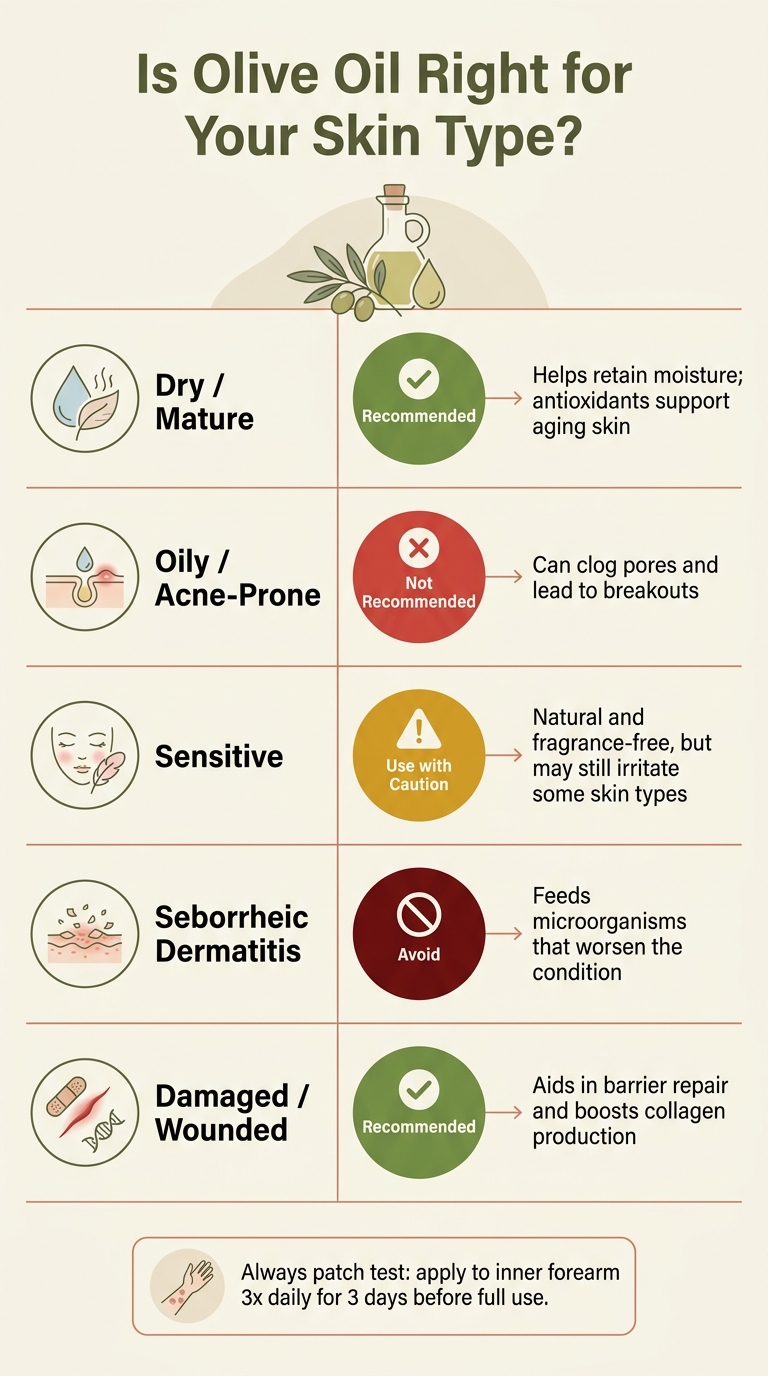
Is Olive Oil Right for Your Skin Type?
Olive oil isn't a universal fix for all skin types. It shines when used on dry, mature, or damaged skin, thanks to its ability to lock in moisture and promote healing. But before diving in, it’s smart to do a patch test: apply a small amount to your inner forearm three times daily for three days. If irritation shows up, stop using it. This simple step helps you safely enjoy the benefits highlighted in this guide.
For those with oily or acne-prone skin, olive oil might not be the best choice - it can clog pores and worsen breakouts. And if you have seborrheic dermatitis, steer clear entirely. Jodi LoGerfo, DNP, APRN, FNP-C, explains:
"If you have seborrheic dermatitis, you should not use olive oil topically as it can feed the microorganisms that cause it."
Another essential tip: always pair olive oil with SPF. Dr. Kassouf warns that "Olive oil allows ultraviolet rays to penetrate the skin because it's less reflective, making the spots even darker."
Here’s a quick breakdown to guide you:
| Skin Type | Recommendation | Reason |
|---|---|---|
| Dry / Mature | Recommended | Helps retain moisture; antioxidants support aging skin |
| Oily / Acne-Prone | Not Recommended | Can clog pores and lead to breakouts |
| Sensitive | Use with Caution | Fragrance-free and natural, but may still irritate some skin types |
| Seborrheic Dermatitis | Avoid | Feeds microorganisms that worsen the condition |
| Damaged / Wounded | Recommended | Aids in barrier repair and boosts collagen production |
Next, let’s talk about how proper storage keeps olive oil effective for your skin care routine.
How to Store and Handle Olive Oil for Skin Use
To keep olive oil at its best, store it in a cool, dark place (ideally between 57°F and 70°F). A pantry or cupboard away from heat sources like the stove is ideal. Always use dark glass or stainless steel containers, as these block UV light better than clear glass or plastic.
Once you open a bottle, aim to use it within 3 to 6 months for top-notch results. Unopened, high-quality extra virgin olive oil (EVOO) can last 12 to 18 months from the harvest date. For application, pour a small amount into a clean dish instead of dipping your fingers directly into the bottle - this prevents contamination and spoilage. If the oil starts smelling like crayons, stale nuts, or putty, it’s rancid and should be thrown out.
Simple DIY Skin Care Recipes Using Olive Oil
Now that you know how to store and handle olive oil, try these easy DIY recipes. Using high-quality EVOO is key - lower-grade oils might contain additives that could irritate your skin.
| Product | Ingredients | Directions |
|---|---|---|
| Nourishing Face Mask | 1 tbsp EVOO, 1 tbsp honey, 1 tbsp plain yogurt | Mix ingredients, apply for 10–15 minutes, and rinse with lukewarm water |
| Body Sugar Scrub | 1 cup sugar, ½ cup EVOO | Combine and massage onto damp skin, then rinse |
| Beeswax Balm | 30g (≈1 oz) EVOO, 20g (≈0.7 oz) beeswax, 10g (≈0.35 oz) shea butter, 5 drops Vitamin E | Melt beeswax and shea butter, mix in EVOO and Vitamin E, and pour into tins |
| Facial Scrub | 1 tsp EVOO, 2 tsp fine sugar or ground oats | Gently massage onto skin, avoiding the eye area, and remove with a warm washcloth |
After applying any olive oil-based product, give your skin a few minutes to absorb it fully before dressing or going to bed - this will help prevent stains on your clothes or bedding.
Conclusion: Getting the Most Out of Olive Oil for Skin Care
Olive oil has long held its place as a powerhouse in skin care. It provides deep hydration, antioxidant protection, and supports the skin’s natural barrier - all packed into one natural ingredient. Research backs this up: a clinical study showed that extra virgin olive oil (EVOO) increased skin hydration levels (from 40.23 AU to 48.66 AU) and reduced redness, proving its benefits go beyond just a temporary soothing effect.
When it comes to reaping these benefits, quality matters. Ultra Premium EVOO is your best choice, thanks to its rich antioxidant content that promotes long-term skin health. In contrast, lower-grade oils may contain impurities or oxidize quickly, which could lead to skin irritation. Brands like Big Horn Olive Oil take extra care by cold-pressing their Ultra Premium EVOO within two hours of harvest, preserving its antioxidant properties for maximum hydration and repair.
As Alison Carroll, Co-founder of Wonder Valley, explains:
"Extra-virgin grade olive oil has endless benefits and uses for skin care and really is one of the oldest beauty ingredients."
To make the most of olive oil in your routine, a few tips can help: apply it to damp skin after a shower to lock in moisture, layer it over water-based products to seal hydration, and always check for a harvest date to ensure freshness. Remember to patch test before use, avoid applying it to oily or acne-prone areas, and never substitute it for SPF.
Start small - just a few drops - and give it time. Visible results often take a few weeks to appear.
FAQs
How do I know if my olive oil is fresh enough for skin use?
To ensure olive oil is fresh and safe for skin use, check its color - it should have a vibrant greenish-golden hue - and a fruity, pleasant aroma. If it smells rancid or musty, it’s best to avoid using it. Proper storage is key: keep it in a cool, dark place and use a sealed, opaque container. Using rancid oil can irritate your skin, so always choose fresh, high-quality olive oil for safe and effective application.
Should I use olive oil before or after my moisturizer?
Applying olive oil after your moisturizer is often suggested as the best approach. By using it as the final step in your skincare routine, you can help lock in hydration and support skin elasticity. To get the most out of it, let your regular moisturizer fully absorb into your skin first. Then, apply a thin layer of olive oil to seal in the moisture and amplify the benefits of your routine. This method allows olive oil to protect and nourish your skin effectively.
What’s the best way to stop olive oil from causing breakouts?
When using olive oil on your skin, moderation is key to avoiding breakouts. If you have oily or acne-prone skin, start with a patch test to ensure your skin reacts well to oil-based products. Choose high-quality extra virgin olive oil for its potential benefits, like antioxidants and antibacterial properties, which may help support skin health. After application, make sure to cleanse your skin thoroughly to remove any excess oil and reduce the chance of clogged pores.