

Ultimate Guide to Olive-Based Chutneys
Olive chutney is simple at its core: olives + vinegar + a sweetener + heat. Cook it down, balance the salt, and you get a thick spread that can last 1 to 3 months in the fridge when stored well.
If you want the short version, here it is:
- Chutney is cooked down until thick and jammy
- Tapenade is usually uncooked and blended into a paste
- Relish stays chunkier and more sharp
- Green olives often need more sweetness than mild olives like Castelvetrano
- Apple cider vinegar fits fruit-based batches, while red wine vinegar suits savory ones
- Mustard oil gives a sharp edge; olive oil gives a softer finish
- The chutney is done when a spoon dragged across the pan leaves a line for a moment
- For storage, use hot sterilized jars, leave 1/2 inch headspace, and keep opened jars at 35–40°F
This guide breaks down the full process in plain terms: what olive chutney is, how it differs from relish and tapenade, which olives and acids to pick, how to fix salt or bitterness, what foods it pairs with, and how to store it safely.
Quick comparison:
| Item | Olive Chutney | Tapenade | Relish |
|---|---|---|---|
| How it’s made | Cooked | Usually uncooked | Often lightly cooked or mixed |
| Texture | Thick, jammy | Smooth paste | Chunky |
| Main taste | Sweet, sour, savory | Briny, salty | Sharp, tangy |
| Common use | Spread, glaze, side condiment | Spread or dip | Topping |
If you want olive chutney that tastes balanced instead of too salty, too sharp, or too bitter, this article shows the key moves that matter most.
Olive Chutney l Sweet And Sour Olive Chutney With All Tips l Jaitun Ki Chutney l Jalpai Chatni
Ingredients and Flavor Building for Olive Chutneys
After the history, the next step is choosing the ingredients that shape the flavor. Olive chutney lives or dies on balance: brine, acid, sweetener, and fat. When those four are in sync, the herbs, spices, and aromatics fall into place.
Choosing Olives, Vinegars, and Sweeteners
The olive sets the tone from the start. Castelvetrano olives are buttery and mild, which makes them a good fit for sweeter, fruit-led chutneys like pear-olive blends. Green olives bring more salt and a slight bitterness, so they often need extra sweetener to keep things balanced. And because most jarred or bottled olives already come packed in brine, it’s smart to taste before adding more salt.
Acid changes the whole feel of the chutney. Apple cider vinegar works nicely in fruit-based versions because its mild tang won’t bury softer ingredients like pears or apricots. Red wine vinegar fits savory Mediterranean-style chutneys, where it can hold its own against bold olives and garlic. Aged balsamic adds more depth to darker blends.
Sweeteners do more work here than people sometimes expect. Jaggery brings a deep, molasses-like note that pairs well with South Asian-style chutneys. Dark brown sugar gives a similar caramel edge. Honey works best in brighter, herb-led blends.
Herbs, Spices, and Oils That Shape the Final Taste
Spices help decide the style. Sweet-sour chutneys often use garlic, shallots, thyme, basil, and parsley, then finish with lemon juice. Herbaceous chutneys often begin with ginger and use panch phoran - a five-spice blend of fenugreek, nigella, cumin, mustard, and fennel seeds - sautéed in mustard oil for a sharp, warming base. Spicy styles get more aroma when whole spices are dry-roasted before grinding.
The cooking fat matters too. Mustard oil is common in Indian-style olive chutneys and adds a sharp heat. For Mediterranean-style blends, extra virgin olive oil brings a fruity, peppery finish that pairs well with garlic and herbs.
Comparison Table: Acids and Fats for Different Chutney Styles
| Acid or Fat | Flavor Impact | Regional Style | Best Use Case |
|---|---|---|---|
| Apple Cider Vinegar | Fruity, mild acidity | Western/Fusion | Fruit-based olive chutneys |
| Red Wine Vinegar | Sharp, robust | Mediterranean | Savory olive and tomato-based chutneys |
| Aged Balsamic | Sweet-tart, syrupy | Italian-inspired | Dark olive or fig-olive blends needing depth |
| Extra Virgin Olive Oil | Fruity, peppery, smooth | Mediterranean | Sautéing aromatics and finishing herbaceous blends |
| Mustard Oil | Pungent | South Asian | Traditional Indian jolpai chutney |
With the flavor base set, the next step is the simmering method that builds texture.
How to Make Olive-Based Chutneys Step by Step
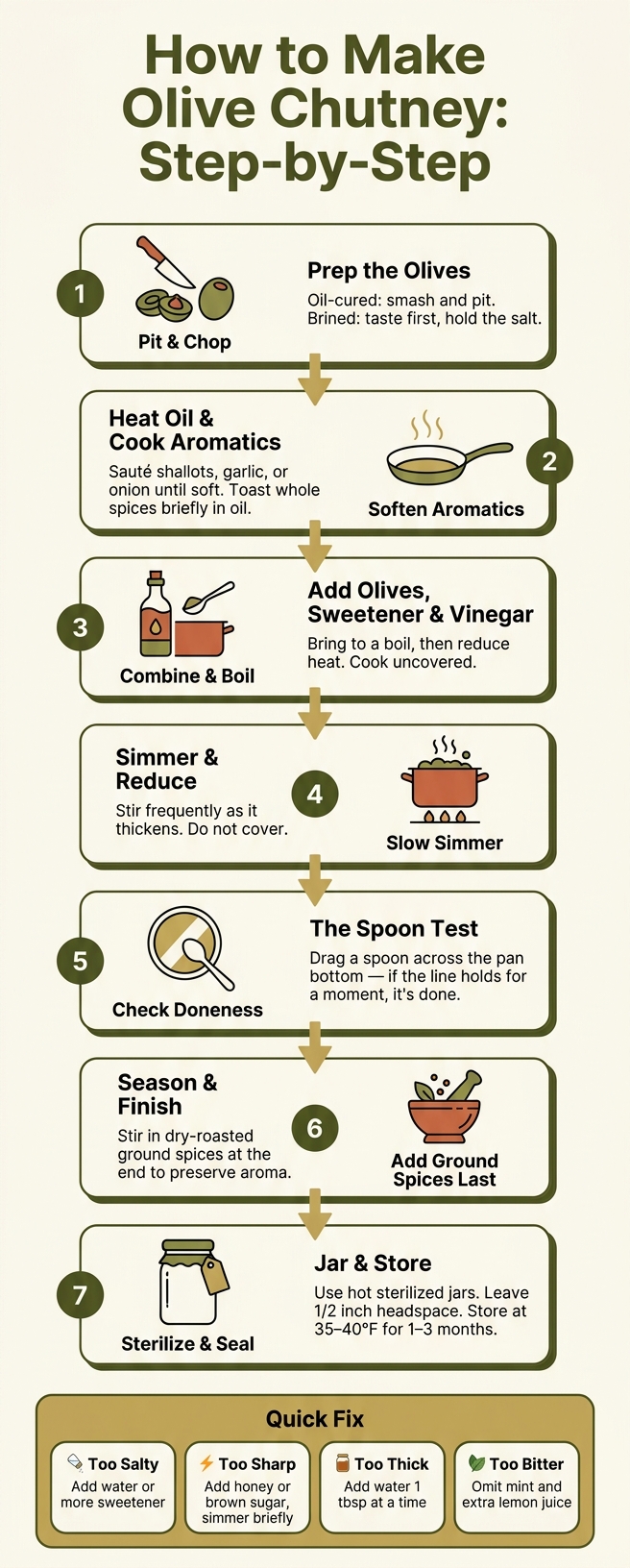
How to Make Olive Chutney: Step-by-Step Process & Key Visual Cues
Basic Cooking Method: From Chopping to Reduction
Once your flavor balance is in place, it’s time to cook the chutney down until it turns thick and spreadable.
Start with the olives. If you’re using oil-cured olives, press each one with the flat side of a knife, remove the pit, and leave the pieces a little uneven for a rustic texture. If you’re working with sliced or brined olives, taste them first. Then wait until the end before adding any salt.
Heat the oil and cook your aromatics - shallots, garlic, or onion - until soft. Using whole spices? Toast them for a moment in the oil so they open up. Then add the olives, sweetener, and vinegar. Bring the mixture to a boil, lower the heat, and let it cook uncovered.
Here’s the key visual sign: drag a spoon across the bottom of the pan. If the line stays open for a moment, the chutney is done. It should look glossy and thick, not thin or watery.
Texture Control, Seasoning, and Common Fixes
How you chop the olives shapes the final texture. Coarse chopping or smashing gives you a rustic chutney with clear bites of olive. Fine chopping makes it denser and more even. Want something in the middle? Use a hand blender after simmering to get a semi-smooth texture that still has some body.
If something feels off, the fix is usually simple:
- Too salty? Add a small splash of water or a bit more sweetener. If your olives are very salty, boil them before cooking to pull out some of the sodium.
- Too sharp? Add a little more honey or brown sugar, then simmer it briefly.
- Too thick? Add water, 1 tablespoon at a time, until it’s spoonable.
- Too bitter? Leave out mint and extra lemon juice. Both can make green-olive bitterness stand out more.
Add dry-roasted ground spices at the end. If you stir them in earlier, their aroma fades.
Comparison Table: Cooking Techniques and Texture Results
| Technique | Texture Outcome | Flavor Development | Sticking Risk |
|---|---|---|---|
| Slow Simmer (Uncovered) | Thick, jam-like | Deep; fruit breaks down naturally | Moderate - stir frequently as it thickens |
| Partial Purée | Semi-smooth, spreadable | Uniform; good for spreads and baguettes | Low |
| Coarse Chop | Chunky, rustic | Flavors take longer to meld | Low |
| Fine Chop | Dense, uniform | Consistent flavor in every bite | Highest sticking risk |
Once the texture is where you want it, the next step is serving and pairing.
sbb-itb-4066b8e
How to Serve, Pair, and Use Olive Chutneys
Best Food Pairings for Sweet-Sour, Herbaceous, and Spicy Styles
Once the chutney has cooked down and cooled, pair its flavor with the dish it's meant to support.
Sweet-sour olive chutneys shine next to rich proteins and sharp dairy. Serve them with roasted pork, turkey, or duck, where the acidity helps cut through the fat. On a cheese board, add a spoonful next to aged cheddar or another firm cheese.
Herbaceous Mediterranean-style chutneys go especially well with grilled chicken, flatbreads, roasted vegetables, and grain bowls. The herbs and citrus lift earthy flavors without taking over the plate.
Spicy olive chutneys fit nicely with sandwiches, pizza, seafood, and fried appetizers. The heat and briny edge help balance savory, doughy, and mild foods.
Ways to Use Olive Chutney Beyond a Condiment
Olive chutney doesn't have to stay on the side of the plate. It also works well inside other dishes. If you want a fast way to use it, turn it into a spread, glaze, or finishing spoonful.
You can use olive chutney as:
- A glaze for roasted meats: Balsamic-based olive chutneys pair well with roasted pork, turkey, or duck. The acidity helps cut through the richness of the fat.
- An instant dip: Stir a few tablespoons into cream cheese or Greek yogurt. Serve with crackers or crostini for a fast appetizer.
- A sandwich spread: Use it on a turkey sandwich, grilled sourdough, or toasted baguette instead of mayonnaise. It adds depth and a briny finish.
- A pasta or grain finisher: Stir a spoonful into warm pasta or a grain bowl just before serving. It acts like a quick savory dressing.
For a glossier finish, stir in a small drizzle of extra virgin olive oil off the heat.
Comparison Table: Chutney Styles and Ideal Pairings
| Chutney Style | Best Pairings | Why It Works |
|---|---|---|
| Sweet-Sour Olive Chutney | Rice dishes, lentils, fried snacks, samosas | Jaggery and warm spices balance fried or earthy flavors |
| Sweet-Sour Olive Chutney (Balsamic/Fruity) | Roasted pork, turkey, aged cheeses, crackers | High acidity and fruitiness cut through rich fats and proteins |
| Mediterranean Herb | Grilled chicken, flatbreads, roasted vegetables, grain bowls | Fresh herbs and citrus brighten grilled meats and earthy sides |
| Spicy/Tangy | Sandwiches, pizza, seafood, fried appetizers | Heat and brine cut through savory, doughy, and mild foods |
Storage, Shelf Life, and Key Takeaways
Refrigeration, Freezing, and Jar Safety
Once the chutney reaches its final texture, storage shapes both safety and taste.
Use hot, sterilized glass jars. Ladle the hot chutney into hot, sterilized jars and leave 1/2 inch of headspace. As the jars cool, they form a vacuum seal. Too much headspace can weaken that seal.
After sealing, place the jar in the fridge or freezer based on how soon you plan to use it.
Store opened jars in the refrigerator at 35–40°F. At that range, a properly cooked olive chutney will usually keep for 1 to 3 months. Each time you serve it, use a clean, dry spoon.
Freezing is a good option for big batches, though the oil can separate. If that happens, just stir it after thawing.
Comparison Table: Storage Methods and Typical Shelf Life
Once the chutney has reduced and cooled, pick the storage method that matches your timeline.
| Storage Method | Typical Shelf Life | Pros | Cons / Texture Impact |
|---|---|---|---|
| Refrigeration (35–40°F) | 1–3 months (cooked); 3–7 days (fresh) | Easy; flavors continue to meld over time | Limited duration; temperature swings from frequent opening can speed spoilage |
| Cool Pantry (tested, properly canned high-acid recipes) | Up to 12 months | Long-term storage; no refrigeration needed | Requires water-bath processing and vinegar with at least 5% acidity; only safe for high-acid recipes |
| Freezing | 4–12 months | Good for large batches | Oil may separate; nuts or soft fruit may soften after thawing |
Key Takeaways From This Guide
The main rule is simple: balance, reduction, and acidity shape both flavor and shelf life.
Olive chutney depends on balance. Brined olives already bring a lot of salt, so wait before adding more until you've tasted the cooked mixture. For storage, use vinegar labeled 5% acidity.
Vinegar and fruit add acidity, which helps slow spoilage. A well-reduced chutney also keeps better because it has less water. Then the final piece comes down to storage: sterilized jars, proper headspace, and a steady refrigerator temperature help protect both taste and safety in every batch.
FAQs
Can I make olive chutney with black olives?
Yes. Black olives are a great fit for olive chutney, especially richer varieties like Kalamata, Niçoise, Gaeta, or oil-cured olives.
For the best flavor, skip canned black olives processed in lye. They often taste flat. A splash of Big Horn Olive Oil’s premium extra virgin olive oil adds a peppery richness that pairs nicely with the olives’ natural saltiness.
Do I need to sterilize jars for fridge storage?
No. For chutney stored in the refrigerator, full sterilization isn't needed.
Just wash jars and lids well in hot, soapy water, then dry them all the way before filling. For the best result, use a clean spoon every time you serve it to help prevent spoilage.
How can I make olive chutney less bitter?
To cut bitterness in olive-based chutneys, add a little sugar, jaggery, or honey to balance the taste. Boil the olives until they’re tender before using them, too. That helps soften their sharp edge.
Also, remove all stems from fresh berries, since stems can add a bitter note. Skip mint and extra lemon juice, because both can make that bitterness stand out more.